The privacy model crypto actually needs:
Anonymous to third parties. Transparent between the two people transacting.
Right now you get one or the other. Full transparency exposes everything to everyone.
Privacy pools hide everything from everyone, including the recipient who needs to know who paid them.
The answer is an identity layer that sits between those extremes.
Outsiders see nothing. The two parties see each other.
Private where it should be. Verifiable where it matter
The next era of crypto isn't user education.
It's interface design.
Intent-aware signing.
Readable identities.
Confidential routing.
Humans and AI agents both deserve better infrastructure.
Quantum cybersecurity is no longer a side conversation, at @SALTConference it shared the main stage with digital banking.
Our CEO @MehowHacks joined @CaitlinLong_ of @custodiabank, @jeffwallis of @N3XTinc, and @nic_carter of @CastleIslandVC, moderated by @josh_blockchain, to talk about what it actually takes to future-proof finance.
Mehow's argument: every serious quantum plan assumes millions of holders will migrate their funds on command. Ours doesn't. Same address, quantum-resistant proof, users don't have to do anything.
Quantum isn't a crypto problem or a banking problem. It's a deadline and we build like it.
The industry is debating whether to freeze Satoshi's wallets before quantum computers can crack them.
That's the wrong question. What we should be asking is, why aren't wallets quantum-resistant by default?
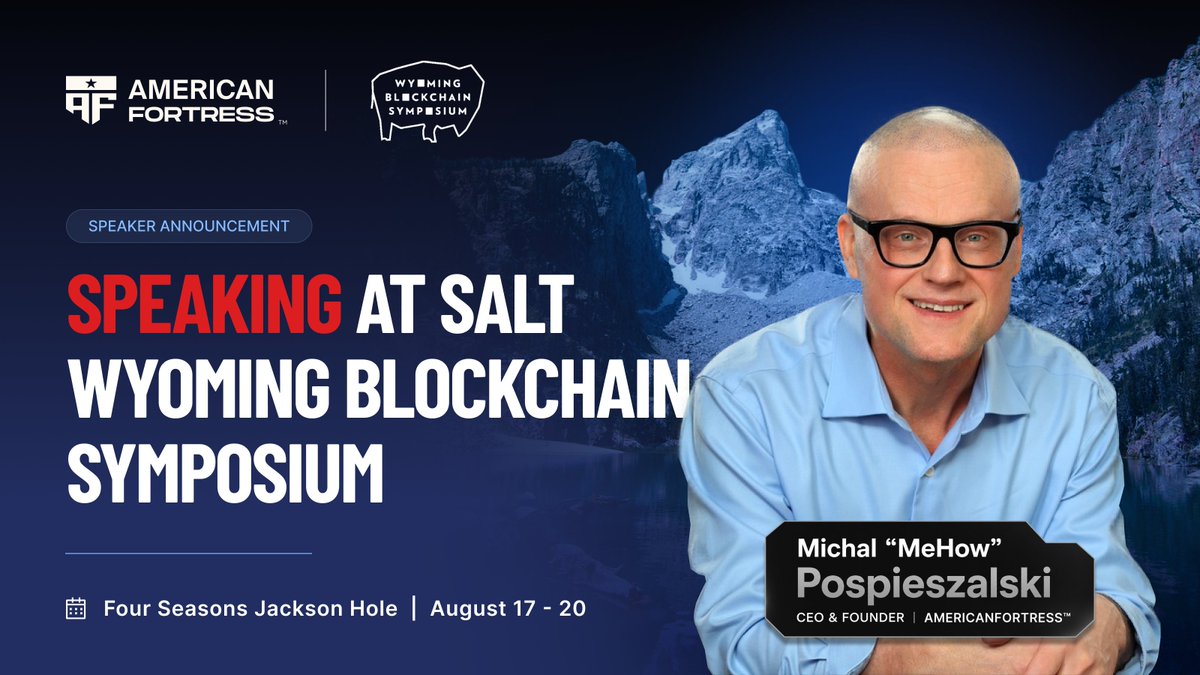
@MehowHacks will be talking about exactly that at the @SALTConference in Wyoming.
See you there.