Found X-rays from Uranus; ERF at UCL; Coordinate multi-award-winning @Orbyts1 scientist-school partnerships to support school science research+STEM inclusivity.
Our Orbyts team worked super hard in our free time to write our first Impact report based on the last 6 years of programme evaluation, so we're mega excited to share it with you: https://t.co/rJ3dkpHADH
We're delighted to present Orbyts' first Impact Report! Over the past six years we have seen Orbyts' transformational impact on young people, researchers and teachers alike and we’re excited to share that with you.
Find the 2017-2023 Orbyts Impact Report: https://t.co/5uoyNuC7m1
Great to see this work led by CPS alumus Dr Jamie Jasinski @spaceJamieJ@NASAJPL, including CPS co-authors Dr Will Dunn @astro__will and Prof Nick Achilleos and CPS alumni Dr @Tom_Nordheim@NASAJPL and Dr Leonardo Regoli @JohnsHopkins APL
👇https://t.co/yyoo7RYOtu 🌞 🧲 🪐🤩
Great to see this work led by CPS alumus Dr Jamie Jasinski @spaceJamieJ@NASAJPL, including CPS co-authors Dr Will Dunn @astro__will and Prof Nick Achilleos and CPS alumni Dr @Tom_Nordheim@NASAJPL and Dr Leonardo Regoli @JohnsHopkins APL
👇https://t.co/yyoo7RYOtu 🌞 🧲 🪐🤩
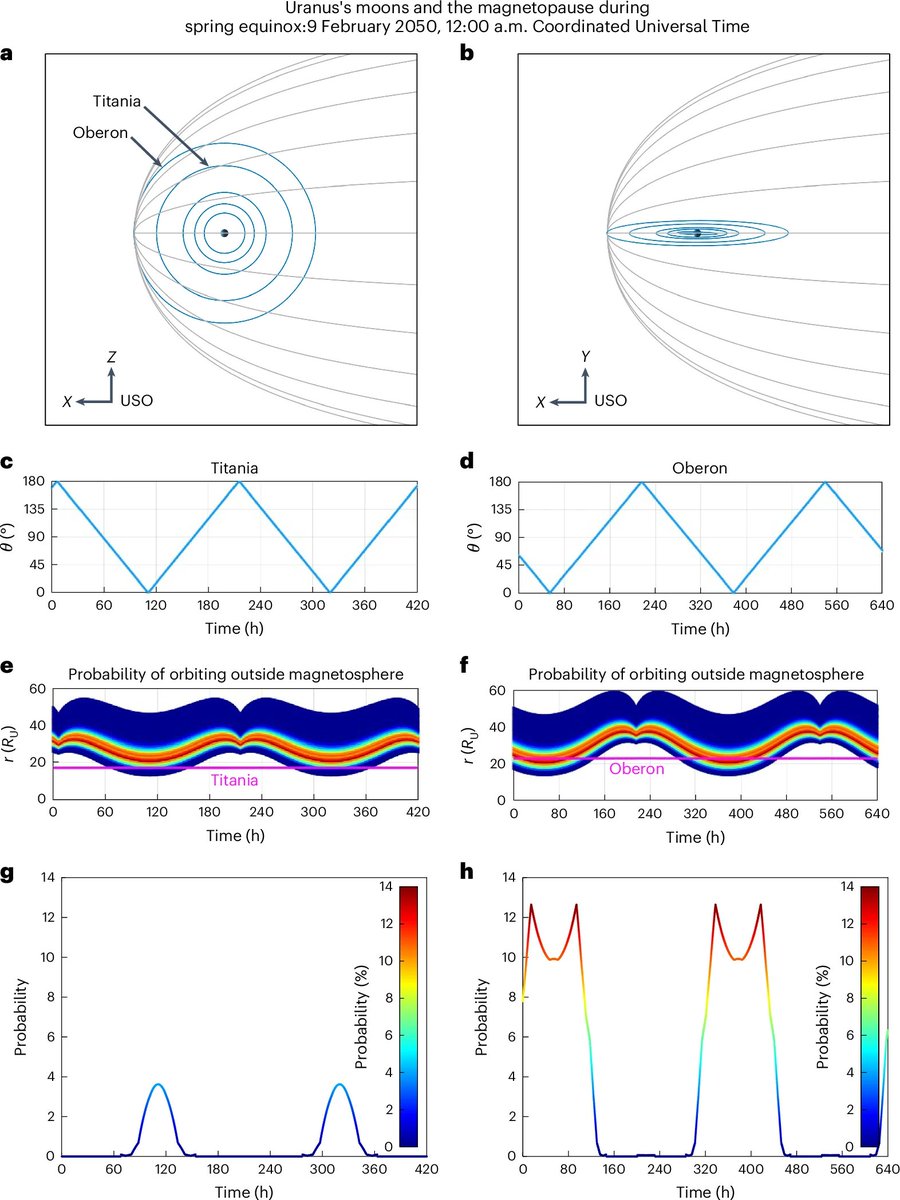
A reanalysis of the 1986 Voyager 2 flyby of Uranus shows that it occurred during an extreme compression of the planet’s magnetosphere by the solar wind. This would have had significant effects on the measurements made during the flyby. @spaceJamieJ et al.: https://t.co/Bexf06nbR7
When I flew by Uranus in 1986, my readings of its magnetosphere confounded scientists – but new analysis shows that it was all a cosmic coincidence and that, if I arrived just a few days earlier, I'd have observed a completely different environment: https://t.co/cLzFvkJoeI -V2
My excellent friend @spaceJamieJ discovered that lots of Uranus's mysterious behaviour that we've talked about for decades, based on Voyager 2s flyby, happened during really extreme solar wind conditions. It's out today here: https://t.co/0taEEwX5ev . May be some news coverage.
A group of young astronomers from @Prendergast_PLS , guided by Fellow Amara Mighty, embarked on a journey to explore stellar nurseries and to understand how different galaxies fuel star formation! 🌌 Check out their conference video!: https://t.co/hDXw806X9I #OrbytsConference2024
Students from @StBernards_HS along with Fellow @ConnorJBallard from @MSSLSpaceLab have taken a significant step towards understanding the potential to identify life on Mars using microbialites from Lake Salda, Turkey🦠🔬Check it out! https://t.co/CFQNsMSBCF #OrbytsConference2024
Students from @BlenheimEpsom and Fellow @rjwarrilow from @MSSLSpaceLab embarked on a fascinating project to identify regions on Mars that may have once harboured habitable conditions! Interested? Check out their conference video here! https://t.co/YDDcIWbTkC #OrbytsConference2024
We have 6 amazing Orbyts space research projects ready for schools in the Warwick/Coventry area, and still a couple spaces. If you're a teacher and would like a scientist to support your students with doing some research, please get in touch. More info: https://t.co/rJ3dkpHADH
We’re kickstarting our 10th year of Orbyts with hubs in London, Newcastle, Leicester, Warwick, Edinburgh, and Kent! Hooray! 🎉 We’re looking forward to yet another year of amazing science!
Obviously v tough to take - I was really proud of our LEM white paper on solar system X-rays and the @LEMXray proposal felt phenomenally well put together by an amazing team. But @AXISprobe is a really exciting mission and I have fingers firmly crossed for them in the next phase.
NASA announced the results of Step 1 of the Astrophysics Probe competition. Unfortunately @LEMXray was not selected. We want to thank our amazing Team of 300+ scientists, engineers, and program managers, administrators, who dedicated 2 years to developing the LEM concept! (1/2)
NASA announced the results of Step 1 of the Astrophysics Probe competition. Unfortunately @LEMXray was not selected. We want to thank our amazing Team of 300+ scientists, engineers, and program managers, administrators, who dedicated 2 years to developing the LEM concept! (1/2)
If you'd like to find out a bit more you could check out our impact report here: https://t.co/oqYu06u29s, ping us an email or ping me a DM and I'd be super happy to discuss. For schools: student cohorts taking part need to be at least 50% girls and at least 50% pupil premium/FSM.
This year we'll have @Orbyts1 hubs in Newcastle,Leicester,Warwick/Coventry,Edinburgh,Kent,London and Brum. Where we'll be pairing scientists with schools to support school research projects. If you're a teacher/researcher and you think this sounds fun, we'd love to hear from you!
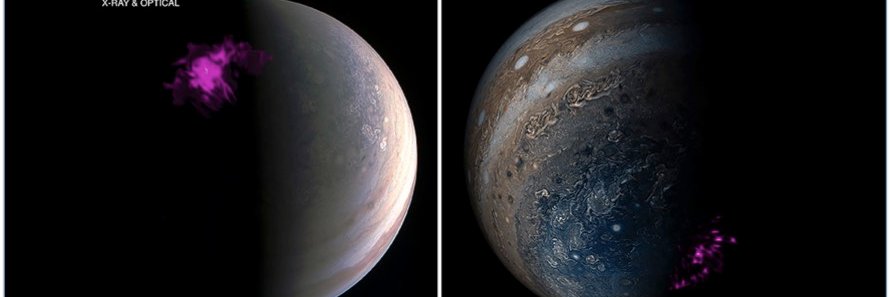
Wrote this very fast and reading back it feels a bit uncomfortable: Ulysses measurements suggested some crossing into open field line regions and there's lots of smashing theoretical work and auroral studies that have hinted at cusp like signatures.
For the last few decades scientists have wondered where Jupiter's magnetospheric cusp is. All the other planets with magnetic fields seemed to have them. It's finally been found :
https://t.co/TmiZe6PG6l