You know all those arguments that LLMs think like humans? Turns out it's not true.
🧠 In our paper "From Tokens to Thoughts: How LLMs and Humans Trade Compression for Meaning" we test it by checking if LLMs form concepts the same way humans do @ylecun@ChenShani2@jurafsky
Very happy to hear that GANs are getting the test of time award at NeurIPS 2024.
The NeurIPS test of time awards are given to papers which have stood the test of the time for a decade.
I took some time to reminisce how GANs came about and how AI has evolve in the last decade.
Spoke to @geoffreyhinton about OpenAI co-founder @ilyasut's intuition for scaling laws👇.
"Ilya was always preaching that you just make it bigger and it'll work better.
And I always thought that was a bit of a cop-out, that you're going to have to have new ideas too.
It turns out Ilya was basically right."
Link to full interview in 🧵.
@ADuvalinho@Mila_Quebec Just applied! Wondering when you anticipate getting back to people about the outcome? Just a rough timeline to allow me to decide on other things : )
In a new post with @NaefLuca @vant_ai we ask what is needed for ML to succeed in biological problems and argue that it is necessary to move beyond "white-box data"
https://t.co/yE5uFPEof2
w inputs from @nathanbenaich@dom_beaini @befcorr @georg_e_winter @schwabpa@ggrigoryanv
Introducing SIMA: the first generalist AI agent to follow natural-language instructions in a broad range of 3D virtual environments and video games. 🕹️
It can complete tasks similar to a human, and outperforms an agent trained in just one setting. 🧵 https://t.co/qz3IxzUpto
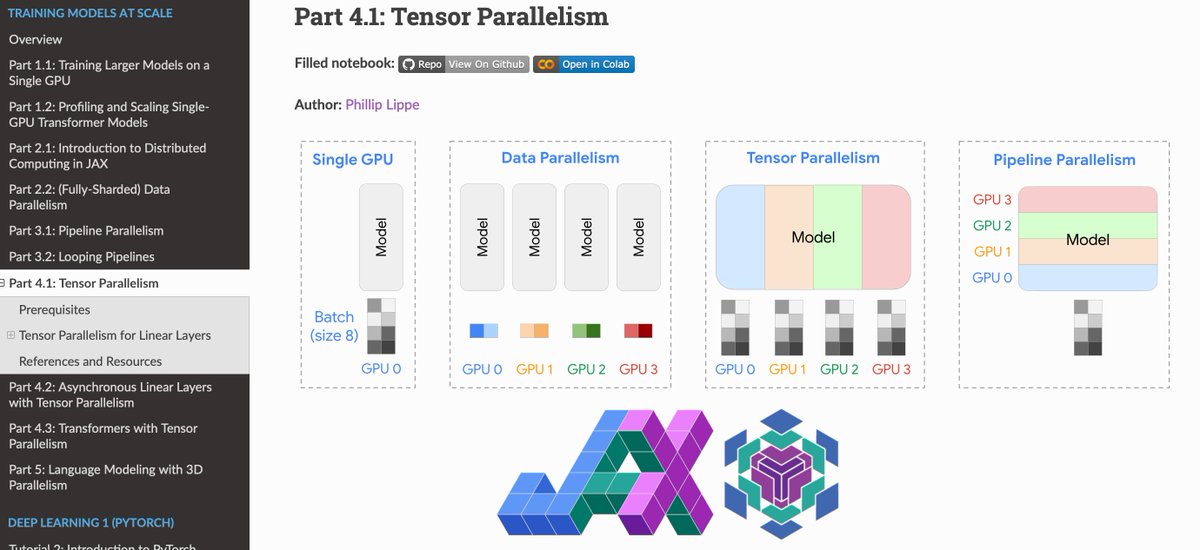
Do you want to train massive deep learning models with ease? Our 10 new tutorial notebooks of our popular UvA DL course show you how, implementing data, pipeline and tensor parallelism (and more) from scratch in JAX+Flax! 🚀🚀
Check them out here: https://t.co/7AtaB7j8l9
🧵 1/11
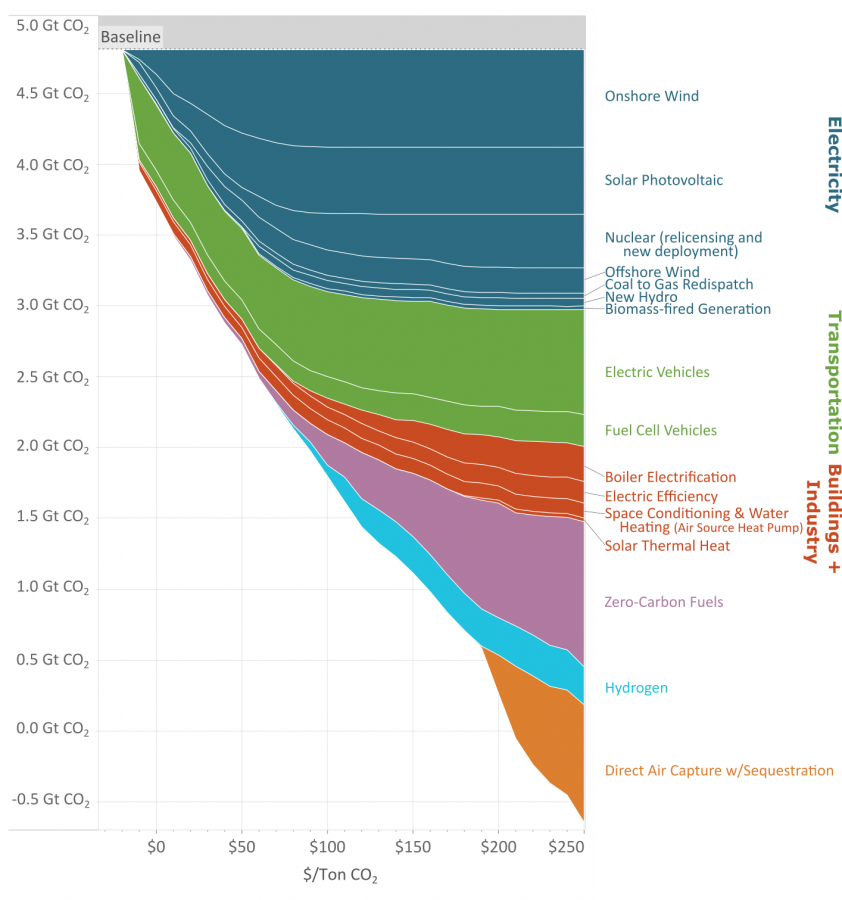
@wellingmax There are other low-hanging fruits for the price/emission reduction. Would recommend this video if you are interested: https://t.co/zKmOpn6fXo
(image taken from https://t.co/SKC0grFH5W)
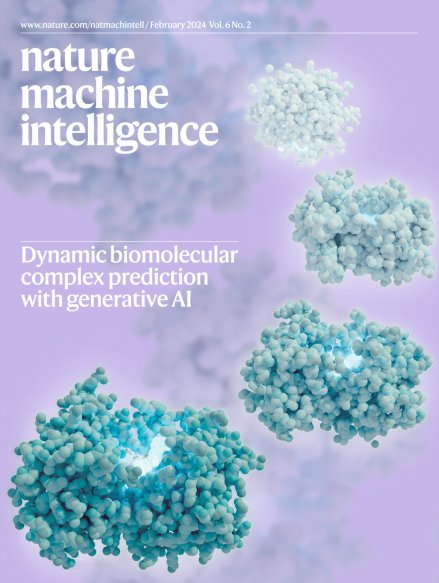
Thrilled that our work on generative AI for dynamic protein-ligand binding is now on the cover of @Nature@ZhuoranQ@wn8_nie@tfmiller3 https://t.co/m4ljYErIE7
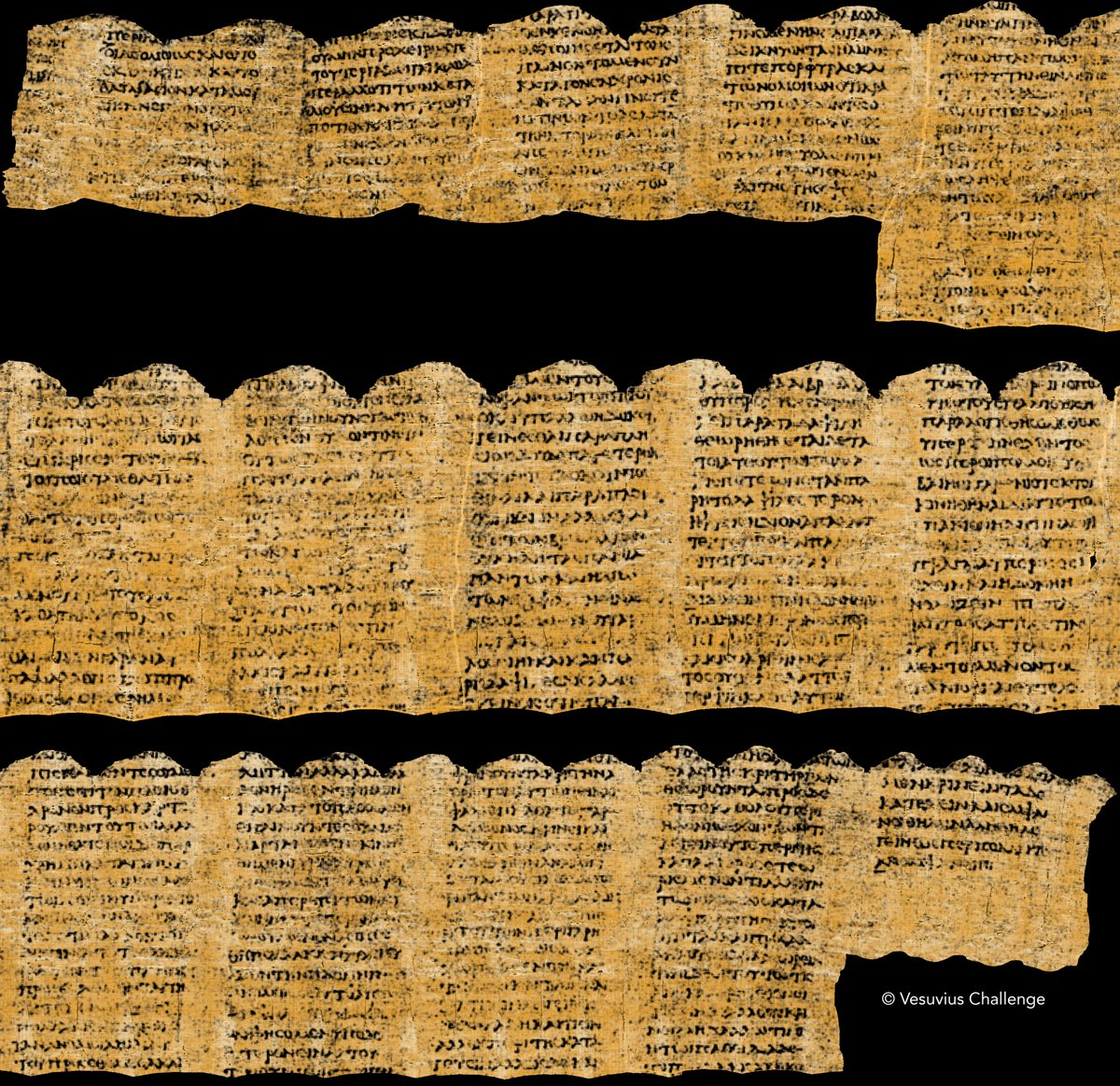
Ten months ago, we launched the Vesuvius Challenge to solve the ancient problem of the Herculaneum Papyri, a library of scrolls that were flash-fried by the eruption of Mount Vesuvius in 79 AD.
Today we are overjoyed to announce that our crazy project has succeeded. After 2000 years, we can finally read the scrolls:
This image was produced by @Youssef_M_Nader, @LukeFarritor, and @JuliSchillij, who have now won the Vesuvius Challenge Grand Prize of $700,000. Congratulations!!
These fifteen columns come from the very end of the first scroll we have been able to read and contain new text from the ancient world that has never been seen before. The author – probably Epicurean philosopher Philodemus – writes here about music, food, and how to enjoy life's pleasures. In the closing section, he throws shade at unnamed ideological adversaries – perhaps the stoics? – who "have nothing to say about pleasure, either in general or in particular."
This year, the Vesuvius Challenge continues. The text that we revealed so far represents just 5% of one scroll.
In 2024, our goal is to from reading a few passages of text to entire scrolls, and we're announcing a new $100,000 grand prize for the first team that is able to read at least 90% of all four scrolls that we have scanned.
The scrolls stored in Naples that remain to be read represent more than 16 megabytes of ancient text. But the villa where the scrolls were found was only partially excavated, and scholars tell us that there may be thousands more scrolls underground. Our hope is that the success of the Vesuvius Challenge catalyzes the excavation of the villa, that the main library is discovered, and that whatever we find there rewrites history and inspires all of us.
It's been a great joy to work on this strange and amazing project. Thanks to Brent Seales for laying the foundation for this work over so many years, thanks to the friends and Twitter users whose donations powered our effort, and thanks to the many contestants whose contributions have made the Vesuvius Challenge successful!
Read more in our announcement: https://t.co/rUlrdGXBMs
🌟Time for another blog post! :D🌟
"No more shape errors! Type annotations for the shape+dtype of tensors/arrays."
Link: https://t.co/wFuzq51OmO
I think the audience for this one is nearly everyone who uses PyTorch / NumPy / JAX / TensorFlow.🤖
"We [...] empirically show that explicitly enforcing roto-translation equivariance is not a strong requirement for generalization."
"Furthermore, we also show that approaches that do not explicitly enforce roto-translation equivariance (like ours) can match or outperform approaches that do."
🔥





![tkipf's tweet photo. "We [...] empirically show that explicitly enforcing roto-translation equivariance is not a strong requirement for generalization."
"Furthermore, we also show that approaches that do not explicitly enforce roto-translation equivariance (like ours) can match or outperform approaches that do."
🔥](https://pbs.twimg.com/media/GASYBZha0AA_5ej.jpg)


