Postdoc @Yale studying immunology in the Montgomery Lab.
Biomedical Science PhD from @UConnHealth / @UConn studying PRG4 in bone + aging in the Schmidt Lab.
Happy to share our new publication in GeroScience: "Proteoglycan-4 (PRG4) serum concentration is lower in aged mice, and genetic deficiency impacts survival probability, blood parameters, and bone during aging."
https://t.co/uOeiSjygMo
New PRG4 paper on aging! The molecule that never ceases to surprise: Serum PRG4 down with age. Deficiency results in decreased survival in mice and accelerated skeletal aging in M mice. Great work by former PhD student @ATang029 and awesome collaborators. https://t.co/nxpDzQggFX
Happy to share our new publication in GeroScience: "Proteoglycan-4 (PRG4) serum concentration is lower in aged mice, and genetic deficiency impacts survival probability, blood parameters, and bone during aging."
https://t.co/uOeiSjygMo
@CraigABrill@Facts_R_Good@JohnStreicher1 Therefore, a lower indirect lowers the total award from 150k to 115k. Indirects are critical for research to happen and covers a huge range of costs. Again, this is a funding cut.
@CraigABrill@Facts_R_Good@JohnStreicher1 No, that's not how it works. The direct portion is the base amount and does not change regardless if the indirect award is 0% or 100%. The indirect is a percentage of the direct award paid on top of it. A 100k direct with a 50% indirect is 50k indirect. 15% is 15k indirect.
@CraigABrill@Facts_R_Good@JohnStreicher1 Indirect costs are not the same as admin costs. Indirect and direct funding cannot legally be spent on the same things. They did not increase research funding, and they did not shuffle the money from indirect to direct. A cut to indirects is a cut to research funding.
The role of govt in funding research is different from other entities. This is bc govt has a vested interest in the future of the people. Not just immediate, but our children and their children. Research is the long game. Breakthroughs now are built on investments 20+ yrs ago.
“Older people are more susceptible to infectious diseases & less responsive to vaccines,” @RuthMontgomery1
Learn more about why & the research on the effects of aging & age-associated diseases on innate immunity from Dr. Ruth Montgomery.
https://t.co/aROVo3jp3C
The Tang lab crew is getting excited to get to Long Beach for the @ORSsociety#ORS2024 annual meeting. We have lots of exciting science to share - and looking forward to catching up with old friends. Safe travels everyone!
#PRG4#lubricin AlphaLISA from @RevvityLifeSci! We developed it with @LubrisBio#rhPRG4, showed PRG4 down in Sjogrens tears, now great to have a kit made/optimized by Revvity CustomTeams. LLOQ ~5ng/ml, only 5ul of sample. Great for serum, tears, saliva - and we’ll see what else!
New lab paper, congrats to @ATang029 & thanks to coauthors! #PRG4 deficient mice have altered femur mechanical/structural/material properties, and more calvarial osteoclasts. AND, #rhPRG4 inhibits osteoclast-ogenesis & activity in vitro. In vivo is next?! https://t.co/Zw9ryCYXwj
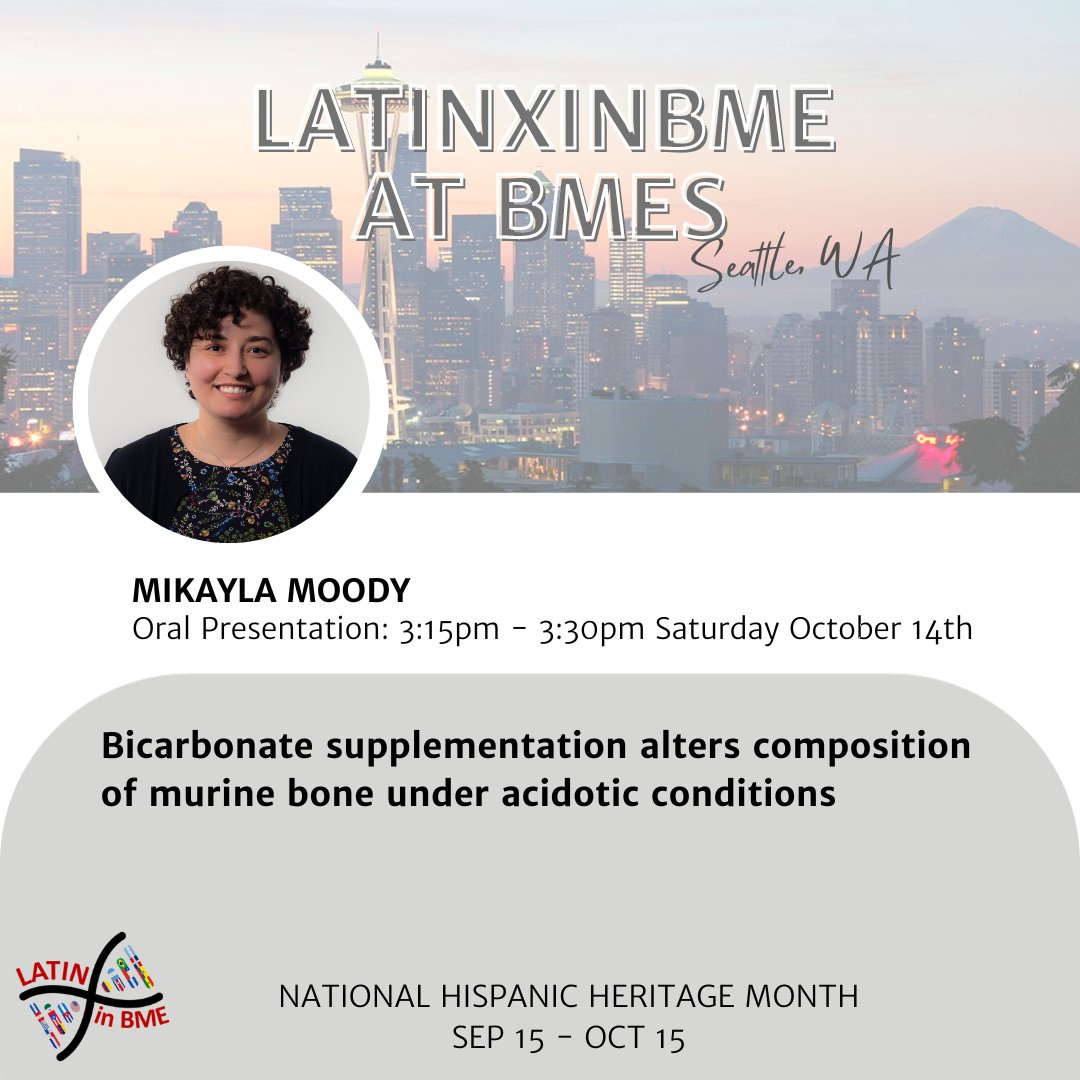
Mark your calendars for Mikayla Moody's presentation at the BMES Annual Meeting @BMESociety on Saturday Oct. 14th. They'll be discussing Bicarbonate supplementation for murine bone, and you won't want to miss it! #LatinXinBME#BMES2023#HHM