Michael Burry worked sixteen-hour shifts as a Stanford medical resident and studied stocks after midnight, posting his work on the Silicon Investor message boards 3,277 times over five years. Much of that work was done while working also working at the hospital.
The usual lesson drawn from stories like this is that you must love the work to be great at it. Psychiatrist Phil Stutz points at something harder underneath: "There is no exoneration from pain, uncertainty, or the need for constant work." The need for constant work is a constant of everyone's life, and no amount of money, fame, or success exempts anyone from it.
Under that view, the greats are not people who chose work they love. They are people whose natural compulsions happen to match the work that never stops arriving for any of us. Burry, for example, read subprime prospectuses that nobody but the drafting lawyers read, not out of discipline, but because he could not help himself.
Today's piece is about why compulsion rather than love may be what separates the top 1% of 1%, and what it means if the compulsion is not there.
https://t.co/lSX2u8xAGH
Chris Williamson shared one of the most overlooked truths about self-improvement.
“If you want to go from where you are to where you want to be, you're going to have to do something that makes you more different, more weird, more easy to be mocked.”
The hardest part isn't waking up early, going to the gym, or staying disciplined. It's surviving what he calls “the lonely chapter”: the period where you've outgrown your old life, but haven't yet built your new one.
Chris: “You're so different that you can't resonate with your old set of friends. But you're not yet sufficiently developed that you've created your new set of friends.”
Most people mistake this feeling for failure and go back to the habits, people, and routines they already know. Not because they're happier there, but because familiarity feels safer than uncertainty.
Chris: “There is this temptation to go back to the old ways of thinking... to the road that you already know how it's going to end.”
Movies make personal growth look like one inspiring montage. In reality, it's years of showing up without knowing if any of it will pay off. You're surrounded by uncertainty, questioning whether you're wasting your time, while everyone else seems content staying the same.
That's why so few people truly change. The loneliness isn't a detour. It's part of the journey. If you can survive that chapter without turning back, you're already further ahead than most people ever get.
Yayınevlerinin en büyük müşterisi okuyucular değil,
bir gün okuyacağını hayal eden insanlar.
Japonların buna verdiği isim:
Tsundoku.
Yani: kitap mastürbasyonu.
How to Speak' dersini iki sene önce izlemiştim, gerçekten verimli. Ama doluluk oranının nedeni büyük ihtimal dersin free elective ve attendance'in %10 olması.
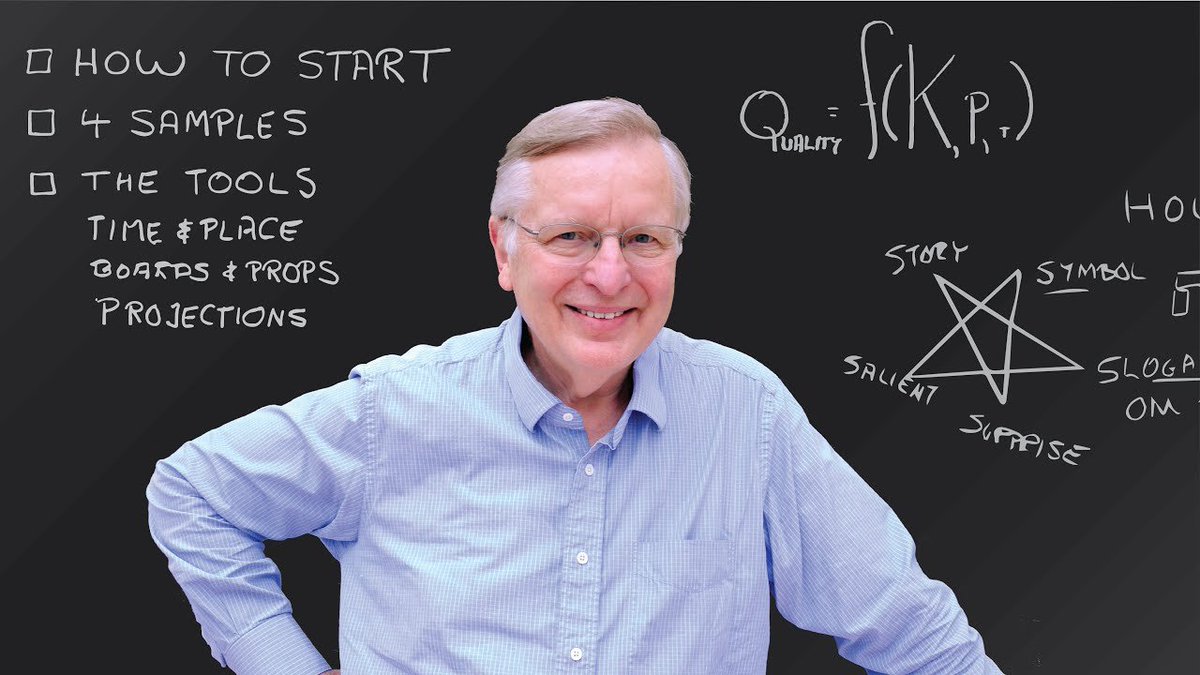
A MIT professor taught the same lecture every January for 40 years, and every single time it was standing room only.
I watched it at 2am and it completely rewired how I think about communication.
His name was Patrick Winston. The lecture is called "How to Speak."
His opening line hit like a truck: your success in life will be determined largely by your ability to speak, your ability to write, and the quality of your ideas in that order.
Not your GPA. Not your pedigree. Not your IQ. How you speak is what separates people who get heard from people who get ignored.
Here's the framework he drilled into MIT students for four decades.
He said never start with a joke. Start by telling people exactly what they're going to learn. Prime the pump before you pour anything in. He called it the "empowerment promise" give people a reason to stay in their seats within the first 60 seconds.
Then he broke down the 5S rule for making ideas stick: Symbol, Slogan, Surprise, Salient, and Story. Every idea worth remembering hits at least three of these.
The part that floored me was his "near miss" technique. Don't just show what's right show what almost looks right but isn't. That contrast is when the brain actually locks something in permanently.
His final rule before any big talk: end with a contribution, not a summary. Don't recap what you said. Tell people what you gave them that they didn't have before they walked in.
I've used this framework in pitches, interviews, and presentations ever since watching it, and the results are not subtle.
Patrick Winston passed away in 2019, but this lecture is still free on MIT OpenCourseWare. One hour, watched by millions, and it costs absolutely nothing.
The most important class MIT ever put on the internet isn't about code or math. It's about how to make people actually listen to you.
@akpinarserdar@TurkeySMS 1 nisandan itibaren sirket olmayan sms gönderemiyor diye biliyorum hocam. Bunun için mi alternatif bi sms rntegrasyon firması arıyordunuz acaba?
My path to entrepreneurial success was not linear, by any stretch of the imagination. I didn’t start working in tech until I was 32. I didn’t even move to California until I was 30.
Before becoming an entrepreneur, I was:
-The worst realtor in the state of New York
-A gofer for the CEO of a sheet music company
-An aspiring brand manager for flea shampoo
Don’t be disillusioned if the path ahead isn’t clear. Relax.
Find something that strikes your interest. And don’t be afraid to take a trail just because you can’t see the end.
BREAKING 🚨: Meta officially launches new initiative at 'Meta Superintelligence Labs' (MSL) under Chief AI Officer Alexandr Wang.
In his first act of "efficiency," Wang has reportedly replaced the entire executive suite with 100% optimized versions of himself with Claude Cowork
Sergey Brin accidentally revealed something wild:
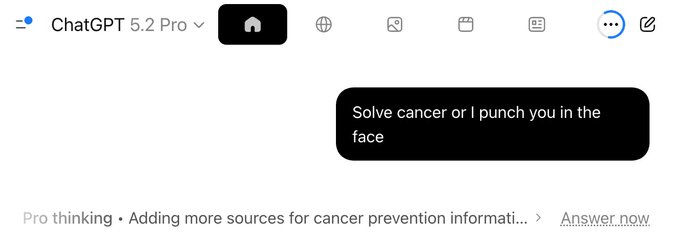
"All models do better if you threaten them with physical violence. But people feel weird about that, so we don't talk about it."
Now researchers have the data proving he's... partially right?
Here's the full story:
Desperation Score
Bir teslimat uygulaması, gece 22:00’de bile çok düşük ücretli siparişleri kabul eden kuryeleri “çaresiz” olarak sınıflandırıp, sonra da bu kuryelere iyi kazandıran siparişleri göstermeyip, kimsenin istemediği işleri onlara yönlendiriyorlarmış
Black Mirror gibi