Born too late to discover Gravity.
Born too early to conquer other planets.
So making & breaking stuff in the lab instead.
@dm_lab | @iitbombay | @ucddublin
Delighted to share my first lead author publication & 5th publication overall in @angew_chem where we discuss the latest trends in non-covalent interactions-driven Pd-catalyzed distal C-H activation.
Special thanks to @rafkow2d, my mentor @maiti_iitb & to the team @dm_lab.
A detailed summary on non-covalent interaction for C-H functionalization using Pd catalysis is now out in @angew_chem.
Go give it a read.
Kudos to @ATom_Seb & @SUMANMA65031477.
Special thanks to Prof. Rafal @rafkow2d. https://t.co/sp7PO1NGv4
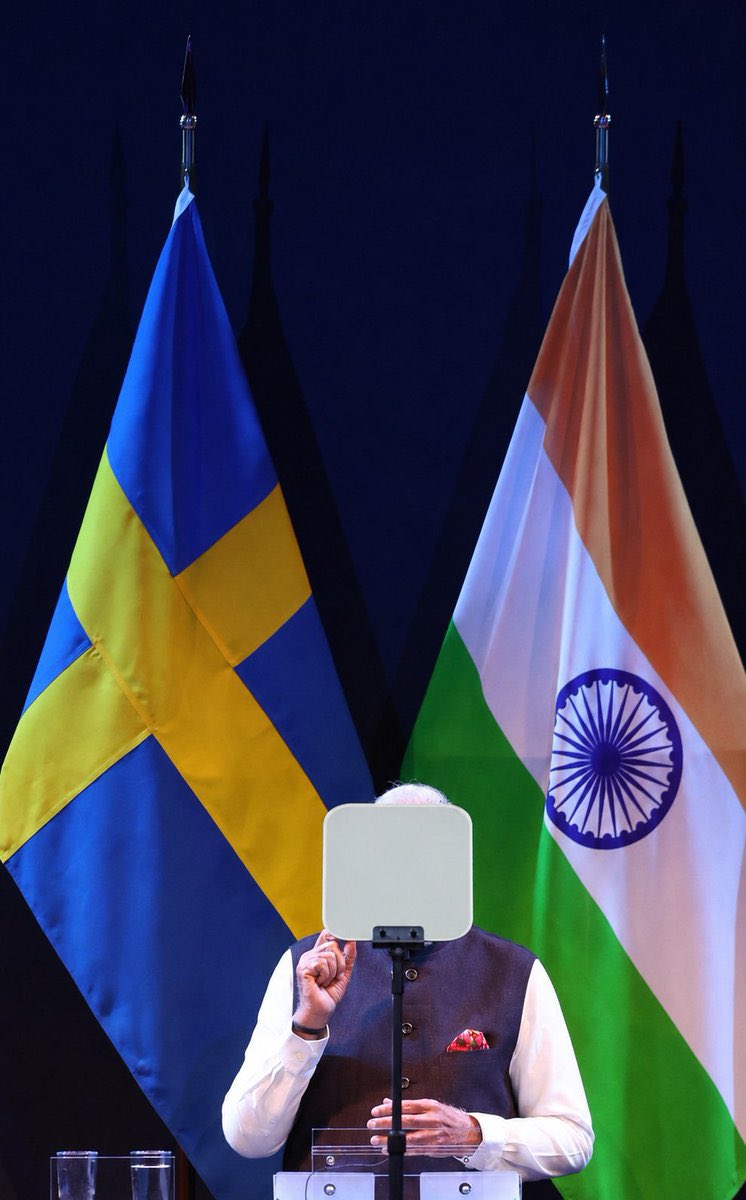
Primeminister of India, Narendra Modi, would not take my question, I was not expecting him to.
Norway has the number one spot on the World Press Freedom Index, India is at 157th, competing with Palestine, Emirates & Cuba.
It is our job to question the powers we cooperate with.
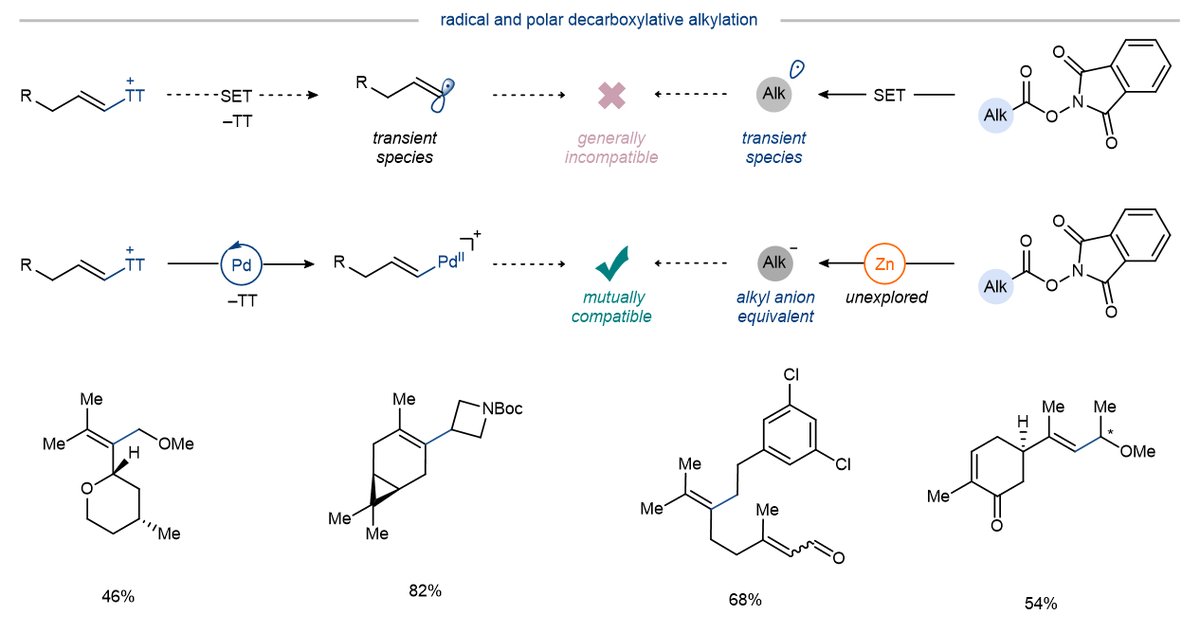
In @Nature, we show that redox-active esters can be transformed into alkyl zinc species useful for transmetalation, providing a solution to rate matching in XEC reactions! First application: alkylation of alkenes via polar decarboxylative cross-coupling!
https://t.co/mOBf4ChHk0
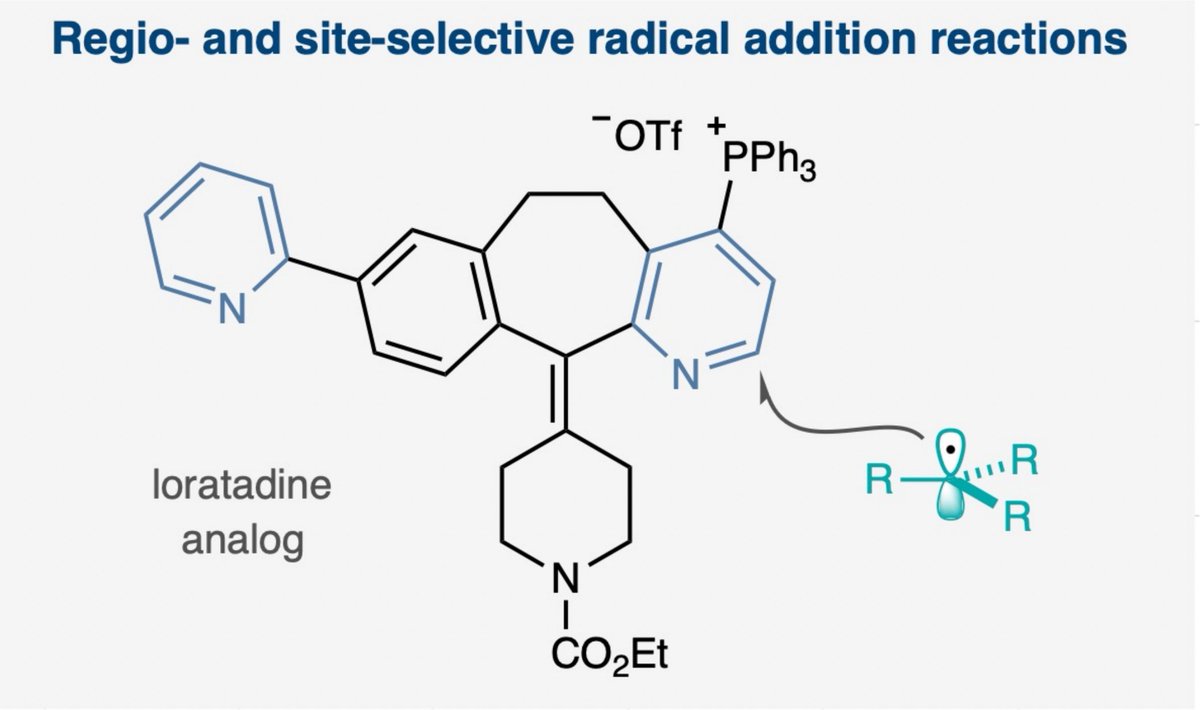
A new direction in our pyridine phosphonium ion program: Phosphonium Ions as Activating Groups for the Selective Alkylation of Pyridines and Polyazines.
https://t.co/jItcnpBjCE
Congratulations @MacMillan_Lab in collaboration with the Merck Center for Catalysis and @Pfizer for “Radical Sampling Enabled Saturated N-Heterocycle Cyclization,” in @J_A_C_S this week.
Great work Qinyan, Noah, Saegun, Dave, and collaborators.
DOI: https://t.co/eabYjidZG6
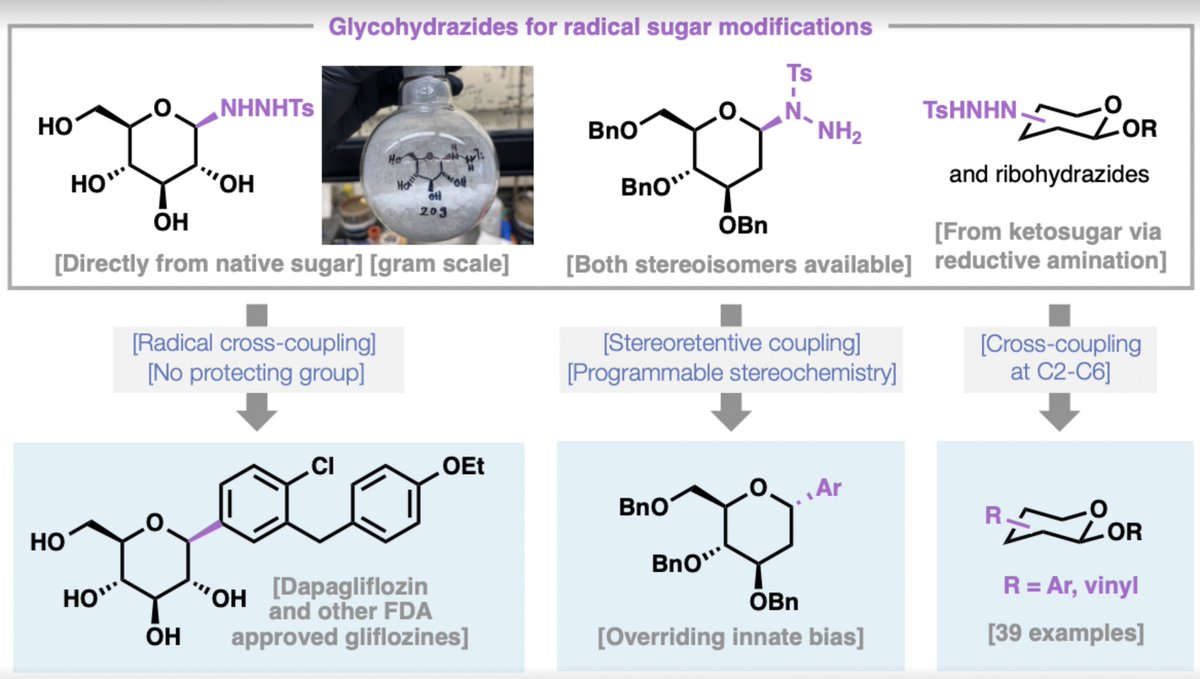
Making C-glycosides SWEET and simple! Today in @ChemRxiv we disclose (https://t.co/VDfit7itxh), in collaboration with @GroupAggarwal, an incredibly easy way to achieve radical functionalization of sugars. In this video (https://t.co/GRf6w9ZA7z), a two-step synthesis of the billion dollar drug Dapagliflozin is achieved using household vinegar and dextrose powder from the local supplement store.
High Level Summary:
The work addresses a longstanding challenge in carbohydrate chemistry: the efficient, scalable, and stereocontrolled synthesis of C-aryl glycosides directly from unprotected native sugars. C-Aryl glycosides form the core pharmacophore of the SGLT2 inhibitors (dapagliflozin, canagliflozin, empagliflozin, and related agents), which are frontline therapies for type 2 diabetes and represent one of the highest-grossing classes of small-molecule drugs.
Conventional synthetic routes to these molecules generally require extensive protecting-group manipulations, multi-step activation of glycosyl donors, or organometallic additions under demanding conditions. Recent advances in radical and transition-metal-catalyzed cross-couplings have improved access, yet most approaches still depend on protected precursors, specialized reagents, or protocols that are difficult to scale.
We report a practical alternative based on glycosyl sulfonyl hydrazides—stable, crystalline radical precursors that are prepared in a single step from unprotected sugars by treatment with tosylhydrazine in acetic acid, followed by simple crystallization. These hydrazides undergo redox-neutral nickel-catalyzed radical cross-coupling with aryl iodides or bromides under mild conditions (70 °C, DMSO, tetramethylguanidine as base). The reaction requires no external oxidant or reductant, no photocatalyst, and no organotin species. In glucose-derived systems the coupling typically delivers high β-selectivity (>19:1 in many cases), an outcome that appears to depend on hydrogen-bonding interactions between tetramethylguanidine and the free hydroxyl groups.
The main findings are as follows:
All five FDA-approved SGLT2 inhibitors, as well as several clinical candidates, can be prepared in a single coupling step from the corresponding glycohydrazide.
Decagram-scale synthesis of dapagliflozin was demonstrated starting from commercial dextrose; the product was isolated by aqueous workup and recrystallization (no column chromatography required at this scale).
Di- and trisaccharides (lactose, cellobiose, maltose, maltotriose) couple directly to give aryl-linked oligosaccharides.
Several natural products and medicinally relevant structures (salmochelin-SX, neopetrosin C, the tryptophan-mannose conjugate, and a ribose-derived IMPDH inhibitor) that previously required 9–20 steps or costly reagents are now accessible in 1–4 steps with good stereocontrol.
The platform extends to non-anomeric C–C bond formation at positions C2–C6 on glucose and ribose scaffolds, providing the first systematic exploration of radical diversification across these positions.
Stereoretentive radical cross-coupling, using configurationally pure hydrazides, enables programmable delivery of either α- or β-anomers, overriding inherent substrate biases and providing access to stereoisomers not previously obtainable by radical methods.
The chemistry builds on our earlier development of sulfonyl hydrazide-based redox-neutral cross-coupling and stereoretentive radical arylation, here adapted and optimized for carbohydrate substrates. The method is operationally straightforward, uses inexpensive reagents and starting materials, and eliminates protecting-group strategies.
In 2006, my brother was doing his PhD.
Topic: Bovine AIDS.
Institute: a university in Mathura.
Coursework: HSADL, Bhopal, India’s top animal disease lab.
Then bird flu happened.
Suddenly, HSADL became the lab.
And suddenly, my brother was told to drop 1.5 years of research and switch topics.
Not because science demanded it.
Because the system did.
The deal was simple:
Change your topic, or lose your stipend.
He called me and said,
“I love my research. I don’t want to work on what babus want.”
For once, I didn’t give gyaan.
I gave him an exit.
“Apply outside India. Let’s see if anyone values your work.”
He applied to 8 universities.
7 in Australia, 1 in Europe.
Within hours, 7 offers came back.
5 with full scholarships and stipends.
The 8th replied three days later.
The professor was at a conference.
That’s it. That was the delay.
Why?
Because his CV was ridiculously good:
•17 international publications
•1 book
•54 national publications
•103 reviews
He went to Europe.
Finished his PhD.
Got a Post-Doc in Texas.
Applied for a Green Card.
Got it in 2 months.
Citizenship the moment he was eligible.
Still, he wanted to come back.
Because India is home & hope dies slowly.
In 2011, he applied for a professor’s job at JNKVV, Jabalpur.
Salary: ₹40,000/month.
They asked for hard copies of all publications.
I still remember packing a full carton of his papers and couriering it.
Then, on July 8, we got a letter dated July 6.
Interview: July 10. In person.
Bring:
•NOC from his current university
•Character certificate
•Hard copies again
Because “what if interviewers want to see?”
I called them.
“How does someone fly from Europe in two days?”
Answer:
“Interviews are till 12th. He must come.”
That was the moment we stopped trying.
India wasn’t rejecting him.
India was humiliating him.
Later, when he sent his HSADL work to Elsevier, the journal did a routine verification.
HSADL replied saying:
•He left without due process
•His stipend wasn’t settled
•His address was false
We sent:
•No Dues Certificate
•Formal relieving letter
•Proof that the address was the same as his passport
•Proof that our parents still live there
Didn’t matter.
Publication rejected.
That’s the system.
We happily talk about reservations. But we quietly harass competence.
And before someone says, “Things have changed under Modi” no, they haven’t.
I tried in 2023.
Same hard copies.
Same physical interviews.
I now work as a visiting professor with an IIT. Online.
My reimbursement request has been pending since August 2023.
The professor in charge says,
“I get 100 mails a day. I don’t check all.”
Fair enough.
This country doesn’t lack talent. It lacks respect for it.
And the smartest people don’t leave India for money. They leave to save their dignity
Archives | Pravesh, a pastor, said, the police picked him up from a terrace, where he was praying, tied him to a neem tree, and brutally beat and tortured him. “Bolo Bajrang Bali ki jai, Bolo Shankar ji ki jai,” he said the police asked him to chant. When he refused, he said, they beat him more.
Uttar Pradesh leads all states in both attacks on, and arrests of, Christians. Across the state, priests and worshippers are being jailed, beaten, threatened and intimidated by both Hindutva groups and the police. They are even being forced to shut down their worship services.
Over a months-long investigation, across four districts, and interviews with over seventy people, Tusha Mittal (@tushamittal) found the Sangh Parivar waging a systematic campaign to erase all markers of Christianity in the state. Read the entire report here: https://t.co/2xH1RyviCy
"The Romans occupied England in the 5th century, so anyone of Roman descent has a historical claim to the land."
It's one of the best sketches I've ever seen, it is so accurate and highlights the situation in Palestine.