What would you suggest we do with empty condos that no one can afford to buy, asks Liberal MP.
Here is an idea: let the prices drop until people can afford them. Welcome to the real world!
NO TO THE CARNEY CONDO BAILOUT
Folks, we told you this was coming, and today the mask is fully off.
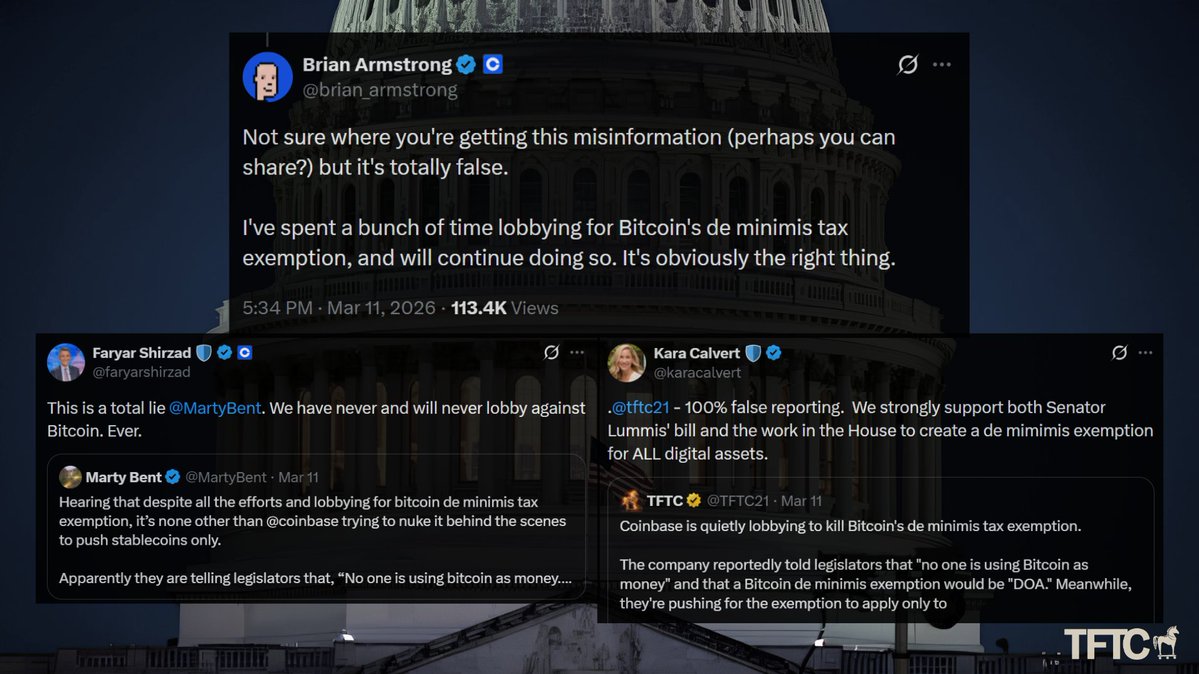
A couple weeks back we reported, based on solid sources, that Coinbase was quietly lobbying to kill a real de minimis tax exemption for Bitcoin while pushing one that applied only to stablecoins like USDC. We laid out the clear incentives in our deep dive. Coinbase made 1.35 billion dollars in stablecoin revenue last year, up 48 percent year over year, almost entirely from yield on the Treasuries backing USDC.
A proper Bitcoin de minimis would let people spend sats on everyday purchases without triggering taxable events on every transaction. That directly competes with their centralized yield machine. We called it what it was. Policy that protects Coinbase’s float rather than advancing neutral Bitcoin adoption.
Brian Armstrong pushed back hard. He called our reporting totally false and misinformation while insisting he was personally lobbying for Bitcoin de minimis. Some accused us of lying or spreading rumors. We stood firm. We offered to have Brian on the TFTC podcast to clear the air. We waited.
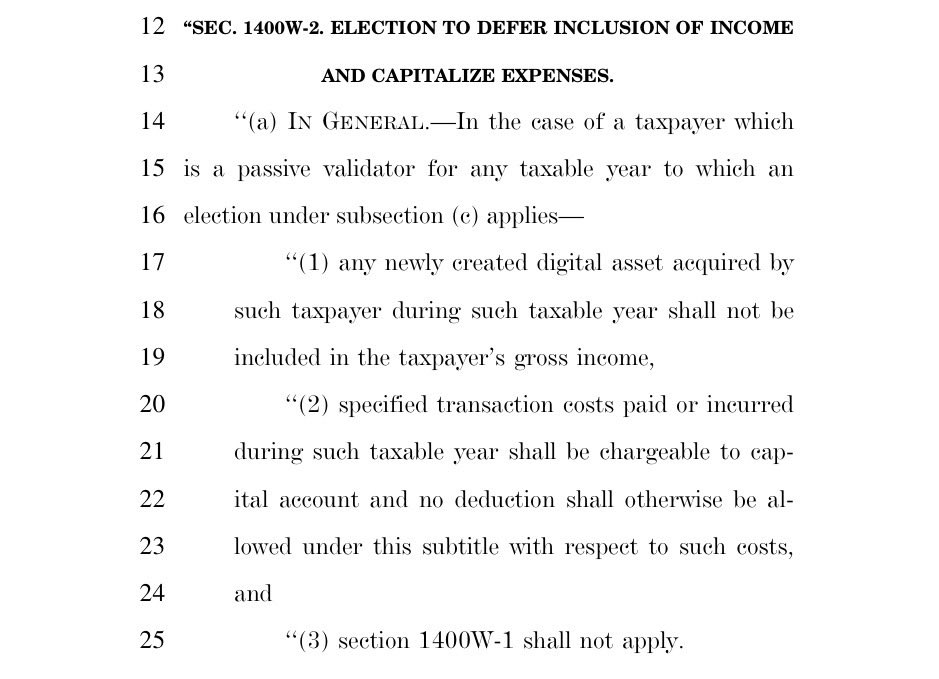
Now the latest draft from Reps. Horsford and Max Miller on the updated PARITY Act framework has dropped. It confirms exactly what we warned about. It gives a de minimis exemption to stablecoins but leaves Bitcoin out entirely. It keeps the punishing double taxation on Bitcoin mining fully intact while carving out relief for passive validation, basically staking. This is not an oversight or sloppy drafting. It abandons any pretense of technology neutrality and deliberately picks winners. Dollar-pegged stables and staking get the breaks, while actual Bitcoin usage as money and Proof-of-Work mining get kneecapped.
Without de minimis for Bitcoin, every small Lightning payment or sat transaction still forces cost-basis tracking and IRS headaches. Paying your plumber in sats or grabbing lunch with Bitcoin remains a taxable event. Stablecoins, being pegged and low-volatility, get an exemption they barely need. The real beneficiary is protecting that massive USDC reserve float and the yield it generates.
Meanwhile, American Bitcoin miners, already operating in one of the toughest, most capital- and energy-intensive industries, face continued double taxation while staking gets a pass. That is not neutral policy. It is industrial policy against domestic Bitcoin mining at a time when we should be leaning into energy abundance and securing the hardest monetary network.
The Bitcoin Policy Institute is releasing a full statement soon, and we fully back the call for strong community pushback. Every Bitcoiner needs to contact their reps and make it politically radioactive to sideline Bitcoin while handing carve-outs to stables and staking. This language slows real adoption, entrenches custodians, and weakens American Bitcoin infrastructure.
We weren’t lying. Our sources weren’t lying. The draft proves the reporting was on target. Those who rushed to call it misinformation owe the community some honest reflection.
Brian, if you’re still open to that conversation, the invitation stands. Come on the podcast. No spin, just walk us through how this draft lines up with your stated support for Bitcoin de minimis. The mic is warm.
This fight isn’t over. Bitcoin doesn’t need permission, but bad policy can delay sovereign adoption and punish the miners securing the network. We’re here to protect the protocol and the right of individuals to use sound money without turning every transaction into a compliance nightmare.
Stay sovereign. Stack sats. Use Bitcoin as money anyway. Call your reps today.
Even more concerning news today on the Bitcoin tax front. We’re going to need the Cyber Hornets for this one. 👇
Today’s new draft **leaves the double taxation on bitcoin mining in place** and only provides relief to staking.
So now the proposal is:
- De minimis for stablecoins but not Bitcoin
- Fixing tax treatment for “passive validation” (I.e. staking) but not Bitcoin mining
This contradicts all prior proposals on this issue. This is not tech neutral and picks winners and losers for no reason.
Full statement from BPI coming soon about @RepHorsford and @RepMaxMiller’s draft.
We need strong community push back to show that this language sets America and Bitcoin back.
The people who stay ahead in an industry aren't consuming the most content — they've got a clean filter, broad view, and act on what they learn.
https://t.co/KngdtzEDRd
Bitcoin that has been finally forfeited to the federal government will be the foundation of the Strategic Bitcoin Reserve that President Trump established in his March Executive Order.
In addition, Treasury is committed to exploring budget-neutral pathways to acquire more Bitcoin to expand the reserve, and to execute on the President’s promise to make the United States the “Bitcoin superpower of the world.”
@_The_Prophet__@BitcoinPierre I think the future Bitcoin-denominated economy will result in higher quality goods. Products will be built to last. After all, who would want to part with their precious Bitcoin for a throwaway plastic bottle of water, or fast fashion? I imagine a future renaissance in quality.
I would measure how much wealth Musk created that never existed before.
Then I'd calculate what percentage of that wealth he kept.
Then I'd figure out what percentage of it he spent on his own lifestyle versus paid in taxes.
Then I'd calculate the incomes of the employees of his companies and their impact on the economy.
Then I'd look at the societal benefits of his companies because it's not all about cash.
Then I'd compare to the benefits Bernie Sanders brought to America. (Mostly complaining.)