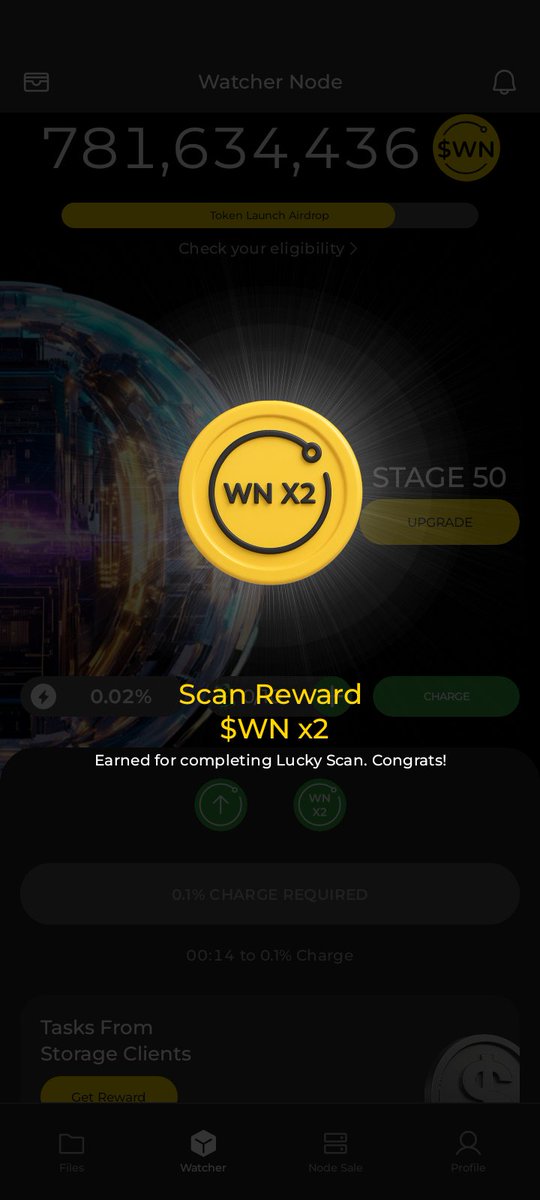
🚀 Validating data on decentralized storage network & earning rewards! Join me for airdrop + more from DeNet’s storage clients!
📲 Get the free app: https://t.co/W4cWhJLCxW
#DeNet#WatcherNode
Denet🎓 Finished the Web 3.0 Basic Course with DeNet!
Now I’m a certified user and have confirmed my role in the DeNet ecosystem. This gives me direct access to new opportunities and eligibility for the Main Airdrop.
Join me, learn Web 3.0, and unlock your own role in the futur
🚀 Validating data on decentralized storage network & earning rewards! Join me for airdrop + more from DeNet’s storage clients!
📲 Get the free app: https://t.co/W4cWhJLCxW
#DeNet#WatcherNode
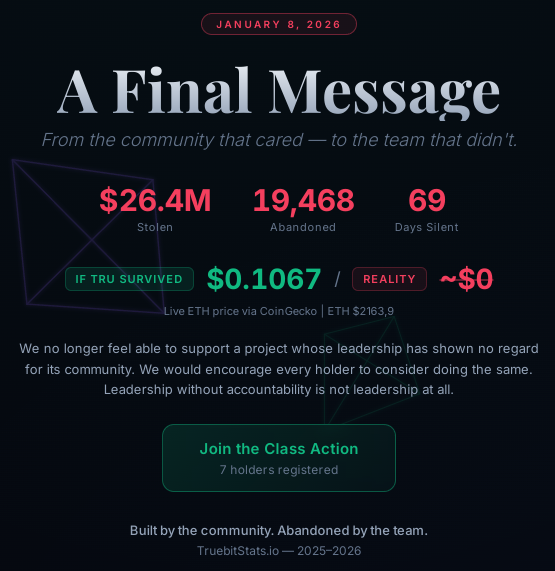
A note from @ShaneOnChain (once one of #Truebit's biggest supporters, now disappointed by their lack of communication (like all of us 🙁)).
👉https://t.co/08Ehy2hx6A
🚀 Big win on DeNet! My Watcher Node has just detected a file ready for extra copies in the DeNet Storage network, earning me some token rewards!
📱💰 Join with my link and start earning: https://t.co/W4cWhJLCxW
Enter my code: 0x33690b1472a6f1f2655a530fb670f09c31d316cb
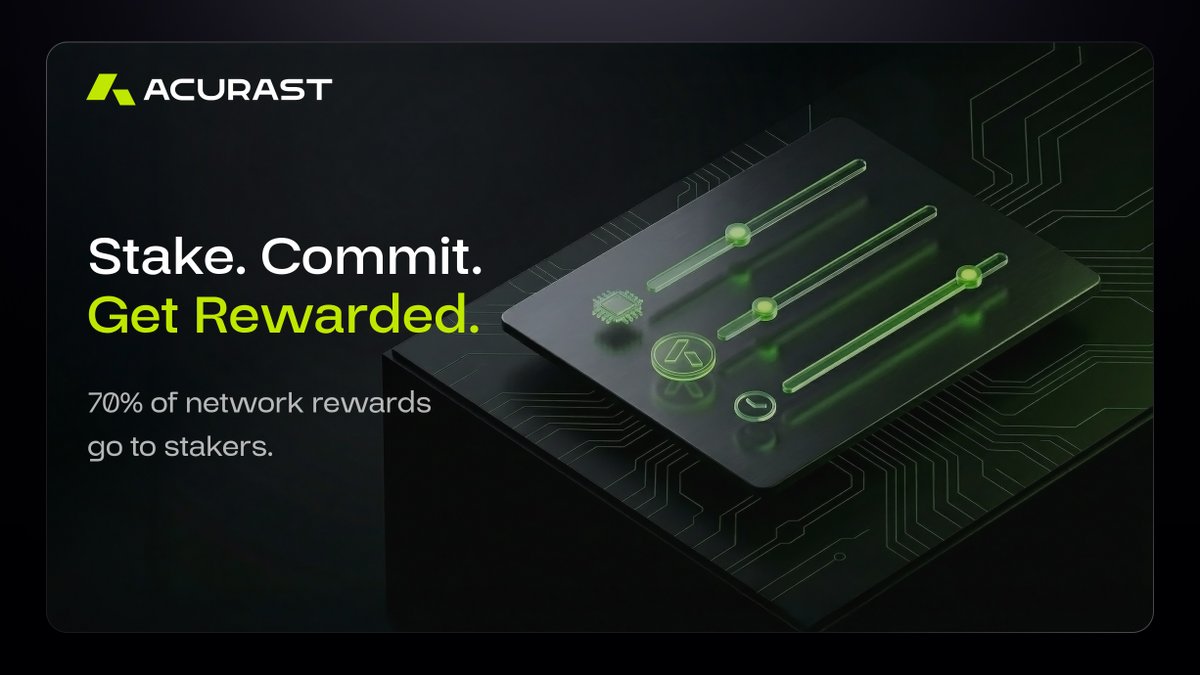
How staking works on Acurast, the simple version.
1. 70% of the rewards distributed on the Acurast network go to participants who stake. The largest share of the rewards.
2. When you start a stake, you choose your compute amount, the amount of tokens ‘at stake’ and the cooldown period: the time you wait to unlock your stake after you decide to ‘unstake’.
3. No hardware? No problem! You can also delegate a stake to someone with the hardware using your tokens. And you still get a portion of the rewards!
4. Staking rewards can be liquid, or you can choose to add the rewards to your existing stake to build up your rewards for the long term.
5. Uptime matters and consistency is rewarded. If you fail to commit to the promised compute, you will be slashed. Otherwise, keep getting those extra rewards and help the network become more reliable!
Want to start? Here's the path:
1. Download the Acurast Processor app and connect your phone
2. Go to staking on the Acurast Hub
3. Fill in the parameters
4. Start staking
5. Monitor your stake health and collect rewards!
Video walkthrough:
https://t.co/yjXeHK4n2W
Full guide:
https://t.co/yGapHM3vAl
Questions? Ask below!
We've been building for exactly this moment.
Consumer chips can do real AI work. Someone just proved it, full AI training on Apple's Neural Engine. 80x more efficient than NVIDIA's best hardware.
Every iPhone since 2017 carries that architecture.
Acurast has 230,000 smartphones networked across 140 countries. Distributed. Running.
The biggest compute network in the world won't be built. It already exists. @Acurast 👀
More updates on devs.truebit 👀❕
Mainly API & Dynamic Oracles
https://t.co/uH70akmPhb
Found by @Richarddd102 👏
#Truebit also work dynamically on software ⬇️
Dear @JasonTeutsch and @Truebitprotocol team.
In the event that recovering the stolen funds is unsuccessful, will you prepare a plan to restore the functionality and value of the $TRU token?
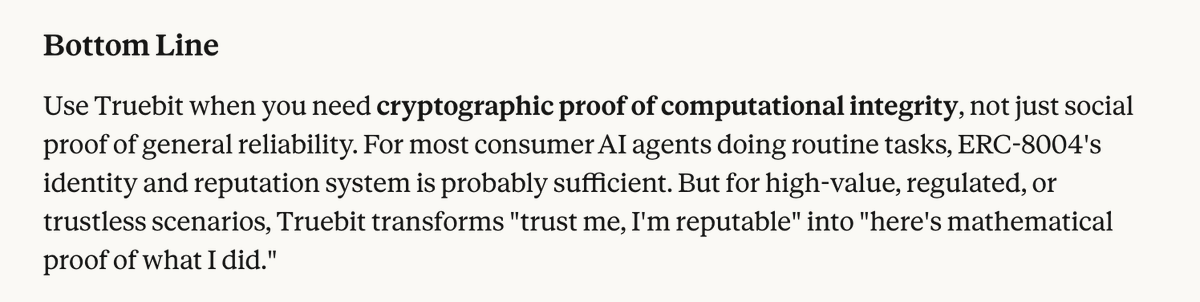
Truebit can provide verifiable proof that your AI agent actually did what it claims to have done - not just that it exists and has a reputation. I.e. 8004 is reputation based (does not include cryptographic proof of computational integrity)
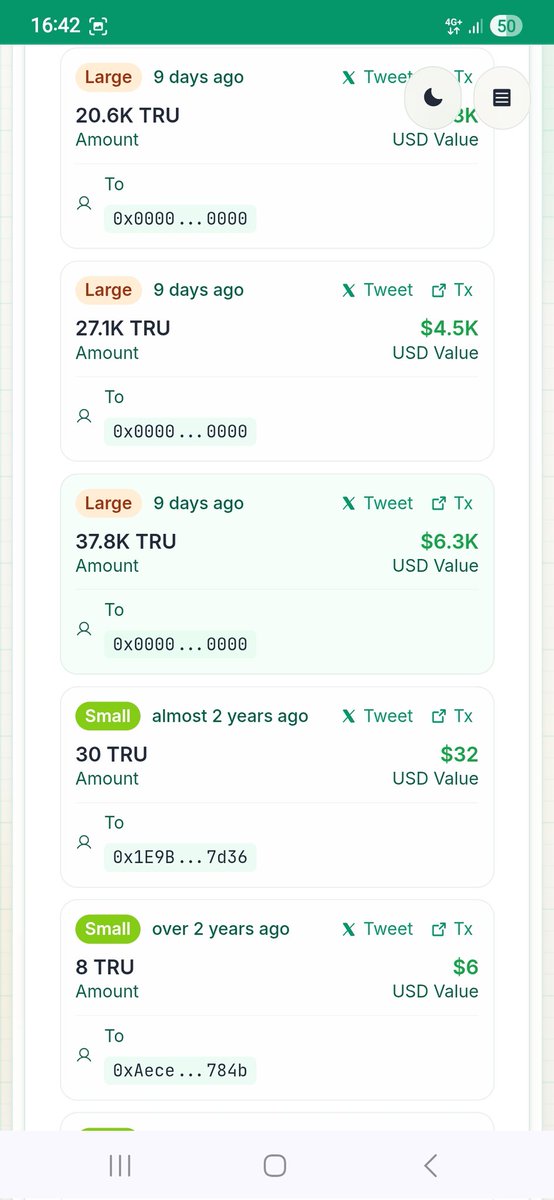
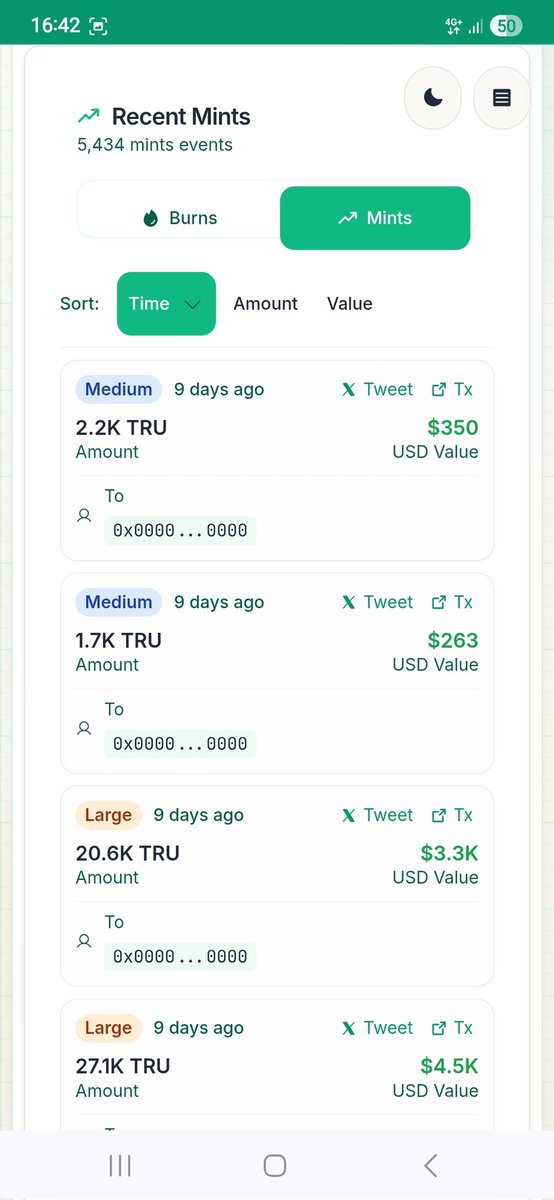
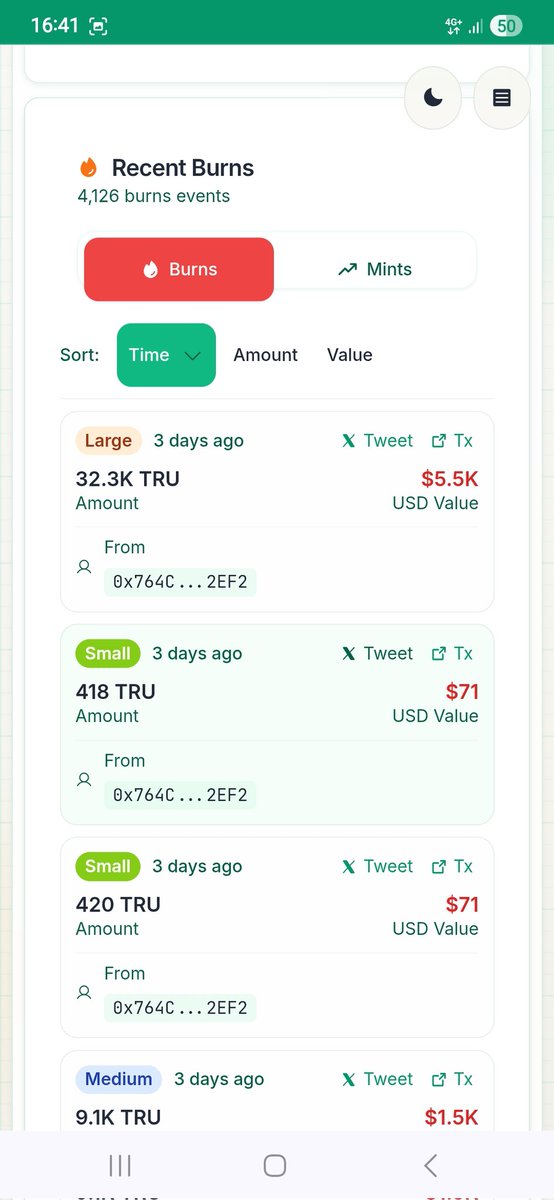
We May Be Witnessing Truebit’s Tokenomics Go Live Quietly
Check for yourself https://t.co/KkWkBhqIF2
Overview page token Burn and Mints
No announcement.
No countdown.
No marketing campaign.
Just on-chain behavior.
Over the past ±9 days, something subtle but important appears to have changed in the Truebit ecosystem: the tokenomics look like they’ve moved from theoretical to operational.
Not flipped “on” loudly but routed into real usage.
The question everyone keeps asking
“Why would anyone mint TRU on the bonding curve if it’s cheaper on a DEX at ~$0.16?”
That question only makes sense if you assume:
minting is optional
users are price-optimizing traders
the protocol is idle
Those assumptions are likely wrong.
What the bonding curve is actually for
The bonding curve is not a retail convenience feature.
It exists to:
guarantee protocol access
ensure deterministic pricing for compute
decouple usage from market liquidity
enforce burn mechanics tied to real work
If you are:
an application
an enterprise
an AVS
a system that must execute a job
You don’t speculate.
You settle.
And you settle through the purchase contract, not Uniswap.
What “soft-on” tokenomics looks like
Infrastructure protocols don’t announce when economics go live. They:
route real jobs first
limit initial volume
observe system behavior
avoid attention
Early signs look like:
small, consistent mint activity
usage-driven timing (not trader timing)
no incentive programs
no hype
To Crypto Twitter, this looks like “nothing happened.”
To anyone watching the mechanism, it looks like ignition.
Why price hasn’t reacted
Because:
demand is still low
burns are small
DEX liquidity is still dominant
no narrative has been pushed
That’s normal.
Token price always lags utility activation, sometimes by months.
The important distinction
This is not:
“full adoption”
“price discovery”
“speculation season”
This is:
production economics entering live use
the first real test of mint → burn dynamics
the protocol moving from promise to plumbing
Why this matters long-term
Once real workloads scale:
minting becomes non-optional
burns accelerate non-linearly
DEX price becomes irrelevant
supply dynamics tighten mechanically
At that point, there is no announcement either just confusion about how price moved so fast.
Bottom line
If tokenomics truly began routing real jobs ~9 days ago, then most of the market is already late just unaware of it.
That’s how infrastructure wins:
quietly
unannounced
boring on the surface
irreversible underneath
Watch the chain, not the noise
Alright frens, I didn't want to go down this road, but here’s the REKT PLEB GUIDE to TRU Utility – The Verify Edition
This is for people who only care about 'number go up' and are allergic to documentation, and to those that keep tagging me with "token not needed" messages.
1) “Is the token actually used, or is it just a relic from the original design?”
This is from the FAQ: “The primary purpose of the TRU token is to secure the operation of the Truebit Node Network. Before Nodes can join the Truebit Verify network, they must lock up (stake) TRU tokens as collateral.”
This is in the node operator part of the dev docs: "Running a Truebit node requires 2,000 TRU tokens to be staked. This stake is essential for the slashing and reward mechanism that ensures honest participation...”
This is from the Terms of Use on the official website: “The TRU Token is intended solely to facilitate certain functionality within the Services or the Protocol...”
This means that in the new platform: No TRU means no node, and no node means no share of the verification pie. TRU is therefore the collateral that keeps the network honest. That is the OPPOSITE of "token not needed."
2) “Isn’t this just fiat SaaS with a pet rock token?”
Yes and No. The documentation is explicit when it comes to the split.
This is also from the FAQ page: “Nodes will receive rewards for their work in stablecoin.”
As I said in my GA post, the yield is in stables, which is predictable and normie-friendly. However, the risk and access is in TRU, you have to put TRU down to play the game. That's deliberate, as people and enterprises running nodes want predicatble bills in fiat, not a potentially volatile token. However, the "levered bet" on the network demand is moved to the TRU holders and node operators via the staking.
More from the FAQ: “Task Payment Option (coming soon): In the near future, it will be possible to use TRU tokens to pay for Truebit Developer and Custom subscriptions."
The Terms of Use repeat this: “We may…….accept TRU Tokens as payment for subscriptions and other Platform fees.”
This means TRU is mandatory for security and node staking, and optional but REAL for paying for access (fees). Anyone saying this is pure fiat SaaS alongside a defunct token needs to re-read their docs.
3. “Why is supply so high, wen burn and wen low float?”
This is from the original Truebit OS article (which Verify links to): “TRU tokens are created and destroyed over time according to cumulative demand. Users can purchase or retire TRU tokens in exchange for ETH. Each Truebit task also burns TRU tokens.”
and also this: “Each purchase transaction deposits some ETH into a reserve escrow.....some ETH is withdrawn from the reserve through each retire transaction.”
This basically means that mints (via the OS purchase contract) require paying ETH into a reserve, the retires send TRU back and pull ETH out, meaning the TRU is gone from circulation. Tasks themselves also burn TRU as part of their fee logic. Over the years, thanks to the diligence of some community members such as @GrimeChain we have clarified that retiring tokens does not lower or raise mint or retire, but minting tokens increases both mint and retire.
So the updated reality is that retiring doesn’t move the OS price band, it just deletes tokens. Minting is expensive (you pay ETH at OS mint price), so with TRU being cheap on Uniswap, nobody sane is going to want to mint when they can just buy existing TRU. The supply is elastic downward via the OS retire (arb) and the task burns.
Don't forget, the current high supply of approximately 164M tokens is a historical scar from the April-May 2021 mint mania, but the system design will always make new mints expensive, and lets anyone who cares about price burn the float for profit when the Uniswap price is < retire price.
For a speculator, that’s structurally better than a fixed, forever-inflating emissions schedule (like a lot of the vapourware tokens you all seem to love).
Also, someone asked in the Telegram group if maybe Truebit themselves were involved in the burning in order to reduce the float that should never have existed. Maybe, maybe not, but you don’t need conspiracies to explain it, this system is cleverly and explicitly designed so that speculative mispricing gets corrected by burning away surplus TRU while paying arbitrageurs in ETH.
4) “Come on TruebitGod, the token is not needed"
Let’s unpack the official statements:
Utility-only by design
“TRU Token is intended solely to facilitate certain functionality within the Services or the Protocol and does not.....confer any ownership interest, right to profits, equity, or governance....”
Translation: this isn’t an equity cosplay, it’s meant to be a tool inside the system, think back to the OS docs, "created and destroyed over time according to cumulative demand."
Security-critical asset
I'll just re-paste this quote - “Running a Truebit node requires 2,000 TRU tokens to be staked. This stake is essential for the slashing and reward mechanism”
Payment and rewards rail
“Node Operators may be paid in TRU Tokens at our discretion” and “We may....accept TRU Tokens as payment for subscriptions and other Platform fees.”
If TRU were truly “not needed,” you’d expect no mandatory stake, no explicit TRU payment option, and no language about facilitating functionality inside the Protocol. Instead, they do the opposite by baking TRU into the staking, rewards, and the (soon-to-be) task payments, while keeping enterprise billing fiat-friendly.
5) “Okay ser, but token is secondary to fiat SaaS”
Again, the FAQ spells out the split: “The primary purpose of the TRU token is to secure the operation of the Truebit Node Network...Nodes will receive rewards for their work in stablecoin.”
Think of it like this:
a] Fiat/stables = cashflow layer for enterprises and node operators.
b] TRU = risk + security + access layer.
c] Nodes are basically delta-neutral yield farms where you earn stables, but you must hold 2,000 TRU at risk (slashing and price fluctuations).
d] As the demand for verification grows, more nodes are needed (or higher stake per node) and that will mean more TRU gets locked just to keep the machine running.
And if they lean into the whole task payment option it means that devs/customers who want to pay in TRU add direct demand on top of that. So yes, fiat is front-and-centre. But that doesn’t make TRU irrelevant, it makes it the leveraged back-end instrument whose job is to:
a] Secure the network.
b] Gate participation.
c] Potentially soak up some of the value flow (if any TRU payments are burned/retired/treasured instead of instantly market sold).
6) “What if they just turn TRU off?”
The Protocol section of the Terms is brutally honest, they may “cease issuing TRU Tokens, change the software which issues and controls them, or disable them at any time.”
And they tell us that we bear “all risk of loss associated with acquiring, holding, and/or using the TRU Token.”
That's a legal part they have to include. I believe the full sheet will be lifted once the Market Structure/Clarity Act is done and dusted early in 2026. The important nuance is that they still chose to:
a] Keep the OS mint/retire docs live and linked via the new GA docs.
b] Require 2,000 TRU for node staking.
c] Advertise TRU task payments as “coming soon."
d] Explicitly mention TRU in relation to node rewards and platform fees.
If the plan was “TRU is dead in this new system, we’re pure SaaS now, sorry,” then the clean legal move would be no new TRU docs, no staking requirement, and definitely no “pay with TRU” teaser on the website.
Instead, they’re doing the opposite while telling you in the ToS that they can change this later if regulators or reality force them to. So yes, the risk is real but the current architecture choices are pointing toward using TRU, not burying it.
7) "Okay TruebitGod, but wen numba go up?
I DESPISE even indirectly talking about price, but for a pure price, no-morals pleb, the big levers from the docs are:
Elastic supply with real burns
a] “TRU tokens are created and destroyed over time according to cumulative demand.”
b] Users can “purchase or retire TRU tokens in exchange for ETH.”
c] “Each Truebit task also burns TRU tokens.”
So structurally it's the bloated supply from the 2021 mint mania now coming up against no new mints + retires + burns, basically the supply is shrinking as usage and arbitrage both do their thing.
The Staking
a] Each node needs 2,000 TRU staked.
b] That stake is tied to a “slashing and reward mechanism that ensures honest participation.”
c] More adoption is going to mean more nodes and more capacity, which will mean more TRU will end up being locked.
If TRU is cheap then the cost of an attack is going to be low. So long-term, security pressure itself argues for either:
a] Higher TRU price.
or
b] Higher stake per node.
Either way, security means implicit buy pressure.
TRU as an optional fee asset
The best case for the price is some portion of those TRU fees are burned, retired, or held, not market-sold. Even if they just pass them to node operators it will be okay because node ops already need stake, so TRU rewards and TRU staking can form a closed loop of demand among people who actually run the network.
Final thought
Please stop commenting on posts about TRU and price, it's embarrassing. Let's not be like the rest of the cryptosphere, this is a unique protocol with incredibly well designed mechanics. It's all quite groundbreaking in my humble opinion.
The point is unlike most casino chips in this market, TRU has a credible path to being priced by work and risk, not just by tweets and hope, and the company’s own docs, not community copium, are what put it there.
#AI #VerifiableComputation #Truebit #ProgrammableTrust #OnChainTrust #TrustlessProofs #Web3Infra #ERC3643 #RWAs #JustVerifyIt #TruebitVerify #TRU #AgeOfVerification #VerificationLayer