Socially anxious, socially awkward social hand grenade. I’m just here to watch everybody else have fun. I’m apparently the quiet but dangerous one 🤷🏻♂️
Westminster may finally be about to have the argument it has spent 40 years avoiding.
If Andy Burnham returns to Parliament, the political class will know how to cover it. A leadership drama. Who is up, who is down, whether Keir Starmer can survive, whether Labour is once again turning inward. The familiar machinery of Westminster psychodrama will whirr into life.
That framing misses the larger point. Burnham’s possible return matters not because of what it says about Labour’s leadership, but because of what it reveals about the British state: what it can still do, what it has forgotten how to do, and what kind of country it must become if it is serious about resilience.
Britain is finally having a more serious conversation about national security. The Strategic Defence Review, the pivot back towards Europe, the recognition that hybrid warfare turns citizens, infrastructure and civic institutions into part of the front line: all of it marks a real shift in how the state thinks about its own survival.
But at the centre of that conversation lies a question that the defence establishment, and most of Westminster, still does not want to answer. What kind of society do you need to be before resilience is possible?
Finland is now the model everyone cites. Comprehensive security. Whole-of-society defence. Civilian preparedness woven into military planning. British strategists admire the Finnish system and ask how it might be copied. But the admiration stops short of the uncomfortable question: why does it work there?
The answer is not geography or history or some mysterious quality of Finnish national character. It is structural. Nearly 80% of Finns say they would defend their country if attacked. In Britain, the figure is closer to 33%. That gap is not an accident. It exists because Finland has spent decades building a society in which people have a genuine stake in what they are being asked to defend. Energy is affordable. Housing is available. Public services function. Institutions command trust. The Nordic welfare state is not a sentimental add-on to Finnish security policy. It is the foundation of it. You cannot ask people to defend a country that does not work for them.
Britain has spent 40 years building the opposite. The privatisation of essentials – energy, water, transport, housing – transferred wealth upwards from households to shareholders while making the basics of everyday life more expensive. The state, stripped of the tools to control costs at source, has been reduced to compensating after the fact.
Out of every pound the Government spends on housing, 88p goes to subsidising private rents. Just 12p goes to building homes. When energy prices spiked in 2022, the Government spent £40bn in a single winter cushioning the blow, not because it had a resilient energy system but because it lacked one. Debt interest now consumes more than £100bn a year. Britain has the highest debt servicing costs in the G7: the compounding price of financing failure rather than eliminating it at source.
This is what bond market dependency actually looks like. It is not an abstract fiscal condition. It is the consequence of a state that has been stripped of the supply-side tools that would let it cure the problems it now pays, indefinitely, to manage. And here is the paradox the Treasury refuses to confront. The countries that borrow most cheaply are often those that have retained the public investment model Britain abandoned. The spread between UK and Dutch borrowing costs has widened sharply not because markets fear public investment, but because they have lost confidence in a model that borrows to subsidise private failure while never addressing its causes.
This is the connection Britain’s defence debate is missing. The familiar framing, that social spending is what must be sacrificed to meet the NATO target, is not merely politically toxic. It is strategically illiterate. Cutting the foundations of social cohesion to fund the hardware of national defence is self-defeating. You end up with planes and no pilots, submarines and no crew, an army that cannot recruit because the society it is meant to protect has stopped believing in itself.
I think Burnham understands this. That is why his programme is more interesting than the leadership gossip suggests. What he has been building in Greater Manchester – public control of transport, expanded social housing, investment in the productive foundations of the city economy – is not a nostalgic rerun of postwar nationalisation. It is a proof of concept for a different kind of state.
The Bee Network is the most visible example, but the argument behind it travels. A state that can shape markets is not condemned to subsidise their failures. A state that produces affordable energy through public generation does not need to spend tens of billions cushioning every price shock. A state with a serious public housebuilding programme does not need housing benefit to rise endlessly in line with private rents. A state that builds institutions people can see, use and trust begins to restore the civic confidence on which resilience depends.
The real constraint on Britain is not money. It is capacity: the workers, institutions, supply chains and public purpose needed to turn national will into national renewal. Britain’s tragedy is not that it has run out of money. It is that after 40 years of hollowing out the state, it has made itself less able to act.
Burnham’s critics will reach for the familiar warning. Borrow more, spend more, spook the gilt markets, repeat the Truss disaster. But this misunderstands both the problem and the opportunity.
Bond markets do not have ideological preferences. They have functional ones. They prefer clarity, credible revenue streams, productive investment, and a state with a plan. What they punish is not public ambition but incoherence. A properly designed productive state programme would not be a leap into fiscal fantasy. It would be an attempt to end the much costlier fantasy that Britain can keep borrowing to compensate for broken markets while refusing to repair them.
The defence conversation and the economic conversation need to become the same conversation. Finland did not build national resilience by choosing between welfare and security. It built resilience by understanding that they are inseparable: that a country in which the basics work, where people trust one another and the institutions around them, is one that can face danger with something more than anxiety.
That is the deeper argument Burnham represents. Westminster will be tempted to treat him as a leadership story. It should resist the temptation. The question is not whether Burnham can return to parliament. It is whether Britain can return to the idea that the state should make life work. Because a country that cannot command the confidence of its people cannot truly defend itself.
Pleased to share my favorite high-resolution capture of the Artemis II launch- the moment the SLS is clearing the tower, captured by a sound-triggered camera placed near the pad.
I'll have prints linked in my bio for this one, and here's a short thread about how it was captured
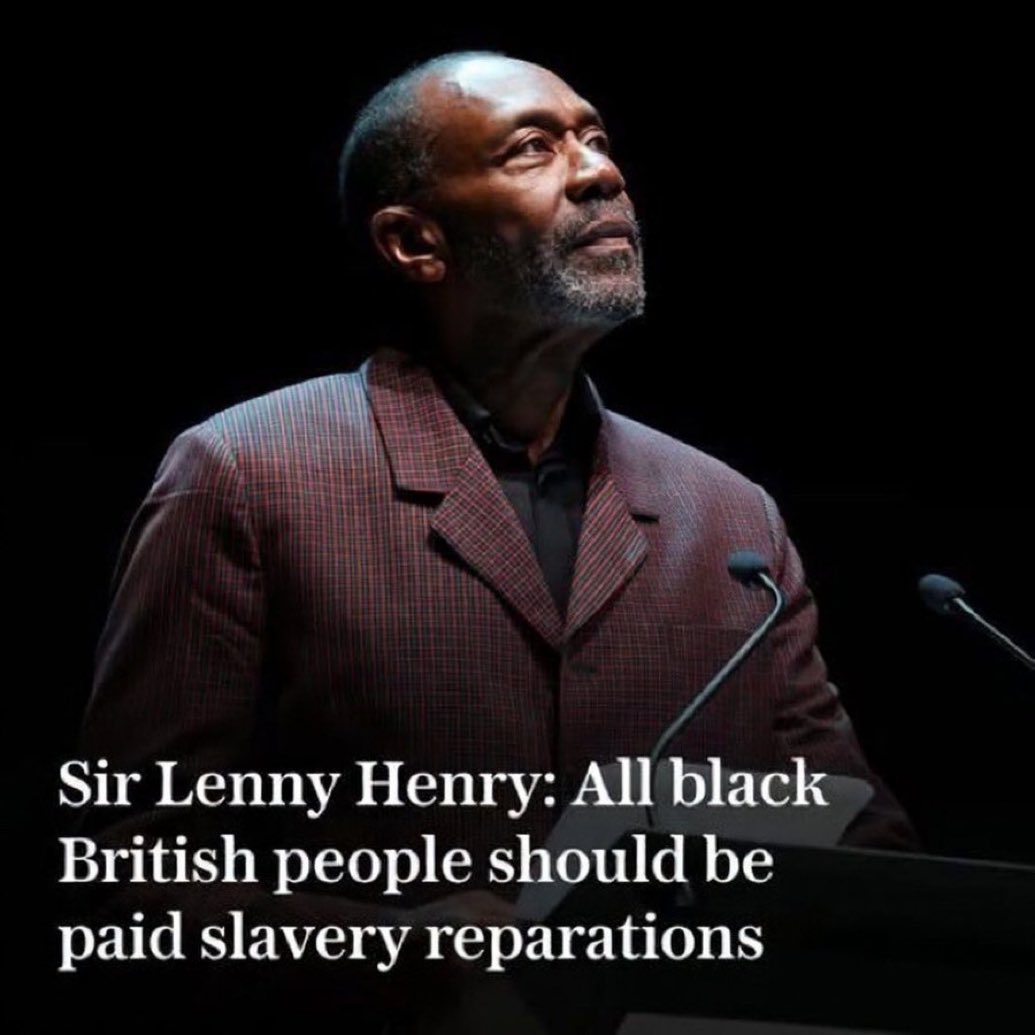
Slave reparations!
I’m all in!
I’ve decided to personally gift £1 million Sterling to every single person my family ever enslaved.
Please form an orderly queue and bring:
• Ironclad documents proving my family personally enslaved you (bonus points if they include my great-great-grandpa’s signature and a Polaroid).
• Your birth certificate proving you were born before Britain abolished slavery on 1 August 1834.
• Proof you’re still alive (the gift can only be claimed in person, no ghosts, no estates, no “my ancestor told me so”).
Oh, and while you’re at it, maybe swing by the local cemetery with a shovel. I’m sure those poor souls buried since the 1800s would appreciate being dug up for their cheque. They’ve waited long enough, right?
Look, if we’re doing “reparations” for historical slavery, let’s do it properly: only to the actual victims. Not their great-great-great-grandchildren who were born free in the 20th or 21st century, sipping oat milk lattes while tweeting about “trauma.”
This isn’t justice, it’s a cosmic-level grift.
It’s like demanding the Roman Empire pay for the roads they built because some distant ancestor got conquered by Caesar. Or billing modern Italians for every Gaul who got turned into a slave 2,000 years ago.
Newsflash: No living person in Britain today was a slave under British law, and no living person in Britain today owned slaves under British law.
The people who suffered are dead. The people who profited are dead.
Their descendants, Black, White, Asian, mixed, whatever had zero say in it.
Chasing “reparations” from random taxpayers (including the descendants of abolitionists, coal miners, and people who arrived after 1834) isn’t healing historical wounds. It’s creating new ones while opening the most hilarious Pandora’s box in human history:
• Should Ireland demand reparations from Britain for the Potato Famine?
• Should Britain demand reparations from Denmark for the Viking slave raids?
• Should Italians bill Mongols for the sack of Baghdad?
• Should every African nation start invoicing each other for the centuries of tribal warfare and slave-trading that predated (and supplied) the transatlantic trade?
Where does the grievance chain end? 1066? The Bronze Age?
Lucy the Australopithecus getting stiffed on her cave rent?
Slavery was a universal human horror, practised by every civilisation from the Egyptians to the Aztecs to the Arabs to the Africans themselves (who sold millions into the trade).
Britain didn’t invent it.
Britain ended it, at massive cost, with the Royal Navy spending decades hunting slave ships while other empires kept right on going.
Demanding cash from people who never owned slaves, to give to people who were never slaves, isn’t “reparations.” It’s retroactive time-travel cosplay with other people’s money. It’s the ultimate participation trophy for historical victimhood: “My ancestor suffered, therefore I deserve a payout… even though I live in a free society with more opportunity than 99.9% of humans who ever lived.”
If you want actual justice, how about this radical idea:
Stop obsessing over who owes whom from 200 years ago, and start judging people by what they do today. Work hard. Build. Create. Don’t inherit grievances like their family heirlooms.
The desire for slavery reparations isn’t righteous anger. It’s lazy, entitled, historically illiterate greed dressed up as moral superiority, demanding a lottery win for a suffering you never endured, from people who never caused it.
My £1 million offer stands.
Just bring the paperwork.
And a time machine.
#Reparations
#Slavery
Oh, and fcuk you Lenny Henry.
The recent Magellan deep sea expedition images of 'Bismarck'. The 16 inch shell from 'Rodney' that hit Bruno turret is just jaw dropping! @WeHaveWaysPod
I’m not a natural presenter in this environment, so trying some new stuff.
I’m far more comfortable thinking, observing, and writing than performing for a camera. So this one felt a little awkward to record.
But places like this matter.
This is Checkerboard Hill in Hong Kong, a quiet landmark that once sat at the heart of one of aviation’s most demanding approaches. For decades, wide-body aircraft, including the Boeing 747, passed this point on the way into Kai Tak. Not because it was dramatic, but because it demanded judgement, precision, and discipline.
Aviation history doesn’t just live in books or museums. It lives in geography. In decisions. In places where design, culture, and human judgement intersect.
I wanted to capture that, even if the delivery isn’t perfect.
The 747 and Hong Kong grew up together, both shaping how the world connects. That story, and others like it, are why I wrote JUMBO. Not as nostalgia, but as an attempt to understand how one aeroplane quietly changed the world.
Sometimes it’s worth pressing record even when it feels uncomfortable.
#aviationhistory #hongkong #boeing747 #judgement #storytelling #jumbo
Unique kinetic installation in Germany's Sprengel Museum
A buoy swinging in the air, it is precisely synchronized with its real double somewhere in the Atlantic and repeats its walking on the waves.
https://t.co/Opk3voVAbG
People will clown a 13-minute mile but praise someone for “starting over again Monday.”
Running slow isn’t the problem. Running your mouth is.
Progress is progress.
If someone is out there grinding, sweating, fighting to be 1% better—they’re already lapping every critic parked on the couch with a bag of opinions and zero receipts.
Respect the hustle, even if it’s slow.
@nicolalalalala 3 full eggs, 3 egg yolks, pecorino cheese and Parmesan, had to use pancetta as I can’t find guanciale anywhere, bit of pasta water and chuck it in the pot!
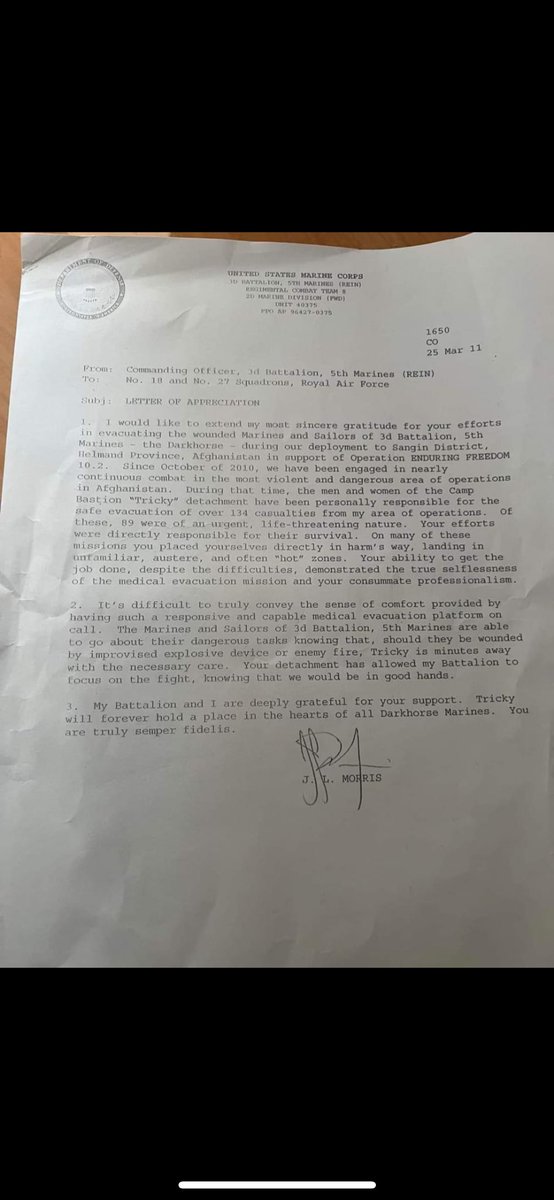
This is a letter that was sent to the Chinook Force during Op Herrick, by the boss of the US Marine Corps. A friend recently shared it and I felt it needed to be seen by all. Tricky 73 was the proudest callsign I ever flew under. No matter what, we were coming to get you. I know so many soldiers who said, just leaving the compound on patrol felt easier, knowing Tricky was on standby. With the power of social media, wouldn’t it be great if we could get this under the eyes of the man who wrote it…Jason Morris. #MERT #tricky73 @USMC@USMCMuseum