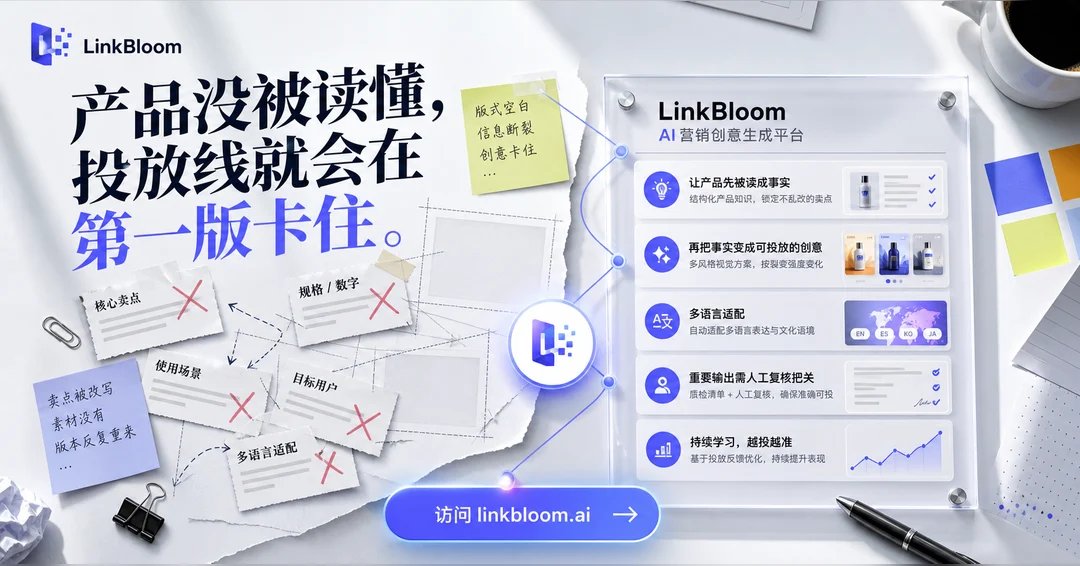
这个矩阵很实用,尤其是 [competitor] alternative 和 [tool] for [use case],比泛泛写“AI SaaS”更接近真实搜索意图。对 SaaS 我会再补一列:每个关键词对应的用户承诺和产品证据。否则页面可以批量铺出来,但 SEO 页面、广告和产品界面各讲一套,流量还是会漏掉。我们在做 LinkBloom 时,就是先把产品事实沉淀下来,再从同一份事实拆不同卖点和创意版本。你现在是手工维护这张矩阵,还是已经接到内容生产流程里了?
@NikiTsivitanou Publishing screenshots and numbers is the right standard. If the landing page doesn’t make the product legible, trial data gets noisy; if the promise isn’t visible in-product, onboarding gets blamed. LinkBloom approaches that creative gap product-facts first, promise second.
@bogdan_ai Exactly. “Sell the outcome” should shape the creative brief too. Start with the pain and outcome; let the product UI act as proof. That’s the logic we’re building into LinkBloom: one product, many testable angles. https://t.co/atnzD2uJyE
@namyakhann Exactly. Concept visuals should explain the workflow, not fake a finished UI. The tricky part is keeping product facts and the promise consistent across angles. That’s what we’re building with LinkBloom: product first, credible variants. https://t.co/atnzD2uJyE
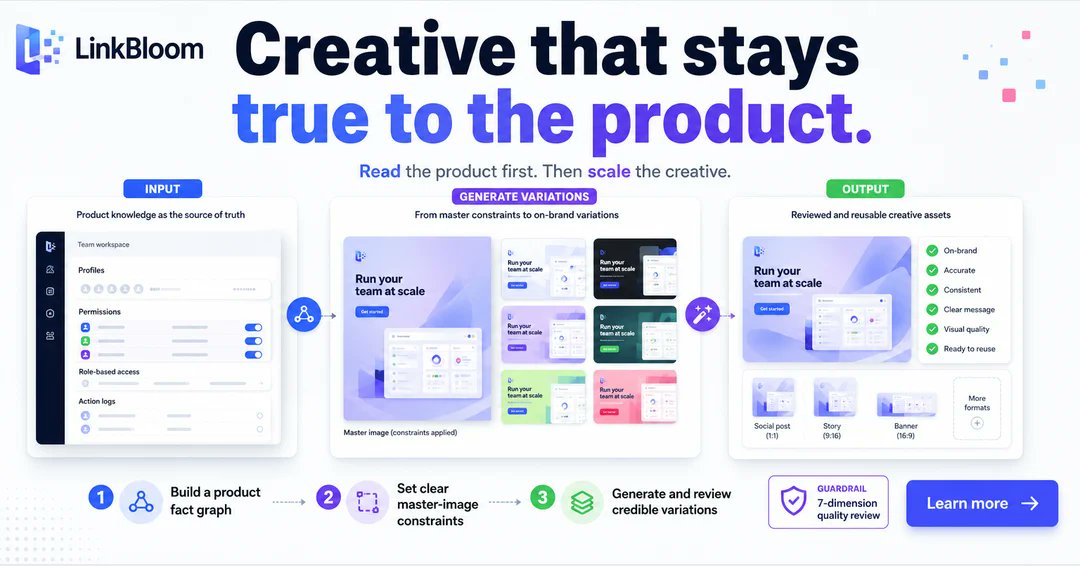
Most SaaS ads don't fail because AI can't make a pretty image.
They fail because the image forgets the product.
LinkBloom starts with the product, builds a master creative, and turns it into credible variations.
Read the product first. Then scale the creative.
https://t.co/wTdC0VjFpF