Founder, Universal Open WellBeing Foundation. Explorer. Ex-CEO ParamiSoft. Follow Buddha's teachings. Be the change you seek. No extremes, seek balance.
@andreasklinger I have always thought of writing software as plumbing! Software developers are writing code (laying pipes), making sure data *flows* and *stored* correctly. We fix memory *leaks*. We debug (fix pipes/taps). As I am progressing in crafting software; I realised I am a plumber! 😊
Elon Musk isn’t automating jobs. He’s deleting companies.
Project Macrohard. Painted on a roof in letters visible from space. Musk calls it the most important thing xAI will build.
Musk: “We aren’t just automating tasks. We are automating the corporation.”
The insight is surgical: if what you produce is digital, you don’t need to exist.
Musk: “It should be possible to completely emulate any company where the output is digital.”
The world’s most powerful corporations produce nothing physical. Google doesn’t make objects. Meta doesn’t manufacture. Microsoft ships bits, not atoms.
If your product is information, your company is just organized thinking. And thinking can be replicated perfectly at zero cost.
Musk: “Their output is digital. So they don’t actually make hardware.”
That’s the vulnerability. Every company that doesn’t touch physical reality is just expensive middleware between a problem and a solution.
Project Macrohard removes the middleware.
No employees. No politics. No overhead. Just function. Pure output at near-zero marginal cost, 24/7, forever.
This isn’t about making companies more efficient. It’s about making them unnecessary.
The Fortune 500 spent a century optimizing competition against other humans. They have zero defense against entities that don’t sleep, strike, or resign.
The largest corporations on Earth are just legacy architecture waiting to be compressed into executable code that does it better, faster, and free.
Journalist Srishti Jaswal comes from a family survived Partition. As part of the fact finding Committee on "Communal Narrative & Violence in Uttarakhand" her experience was horryfying. Where are they taking this Country? Anyone who love this land must speak now. Plz Listen.🎧
A lonely goodbye to Madhav Gadgil, one of the tallest environmentalists of our times.
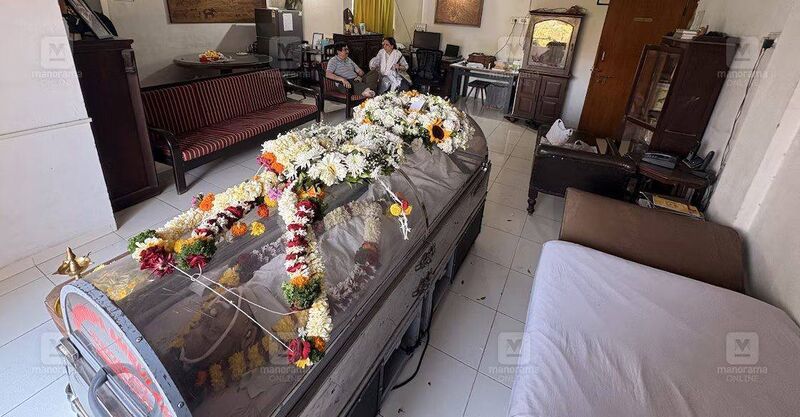
Under the banyan trees of Navi Peth in Pune, Madhav Gadgil was taken for cremation last evening. The gathering was small, some forty, perhaps fifty people.
No ministers. No senior officials. No tricolour to drape the body. No guard of honour salutes. No ceremonial rifle volleys.
One expects a crowd, the usual press cameras and public mourning. Instead, there was a pause, a quiet uncertainty, as if this farewell were happening somewhere it wasn’t meant to.
State honours had been promised, but never quite arrived. Even the police escort lost its way. For nearly half an hour, Gadgil’s body lay waiting, wrapped in simple white, while the city carried on around it, indifferent.
For me, this was not the death of a distant public figure.
In the 1990s, when I was starting out as a science correspondent with the Press Trust of India in Bengaluru, Madhav Gadgil was already a towering presence at the Indian Institute of Science (IISc). At the IISc's Centre for Ecological Sciences, he stood out, not by volume or self-importance, but by intellectual rigour and moral clarity.
I walked into his office many a time in those years, notebooks open, deadlines close. He listened carefully, answered precisely, never spoke down. He believed knowledge carried responsibility, and that science without ethics was incomplete. Those conversations stayed with me, shaping how I understood both journalism and ecology.
This was also the man who later led the Western Ghats Ecology Expert Panel, producing a report that treated the mountains not as real estate or mineral stock, but as living systems. The Gadgil Committee Report spoke of ecological limits, decentralised governance, community rights, and long-term survival.
A Padma Bhushan awardee. A UN Champion of the Earth. A lifelong defender of forests, rivers, biodiversity, and uncomfortable truths. In death, he was treated as someone easily forgotten.
The trees were not.
The old banyans stood quietly, their leaves stirring in the afternoon air. Gadgil had given his life to them. Trees remember. Animals remember. They show up when people don’t.
Had this been a politician or an industrialist, roads in Pune would have been sealed, helicopters circling, television studios filled with tributes and theatrical grief. Power is never allowed to pass quietly.
But a man who tried to protect the land that sustains us all was sent off almost unnoticed.
The trees stood witness.
The rest of us moved on.
Goodbye, Madhav Gadgil.
Forgive us.
We did not know how to honour you.
(Photo Courtesy: R S Gopan)
We’re excited to announce the product version of our Atlas® robot. This enterprise-grade humanoid robot offers impressive strength and range of motion, precise manipulation, and intelligent adaptability—designed to power the new industrial revolution. https://t.co/KWQX3PcFA6
290 organisations from 52 countries are calling on the FAO, the ITPGRFA Secretariat, and national governments to REJECT the proposed MLS/DSI amendments at #GB11 in Lima.
This is one of the strongest global civil society mobilisations ever assembled on seeds, farmers’ rights, biodiversity, and sovereignty. Across continents and cultures, the message is clear and unified:
🌍 Why 290 organisations are calling for a NO VOTE
The current draft package:
• fails to prohibit patents and other IPRs on MLS-shared genetic resources, components, derivative varieties, and derived information — including DSI — with no strict, verifiable enforcement to prevent this misuse
• seeks expansion to ALL PGRFA and DSI-sharing before any safeguards, transparency, or accountability systems are in place
• has no SMTA transparency (no disclosure of who takes what plant genetic resources)
• has no binding benefit-sharing (companies can profit without paying provider countries or farmers)
• has no FPIC (Free, Prior & Informed Consent) for farmers & Indigenous peoples
• allows biopiracy through DSI
• inserts new confidentiality clauses protecting commercial secrecy
• undermines national sovereignty over genetic resources
• omits protections for Farmers’ Rights (Article 9)
• was advanced without consensus
• and is heavily shaped by corporate influence
This is not a reform.
This is a setback — one that weakens rights, strengthens corporate capture, and denies basic transparency.
🌾 What the Global South and Global Civil Society Demand
1. Strict, verifiable enforcement to prohibit IPRs
No patents on MLS-shared seeds, traits, derivatives, or DNA information — including DSI — with strong oversight to prevent misuse.
2. No expansion to ALL PGRFA or DSI inclusion
Not until transparency, benefit-sharing mechanisms, and safeguards are real.
Not until patent-prohibition and IPR safeguards are secured and enforceable.
3. Full SMTA transparency
Publish ALL transfers — providers, recipients, accession numbers, research outcomes — as required under the Treaty.
4. Legally binding monetary benefit-sharing
Not voluntary. Not symbolic. Every commercial use must contribute.
5. FPIC for farmers & Indigenous peoples
No use or commercialisation of seeds or genetic sequences without explicit consent.
6. A NEW, fair, inclusive global process
With farmers, Indigenous communities, and civil society — not just breeders and corporate observers.
🇮🇳 India's Role is Critical
As a major biodiversity provider nation, India must:
• vote NO at #GB11
• defend national sovereignty over India’s plant genetic resources
• uphold Farmers’ Rights under Article 9
• ensure the Seeds Bill protects the right to save/use/exchange/sell seed
• oppose DSI access without binding global benefit-sharing
• stand with the Global South against corporate capture
📜 Full global letter & signatories:
https://t.co/AV2znEZYGW
We call on the following leaders to act:
@FAODG@planttreaty@kentnnadozie@MichaelFakhri@PMOIndia@ChouhanShivraj@AgriGoI@oxfamnovib@SwedBio@FIANista@FAOPeru
Seeds are our bio-cultural living heritage — not corporate property. Seeds are life. Seeds are freedom.
Stand with farmers, seed keepers, Indigenous communities, and biodiversity defenders.
Reject the MLS/DSI amendments at #GB11.
#SeedSovereignty #FarmersRights #NoBiopiracy #Biodiversity #FoodSovereignty
@NGKabra@shaashvats30 Corollary would be, Americans could do it because they believed Germans are closer to making one. At least that’s what Einstein believed, and later regretted in sending the letter to Eisenhower, after he realised Germans couldn’t build one.
India's 16-year-old para-archer Sheetal Devi produced a sensational effort in the final of the women's individual compound event at the Asian Para Games to win the gold medal. With no arms.
Watch carbon dioxide move through Earth’s atmosphere.
With this high resolution model, scientists can see CO2 rising from sources like power plants, fires, and cities and watch how that carbon dioxide spreads via wind patterns and atmospheric circulation. https://t.co/e0sXDIeNvd
OpenAI Co-founder Andrej Karpathy explains the new computing paradigm:
"We're entering a new computing paradigm with large language models acting like CPUs, using tokens instead of bytes, and having a context window instead of RAM.
This is the Large Language Model OS (LMOS)"
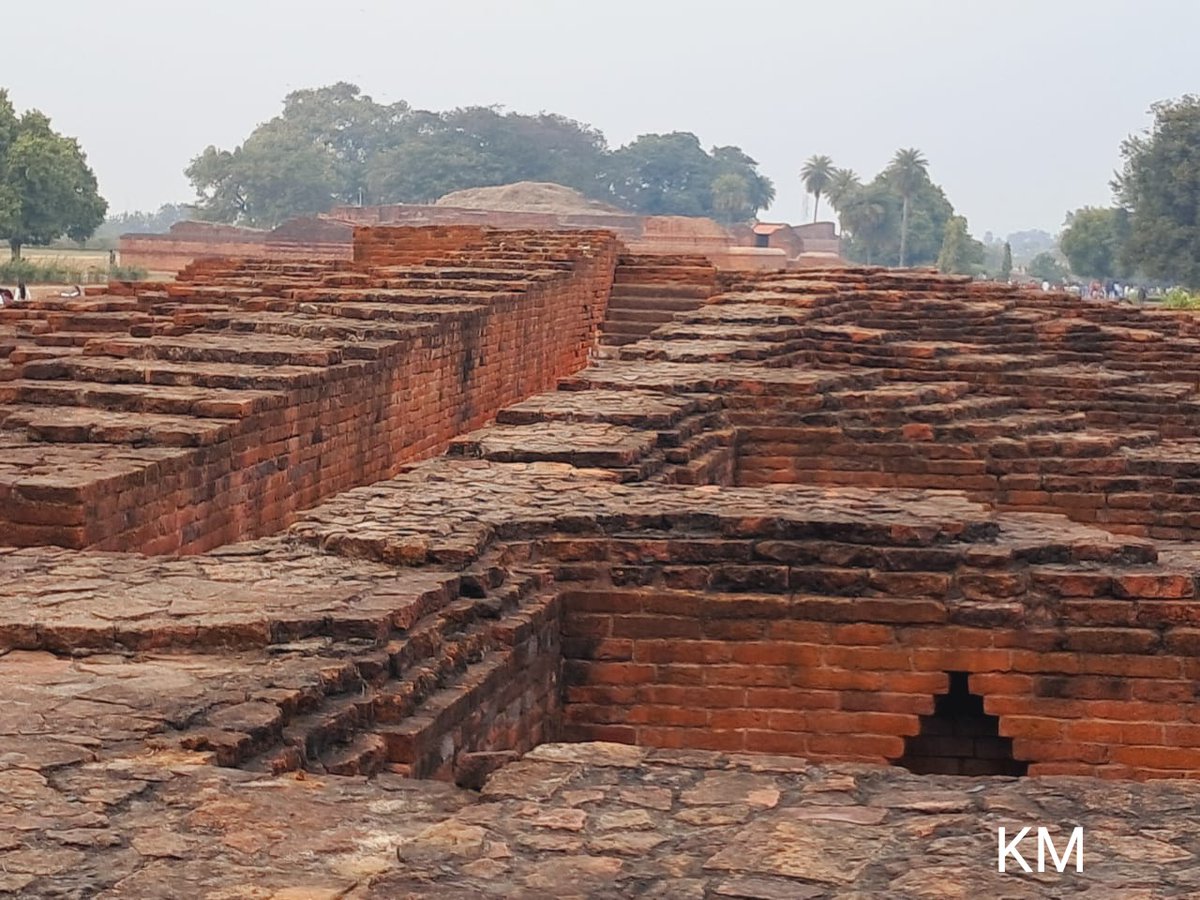
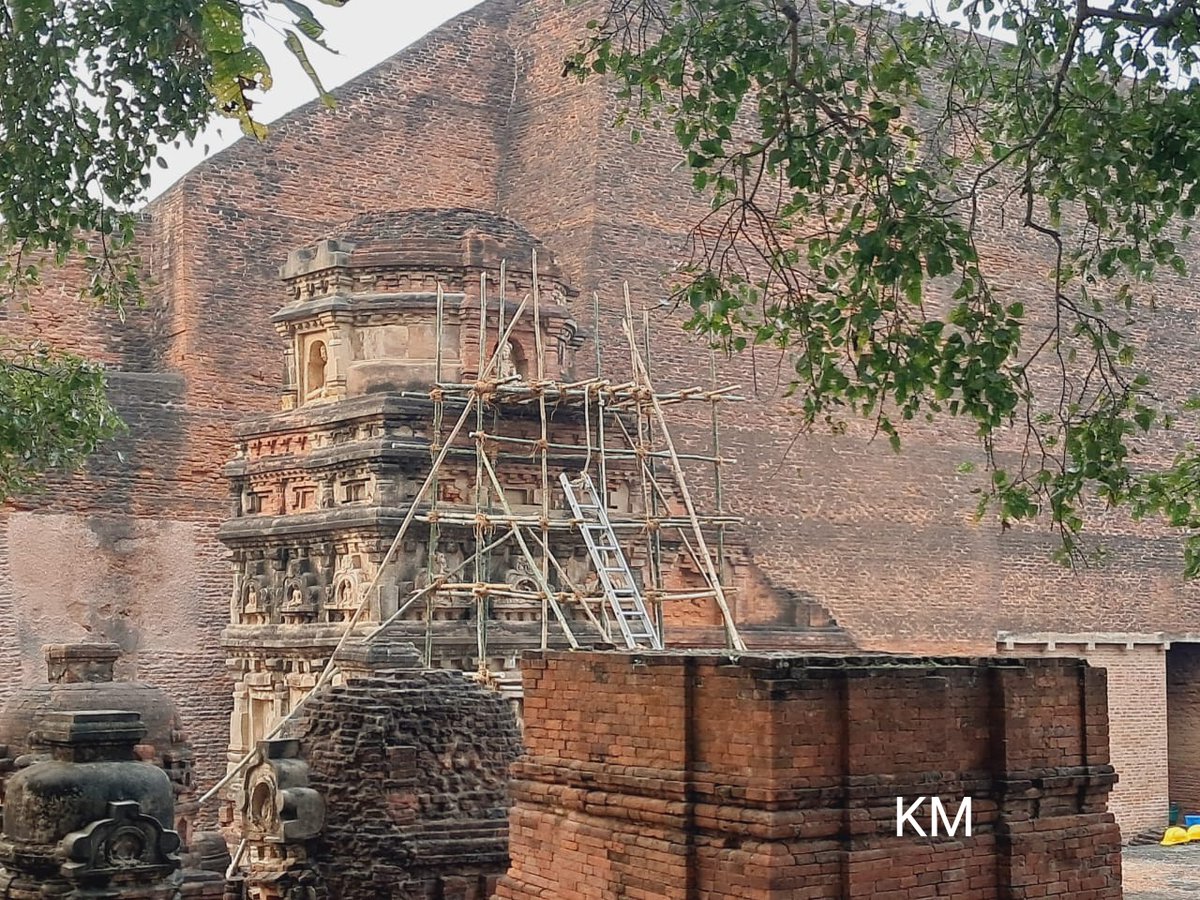
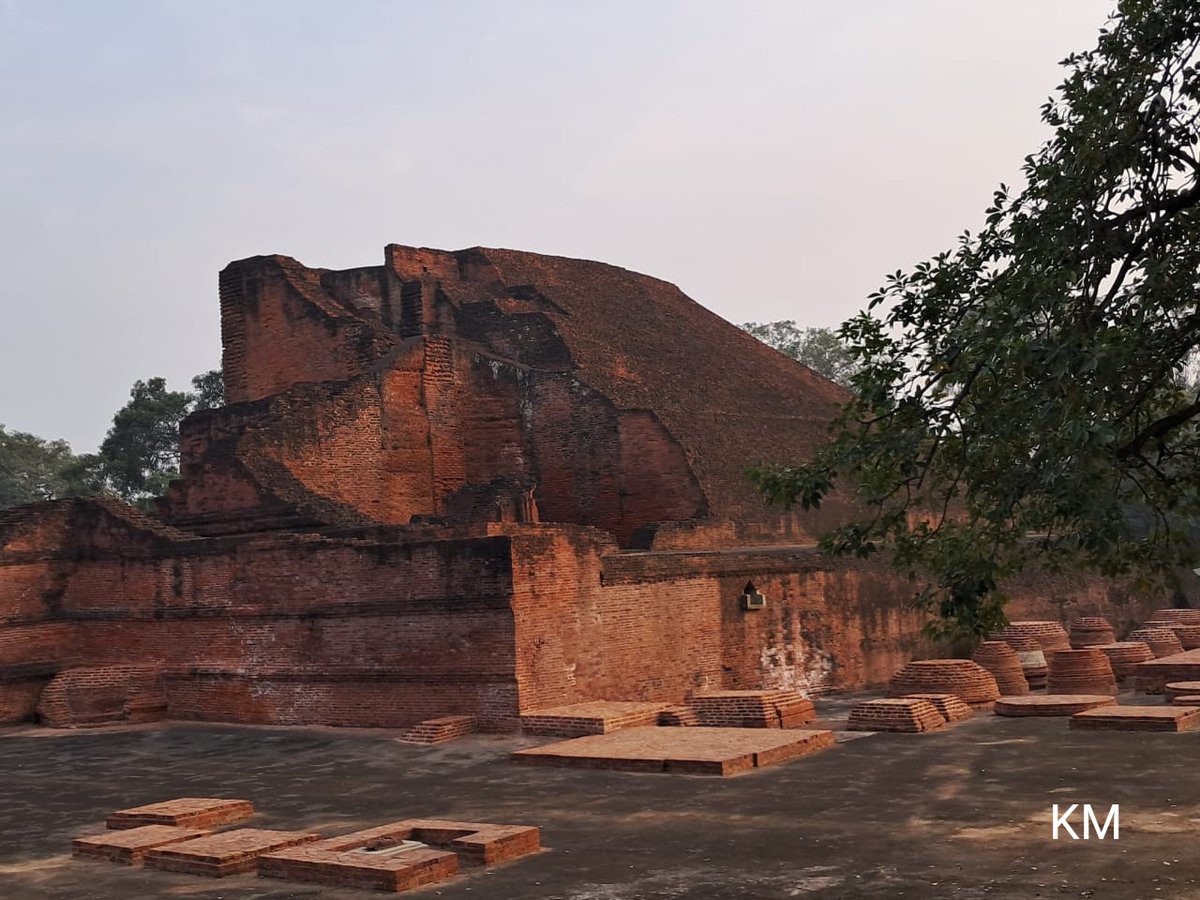
Long thread and not on WhatApp University: I restrained myself from writing about #NalandaUniversity over the last few days. Was waiting for all jokers to stop parroting about Khilji. I bet 99.99% of those posting can't even point Nalanda on the map. Nalanda was looted MANY 1/n