Rajendra Chola I: A Legacy Carved in Stone and Sea
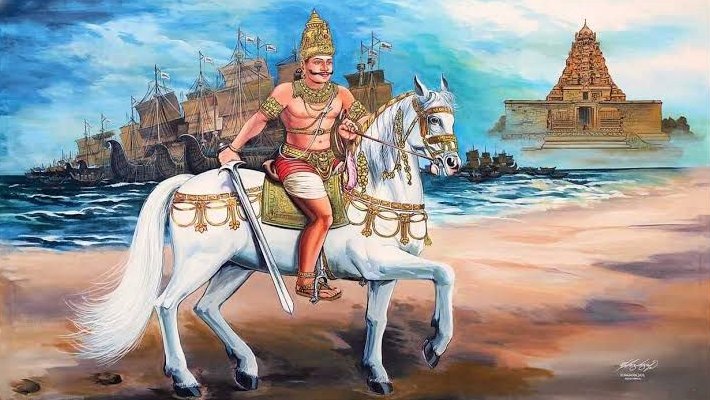
On this auspicious day of Aadi Thiruvathirai (Arudra Nakshatra), we commemorate the birth of one of the most illustrious monarchs in Indian history—Rajendra Chola I. A ruler of immense might and foresight, Rajendra Chola was more than a conqueror; he was also a patron of the fine arts, as attested by the Karandai epigraphs, which describe him as being well-versed in artistic and scholarly pursuits. His reign stood at the confluence of power, devotion, and culture.
Know about the Leiden (Aanaimangalam) copperplates retrieved by India from Netherlands after many centuries:
> The first copper plate to be discovered on Cholas
> Excavated by Dutch East Indies Company (VOC) during the construction of Fort Vijf Sinnen around 1700
> Brought to the Netherlands in 1712 by a pastor, whose descendants donated it to Leiden University in 1862
> Deciphered in 1886 by Pandit Natesa Sastri and Burgess
> Issued by GOAT king Rajaraja the first
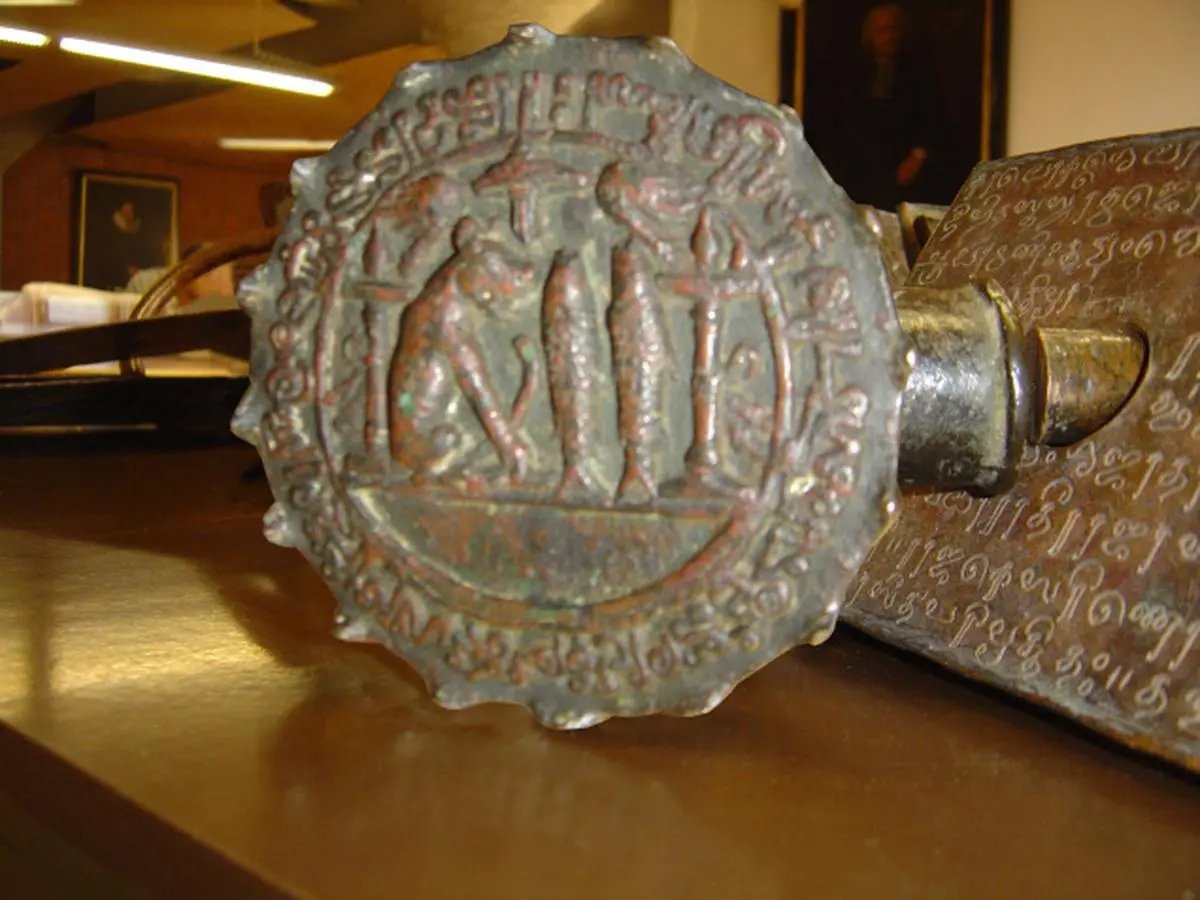
> 21 copper plates held together by a bronze ring with the regal seal
> First 5 plates are in Sanskrit, rest 16 are in Tamil
> Weighs 30kg, and are numbered from plates 2-21
> Mentions the lineage of Cholas starting from Vishnu till Surya, Ikshavaku and then Manu, the king who gave justice to a bereaved cow
> Mentions about Devasura Manthan with Shiva becoming Neelakanta, and the Amrita being distributed to Devas by a Chola king
>Records the historic grant given by Rajaraja to ruler of Sri Vijaya (Indonesia) for constructing a Chulamanivarma Vihara in Aanaimangalam of Nagapattinam district
> Boundaries of the Vihara were determined by the ceremonial circumambulation of a female elephant
>Sanskrit plates were written by Kottaiyur's Ananta Narayanan of Vashishta gotra
> Documents in detail the 41 officials who executed the edict, the artisans who wrote out the words and the sculptors who rendered the inscription
> Poetically states that only Veda Vyasa can truly capture the fully glory of Cholas, but the author is trying his best
> States "As long as the crescent adorned Shiva resides on Kailasha and Vishnu does Yoga Nithirai on Paarkadal, and the earthly lamps Sun and Moon drive darkness away, may the Chola clan protect this Earth"
> In the summer of 2023, the Indian government submitted a request to Leiden University to return the Chola Plates
> The Leiden/Aanaimangalam Chola Plates will now go to the Archaeological Survey of India (ASI) in New Delhi
A proud moment for Bharat’s civilizational heritage 🇮🇳
After centuries in the Netherlands, the historic Leiden (Aanaimangalam) Chola Copper Plates of Emperor Rajaraja Chola I, among the earliest and most important Chola inscriptions are finally returning home
These 21 copper plates beautifully document the glory of the Cholas, their maritime ties with Srivijaya, and the grant for the Chudamani Vihara at Nagapattinam. A priceless symbol of Tamil history and India’s cultural legacy has been rightfully reclaimed.
Heartfelt thanks to the Government of India under leadership of PM @narendramodi for bringing our heritage back to its motherland 🙏
@MinOfCultureGoI@gssjodhpur@ASIGoI@PMOIndia@cultconvos
What distinguishes Indian civilization from other ancient civilizations such as Egypt & Greece is the remarkable continuity of its architectural & vedic traditions
Even today, temples in India continue to be constructed according to the rules of Agamas, Shilpa Shastras, and other classical frameworks
These knowledge systems that have survived through uninterrupted oral or written practice, while comparable traditions in other ancient civilizations have completely lost it
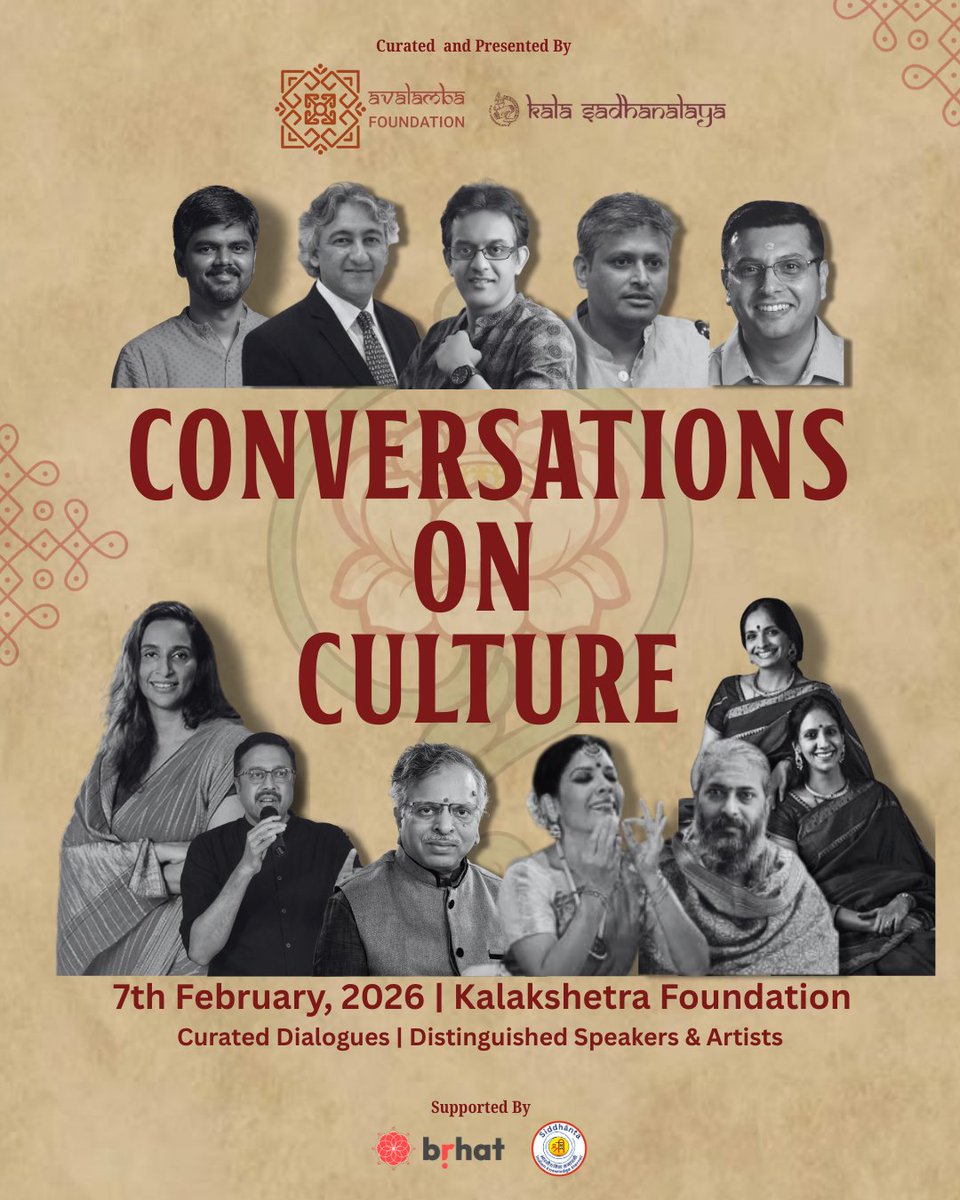
Congratulations to @cultconvos on Conversations on Culture - encouraging dialogues on art, heritage, and the Indic Knowledge System.
Dialogues such as these promoting IKS and the interconnection with our traditions are the need of the hour.
Wishing them the best.
We are delighted to have some highly accomplished friends stepping in as our Masters of Ceremonies for today’s sessions.
Be there to interact them in action !
@jananisampath
Friends in Chennai, Delighted to be speaking at @avalambafdn's 'Conversations on Culture’, with knowledge partners @brhat_in
My session examines why India must revisit its history, rethink narratives, memory & cultural revival.
🗓 7 Feb 2026
📍 Kalakshetra Foundation
🎟 Free registration: https://t.co/317ObLm7Y7…
Curators: @krithikasivasw@manasvinikr@cultconvos
Hope to see several of you there at this unique & what promises to be a wonderful day of stimulating conversations & performances.
𝐓𝐡𝐞 '𝐂𝐨𝐧𝐯𝐞𝐫𝐬𝐚𝐭𝐢𝐨𝐧𝐬 𝐨𝐧 𝐂𝐮𝐥𝐭𝐮𝐫𝐞' 𝐄𝐯𝐞𝐧𝐭 - 𝐃𝐢𝐚𝐥𝐨𝐠𝐮𝐞𝐬 𝐨𝐧 𝐀𝐫𝐭, 𝐇𝐞𝐫𝐢𝐭𝐚𝐠𝐞 & 𝐈𝐧𝐝𝐢𝐜 𝐊𝐧𝐨𝐰𝐥𝐞𝐝𝐠𝐞 𝐒𝐲𝐬𝐭𝐞𝐦𝐬.
We are deeply honored and grateful to Dr. Jayanthi S. Ravi @JayantiRavi , Additional Chief Secretary (revenue), Gujarat Govt and Secretary of Auroville for graciously accepting our invitation to be the Chief Guest for the 1st edition of Conversations On Culture.
More than a distinguished civil servant, she is a rare blend of scientist, performing vocalist, administrator, writer, and changemaker. Her multifaceted life reflects a deep commitment to knowledge, creativity, and public service.
Her personal passion for art and culture, combined with her vast experience and vision, makes her presence truly special. As we take our first steps in building a meaningful platform for cultural dialogue, her guidance and insights will light the way forward.
Thank you, ma'am for being part of this.
#ConversationsOnCulture
Extremely happy to be the curators along with Kala Sadhanalaya for the 1st edition of Conversations on Culture. Please follow the handle @cultconvos for updates and registration link.
#ConversationsOnCulture
𝐄𝐯𝐞𝐧𝐭 𝐀𝐥𝐞𝐫𝐭!
𝐶𝑜𝑛𝑣𝑒𝑟𝑠𝑎𝑡𝑖𝑜𝑛𝑠 𝑜𝑛 𝐶𝑢𝑙𝑡𝑢𝑟𝑒 : 𝐷𝑖𝑎𝑙𝑜𝑔𝑢𝑒𝑠 𝑜𝑛 𝐴𝑟𝑡, 𝐻𝑒𝑟𝑖𝑡𝑎𝑔𝑒 & 𝐼𝑛𝑑𝑖𝑐 𝐾𝑛𝑜𝑤𝑙𝑒𝑑𝑔𝑒 𝑆𝑦𝑠𝑡𝑒𝑚𝑠.
Art has always spoken beyond language and time. In the Indic tradition, it goes even further — becoming a sacred path to inner transformation and spiritual realization.
Date: 7th Feb 2026 - From 10:30 AM onwards.
Venue: Kalakshetra Foundation, Chennai
To Register for the sessions and book tickets for the Concert :
https://t.co/O0fwI1Qw15
@brhat_in@NagarajPaturi@Anviksiki@vikramsampath@fihcr_info@ranjanigayatri@krithikasivasw
Namaskaram !
We are delighted to launch Conversations on Culture,
a platform for thoughtful dialogue on culture, art, heritage, and living traditions of our country.
The series will feature exciting sessions, erudite speakers, and accomplished artists, bringing together diverse perspectives from across cultural and intellectual disciplines.
🗓 Mark your calendars for the 1st edition happening on 7th February 2026 at Kalakshetra Foundation, Chennai.
👉 Follow this page for updates, speaker announcements, and session details.
Keep your notifications on !
#ConversationsOnCulture #CultureAndHeritage #IndicKnowledgeSystems #PublicDialogue
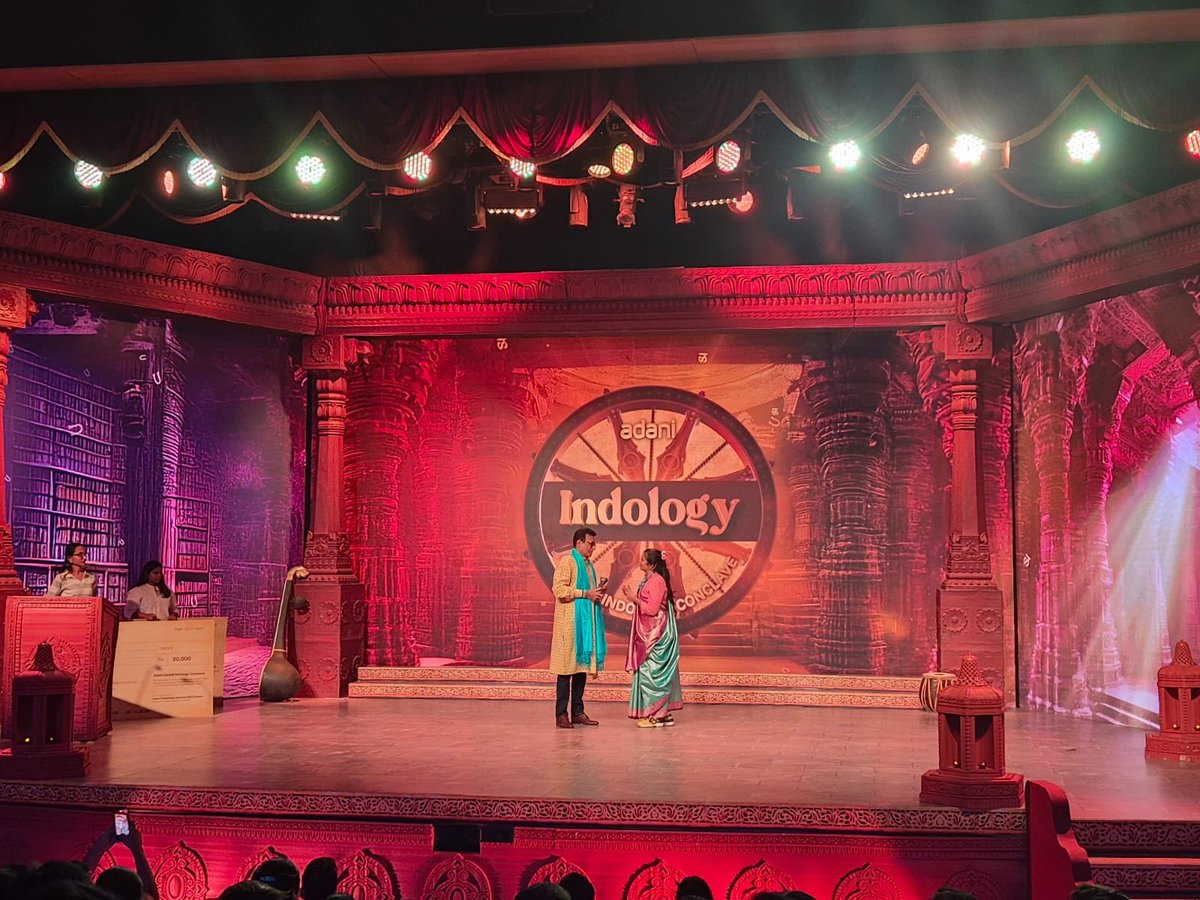
Pranams to Sohattur Ramanujachar Swami for receiving the Lifetime Achievement Award, in recognition of his dedication to digitising India’s classical knowledge systems & for his leadership in developing technology that bridges ancient wisdom with modern research.
Adani Global Indology Conclave Ahmedabad
Congratulations & Humble Pranamas to Sohattur Sri U Ve Ramanujacharya swami for winning life time achievement at Adani Global Indology Conclave 2025
Swami is the founder trustee of Parankusachar Institute of Vedic studies
A revered disciple of Samartha Ramadas, Sri Bhimaraja Goswami shaped Tanjore’s spiritual & cultural soul
His samadhi now lies in ruins, awaiting revival
Avalamba & @IndicCollective ve begun this sacred restoration
Kindly join us in this cause
Link - https://t.co/v8PqAI8Vd8
Day 9 : Shree Kamalaambaa Jayati, ahiri raga, rupaka tala.
Pallavi
Shri Kamalaambaa Jayati Ambaa Shri Kamalaambaa Jayati Jagadaambaa
Shri Kamalaambaa Jayati Shringaara Rasa Kadambaa Madambaa
Shri Kamalaambaa Jayati Chidbimbaa Pratibimbendu Bimbaa
Shri Kamalaambaa Jayati Shreepura Bindu Madhyastha
Chintaamani Mandirastha Shivaakaara Manchasthita Shivakaameshaankasthaa
Anupallavi
Sukara-ananaadya-arccita Mahaa-tripura
Sundarim Raajaraajeshvareem
Shreekara Sarva-ananda-maya Chakra-vaasinim Suvaasinim Chintayeham
Divaakara Sheetakirana Paavakaadi Vikaasakarayaa
Bheekara Taapa-traya-adi Bhedana Dhurinatarayaa
Paakaripu Pramukhaadi Praarthita-Sukalebarayaa
Praakatya Paraaparayaa Paalitodayaakarayaa
Charanam
Shrimaatre Namaste Chinmaatre Sevita Ramaa Harisha Vidhaatre
Vaamaadi Shaktipujita Paradevataayaah Sakalam Jaatam
Kaamaadi Dvaadashabhir-upaasita Kaadi Haadi Saadi Mantra-rupinyaah
Premaaspada Shiva Guruguha Jananyaam Pritiyukta Macchittam Vilayatu
Brahmamaya Prakaashini Naamaroopa Vimarshini Kaamakalaa Pradarshini Saamarasya Nidarshini
The ninth chakra kriti in Raga Ahiri is truly distinctive. It incorporates all eight vibhaktis (grammatical cases). This chakra is known as the Sarva Anandamaya Chakra, symbolizing the Bindu, the point of union with Parabrahman, who is manifest as the Divine Mother. She resides in the Chintamani Griha. The avarana (enclosure) is the Bindu, and the chakra, named Sarvanandamaya, signifies a state of complete bliss. The associated yogini is Parathi Para Rahasya, the mudra is Sarva Yoni, and the siddhi (spiritual attainment) is Prapti. The mental state aligned with this chakra is Savikalpa Samadhi. The presiding deity is the supreme goddess Lalita Maheshwari Mahatripurasundari. The Shakti here is Maha Tripura Sundari, the embodiment of Brahman.
This avarana corresponds to the Brahmarandra, the crown of the head of the Mother Goddess. The kriti skillfully uses all eight vibhaktis: the pallavi is in the nominative case; the first three lines of the anupallavi are in the accusative; and the rest of the anupallavi employs the instrumental case.
The ninth enclosure is the Bindu, referred to as the Sarvananda-maya Chakra. This Bindu is, in essence, the Sri Chakra itself, representing the supreme Mother Goddess Maha Tripura Sundari, Lalita, or Rajarajeshwari with all other elements being her manifestations. Dikshitar expresses ecstatic devotion in exalted and poetic language, glorifying and celebrating the Divine Mother. This kriti is also steeped in Sri Vidya tradition.
He portrays the Goddess as the embodiment of the Bindu, the pure consciousness at the heart of the Sri Chakra.
Celebrating Navaratri with Shri Muthuswamy Dikshitar’s Kamalamba Navavarna Krithis
A Sacred Musical Pilgrimage through Dikshitar’s Musical Tapestry
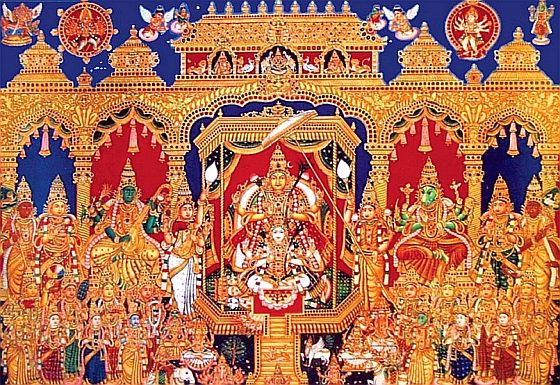
As we step into the sacred nine nights of Navaratri, it is a fitting time to revisit one of the most monumental works in Carnatic music - Shri Muthuswamy Dikshitar’s Kamalamba Navavarna Krithis. This magnum opus, composed in praise of Sri Kamalamba, the presiding deity of the Thiruvarur temple (which Dikshitar fondly refers to as Kamala Nagara), stands as a towering blend of music, mantra, tantra and metaphysics.
The Kamalamba Navavarna Krithis are gems of Carnatic music , a profound expression of Dikshitar’s devotion to Sri Vidya and are a brilliant demonstration of his musical and spiritual mastery. The set comprises of eleven compositions: beginning with a Dhyana Krithi , followed by nine Avarana Krithis and culminating in a Mangala Krithi.
Each Avarana Krithi is meticulously crafted to correspond with a layer (avarana) of the Sri Chakra, invoking its presiding deity, yogini, mudras, and siddhis. Dikshitar’s genius shines through in his choice of ragas, skillfully embedding the raga mudra (name of the raga) into intricate lyrical and melodic frameworks. The compositions are set in rich Sanskrit, employing all eight grammatical vibhaktis(cases), with the final krithi uniquely combining all eight making them a linguistic and poetic marvel.
Dikshitar follows the Samhara Krama ( the inward spiritual journey) through the Sri Chakra leading from the outermost avarana to the innermost Bindu, symbolizing union with the Supreme. At each stage, he offers salutations, invokes the deities, and delineates the philosophical underpinnings of each layer, staying true to the Kadi school of the Dakshinamurthy tradition within Sri Vidya.
Through these krithis, Shri Muthuswamy Dikshitar opens a gateway to the vast and subtle knowledge of Sri Vidya expressed through music that is aesthetically sublime and lyrically profound. Enriched with gamakas, raga lakshanas, and complex tala patterns (the suladi sapta talas), these compositions are a testament to his towering genius.
Truly, it would take lifetimes to fully comprehend the depth and brilliance of Dikshitar’s musical , spiritual and ritualistic legacy.
Pic credits : to respective owners.
#Navratri2025 #Navaratri2025
Day 8 : Shree Kamalaambike Avaava, ghanta raga, adi tala
Pallavi
Shri Kamalaambike Avaava
Shive Karadhruta Shuka Shaarike
Anupallavi
Lokapaalini Kapaalini Shoolini Lokajanani Bhagamaalini Shakrudaa
Aalokaya Maam Sarva Siddhipradaayike Tripuraambike Baalaambike
Charanam
Santapta Hema Sannibha Dehe Sadaa-akhandaika-rasa-pravaahe
Santa-apahara Trikona-gehe Sa-kaameshvari Shakti-samuhe
Santatam Mukti Ghantaamani Ghosaayamaana Kavaata-dvaare
Ananta Guruguha Vidite - Karaahnguli Nakhodaya Vishnu Dashaavataare -
Antahkaraneksu Kaarmuka - Shabdaadi Pancha Tanmaatra Vishikhaatyanta
Raagapaasha Dvesa-ankusha Dharakare Atirahasya Yoginipare
The eighth chakra is known as the Sarva Siddhiprada Chakra. The corresponding Avarana Kriti is composed in Ghanta Raga, which is now considered rare. This composition exudes a majestic quality that is beyond description. it must be directly experienced to be truly appreciated. Engaging in the sadhana of this kriti imparts deep knowledge (gnana) of the raga, mirroring the essence of the chakra itself, which signifies the complete realization and success of atma jnana (self-knowledge). The associated yogini is Ati Rahasya, where the knower, the knowledge, and the known merge into one. This also symbolizes the Somaskanda Murti a union of Sa, Uma, and Skanda who is the presiding deity at Tiruvarur.
The Avarana is the Trikona; the chakra is the Sarva Siddhiprada Chakra, meaning "that which grants all attainments." The yogini is Athi Rahasya Yogini, the mudra is Sarva Beeja, and the associated siddhi is Iccha (will or desire). The mental state cultivated here is Nididhyasana (deep contemplation), and the presiding deity is Tripuraamba. The gem associated is Gomaya, and the corresponding time span is a ritu (two-month period). The three shaktis here are Kameshwari, Vajreshwari, and Bhagamalini. This avarana corresponds to the masthaka (crown of the head) of the Divine Mother.
In a state of divine ecstasy, Dikshitar extols the glory of the Mother, who protects the worlds. She is adorned with a garland of skulls and wields a trident manifesting as Bhagamalini, the embodiment of fire and Rudra’s dissolving power. She is also Tripurambika, the ruling deity of this avarana, and known as Balamba, sovereign of the Sarva Siddhiprada Chakra.
Listen to DK Jayaraman's students sing
https://t.co/VaY3Y3AyUt
Day 5 : Shree Kamalaambikaayaah Param Nahire, Bhairavi raga, mishra jampa tala
Pallavi
Shree Kamalaambaayaah Param Nahire Re Chitta Kshityaadi Shivaanta Tatva Svaroopinyaah
Anupallavi
Shreekantha Vishnu Virinchaadi Janayitrayaah Shivaatmaka Vishvakartryaah Kaarayitryaah Shreekara Bahirdashaara Chakra Sthityaah Sevita Bhairavi Bhaargavee Bhaaratyaah
Charanam
Naadamaya Sukshmarupa Sarva Siddhipradaadi Dasha Shaktyaaraadhita Moorthe Shrotraadi Dasha Karana-aatmaka Kula Kauli Kaadi Bahuvidhopaasita Keertthe Abheda Nitya Shuddha Buddha Mukta Saccida Anandamaya Paramaadvaita Sphurtthe Aadi Madhyaanta Rahitaaprameya Guruguha Modita Sarva Arttha Saadhaka Sphurtte Mulaadi Navaadhaara Vyaavrtta Dashadhvani Bhedajhna Yogibrunda Samraksanyaa Anaadi Maayaa Avidyaakaarya Kaarana Vinoda Karana Patutarakataaksa Viksanyaah
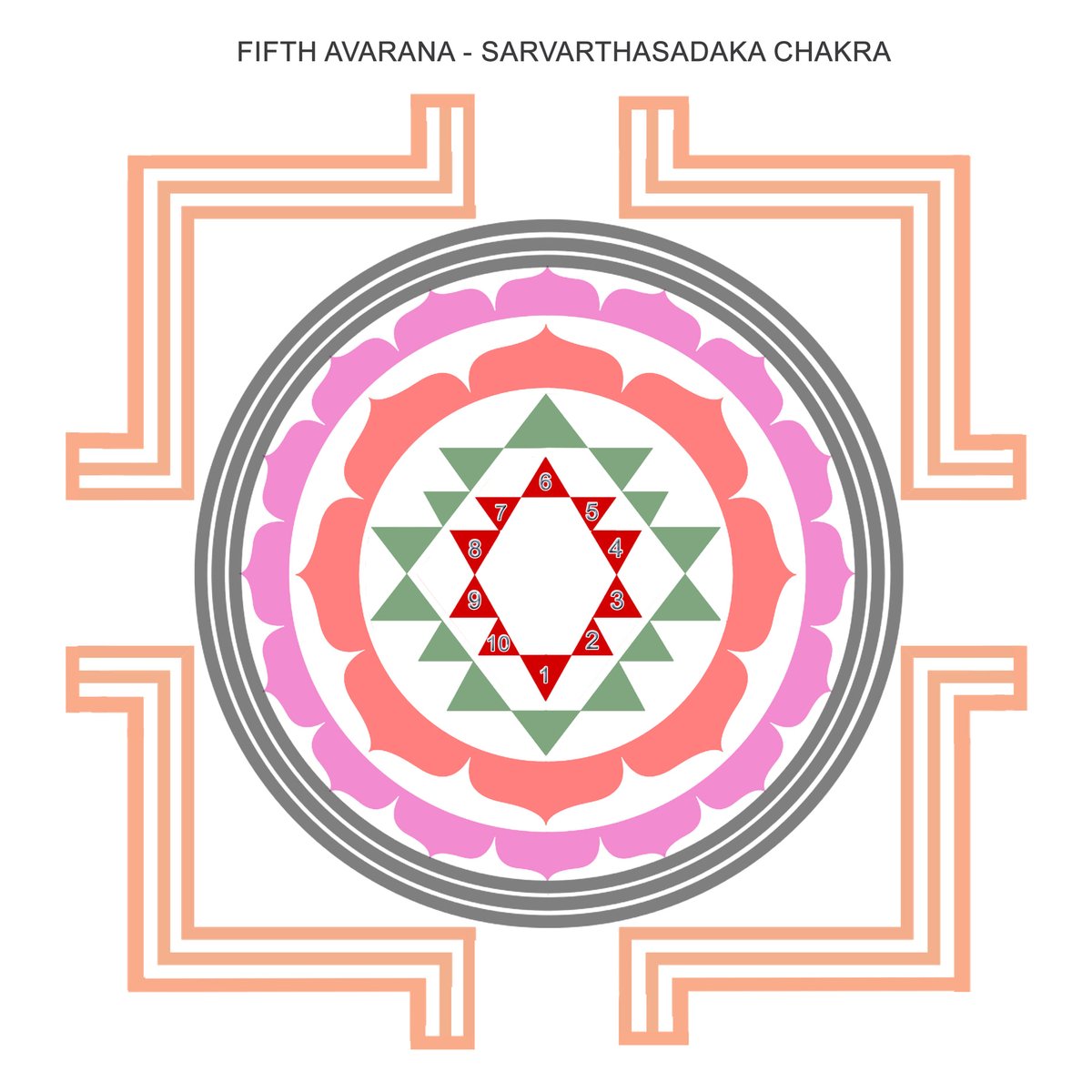
The fifth chakra kriti, Sarvartha Sadhaka Chakra, is set in the graceful raga Bhairavi. It honors Kulottheerna Yogini, who represents the ten prana shaktis (vital energies). The associated Avarana is Bahirdasara, and the chakra Sarvartha Sadhaka means “accomplisher of all.” The Yogini is Kulottheerna, the Mudra is Sarvonmadini, and the Siddhi is Vashitva. The mental state is Guroopa Sadanam, and the presiding deity is Tripura Shri. Her vidya (mantra) is Haim Hklim Hsauh. The gem is pearl, the time is lunar day, and the ten associated Shaktis begin with Sarva Siddhi Prada. The number ten is dominant, and this chakra corresponds to the neck of the Divine Mother.
Dikshitar addresses the Devi as Shreekara, seated on the Bahirdasara Chakra and attended by Bhairavi (Kali), Bhargavi (Lakshmi), and Bharati (Saraswati). "Bhairavi" also functions as the raga mudra in the kriti.
The ten Shaktis include Sarva Siddhi Prada, Sarva Sampath Prada, Sarva Priyankari, and others. Dikshitar worships them as subtle sound forms within the body (Naadamaya Sukshmarupa).
The yoginis of this chakra are known as Kulottheerna Yoginis or Kuala Yoginis. Dikshitar describes the Mother as appearing in many forms (Bahuvidhopasthita), including the ten yoginis of the Kula, Kaula, and related traditions (Dasha Karana Atmaka Kula Kaulikaadi).
Dasha Karana refers to the ten organs: five of knowledge (Jnanendriyas) and five of action (Karmendriyas). Dikshitar lyrically portrays this fifth avarana Sarvartha Sadhaka as the fulfiller of all desires.
Listen to Anahita & Apoorva singing this beautiful krithi.
https://t.co/I7KzRMFiAz
Day 4 : Kamalaambikaayai Kanakamshukaayai , kambodhi raga, khanda ata tala.
Pallavi
Kamalaambikaayai Kanakaamshukaayai Karpura Vidikaayai Namaste Namaste
Anupallavi
Kamalaa Kaanta Anujaayai Kaameshvaryai Ajaayai Himagiri Tanujaayai Hreem Kaara Pujyaayai Kamalaanagara Vihaarinyai Khala Samooha Samhaarinyai Kamaneeya Ratna Haarinyai Kali Kalmasha Parihaarinyai
Charanam
Sakala Saubhaagya Daayakaambhoja Charanaayai Samkshobhinyaadi Shaktiyuta Chaturthyaavaranaayai Prakata Chaturddasha Bhuvana Bharanaayai Prabala Guruguha Sampradaayaantah Karanaayai Akalanka Rupa Varnaayai Aparnaayai Suparnaayai Sukara Dhruta Chaapa Baanaayai Shobhanakara Manukonaayai Sakunkumaadi Lepanaayai Charaacharaadi Kalpanaayai Chikura Vijita Neelaghanaayai Chidaananda Purna Ghanaayai
The fourth vibhakti kriti is composed in raga Kambhoji, with the raga mudra “kambhoja” seamlessly integrated in the phrase “daya kambhoja.” This chakra, Sarva Saubhagya Dayaka, symbolizes the bestower of all auspiciousness. The associated yogini is Sampradaya Yogini, representing the traditional path through the fourteen worlds. The raga’s essence is clearly brought out in the opening phrase when the Navavaranams are rendered in sequence. The avarana, Chaturdasha Trikona, is formed by fourteen triangles. The chakra is associated with the mudra Sarva Shankari, siddhi Ishitva, and the mental state Ishwara Vichara. The presiding deity is Tripura Vasini, whose vidya is "Haim Hklim Hsauh." Coral is the gemstone, and the time linked to this chakra is both day and night. It features fourteen Shaktis, beginning with Samkshobhini, making 14 the dominant number, symbolizing the heart of the Divine Mother. Dikshitar invokes the goddess as Sakala Saubhāgya Dāyaka Kāmbhoja Charanāyai : she whose lotus like feet bestow all prosperity, embedding the raga mudra in his devotion. This chakra is also called Manukona, referencing the fourteen Manus, and is guarded by the fourteen Sampradaya Yoginis.
Listen to a peaceful rendition by D K Jayaraman's students at the prakara of thiruvarur temple.
https://t.co/iNVet3NJMh