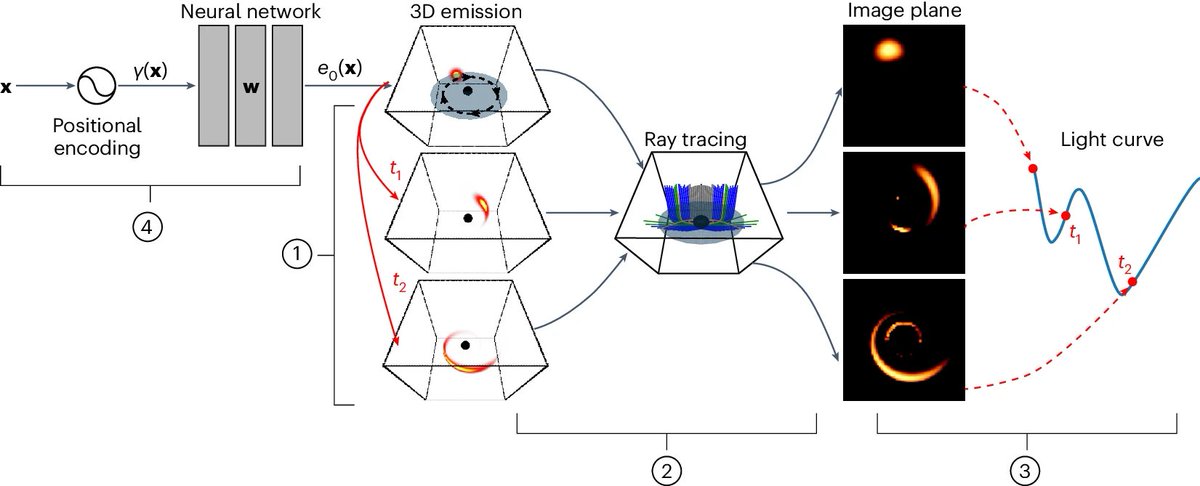
.@aviadlevis et al. reconstruct a 3D image of a bright flare orbiting the black hole Sagittarius A*. This image is computationally recovered from @almaobs lightcurve data by constraining a neural network with a gravitational model of black holes: https://t.co/t08gZcpN7U
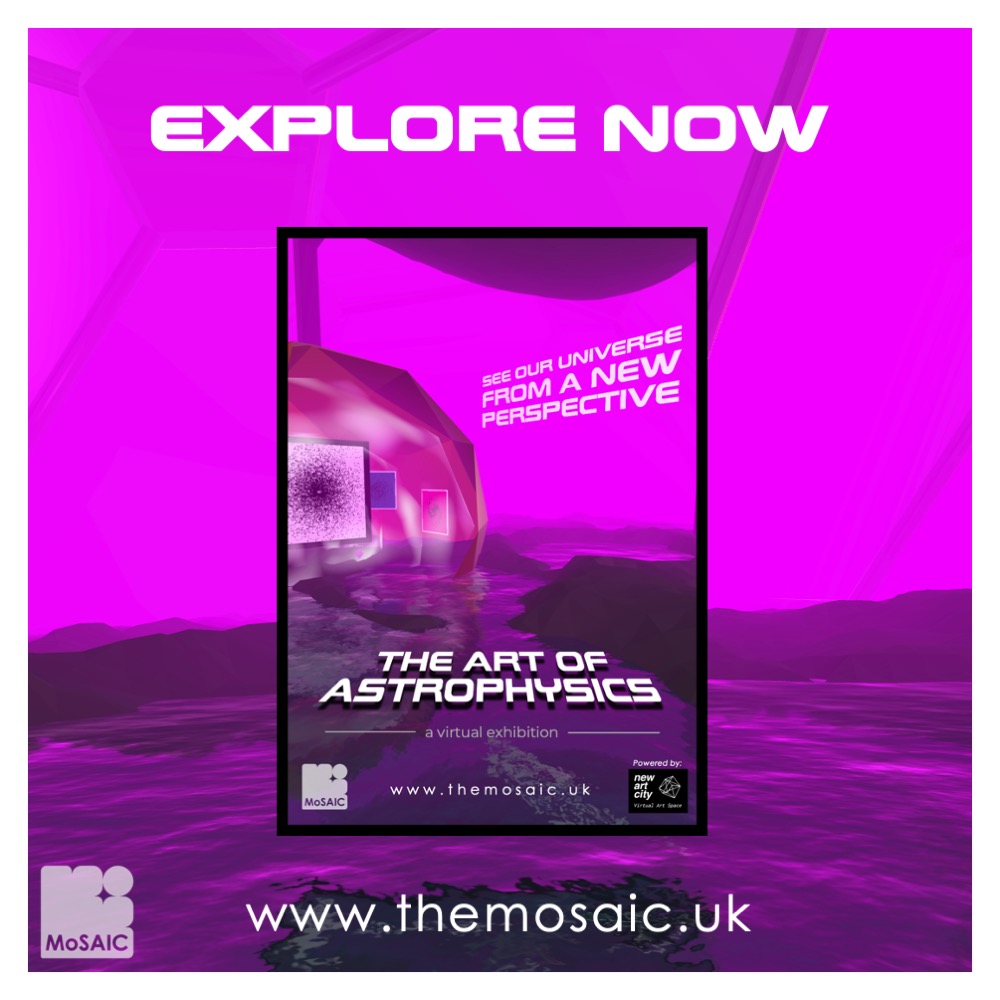
Wandering (and wondering) in this virtual world built by @themosaicuk is amazingly addictive! If you wander over to the gravity gallery, you might find an exhibit on latest work on 3D reconstruction (using neural radiance fields) of a flare around Sagittarius A*
The Schiller lab is hiring PhD and post doc students for an ERC funded research on dendritic and network mechanisms of motor learning using state of the art methods. Atmosphere in the lab is lively and multi-cultural. Come join us.
Scientists, led by a team at Caltech, used AI and telescope data to create the first 3D video of mysterious bright flares around the supermassive black hole at the center of our galaxy.
https://t.co/zMVViINenD
To my astronomer friends we used @almaobs light curves from April 11, 2017 to reconstruct the 3D emission directly after an X-ray flare. By assuming an orbital model for the accretion disk we translate time series data to recover the initial 3D synchrotron emission structure.
.@aviadlevis et al. reconstruct a 3D image of a bright flare orbiting the black hole Sagittarius A*. This image is computationally recovered from @almaobs lightcurve data by constraining a neural network with a gravitational model of black holes: https://t.co/t08gZcpN7U
To my computer science friends we developed NeRFs for black hole 3D imaging using general relativistic ray-tracing. We then reconstructed what the 3D environment around Sagittarius A*, the supermassive black hole at the center of the Milky Way, might look like.
The EHT has released new images of the M87* black hole from observations taken in April 2018. The brightness peak of the ring has shifted by about 30º compared to 2017, consistent with our theoretical understanding of variability from turbulent material around black holes.
Our new paper on toothed #whale jaws is out today in @CurrentBiology. The jaw of toothed whales is unique in that it is used for both #hearing & #feeding. We investigate what’s happened to the shape of the #jaw over 50 million years🐬
https://t.co/6j9smxk1Fb
I plan to take on graduate students 🎓 working on Computer Vision 📷, AI 🧠, & Robotics 🤖 in @UofTCompSci. Interested in joining and becoming part of the broader @UofTRobotics and @VectorInst communities? Learn more at https://t.co/mOMsOfZUZh 1/2
A breakthrough imaging technique from @uoftcompsci researchers acts like a "microscope for time," capturing everything from the bounce of light off a mirror to the bounce of a ball on a basketball court — all in one take. https://t.co/P4hyE62zEW