Labor's primary vote has collapsed to be down over 47% in an electorate (and its predecessors) it has held since their inception almost 40 years ago. https://t.co/nnMHB08mYl
The country is already paying and it will for a long time to come.
Politicians and their supporters can attempt to rationalise things however they please, but the perception of the electorate is everything.
And the data shows that perception is largely accurate.
Don't tell people they should be okay with the circumstances they find themselves in.
Act to actually fix it, or face the consequences.
It's a story as old as time, but rather than act, the majors just employ more spinners.
Madness.
And, frankly, the country might pay.
One in seven new cars sold in the U.K. is paid for through a disability benefit, per the WSJ.
The scheme lets people swap part of their disability payments for a brand-new car every three years.
Among those who got new cars last year, by primary medical condition, according to government figures:
Tennis elbow: 40
Wheat intolerance: 50
Dyslexia: 320
The program now has about 815,000 customers, up roughly 200,000 in two years.
@NathanChinn13 The labour market rebalances based on price signals.
So in that regard it is working as advertised.
The problem is government is distorting those signals.
Amidst the debate surrounding migration levels, I have had several people cite the AFR article from the pandemic era talking about dishwashers allegedly being paid $50 an hour.
So let's explore that shall we.
If dishwashers were suddenly being paid $99k per year over a protracted period, you would see all manner of unskilled individuals (or even some skilled ones) move into washing dishes.
After all why would someone work their ass off in a dead end job in cleaning or aged care for less money, when they can earn above median full time earnings.
It's here that Australia has a good insight into what can be challenging work and labour market economics, which comes from the RBA.
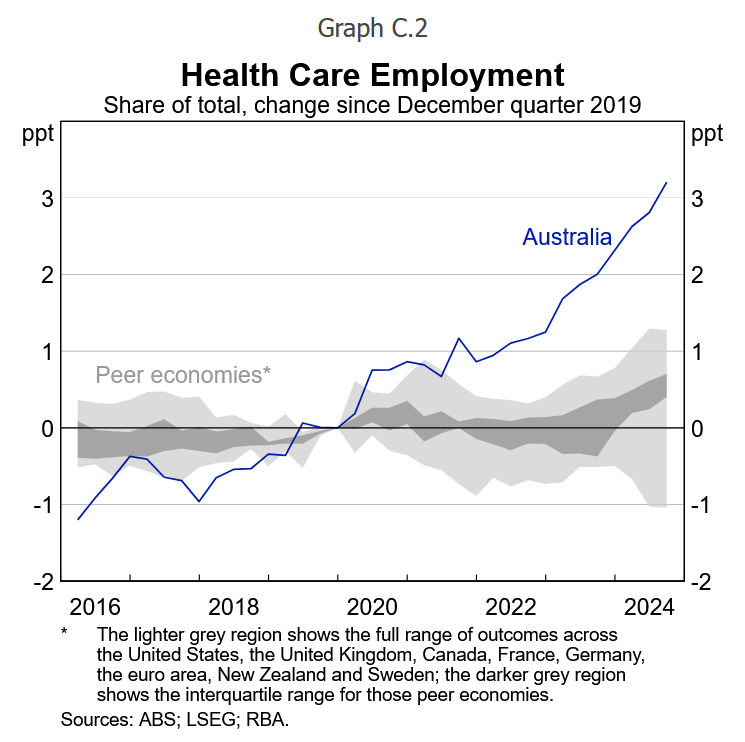
Amidst the enormous rise in healthcare employment (Chart 1) and superior relative wage outcomes in the sector for some workers, it has been sucking in labour from other industries.
As Chart 2 illustrates, this has occurred across every industry to vastly varying degrees.
It's clear in the data that the healthcare sector is pulling in employees from other elements of the economy at quite a pace, far outstripping those coming to or back to the sector via previously being unemployed.
In short, basic labour market economics are working.
The healthcare sector is demanding additional workers, it is paying the wages required to get those workers from other industries and the labour market rebalances accordingly.
It's absolutely true that labour market rebalancing takes time and can throw up challenges, but that doesn't mean it should be avoided.
That is part of how productivity is enhanced in a well functioning economy, in an ideal world the labour goes to the jobs and industry where it can produce the most relative value, whether it be social or economic.
Graph source: https://t.co/mx0AzLWmhe
@Ronnie451785314 Absolutely.
I also support funding to get older people back in the classroom or on job sites to teach part time with real hands on experience.
There is a common narrative that job X or Y is low paid, and needs to be paid better.
Well okay.
Why isnt it being paid better?
In anything approaching a free market economy on a long enough time horizon, wages will rise to a level that ensures demand will be met or productivity will rise so more can be accomplished with less labour.
But when you have a massive artificial expansion of the labour force in an age demographic, say 20-30 years of age, its unsurprising that there is now more supply than demand for these roles, suppressing wages growth.
Throw in that at the average temporary visa holders are exploited and underpaid according to some studies, why would an unscrupulous business owner pay more
When there is a large supply of additional labour, that is heavily exploitable.
Its basic supply and demand level economics, and if the current economic strategy worked as advertised, we wouldnt have had near 0% growth in the private sector economy in per capita terms foe the last 14 years.
This is what a property bust looks like when government and central banks aren't riding to the rescue when price falls start to reach mid to high single digits (aka Australia in almost every property downturn in the last 40 years)
We could get it back to 1990s levels in terms of construction costs relative to incomes, but as long as a parcel of land costs somewhere between 4x and 8x more (for a far smaller block) than it did relative to incomes then, housing is not going to be affordable on a long term time horizon.
Auction results - Sold To Listed
- Sydney 24.6% (30.8% last weekend)
- Melbourne 40.9% (36.7%)
Sydney absolutely collapses to its worst result since my records began.
If this is reflected in SQM's results come Tuesday, this is a market deeply in trouble.
Melbourne a strong bounce vs last week and a massive divergence developing between the two cities.
Although to what degree the now required auction disclosure rules in Victoria could be boosting clearance rates is unclear.
Overall auction volumes in both locales remain depressed compared with this time last year, which is playing a major role in supporting the market.
Without this factor results would be significantly worse.
If you want the normal full round up let me know in the comments, I'm out for the night.
Both cities markets remain in a deeply challenging place and on these numbers within the zone of major price falls.
Methodology in graphic below.
I produce this data entirely unpaid, so if you would like to make a one off contribution to support this effort you can do so here: https://t.co/AD1E5l3cvI #AvidAuctions
Auction results - Sold To Listed
- Sydney 30.8% (27.1% last weekend)
- Melbourne 36.7% (41.3%)
Sydney a bounce from last week, which was the 2nd weakest result since my records began over 8 years ago.
Melbourne a sizable fall, down to within 1 percentage point of its worst performance this cycle.
Meanwhile auction volumes in both locales have collapsed compared with this time last year, which is playing a major role in supporting the market.
Without this factor results would be significantly worse.
It's worth noting that the new auction disclosure rules in Victoria are likely playing a role in the depressed level of auctions in Melbourne, although the drop was already well entrenched prior to them taking effect.
This weekend last year saw: 1334 auctions in Sydney and 1122 in Melbourne.
This week: 845 for Sydney and 553 for Melbourne.
SQM's results for last weekend saw the weakest result for Sydney since records began in February 2020, with an even worse performance than the absolute height of lockdown.
Meanwhile, Melbourne was flat compared with the week before, still in a poor position.
For those wondering what is "normal" on my metric for this weekend of the year, the two cities in 2025:
Sydney: 42.7%
Melbourne: 52.0%
Both cities markets remain in a deeply challenging place and on these numbers within the zone of major price falls.
Methodology in graphic below.
I produce this data entirely unpaid, so if you would like to make a one off contribution to support this effort you can do so here: https://t.co/wxdm21DhuK #AvidAuctions
@angus76774609@matt_barrie Its great, but a whole lot more downside is required, particularly in land prices if we are going to see a lasting change to affordability.
@aaronsmith Its rather simple from a broad overview, at that skill and experience level there is more supply of labour than there is demand.
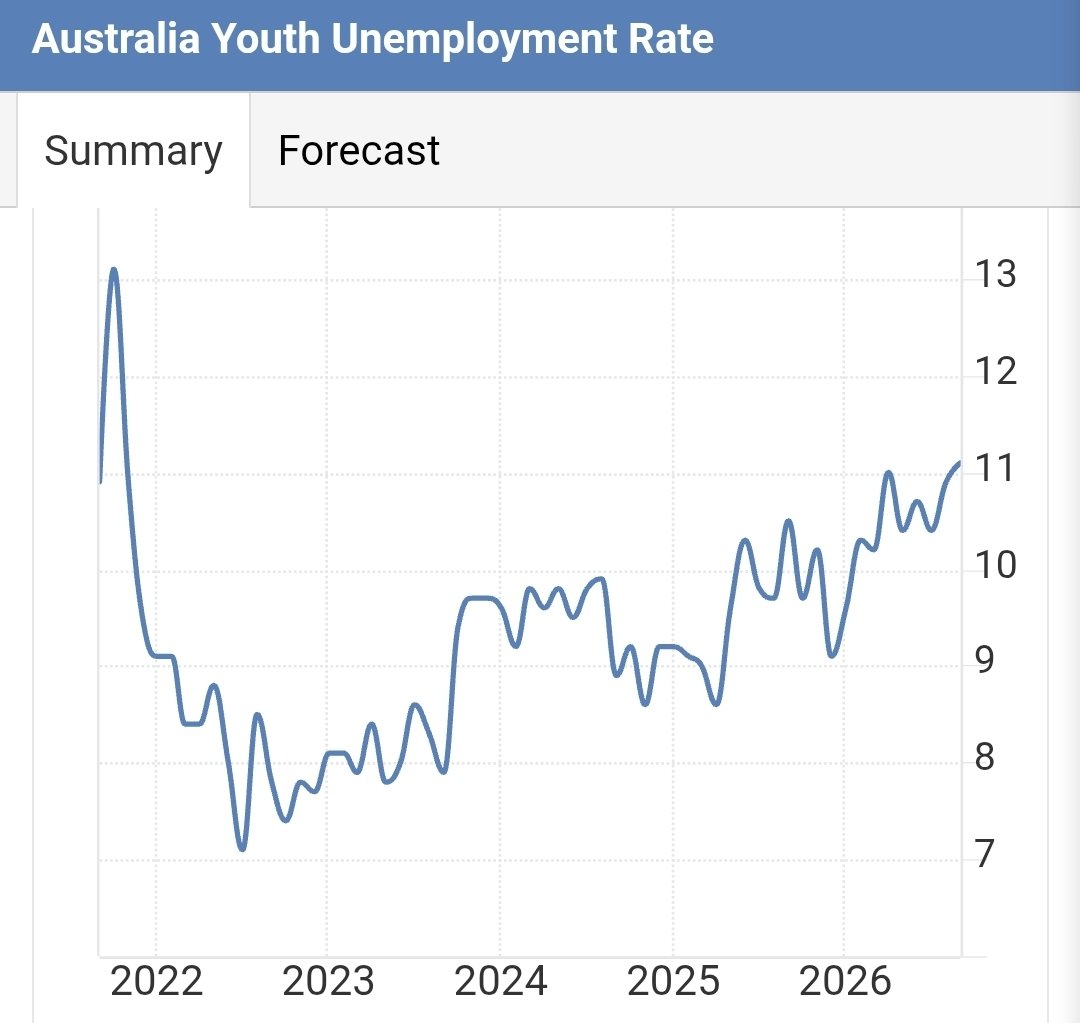
Thats why youth unemployment has shot up from in the 7% range in mid-2022 to over 11%.
Ash taking a big swing here.
I will say flat out, no we shouldn't be using migrants to fill low skill hospitality jobs when youth unemployment is pushing 11%.
And we have a housing deficit that govt agencies admit wont be resolved this decade, even with Labor's migration cuts.
Tarric is implying that we don't need to fill jobs in hospitality?
What is the implication here? Let's kill the Australian economy and services due to falsehood that immigration caused the housing crisis and/or foreign people are bad. Fucking pathetic.
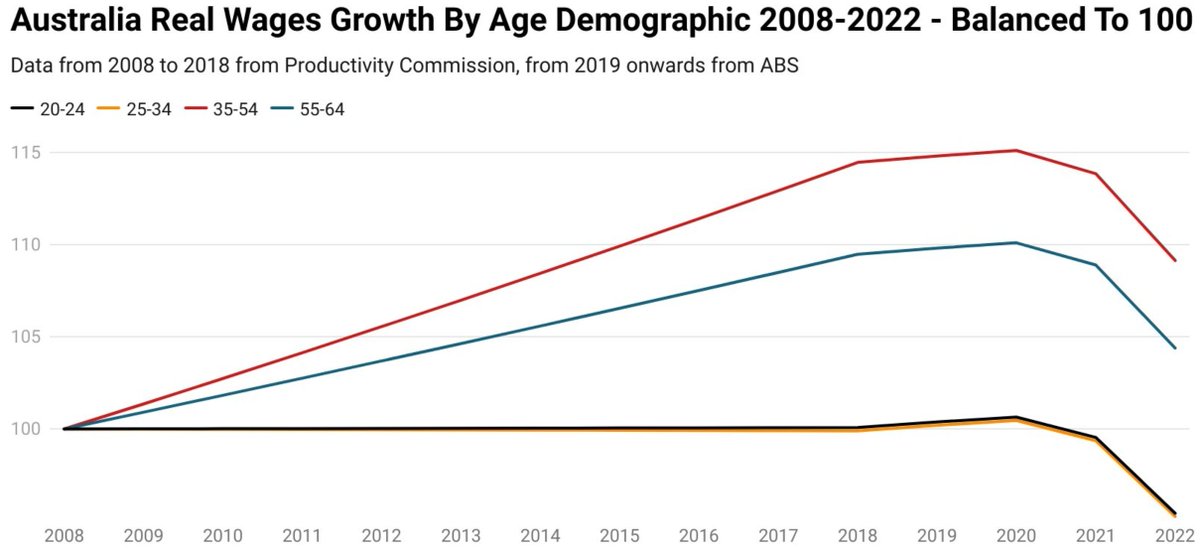
Have some of the folks in the pro-high migration camp ever looked at the real wages outcomes that the 'Big Australia' era helped to deliver...
And reflected on how Mathias Cormann and the Coalition wilfully pushed to keep wages growth low...
Data to confirm what I have stated.
Youth Unemployment: Trading Economics
Housing Deficit: National Housing Supply and Affordability Council - State of the Housing System 2026 (note this data misses the major rise in the deficit in 2022-23)
@Boomer_Pride A study by several senior workers at the RBA based on actual wage growth pressures relative to claims of shortages suggests its mostly employers wanting a buyers market.
This also serves to obscure genuine shortages.