How far can you go in 30m in San Francisco?
I built isochrones from the center of 40 neighborhoods to show how far you can walk, bike, drive, & ride transit
An isochrone shows the distance you can travel when time is held constant (iso - same; chrone - time)
There are interesting takeaways on the state of public transit and infrastructure in sf - full analysis (and app) out soon
Over 10,000 Americans are waiting for a liver transplant. MIT Engineers developed injectable “mini livers” that could take over the functions of a failing liver. The technology could offer an alternative to transplantation or provide support until a donor organ is available. https://t.co/RxSrNqD4b4
Prof. Donald Knuth opened his new paper with "Shock! Shock!"
Claude Opus 4.6 had just solved an open problem he'd been working on for weeks — a graph decomposition conjecture from The Art of Computer Programming.
He named the paper "Claude's Cycles."
31 explorations. ~1 hour. Knuth read the output, wrote the formal proof, and closed with: "It seems I'll have to revise my opinions about generative AI one of these days."
The man who wrote the bible of computer science just said that. In a paper named after an AI.
Paper: https://t.co/juSOmK9vOt
Capybara Simulator announced
The game lets you play as a capybara and just exist peacefully in beautiful forests, swimming and watching sunsets with no goals or pressure.
This is the Outstanding Paper Award at ICLR 2025, and this is exactly the kind of research on LLMs we need, not those quasi-psychological studies of the form "we asked the same question to these 3 models and see which one is more racist!"
As you might already know, when finetuning language models, researchers first perform supervised learning on good examples, then apply preference optimization—training the model to distinguish preferred responses from rejected ones using algorithms like Direct Preference Optimization (DPO). This two-stage process improves model behavior, but prior work observed a curious phenomenon: during the preference stage, the model's predicted probability of generating responses (measured by log-likelihood) decreases for nearly all responses, including the preferred ones the training is supposed to encourage.
This paper provides a mathematical framework explaining why this happens by decomposing each gradient update into three components: how the model currently predicts, how training on one example affects similar examples, and the direction of the gradient signal.
The analysis reveals a "squeezing effect": when you apply negative gradients to push down the probability of bad responses, the probability mass doesn't get redistributed evenly—it concentrates on whichever token has the highest probability at each position. This makes the model's predictions increasingly peaked. The effect becomes severe when the negative gradient targets responses that already have very low probability, which commonly occurs when using pre-collected datasets where the rejected responses were generated by a different model.
The framework explains why methods that generate new response pairs from the current model at each training step outperform methods using fixed pre-collected pairs—they avoid applying large negative gradients to responses in low-probability regions.
The insight leads to a simple improvement: including both preferred and rejected responses during supervised fine-tuning before preference optimization demonstrably improves alignment by reducing the harmful squeezing effect.
Let the paper talk to you and answer your questions on ChapterPal: https://t.co/fQs45SptZm
Download the PDF: https://t.co/sXccVfemmW
Introducing Gemini 3 Pro for understanding research papers 🚀
Highlight any section of a paper to ask questions and “@” other papers for quick context, comparisons, and benchmark references
Bought a Sari at a prominent store in Coimbtore. At billing counter, they asked my mobile number, which I refused to give.
They said, they can't bill without number.
I said - Fine. I will not buy.
As I started walking out the sales lady said, I will give my number to bill & this is how the purchase happened.
Why is the mobile number capture mandatory? This was something I could walk away with, this could have been food, medicine or something really important.
@PiyushGoyal ji please look into it. Data privacy is being breached at every transaction.
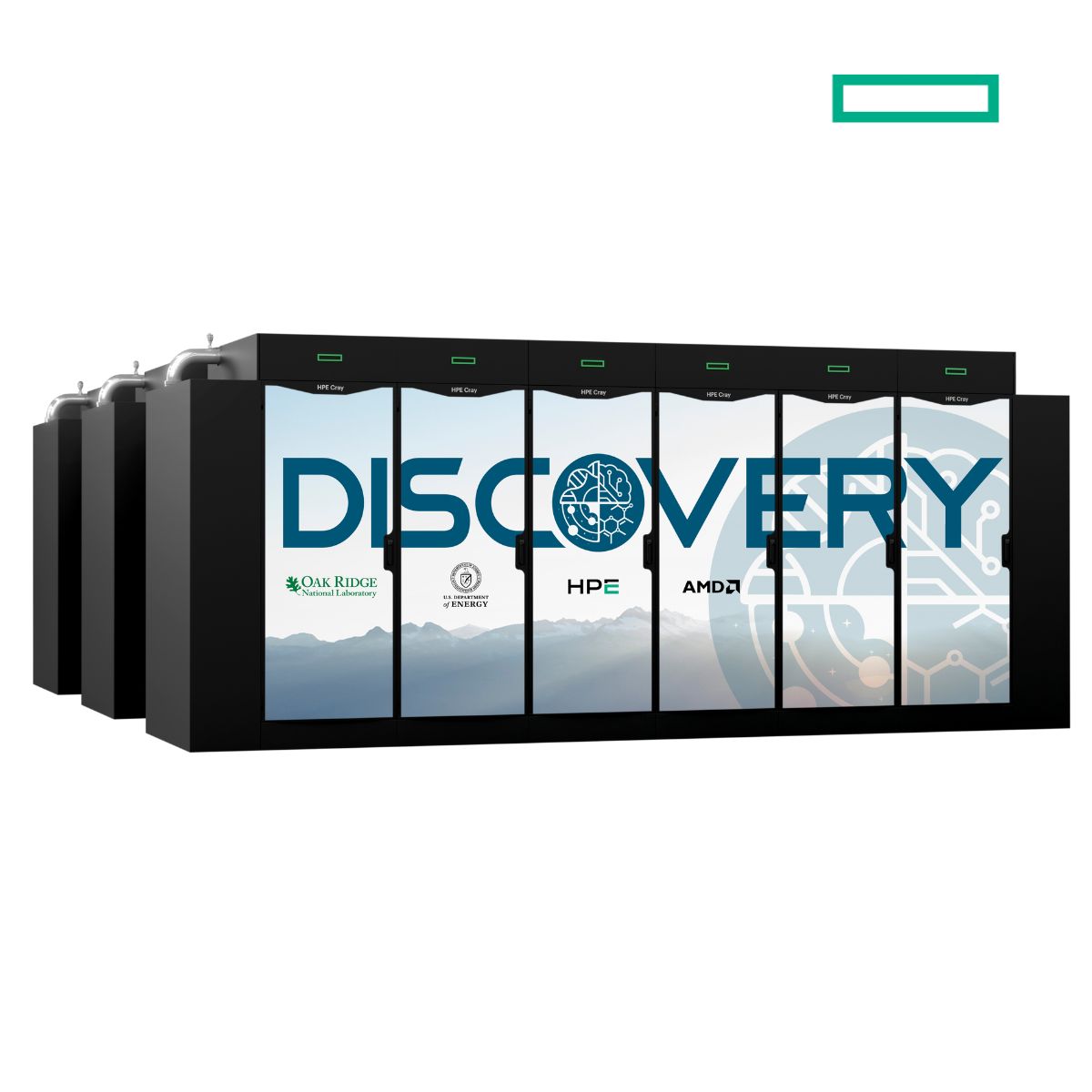
HPE is partnering with @ORNL to build the next-generation exascale supercomputer “Discovery” and the AI system “Lux.” These systems will drive breakthroughs across industries. Explore the tech that’s pushing science forward. https://t.co/XToiyHPglw
.@ENERGY’s new order is a game-changer. It sets the stage for @FERC to accelerate data center + generation co-location, unleashing U.S. energy dominance and fueling AI leadership.
The proposed rule allows load and generation to be built together, instead of waiting years for sequential approvals for critical infrastructure.
By co-locating energy generation with large loads, this order could slash interconnection timelines and fast-track the next wave of AI and energy growth, boosting American competitiveness. 🇺🇸