📢 New Preprint 📢
💪 Current LLMs are performing quite well in pragmatic reasoning
🧐 But how do they acquire this ability?
Introducing AltPrag, a dataset motivated by the idea of "alternatives" in pragmatics to trace during which phase LLMs learn pragmatic reasoning.
[1/n]
@JohnHolbein1 Model multiplicity! I have a paper about to go on arxiv soon about exactly this, but in the meantime you should look at Rashomon Partition Sets! https://t.co/wRWOOMjzve
UW’s @TechPolicyLab and I invite applications for a 2-year Postdoctoral Researcher position in "AI Alignment with Ethical Principles" focusing on language technologies, societal impact, and tech policy.
Kindly share!
https://t.co/08pfHQ59Ml
Priority review deadline: 3/28/2025
Congress appropriate billions to USAID yearly through Foreign Assistance Act. You don't like that. That's fine!
But you can't just go around the Constitution because you don't something. Then we have no republic, just authoritarian whims.
Incredible how nobody understands this
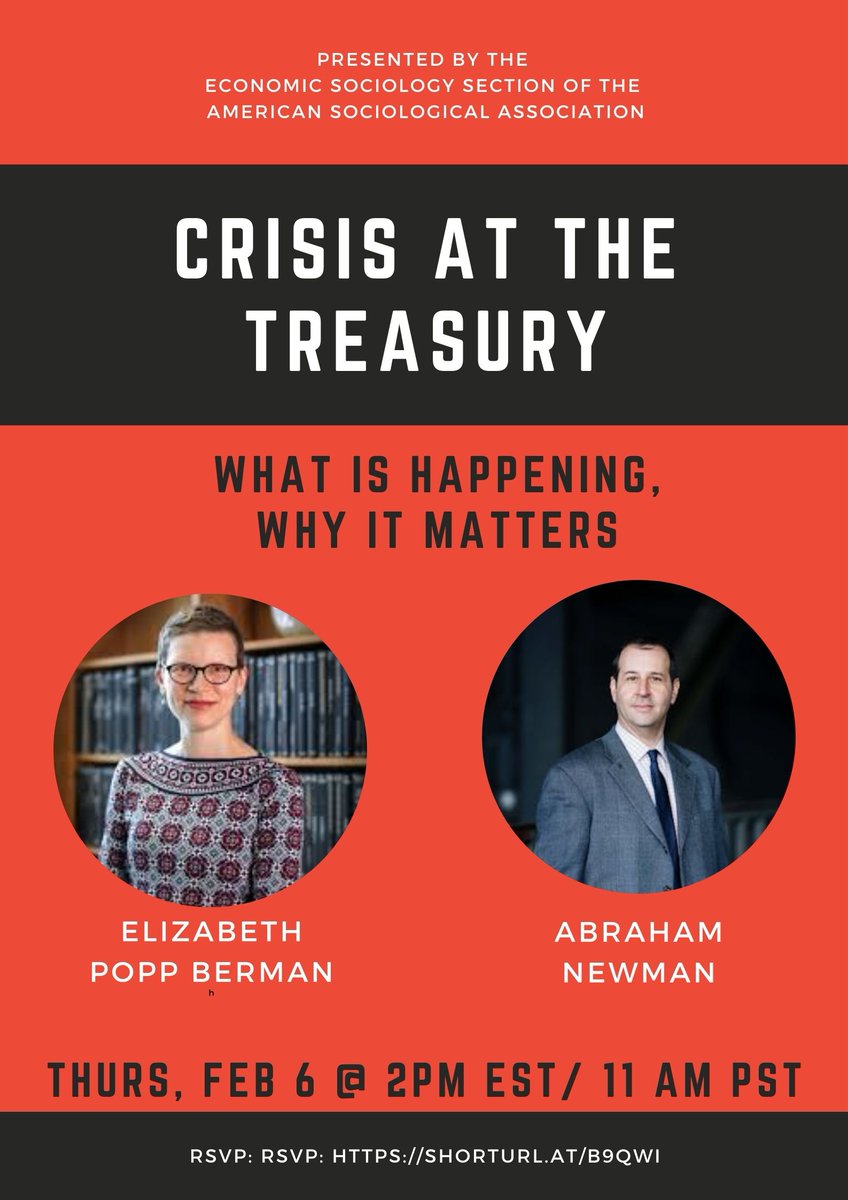
Really looking forward to this discussion with @ASAnews@epopppp@ANewman_forward, though I wish these were not our current circumstances. Registration is available the attached link!
Obviously I don't think trump needed the Dems permission to go there. But the Dems have made it far more difficult to muster a principled and coherent opposition. The unitary fiscal executive didn't begin with trump.
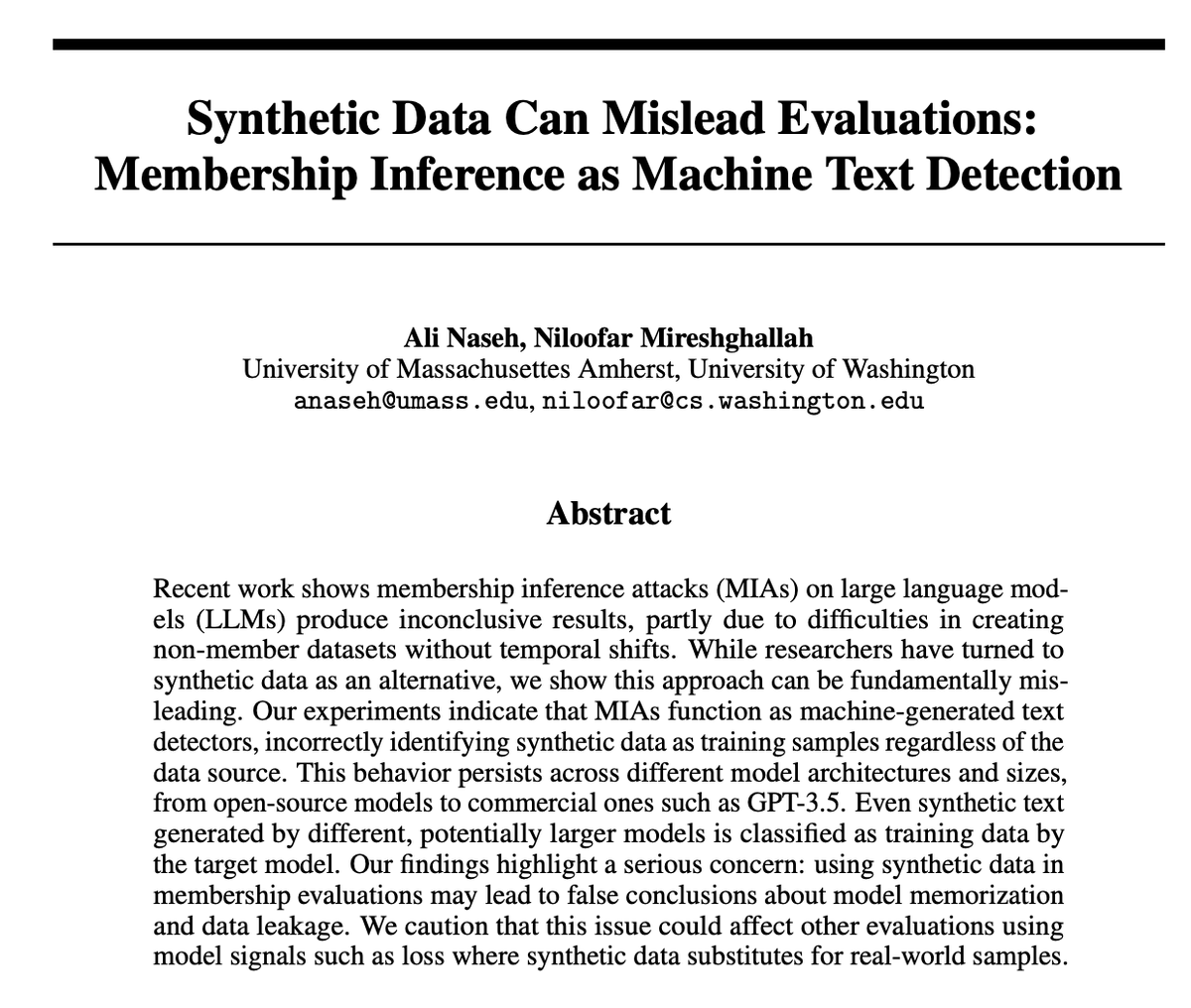
*Synthetic data misleads evaluations* that are based on model loss, e.g. membership inference: models prefer ANY machine-generated text over their actual training data!
This affects many benchmarks such as those using machine translated text.
https://t.co/7q7Mqx3rxU
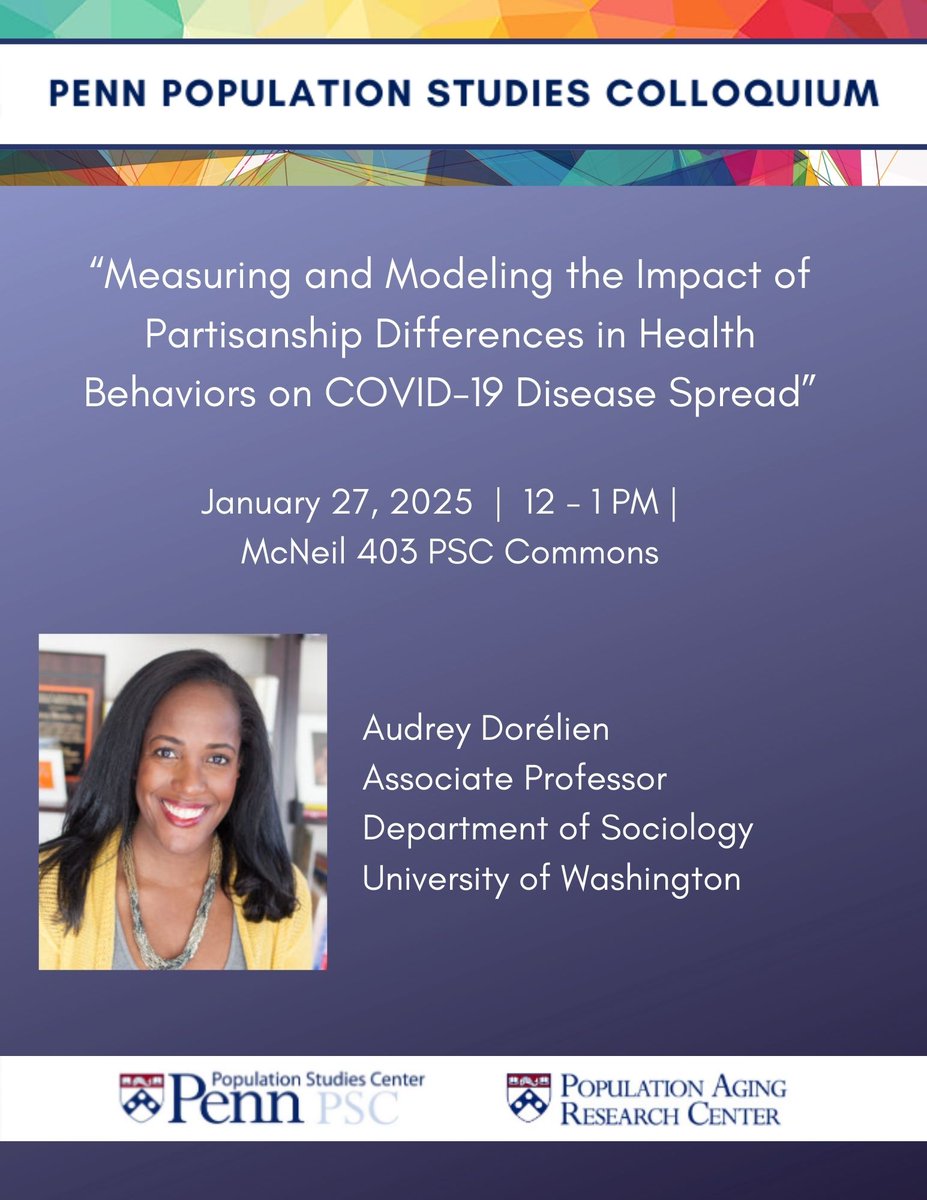
Join Us MONDAY for the first Colloquium of the semester, when @AudreyDorelien of @UW presents
Measuring and Modeling the Impact of Partisanship Differences in Health Behaviors
on COVID-19 Disease Spread
1/27 at NOON
PSC Commons (McNeil 403)
It’s surprising how much large firms influence aggregate inflation dynamics - even during the recent inflation surge.
⬇️🧵 on a new paper https://t.co/mEvnXJUxfO with @SEAlvarezBlaser@LeinSarahMarit and Andrei Levchenko (1/5)
Machine Learning is not just (glorified) statistics! Sure, in its most basic form, ML doesn't seem that far removed from fancy statistics... But ML is its own thing!
Steve Brunton, @eigensteve of the University of Washington, in his fabulous short lecture series on probability and statistics (look for it on YouTube), gives these clear-eyed definitions:
Probability: Assuming you have a known probability distribution that describes your data (say, a Gaussian), probability theory allows you to say something about samples of data you might observe in the future. So, one can calculate the probability that a random variable, X, takes on some value, given the parameter theta that describes the probability distribution (theta for a gaussian would be the mean and variance).
Statistics: It's the flip side of the above. Now, we have in hand the data or samples. We are trying to say something about the probability distribution that best models the data; or given the data we want to say something about the probability of the parameter theta of the distribution
Machine Learning / Deep Learning: Sometimes, we have the data, but the underlying distribution is unknown, or impossible to characterize analytically, using parameters specified by some theta. ML is used to learn the (empirical) distribution by examining the data.
This is the point at which someone will say, but, that is just statistics! Here's why it's not:
Take the problem of learning the probability distribution over the millions of images of the natural world. And not just that: once you have learned the distribution, you have to sample from it, and generate new data that looks like an image from the original dataset. Try doing this with standard statistical methods in some tractable way. It's near impossible.
But diffusion models, heavily influenced by the physics of non-equilibrium thermodynamics, do exactly that. That's deep learning at its best.
Also, take large language models (LLMs). Of course, LLMs learn the statistics of human written language from an enormous corpus of training data, and generate new text by estimating and then sampling from conditional probability distributions, given some input text. Again, while it sounds like it's just statistics, standard statistical methods could not pull off what an LLM can.
The chapter on probability and statistics in WHY MACHINES LEARN was one of the most difficult to write (it involved getting across the basics of two large fields of math and tying them to ML, all in the space of 30 pages). Nearly killed me. But it was also one of the most satisfying chapters to write, not least because I got to understand so much while trying to make sense of these issues.
More here: US: https://t.co/IUiKKxZcUH
UK: https://t.co/UbnCK0BMa7
A real honour and career dream that PRISM has won a @NeurIPSConf best paper award! 🌈 One year ago I was sat in a 13,000+ person audience of NeurIPs '23 having just finished data collection. Safe to say I've gone from feeling #stressed to very #blessed 😁