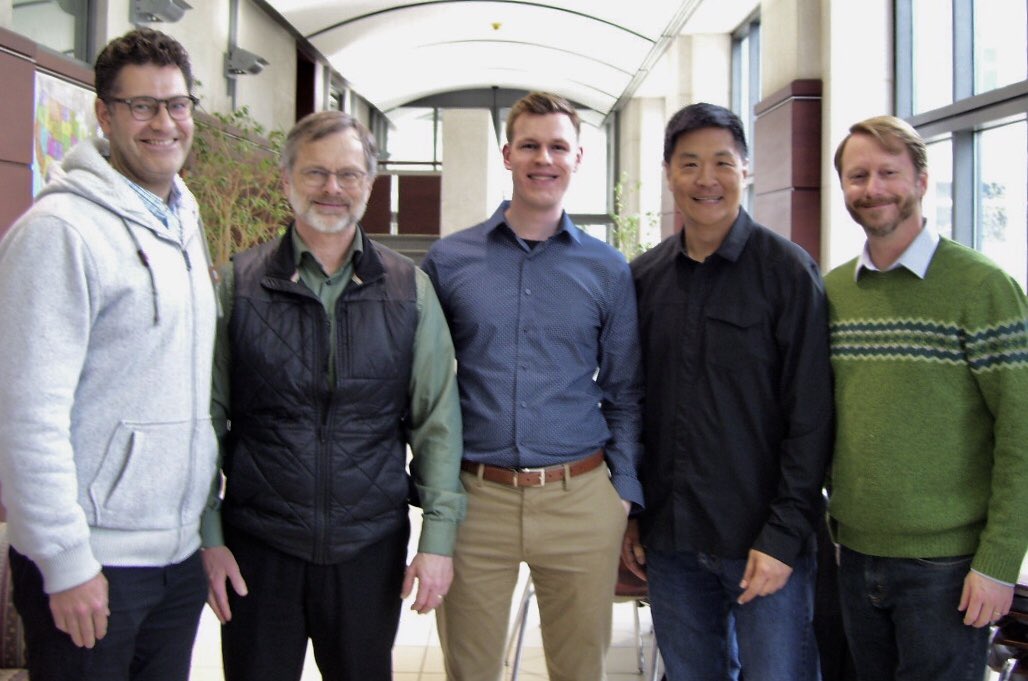
For reasons I can't fathom, my post about our search for new postdocs at U Chicago was marked as containing "sensitive content". I'm baffled! Explain this to me and earn my gratitude.
But really, we are seeking postdocs. https://t.co/DNzgWxOPQa
@Josh_J_Foster @bradpwyble@AlonZivony Mazza and Carramazza have a nice paper showing that N2pc set size effects (with displays containing varying numbers of dots) disappear when subjects are no longer trying to individuate the individual elements off the displays.
@Josh_J_Foster @bradpwyble@AlonZivony Cool thread! My two cents on N2pc responses to complex objects is that it may depend on there global/local stance of the observer. If they are motivated to individuate the parts of the object, N2pc amplitude should ride along with effective set size.
We have an ongoing search for an assistant professor studying Cognitive Psychology at the University of Chicago!
Please consider this chance to join a vibrant psychology and neuroscience community that stretches across multiple departments and divisions. https://t.co/5jQv7jJtFi
@stevenjluck Take heart, Steve. The impact won't be that noticeable because of the parallel brownout of the processes that allow you to notice that sort of stuff.
@hardsci Certainly it depends on the paper's length and complexity... And whether there are obvious fatal problems that preclude the need for scrutinizing more minor issues. Papers that are close to the threshold take me longer to review than ones that miss the mark by a lot.
@hardsci Just a thought experiment: A purveyor of magical items tells you that anything placed in this box will disappear with probability 0.5. If you put your watch in there and nothing happens, nothing has been learned. But on the other hand...