Is meta-RL in PFC just a big RNN or can we figure out its mechanism?
Here we show that RNNs learn a particular, but general, method for meta-RL. They place options in 'ranked’ subspaces (slots), and dynamically re-rank them. Value doesn’t pick the action; it reorders the slots🧵
Chomsky was wrong.
Researchers found your brain doesn’t store language the way every textbook since 1957 claims.
For decades, the undisputed rule of linguistics, led by Noam Chomsky, was that human language is hierarchical.
We were told our brains process language using complex "grammar trees." That we secretly build deep, abstract, mathematical rules in our heads before we speak.
This new paper proves that is completely wrong.
Researchers at Cornell University analyzed how people actually process and produce language in real time.
They found sequences. Linear chunks.
When we speak, we aren't calculating deep syntactic rules. We are just predicting the next most logical sequence of words based on the context of the words right before it.
We string linear chunks together.
If this sounds familiar, it should.
This is exactly how Large Language Models like ChatGPT work.
For years, critics have dismissed AI as "just a next-token predictor." They said it isn't truly intelligent because it doesn't understand deep grammatical hierarchies like humans do.
But this paper suggests humans don't use those hierarchies either.
We are just predicting the next chunk.
Language isn't a rigid tree of mathematical rules. It's a linear stream of contextual predictions.
We thought we were building AI to mimic the complexity of the human brain.
It turns out, the human brain was just running a simpler algorithm all along.
Boston University is recruiting Assistant Professors in multiple departments affiliated with our Center for Systems Neuroscience as part of the University-wide convergent search for Advancing Brain and Cognitive Health. For links to specific positions see: https://t.co/s0YSSZNzzN
BCS is hiring! Search now underway for tenure-track assistant professor across all areas of brain and cognitive science, potentially including computation, cognitive science, or experimental neuroscience. Deadline Dec. 1, 2026. https://t.co/0ua3JXjRSU
We are hiring!!
"Artificial intelligence, broadly construed. This includes embodied AI and robotics, machine learning and the systems that support it, and AI developed for problems in science, engineering, medicine, education, and society."
https://t.co/N5HaJl4k25
Without nonhuman primates, the neuroscience field could miss out on insights into vision, motor control, cognition and development, according to our interviews with 17 neuroscientists.
By Alissa de Chassey
https://t.co/fmgiIT3ZkA
Will you be at the Memory Disorders meeting in Toronto. Or in Toronto? Come see Pavlov’s Dogz, the legendary brain punks you've heard so much about. Friday night at The Pilot. Get yr tix NOW!
Pavlov's Dogz
Date: Oct 23 • 19:00
https://t.co/4GaDmMbeRD
"What" and "where" in frontal cortex, together again. In this case, in a relational code that ties objects to their arrangement.
A Relational Code for Objects in Primate Frontal Cortex
https://t.co/hdYq0A42tb
#neuroscience
@doristsao Haven't read it yet, but just sharing that I'm curious about possible linkage between this 15Hz signal and this one: https://t.co/bEgxHZTzEp
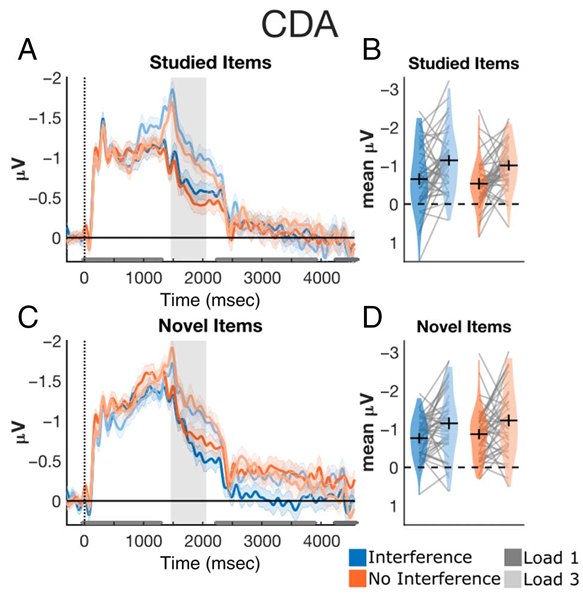
Does knowing that distractions are coming change how we use working memory?
In two EEG experiments, anticipating interference did not change how strongly previously learned information was reactivated in working memory.
https://t.co/FDoo2IG1gC
The foundational claim that newborns visually prefer upright over inverted face-like configurations is a myth, as the original data actually showed no such preference. This review reveals that a false narrative constructed in subsequent literature was projected back onto the source, overturning the primary evidence for innate face knowledge in infant psychology.
https://t.co/elRGPAxnyJ
New paper out in @NeuroCellPress! Using Multi-Site Neuropixels recordings in NHPs, we show that automatic behaviors are interrupted by the OFC "jamming" rather than "suppressing" the striatum!
https://t.co/zcVC1PT3oX
Exploring Neural Mechanisms Underlying Error-related Impairments in Active Working Memory Suggests an Adaptive Shielding of Contents during Cognitive Control dlvr.it/TVvYW7
@johnmark_taylor fyi, there is another good way, one that doesn't have a several month lag between submission and publication. it's the @jocnforum. Indeed, here might be a place to start: https://t.co/jc8KjGB0Ko
Imaging Neuroscience: The First 3 Years—Editorial
Thanks to our Editorial Board, reviewers, and authors, who trusted that this would work, and moved with us to the new journal. Its success belongs to that community.
https://t.co/ssgFbUgHra
The rich get richer in visual processing: latest study with Ivan Tomic shows that we allocate resources preferentially to stimuli that we feel confident in estimating, which makes us better at estimating them...even if the initial confidence was misplaced https://t.co/xkRfsZ28pq