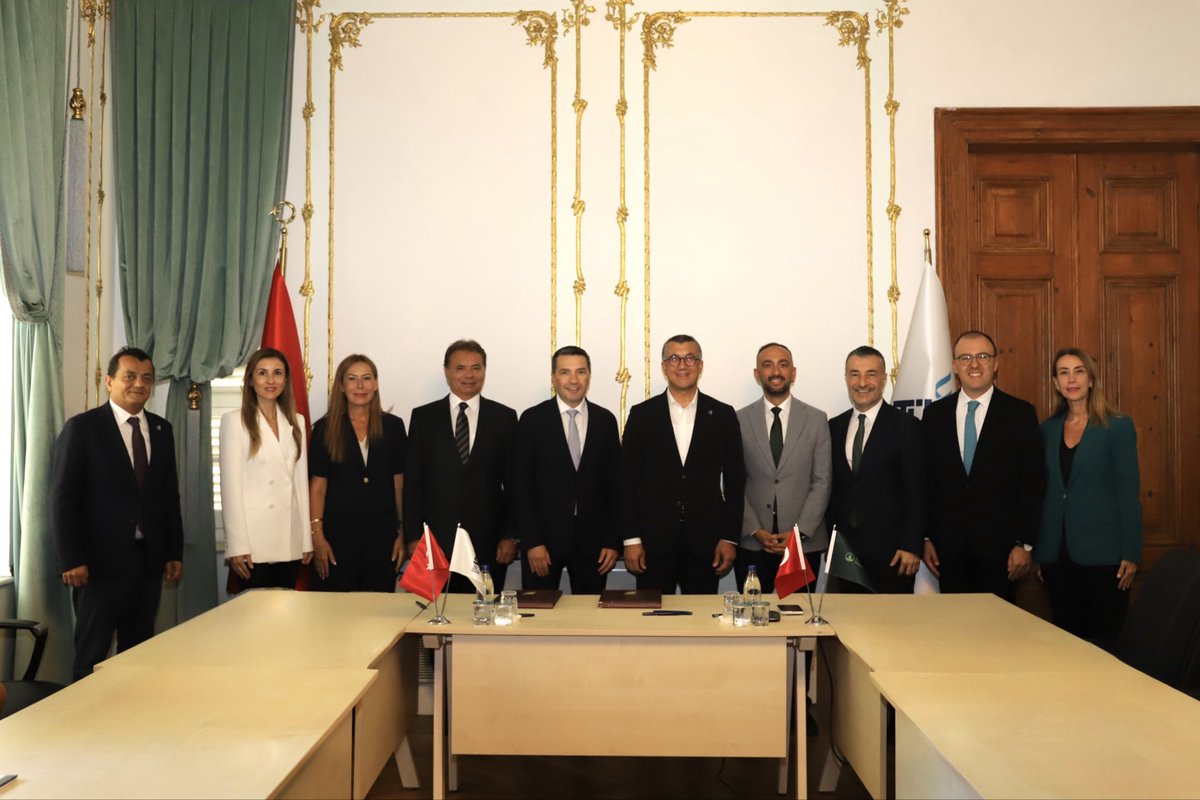
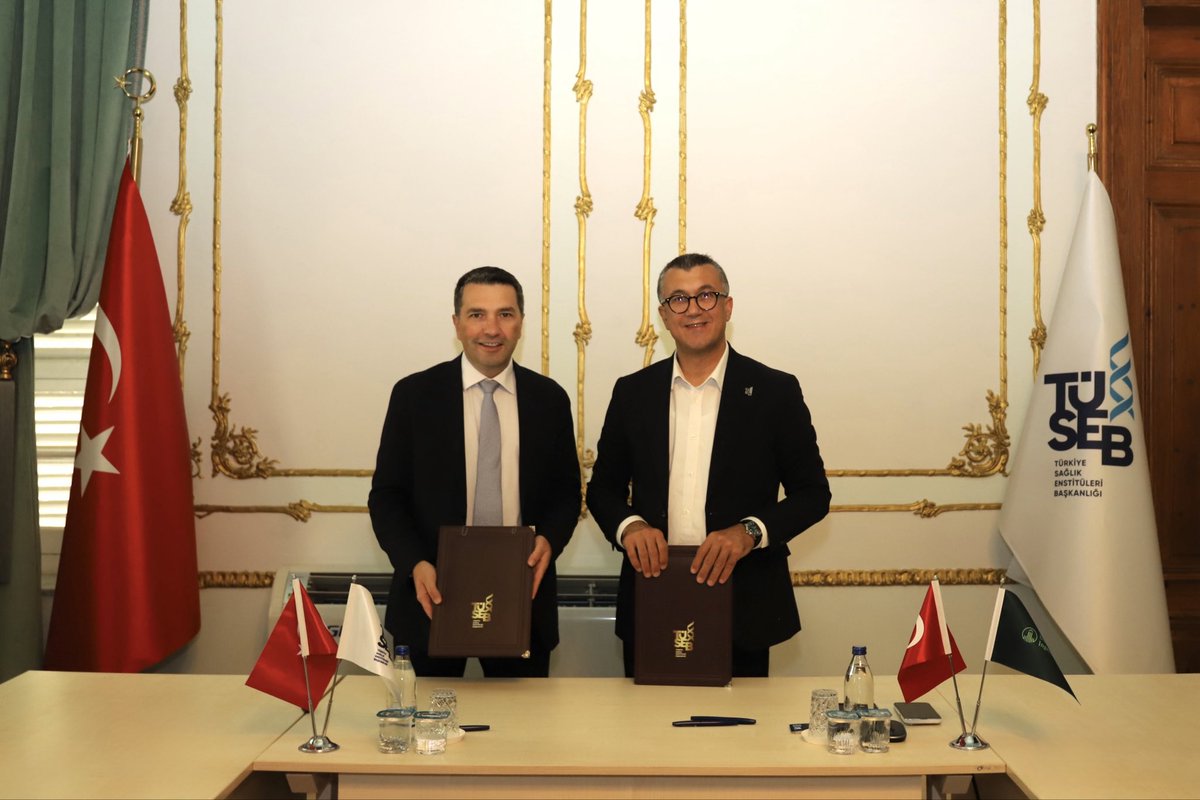
TÜSEB ile Boehringer Ingelheim İlaç Ticaret Anonim Şirketi arasında sağlık bilimleri ve teknolojileri alanında iş birliğinin geliştirilmesine yönelik iş birliği protokolü imzalandı.
Protokol ile kanser, klinik çalışmalar, biyomedikal teknolojiler, biyoteknoloji, ilaç ve ilaç taşıma sistemleri, tıbbi cihaz, yapay zekâ, biyomalzeme, tıbbi görüntüleme sistemleri ve tanı kitleri başta olmak üzere ortak çalışma alanlarının geliştirilmesi hedeflenmektedir.
TÜSEB Başkanı Prof. Dr. Ümit Kervan ile Boehringer Ingelheim İlaç Ticaret Anonim Şirketinden Genel Müdür Okan Güner ve Medikal Direktör Dr. Levent Alev tarafından imzalanan protokol kapsamında ortak Ar-Ge ve Ür-Ge çalışmaları yürütülmesi, bilimsel araştırma ve proje desteklerinin geliştirilmesi, araştırma altyapıları ile klinik alanların ortak kullanımına yönelik çalışmalar yapılması planlanmaktadır.
Söz konusu protokol ile sağlık alanında kamu-özel sektör iş birliğinin güçlendirilmesi, yenilikçi sağlık teknolojilerinin geliştirilmesi ve bilimsel üretim kapasitesinin artırılmasına katkı sağlanması amaçlanmaktadır.
Impressive temporal AI model of aging by @GladstoneInst
Based on ~175M single-cell transcriptomes, the model predicts drivers of cell trajectories across human aging.
Also great that the first author, Javier, trained in our lab. Always rewarding to see our alumni flourish.
A nationwide trial aimed at transforming how dementia is diagnosed through blood tests is now underway!
The READ-OUT research team will assess a range of new and existing blood tests for different types of dementia and assess how they could be used to detect dementia at various stages.
This vital research is bringing us closer than ever before to a breakthrough, and it wouldn’t have been possible without support from our partners @AlzResearchUK , @NIHRresearch, and funds raised by players of @PostcodeLottery.
Read more at: https://t.co/NDBEKj9HAI
BREAKING NEWS
The 2024 #NobelPrize in Physiology or Medicine has been awarded to Victor Ambros and Gary Ruvkun for the discovery of microRNA and its role in post-transcriptional gene regulation.
A new hydrogel boosts nerve regrowth following spinal cord injury in animals, significantly improving motor function during recovery. https://t.co/YnIzWqTA8f @ScienceAdvances
FDA approves third anti-amyloid antibody for Alzheimer disease https://t.co/6yRJ27EYDw
Eli Lilly’s donanemab (Kisunla) is now approved for early symptomatic Alzheimer disease.
Hereditary Alzheimer's Transmitted Via Bone Marrow Transplants
Alzheimer's disease, traditionally seen as a brain-centric condition, may have systemic origins and can be accelerated through bone marrow transplants from donors with familial Alzheimer's to healthy mice.
This study underscores the disease's potential transmission via cellular therapies and suggests screening donors for Alzheimer's markers to prevent inadvertent disease transfer.
By demonstrating that amyloid proteins from peripheral sources can induce Alzheimer's in the central nervous system, this research shifts the understanding of Alzheimer's towards a more systemic perspective, highlighting the need for cautious screening in transplants and blood transfusions.
1/2
Review the brain from a 360-degree viewpoint 🔄🧠
Examine brain structures from a 360-degree viewpoint, make various incisions and slices, read more about the areas, and download images of the brain.
Access our 3D Brain Atlas here: https://t.co/2eiqTVWhDy
APP antisense oligonucleotides reduce Aβ aggregation and rescue endolysosomal dysfunction in induced pluripotent stem cells derived from people with Alzheimer disease https://t.co/MQNoIPL2l1
Submissions to #SciDip15 are due in less than a week! Submit by Sunday, Mar. 31 to have your voice heard in this special issue that will look at the changes we’ve seen to #sciencediplomacy since @aaas and @royalsociety helped to define the concept in 2010: https://t.co/yrsx2sFBSQ
Impressive work from Jianping Fu @UMich@reiner_lab@UPenn_SongMing describing a new method to grow a bona fide neural tube from human stem cells. NT-like structures develop antero posterior & dorso-ventral polarities as in a normal neural tube, including hox gene segmentation & Neural crest cells. Great tool to study neuronal specification
https://t.co/mKyqKQL5gt
💡 Innovation + 👩🏾🔬🧑🏼🔬 Collaboration = 🧠 Increased understanding of the brain
Meet 64 interdisciplinary teams working to expand our understanding of neuroscience + find treatments for neurodegenerative diseases https://t.co/k5E0BWc0rS
Isn’t it fascinating how #neurons can closely resemble cities and road networks? 🌆
In our most recent episode, Svilen discussed the role of the #cytoskeleton in neurons with Dr. Christophe Leterrier @christlet. Neurons contain different classes of protein filaments that make up the cell's cytoskeleton. They work together to maintain and change the cell's shape but are also important for transport processes inside the cell. 🚚
Dr. Leterrier likes to use an analogy in which smaller filaments (#microfilaments) such as actin serve as “roads” within the cell for short-distance transport, while large filaments (#microtubules) represent “highways” on which proteins or vesicles can travel longer distances and even the entire length of the axon.
For more intriguing facts about neurons check out our new episode with super-resolution #microscopy 🔬 expert Dr. Christophe Leterrier now out on YouTube and Spotify!
Left image: Neuronal cell culture, used with permission from Dr. Christophe Leterrier
Right image: Road networks in the southern Netherlands as seen from the ISS, European Space Agency (ESA, https://t.co/j5aLlZDJN7)
This podcast is supported by the International Max Planck Research School for Neurosciences in #Göttingen as well as the Cluster of Excellence "Multiscale Bioimaging" in Göttingen @MBExC_de.
#FluorescenceFriday #fluorescence #microscopy #optics #neuroscience #phd #phdstudent #phdlife #STEMeducation
The Tian Lab strongly believes in the importance of open science 🧬🔬
We proudly share our biosensors with labs all over the world!
Large requests: visit our @uncneurotools sensor menu
https://t.co/F72PsNgOq3
Small requests: https://t.co/eW1cr5w0Y3