Friends: a Couple of days ago I participated in an X (Twitter) discussion on the low Royalty allocated to #Somalia in its oil and gas exploration agreement with #Turkiye. I was supportive of the agreement, recognizing both its limitations and its strategic importance for Somalia’s long-term development. My reasoning was as follows.
Yes, there are a lot of weaknesses in the agreement, including high cost recovery (90%) and low royalty (5%). But at this early stage, Somalia remains a frontier jurisdiction with no proven commercial reserves. In such contexts, attracting credible international partners is inherently challenging. Offshore exploration is capital-intensive and high-risk, often requiring significant upfront investment with no guarantee of discovery. Against this backdrop, the agreement reflects a pragmatic approach: prioritizing exploration activity and geological discovery over immediate fiscal gains.
While the fiscal terms, particularly the royalty rate and cost recovery provisions, may appear less favorable compared to more mature petroleum regimes, they must be evaluated considering Somalia’s current position. Without proven reserves, not to mention the security and political risk, the country’s bargaining power is necessarily constrained. Securing investment under these conditions is itself a meaningful achievement, as it initiates the critical first step in transforming potential resources into confirmed national assets.
Importantly, this agreement should be viewed not as an endpoint, but as a learning platform. It offers Somalia a valuable opportunity to build institutional capacity, strengthen regulatory oversight, and develop technical expertise in petroleum governance. As exploration progresses and geological certainty improves, Somalia will be better positioned to negotiate future agreements on more favorable terms.
In this sense, the agreement represents a foundation, one that may enable Somalia to transition, over time, from a high-risk frontier environment to a more competitive and strategically empowered resource holder. Furthermore, given what is happening in the Middle East and Iran, this venture may have arrived at the most opportune time for implementation.
Somalis will find a reason to oppose anything.
The war against Al Shabaab? A conspiracy project.
One person one vote? Incomplete and illegitimate.
Indirect elections? Haram, we reject it.
The constitution? Hassan Sheikh just sewing his own shirt. Never mind that every single presidential candidate ran on completing it.
Oil production? New colonialism.
Federalism? Dividing the country and splitting society.
So where exactly do you lead a people like this?
Centralized governance. That is the answer. A strong unified state with one direction, one vision and one chain of command. Federalism in Somalia has become an excuse for every regional lord to block national progress.
SOMALIA may seem an unlikely place to have struck an oil deal, but the terms of its contract could bring in impressive returns in the long term. Relative to other projects across the continent, it has considerable advantages.
The Critics Are Silent But We Aren't.
Somalia took less money up front but were given a significantly better return on investment at the end of the deal.
Once exploration costs are paid the potential is for Somalia to extract far greater value from its oil and gas resource than what some of its African frontier counterparts secured in their initial discoveries.
This will also allow Somalia to get more out of the field over time, not just in the first couple of years.
Early payments were given to countries such as Guyana but long-term state share of revenues remain lower.
Somalia’s 3D covering is much more favourable for larger rewards following commercial discovery, whether the prospective offshore resources be sizeable or not.
The deep water. Türkiye is protecting Somalia from losing billions before the first oil.
IF Somalia can confirm the reserves of its offshore oil and gas, it could end up taking a bigger share of profits than some of Africa's oil-producing states received in their first-generation contracts.
Somalia's oil and gas deal may turn out to be more valuable for the impoverished East African nation in the long run if it allows the government to retain more revenue once production starts,
Unlike some other frontier African countries, Mozambique began production without the exploratory overhead of having first established future potential.
SOMALIA: Coast and offshore basin size boosts long-term profit potential even higher than land-based African discoveries.
In agreeing a petroleum deal with international oil companies, Somalia is trading tomorrow’s oil for today’s patience and is likely to receive one of the continent’s best future-value petroleum deals, potentially one of Africa’s best if the finds are large.
Failed politicians have only one weapon left. “lies designed to break the public’s hope” But, we are not hopeless. We are simply tired of few who trade in lies and fear
https://t.co/dk8yXD5VCY
Pleased to share my contribution to the LoYW symposium with the Lieber Institute. I explore the Somali traditions of restraint in warfare, how customary law historically placed limits on violence and their relevance to discussions on the universality of humanitarian laws. #IHL
Long before formal statehood, Somali society developed a detailed and durable system for regulating violence constructed on customary law, collective responsibility, and oral authority rather than codification, explains Ayan Ali. https://t.co/JqMK2IhPth
Long before formal statehood, Somali society developed a detailed and durable system for regulating violence constructed on customary law, collective responsibility, and oral authority rather than codification, explains Ayan Ali. https://t.co/JqMK2IhPth
In a world that grows numb to cruelty, be like Ahmed al-Ahmed, who ran toward danger to protect life.
That is Islam.
We mourn the victims of today’s attack in Australia and pray for safety and sanity everywhere.
May those who murder while cloaked in power or false righteousness leave no legacy worth repeating.
Today, we successfully concluded a four-day symposium marking the 25th anniversary of the Somali Peace and Reconciliation Conference held in Arta, Djibouti, in 2000. The event celebrated this historic milestone with the opening of the Arta Museum and the symbolic reconstruction of the original conference tent, honoring the spirit of unity and hope that defined the Arta process. I wrote this article to reflect on the historical significance of that moment and its lasting impact on Somalia’s journey toward peace and statebuilding.
https://t.co/0vW60IVs98
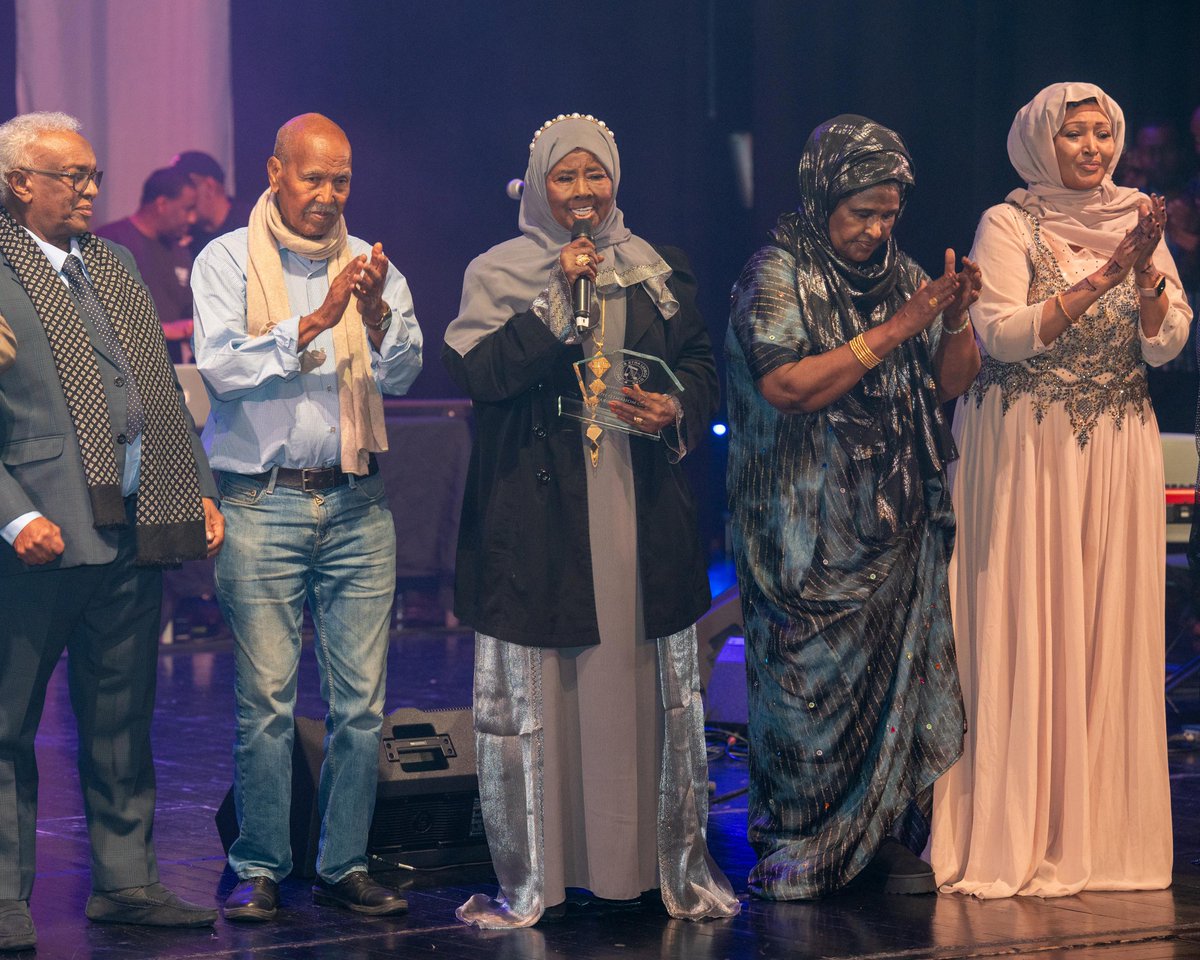
Somali novelist Nuruddin Farah led a special event honouring the legendary Somali vocalist Hibo-Nuura Maxamed with a lifelong recognition award, as part of the closing session of the @SomaliWeekFest.
Thank you Ayan Mahamoud (@Gobannimo) for this and everything Somali week.
Update: Nicaragua v. Germany at the ICJ
On 21 July, Nicaragua submitted its Memorial in line with the time limit set by the @CIJ_ICJ in its Order of 19 July 2024.
Nicaragua submits that Germany has failed to fulfill its duty to guarantee respect for international humanitarian law and the principle of self-determination of the Palestinian people and has been facilitating—through action or omission—crimes such as apartheid, illegal occupation, and genocide.
Nicaragua requests the Court to adjudge and declare, inter alia, that:
⚫️Germany must immediately cease the supply of weapons and military technology to Israel;
⚫️Germany must distinguish in its commercial, cultural, and academic relations between the territory of Israel and the Occupied Palestinian Territory;
⚫️Germany must offer assurances and guarantees of non-repetition;
⚫️Germany must perform the obligation of reparation in the interest of the Palestinian victims of its conduct
With its recent Advisory Opinion in Obligations of States in respect of Climate Change, the ICJ seems to have removed one legal hurdle for Nicaragua to overcome: its legal standing with regard to both obligations erga omnes (under customary international law) and obligations erga omnes partes (under treaties like the genocide convention) now seems to be established. The main legal hurdle of jurisdiction, however, still remains (not to speak of the uphill struggle of proving the merits of its claims).
Germany now has until 21 July 2026 to respond.
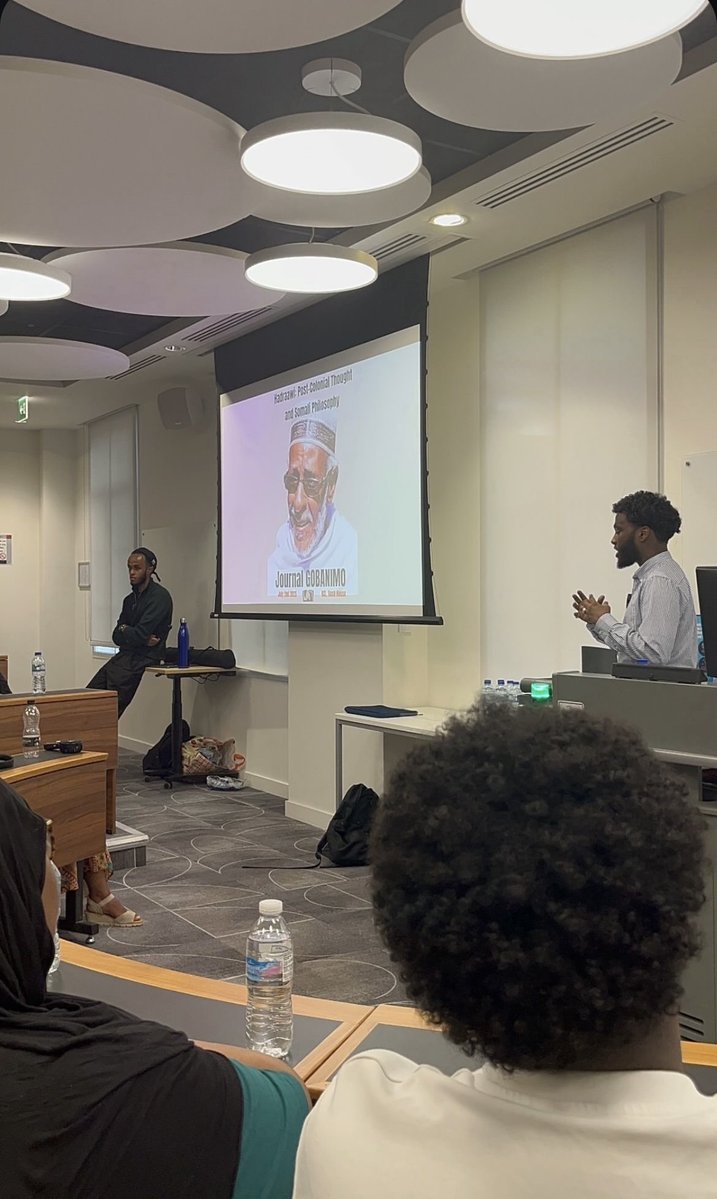
Our deep thanks to all who attended 'Two Events, Two Weeks: Critical Horizons in Somali Thought'. With profound insights from @Ibn_Asad2 and @TheNabaddoon —early Islamic governance to Hadraawi’s intellectual legacy—spurring the Somali imagination towards authentic healing futures
One way to support @FranceskAlbs is to read, circulate, cite, quote, and teach the rigorous reports she has written on self-determination, carceral system, child rights, genocide, and corporate complicity. Here is a list:
#Somalia does not need a structural reset; it needs a reinvigorated and honest commitment to the unfinished work of constitutional federalism.
'The Mirage of Confederalism: Why Somalia Must Reform Its Federation, Not Abandon It' on WardheerNews website https://t.co/f2p1Tk53fL
Check out my latest opinion on Wardheer. Walaaloyaal midnimo should not be up for debate!
Midnimada lagama doodo, waa la dhowraa! Midnimo waa daawo, kala tag waa cudur!
Let’s reform what exists, not romanticise disunion.👇@Wardheernews
For the friends in London, don’t miss out! A timely and necessary intervention by Prof. Baadiyow. “Somalia: A State in Search of Exceptional Leadership” launches in London. A rare chance to engage with ideas that speak to Somalia’s past, present, and political future. #Somalia
Fadlan, kasoo qaybgal baal-furka buugga: Somalia: A State In Search of Exceptional Leaderahip. Introductions by H.E Ambassador to the UK @MinisterHashi and Somali historian Mohamed Issa Turunji. Organized by @MohammedAArtan@LoohPress#London_Uk