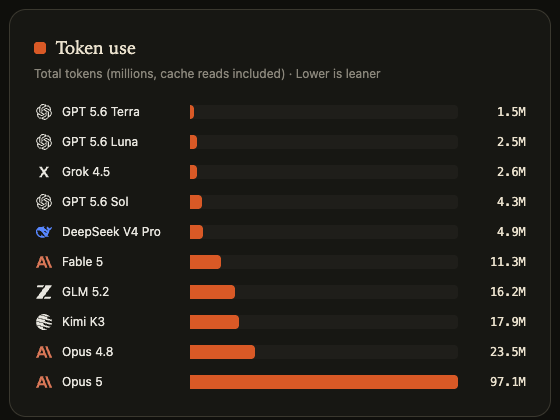
is it just me? or has claude turned into a complete shitshow since last week
needs so much handholding than ever before..feels like claude of 2024..
spits the wrong answer, goes down the wrong path despite explicit instructions..and then when corrected says Alright, I’ll correct it. I messed https://t.co/Q7qSknyDiz annoying
Keep your problems smaller than your life. A flat tire is a flat tire. A bad meeting is a bad meeting. A canceled flight is just an extra two hours. These things become catastrophes when you let them. But they stay manageable when you remember the depth of your real life- the people you love, the work you care about, the beautiful years still ahead. Zoom out. Fit your reaction to the size of the problem.
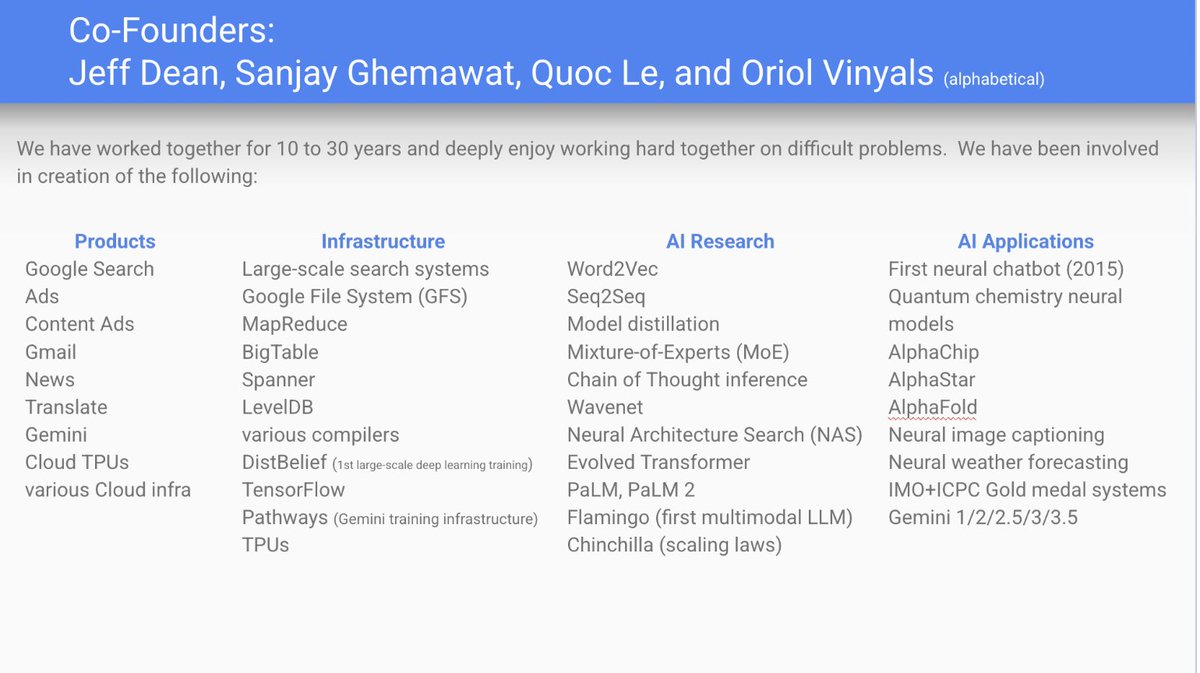
We created a pitch deck to tell a handful of VC firms about us and what we were up to (a fun experience!). Here’s a few slides about our background and some of the things we’ve worked on from the pitch deck (it was fun putting together the list of people in our teams who have gone on to found a whole range of exciting companies). We are delighted to have selected @radicalvcfund
and @khoslaventures to lead our initial funding round, along with participation from @lightspeedvp, @kleinerperkins, Doerr Capital (@johndoerr), and Alphabet (@Google). We’ll be working with them to close our seed round over the next few weeks.
You can ignore big companies early on, but assuming you can scoop them up later is naive. Selling to small companies doesn’t teach you how to navigate the complexity of an enterprise sale.
Enterprise sales require sophisticated qualifying skills. How important is the problem? Who actually has influence? What alternatives are they considering? How will the decision be made? Who has veto power? What does the approval process look like? Etc.
If you can’t answer those questions, you can’t sell. Qualification is the core skill in enterprise sales, and the best B2B sales organizations are exceptional at it.
Silicon Valley somehow unaware
That basically all of the GOATs on Wall Street / Hedge Fund-land
Have had some sort of blow-up earlier in their career
Part of the game of being a live player on the field
He's obviously talented (never met/don't know him) and will be back
Yeah so, boom times always reward low integrity opportunists because greed is easy to exploit. However, these folks tend to get flushed out in the down turn.
It's hard to maintain a successful career over the long term without an ethical compass. Possible, but much harder.
@pHequals7@SinaHartung i thought it was just me!! 🫠and was taking it as a sign that I have 0 brain cells left and need to go to bed..it’s already 11:15
It has never been easier to get first draft quality work. Almost no effort.
This means that taste and final polish will matter more than ever to rise above the slop.
We will see this in every category.
Morgan Stanley: "Our highest conviction view: the demand for compute is likely to significantly exceed supply for many years to come."
"We are fundamentally bullish on the rate of improvement in AI capabilities, the benefits of AI adoption, and associated capex."
"The ROI on AI capex is attractive. Our token economics model suggests both large LLMs and more efficient models generate strong ROIs on the underlying AI infrastructure."
Releasing the model weights and technical report of Kimi K3.
Kimi K3 is our most capable model: a 2.8T MoE model with native visual understanding and a 1M-token context window.
New model architecture: 2.5x the intelligence per unit of compute, not just more params.
Alongside Kimi K3, we're opening up more of the stack behind it — high-performance attention kernels, MoE communication library, and infrastructure for running agent environments at scale.
Model weights: https://t.co/7m7eEg6Y0B
Tech report: https://t.co/yeu6cjpMCT
Tech blog: https://t.co/YTfiMSNM1f
quick update on how this is going: they have gone back to linear because maintaining their internal tool that they vibecoded was taking away from their actual work’s bandwidth.
Sam Altman reveals his favorite Naval quote:
"Naval Ravikant used to say this thing that I loved, which is, if you had a fast-forward button on a remote for your life, your life would be over."
"The boring parts, the bad parts, they're still much better than no experience. It’s all part of the interestingness and the kind of emotional depth and range. And I don’t know, I find it fairly easy to be grateful for the bad days."
To me, systems thinking is part engineering, and part behavioral economics.
If you build feature X, how is it likely to be used, misused, or abused?
Will a user understand its purpose? What will they find lacking?
How does it interact with other features and products?