Someone asked me today what's the most motivating thing I've ever read. It's this quote: "The definition of hell--on your last day on earth, the person you became met the person you could have become."
The most profound regret is not about things you did but about the things you didn’t do—the missed opportunities, the untapped talents, the unlived dreams. It serves as a powerful reminder to live fully and intentionally and to be the version you could have been if you had not been held back by fear, doubt, shame or complacency.
If your daughter needs tutoring in algebra, you can probably find someone cheaper than Albert Einstein.
Giving every task to GPT5.5 or Opus 4.8 is overkill. Often times you can get the task done just as well, but 10x cheaper and 10x faster with a smaller model.
Huge tactical mistake by Sinner and his team. A tennis player’s legacy is defined by the majors he wins. Yes, he won everything recently — Indian Wells, Miami, Monte Carlo, Madrid, Rome — but playing every tournament with so many matches wears a body down. He should have rested more before the French Open. What a pity.
AI won’t eliminate sw engineering jobs just as ATMs didn’t kill jobs in bank branches. ATMs automated routine tasks like cash withdrawals & deposits, while tellers shifted to higher value work such as loans, investments & personalized advice. Total teller jobs actually grew. AI will automate parts of sw dev tasks but huge demand for new sw & novel use cases will likely expand need for sw engineers.
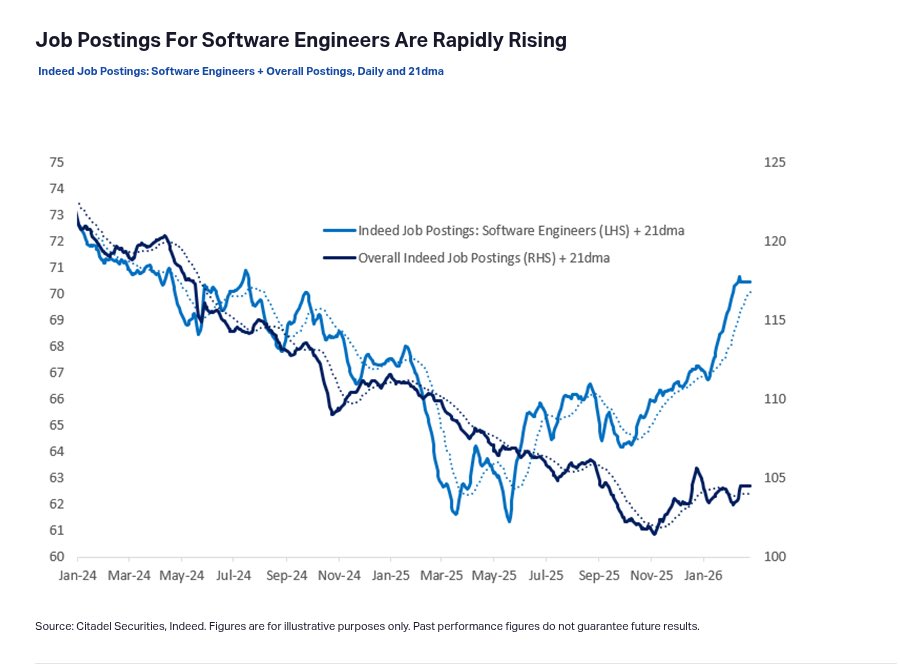
Q: How are job postings for software engineers rising rapidly despite AI agents automating coding?
A: Because there’s far more code to manage than ever before. We’re already seeing a 14x YoY increase in GitHub commits, and it’s accelerating.
AI has dramatically lowered the cost of writing code, so it’s now being used across far more businesses, applications, and use cases.
We’re at the beginning of a massive productivity boom driven by the proliferation of bespoke software throughout the entire economy.
Coding has been AI’s breakout use case this year. The fact that it’s increased demand for software engineers — rather than decreased it — should call into question the entire “AI will cause mass job loss” narrative.
Je suis pour la liberté d'expression totale. Que chacun soit libre de dire des bêtises. Comme ça on peut les corriger.
Le tweet de Clémence Guetté sur Mamdani est un cas d'école de foutage de gueule. Démontage.
"En 4 mois, Mamdani a ramené le budget à l'équilibre. De 12 milliards à 0."
D'abord : NYC est légalement obligée de présenter un budget équilibré chaque année depuis 1975 (Financial Emergency Act, après la quasi-faillite de la ville). C'est le 47e budget équilibré consécutif. Présenter ça comme un exploit, c'est déjà mentir par omission.
Maintenant, comment le "trou" de 12 Mds$ a été comblé :
→ ~8 Mds$ d'aide de l'État (Gouverneure Hochul a sorti le chéquier)
→ 1,64 Md$ en repoussant les paiements de pensions de 2032 à 2037
→ 500 M$ d'une taxe pied-à-terre pas encore votée
→ 1,77 Md$ d'économies réelles sur 2 ans
→ Le reste : revenus fiscaux supérieurs aux prévisions
Ce ne sont PAS les finances de la ville qui s'améliorent. C'est Albany qui paye. Les médias locaux (Vital City, THE CITY, NY Focus) appellent ça pour ce que c'est : un bailout de l'État.
Le tour de magie le plus crade : étirer l'amortissement des dettes de pensions sur 5 ans de plus.
Citizens Budget Commission (non partisan) : "un gimmick qui équilibre ce budget sur le dos des futurs New-Yorkais."
William Glasgall (Volcker Alliance) : "Étendre la période d'amortissement crée une dette plus chère que des obligations municipales." Traduction : Mamdani emprunte au taux le plus cher possible pour faire semblant d'équilibrer aujourd'hui.
Andrew Rein (CBC) : "On demande à des gens qui n'habitent même pas encore ici de nous aider à équilibrer le budget."
Ce que Mamdani n'a PAS dit dans sa présentation : son propre budget projette un déficit de 7 Mds$ pour 2028. Les experts disent qu'ils ne se souviennent pas d'un maire qui ait omis de mentionner les déficits futurs. C'est de la com pure.
Et toutes ses promesses de campagne ? KILLED.
- Taxe sur les millionnaires : tuée par Hochul
- Hausse corporate : tuée
- Bus gratuits : tués
- Property tax hike : retirée en panique
Il n'a fait passer aucune de ses idées radicales. Il a juste pris l'argent des autres et pelleté la dette sur 2037.
Ce n'est pas de la "gestion au service des gens". C'est un mirage comptable financé par l'État fédéré et payé par les générations futures.
Quand un politicien socialiste dit "j'ai mis le budget à zéro", vérifie d'où vient l'argent, vérifie les paiements différés, vérifie les déficits futurs, vérifie ce qu'il a abandonné.
La gestion publique honnête, ça ne tient pas dans un tweet de 4 lignes. La propagande, si.
The irony of Robert Reich using X — a platform that lets anyone share ideas, reach millions, debate in real time, and access unfiltered information from around the world — to dismiss self-made success and wealth creation.
John, stay with me here, because this one is special.
The company was called Allbirds. Yes, the sneaker company. Wool shoes, soft branding, clean lifestyle, all of that.
Today, they’re selling the footwear assets, changing the name to NewBird AI, lining up a $50 million convertible facility, and getting into AI compute infrastructure.
Do you understand what I’m telling you right now?
This is no longer a shoe company. This is a GPU story.
They went from insoles to infrastructure in one press release.
And that’s the beauty of it, John. The second you say “AI compute” and “GPU assets,” nobody cares what they used to sell.
You’re not buying a footwear brand. You’re buying a reinvention. You’re buying a hot narrative. You’re buying a company that could become an AI story before lunch.
So no, John, I’m not pitching you shoes.
I’m pitching you NewBird AI, with a dream, a ticker, and $50 million to go shopping for GPUs.
Now tell me that doesn’t sound bullish.
This is nuts. I remember when Gartner rated CSC higher than Amazon for cloud services when the cloud was taking off.
How can anyone ever trust Gartner for advice when their own interests override objective reality?
Citrini Research, the same firm whose February AI “doomsday” report wiped billions off software stocks, just sent an analyst into Hormuz and found ~50% of tankers sailing through were effectively hidden, undercutting the blockade narrative that pushed oil to $115.
Hard-hitting independent research still moves markets.
Citrini Research sent an analyst to Oman with $15,000 in cash, recording sunglasses, a smuggled camera, and Cuban cigars for networking. The analyst signed a pledge to Omani authorities not to gather intelligence, then got on a boat and sailed to within 18 miles of the Iranian coast. What he saw contradicts every headline about the Strait of Hormuz being closed.
Approximately 50 percent of tanker traffic in the strait is missing from public AIS tracking systems. The vessels are not missing because they sank. They are missing because they turned off their transponders, spoofed their GPS coordinates to broadcast false positions, duplicated the identity codes of decommissioned ships, switched to low-power transmission mode, or swapped identities with nearby vessels. The result is an electronic fog through which physical ships move crude to Asian ports while the tracking systems that Bloomberg terminals rely on show an empty waterway. More than $3 billion in crude has been transported through the strait since the war began, primarily to China, much of it under Iranian terms, paid in yuan or cryptocurrency.
The strait is not closed. It is filtered. Iran decides who passes and who does not. Ships that pay the IRGC toll and accept escort through the Larak corridor transit under the electronic fog. Ships that refuse are turned away or attacked. The “closure” that drove Brent to $115 and Aramco’s OSP to a record $19.50 premium is a selective blockade operating behind spoofed transponder data that makes it look total when it is not.
Brent dropped from approximately $115 to the $108 range as the report circulated. The market had priced in a complete shutdown. The reality is a controlled chokepoint generating toll revenue while maintaining the appearance of total disruption to maximise the scarcity premium on every barrel that gets through. Iran is running two operations simultaneously: a blockade for the cameras and a toll booth behind the blockade for the revenue. The opacity is the product. The fear is the markup.
The techniques are not sophisticated. Going dark requires flipping a switch. GPS spoofing requires a $500 device injecting false coordinates into the transponder’s GPS input. Identity theft requires typing a different MMSI number into the AIS configuration screen. Low-power mode requires switching from 12.5 watts to 1 watt. These are not state-level cyber operations. They are the maritime equivalent of turning off your phone’s location services. The ghost fleet runs on technology any ship’s officer can deploy in minutes.
The 50 percent blind spot means every estimate of Hormuz disruption based on public AIS data, every IEA shortfall calculation, every Goldman Sachs supply model, and every insurance premium derived from vessel tracking is working with half the picture. The other half is sailing in the dark, loaded with crude, headed for Chinese refineries, paying the IRGC in the currency of the country that ships sodium perchlorate to fill the missiles that the same IRGC fires at Israeli cities.
The strait the world thinks is closed is open for business. The price of admission is invisibility. And the entity collecting the toll in yuan while demanding war compensation in the ten-point response is profiting from the blockade it claims is absolute, selling passage through the chokepoint it says will “never return to its former state,” and funding the war with the revenue from the peace it refuses to sign.
https://t.co/dAOBBMsgDS
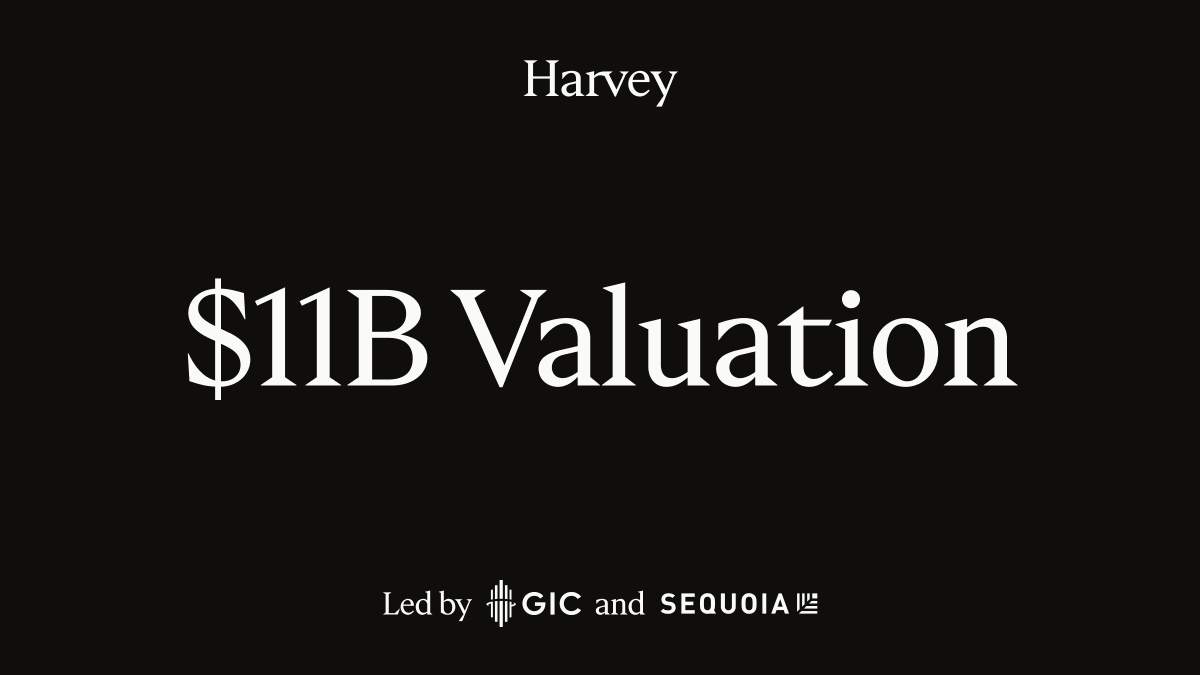
Congrats to @winstonweinberg and the entire Harvey team. In just a few years they’ve gone from a cool idea to building the AI layer that's actually reshaping how legal work gets done, one sophisticated workflow at a time. Impressive momentum driven by strong execution
Elon used the same vertical integration playbook at SpaceX. SpaceX brought rocket design, engines, avionics, structures, and software in-house. This tight loop of build fast, test (often to failure), analyze, iterate in weeks drove exponential learning, collapsed costs, and turned reusable rockets into reality.
ELON MUSK: "We're starting off with an advanced technology fab here in Austin, and I'd like to thank @GregAbbott_TX and the state of Texas for the support.
So in the advanced technology fab, we will have all of the equipment necessary to make a chip of any kind logical memory, and we will also have all of the equipment necessary to make the masks. So in a single building, we can create a mask, make the chip, test the chip, make another mask, and have an incredibly fast recursive loop for improving the chip design.
To the best of my knowledge, this doesn't exist anywhere in the world. We're really going to push the limit of physics in compute, and we're going to try a bunch of wild and crazy things, which you can do if you've got that fast iteration loop that I can't emphasize enough the importance of being able to make it, to test it and and then make and then change the design, do another one, and have that in a single building."
@ProbyShandilya Numbers feel trivial in hindsight. The real takeaway is that pairing a strong product with a super distribution engine, particularly direct sales, produces outsized outcomes. Not many know that BladeLogic produced ~40 CROs for other amazing software companies.
It’s quite disingenuous to mention a white supremacist but not mention two jihadists who escalated a protest into terrorism. If you want to be the mayor for all New Yorkers then act like the mayor for all New Yorkers.
Yesterday, white supremacist Jake Lang organized a protest outside Gracie Mansion rooted in bigotry and racism. Such hate has no place in New York City. It is an affront to our city’s values and the unity that defines who we are.
What followed was even more disturbing. Violence at a protest is never acceptable. The attempt to use an explosive device and hurt others is not only criminal, it is reprehensible and the antithesis of who we are.
I want to thank the brave men and women of the NYPD who acted quickly to keep New Yorkers safe. Our officers ran toward danger without hesitation, demonstrating once again the courage and dedication it takes to protect this city every single day.
My administration is closely monitoring the situation and I remain in close contact with our Police Commissioner.
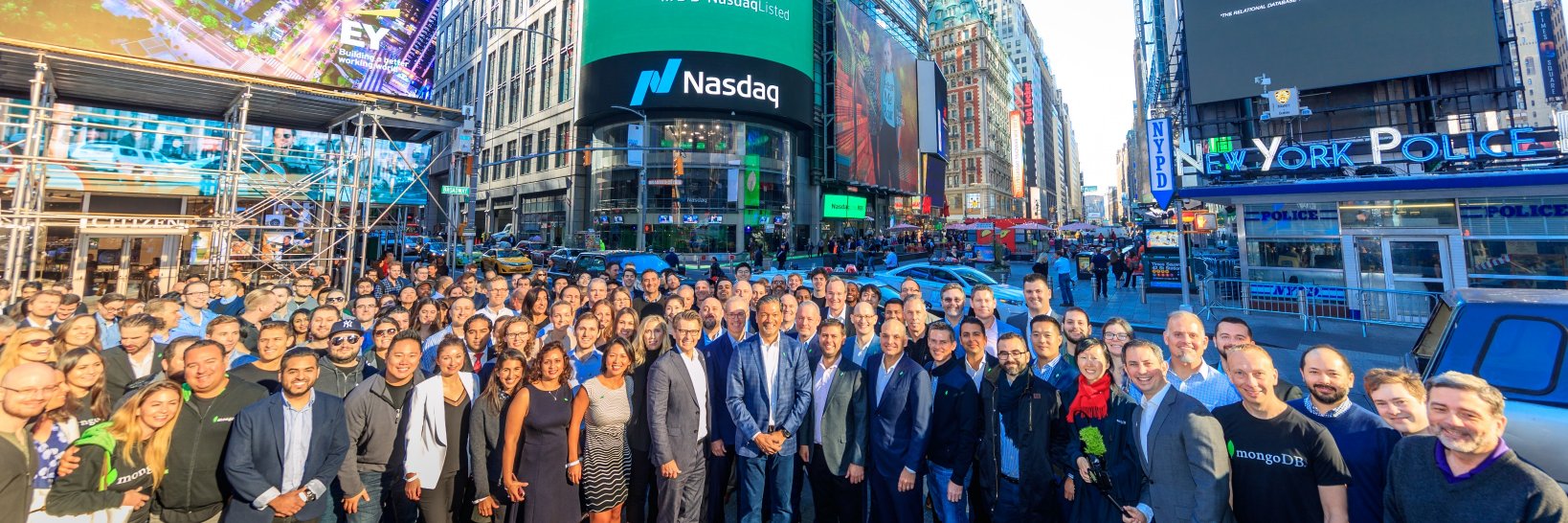
“When you leave the room, what does your team say about you?”
@dittycheria of @MongoDB shared this self-awareness test at a recent @sequoia Scaler Session.
Even “he’s a pain on this topic” is fine, as long as it is intentional.
1/ Truth-telling is the bottleneck to speed.
Org quality equals speed plus quality of decisions. What slows companies is not complexity. It is leaders avoiding hard conversations.
As a first-time CEO, Dev said he had to stop trying to be the answer man. Saying “I don’t know” unlocked his team.
2/ His 3-step accountability framework:
1. Set clear expectations and explain why they matter
2. First miss, take the onus ("I didn't do a good job setting expectations")
3. Second miss, hold them to it
Most leaders do not lack authority. They lack clarity upfront and speed of feedback.
When most of us read that Block is laying off 40% of staff, we reflexively assumed the business was in trouble. It wasn’t. The company just reported an excellent quarter.
There’s a broader lesson here. The optimal moment to make difficult structural decisions is when performance is strong. Yet many leaders defer action until results deteriorate, even when the underlying issue has been obvious for months. By then, the decision is no longer strategic. It is reactive.
If you wait for a downturn to force your hand, you are negotiating from a position of weakness. Make the hard calls when you have momentum, cash, credibility, and optionality. That is when you can be deliberate instead of being desperate. The discipline to act early is what separates good leadership from poor management.
Wow. This is an aggressive move.
Layoffs totally suck, and I feel for everyone affected.
I do respect the effort to avoid making continual cuts year over year and instead make one deep cut and be done. This tells everyone left in the co that you don’t need to look over your shoulder.
Time will tell if @jack is right, or if AI comes after more jobs.
Mamdani could learn a lesson in INCENTIVES
FedEx's Memphis hub was a nightly disaster: packages had to be sorted + reloaded in hours but the sort always ran late.
They tried everything.
Then someone noticed: they paid workers by the hour. The longer it took, the more they earned. So they switched to paying by the shift, same pay, go home when you're done! Problem solved overnight!
INCENTIVES MATTER.