Ok so I am fascinated by the genderlessness of Persian and I think everyone else should be too.
The vast majority of Indo-European languages contain a deeply gendered system of nouns and verbs. This trait is thought to descend from Proto-Indo-European noun system which split objects as “animate” and “inanimate” nouns, which reflected the animistic beliefs of that ancient society. As society expanded, this later morphed into having gender associations, with as much as three genders for many of its subsequent languages.
This fact is demonstrated perhaps most notably in its daughter languages in words like “Ignis” (Latin for fire) and “Agni” (Sanskrit for fire) both believed to be remnants of the reconstructed Proto-Indo-European word “*h₁n̥gʷnis” for the “animate” state of fire. However the continuation of gender from the “animate” noun system to the “gendered” noun system is mismatched in both. “Ignis” is neuter while “Agni” is feminine. The adherence to any methodology for the basis for gender in linguistic association did not survive this diversification.
We see this also demonstrated in the history of English. In contrast to the rest of its Germanic counterparts, English lacks grammatical genders. The language we know today was consolidated down from the main Old English dialects of Northumbrian, Mercian, West Saxon, and Kentish, beginning in the late 10th century till the 14th century. Each of these languages had their own unique gendered nouns which often contradicted the gender of the dialects around them. Over a period of time, with more populations mixing on the island, Middle English became a broader version of these and shed any former system of gendered nouns. Modern English only leaves “he, she, they, it” as a remnant of its past. (Though I’m sure you’d find many English people who’d still swear they speak another language up in the north. Lol)
However, while this divergence of the English language away from grammatical gender was around 800 years ago, Ancient Persian had undergone a similar process of transition away from gender over a millennia before: approximately 2,300 years ago. And the ancient Persians took their transition one step further by ridding itself of “he, she” entirely. It completely diverted away from even the gender structure of its own language family, giving one pronoun to everyone and ridding itself of all grammatical gender all together. Even while other Iranian languages in the region stayed true to as many as three grammatical genders, such as Pashto (Eastern Iranian Language) and Kurdish (Western Iranian Language) which both maintain a tri-part grammatical gender structure similar to that of Old Persian or Ancient Avestan, as one might expect, Middle Persian did not.
Sanskrit has three grammatical genders, and as such its daughter languages in the Hindustani language family have also maintained three grammatical genders. Old Nose had grammatical genders, and so most Germanic languages still maintain grammatical gender. (Save for English of course, though gendered pronouns still abound.)
Call me dramatic but Persian is kinda nuts. Just *POOF* a little genderless island in language family of hundreds of languages doing the complete opposite. Just one pronoun for everyone. (pronounced like “oo” for “they” and “oonho” for “them”)
I keep trying to find more materials on the culture of Iran in this period but I’m not sure how to even begin. I’ve heard that the tongue of the common people might have even been genderless before Middle Persian was finally adopted as an official court language.
Are there any other Indo-European languages that have undergone a similarly cataclysmic change in priorities or is it just Persian?!! No fumbling around picking different genders for “table” and just chucking them all in the bin?!!
I’m obsessed. How did it happen?!!? Are there any running theories?!? It was so many millennia ago the records are sparse.
Spill the beans. Pls I have to know. 😭
UPDATE on Visa for Teheran Mayor #Iran:
Belgian Foreign Minister @hadjalahbib faces another hearing in parliament next Monday. This is slowly turning into a government crisis in #Belgium. Public pressure and accountability works.
more: https://t.co/RhBQuZjRs1
ترکشهای صدور ویزای مناقشهبرانگیز برای زاکانی علاوه بر نخستوزیر به وزیر خارجه بلژیک نیز اصابت کرده است. رسانههای بلژیک از این مناقشه به عنوان "ایران گیت" نام بردهاند و احزاب اپوزیسیون خواستار استعفای او شدند.
https://t.co/eE980KglaJ
به یاد هدی صابر
شمشاد ماندگار، منش برقرار؛
کنشگر صادق و ایثارگر جامعه مدنی ایران؛ آزادهای که در چنین روزی (۲۱ خرداد ��۳۹۰) و در جریان اعتصاب ��ذا در زندان اوین، جاودان شد.
هرگز نمیرد آنکه دلش زنده شد به عشق
@CNN This is the most important message of the study not the flashy title:
“correlation"
“That doesn’t mean that it’s the breastfeeding that causes the children to do well at school — obviously it could be some other aspect of the fact that their family is relatively well off"
🔴 BREAKING!
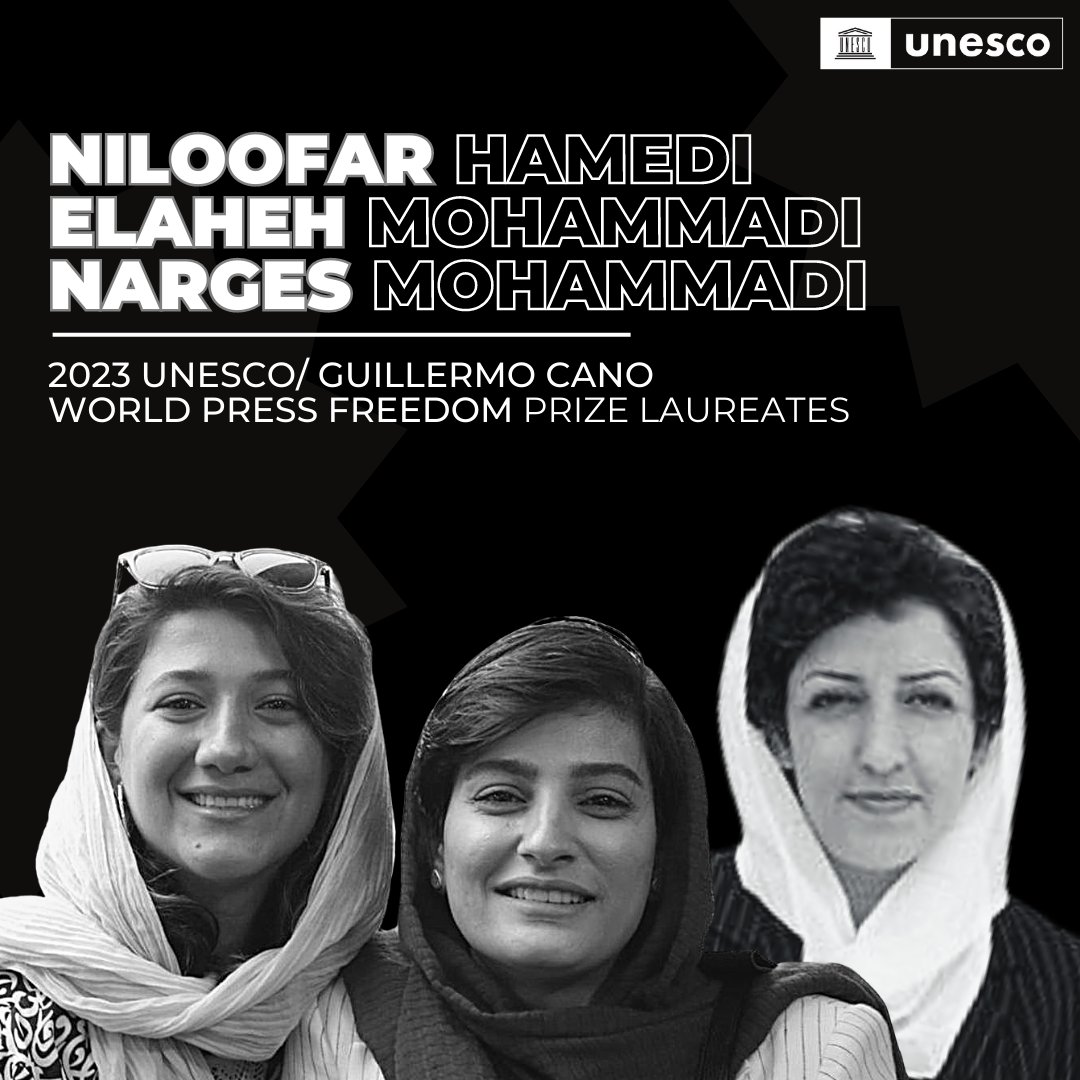
Niloofar Hamedi, Elaheh Mohammadi and Narges Mohammadi, three imprisoned Iranian women journalists, have been named laureates of the 2023 @UNESCO/ Guillermo Cano World #PressFreedom Prize.
https://t.co/2ghjvTR8iy #WorldPressFreedomDay
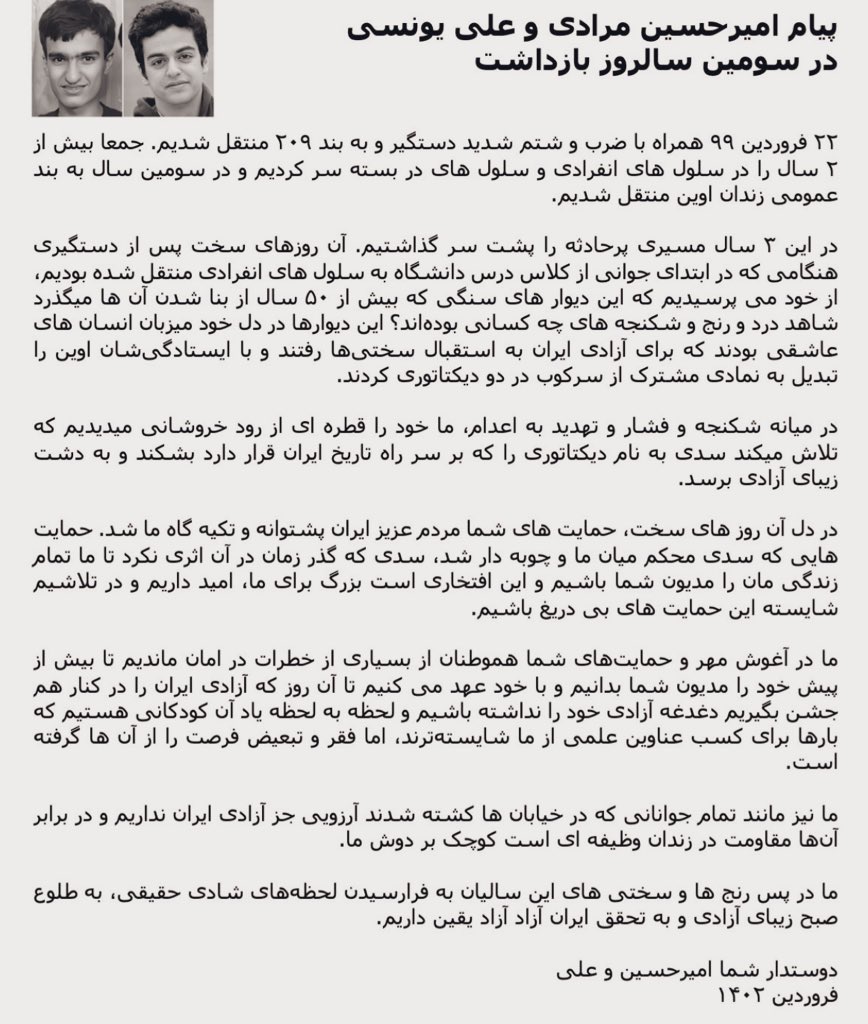
ما نیز با خود عهد میبندیم تا آن روز که آزادی ایران را در کنار هم جشن بگیریم، دغدغه آزادی خود را نداشته باشیم.
دوستدار شما مهدی
#امیرحسین_مرادی#علی_یونسی#مهسا_امینی
دم خروس نیویورک تایمز 🙄
NY Times makes big bucks selling high-end tours to Iran while defending authoritarian regime - Washington Times https://t.co/YcygH3Ik1P
عجب زنی بود پروانه فروهر! چقدر جای همچین کسی امروز خالیه که بتونه جنبش رو رهبری کنه. ج ا خیلی خوب فهمید کیا ریشهاند توی ایران قطع کرد تا این درخت آزاده خواهی هیچوقت نتونه پا بگیره
بعداز رها کردن زباله در خیابان و رودخانه و جنگل و ساحل و هرجایی که پایشانبرسد حالا هم شاهد قطع شدن نهالها و درختان جوان #جنگلهای_هیرکانی برای برپایی آتش توسط برخی از مسافران هستیم.
آتشی که بهای آن آسیب شدید و نابودی این جنگلهای چند میلیون ساله است.
دختر ۲ سالهام از دیروز آهنگ یه اشاره افتاده به زبون�� همش راه میره میگه اشاره اشاره.. این آهنگ و شاید من ۲ بار بیشتر نذاشتم تو خونه. چطوری آخه؟ قبرت گلبارون هایده جان
🧵 به نام زن، زندگی، آزادی
امروز «منشور همبستگی و سازماندهی برای آزادی» با نام «مهسا» منتشر میشود.
همهی تلاش بر این بوده است تا اصولی که مورد توافق قرار میگیرد منطبق با ارزشهای انسانی و دموکراتیک باشد تا اکثریت ایرانیان خود را در آن ببینند. 👇
علاوه بر خانم فرحان در خلق این اثر، سه خواننده زن دیگر همکاری داشتهاند: ماهان معین، گلاره شیبانی و نیکیتا. یاسمن سالکی، نوازنده گیتار و علیرضا بغدادچی تهیهکننده، دیگر هنرمندان دستاندرکار تهیه آهنگ «زن، زندگی، آزادی» هستند. ۲/۲