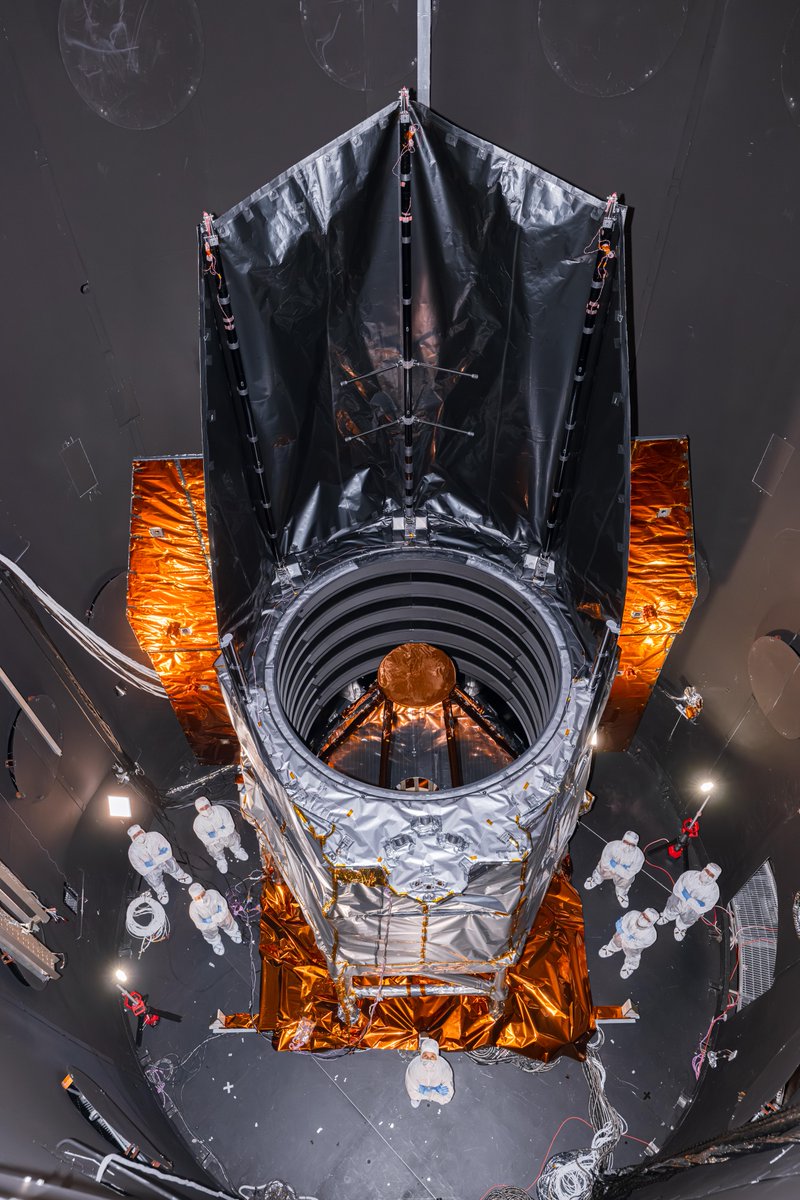
Roman is as cool as it gets ❄️
Roman’s outer half — the outer barrel assembly, sunshade, and test solar panels — passed a critical test to ensure its proper function in space. Over a couple of weeks, this assembly faced intense space-like temperatures and extremely low pressures. 🔗: https://t.co/koAOorE1Ue
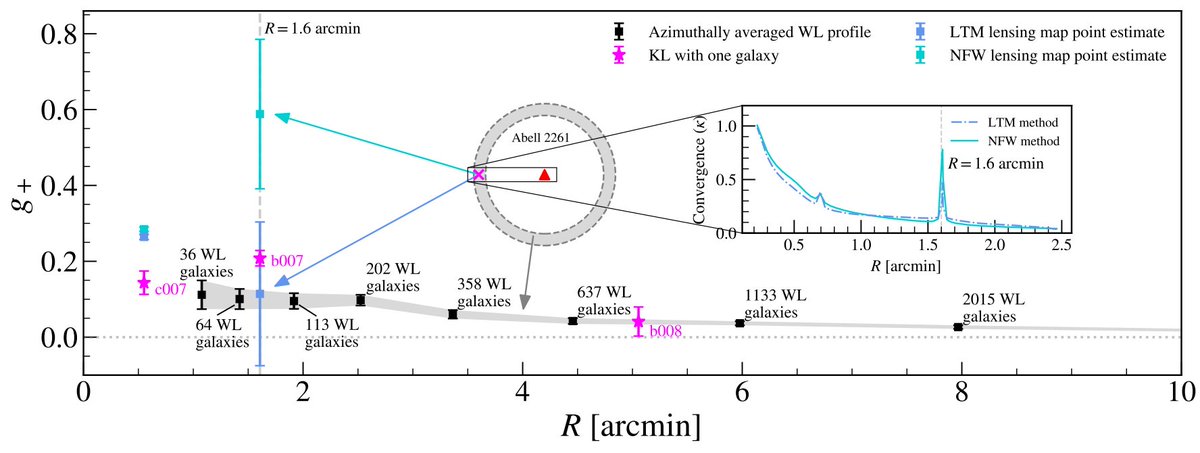
We present the first cluster lensing measurement using the kinematic lensing technique. Estimating shear from three source galaxies, we find results broadly consistent with weak lensing. Our typical shear uncertainty is 0.026, a ~10x improvement over the weak lensing shape noise.
Why @VRubinObs is so amazingly different from other optical telescopes and how will it help to study dark matter and dark energy? Check out this article from @NSF: https://t.co/WEziKBogvB
The next Cosmology Talks miniworkshop is next Tuesday at 1600 UTC.
(On Beyond 2pt Statistics)
Details here (all cosmologists welcome😀): https://t.co/U7lmkssIDS
Honest work and discussion on how cosmology and galaxy survey analyses can move beyond the canonical 2-point correlation function. We've been working for 2 years to show the community that we're ready. Watch our interview w/ @just_shaun at Cosmology Talks
https://t.co/Ouy7COmlqO
Steward Observatory's Marcia Rieke will receive the 2024 Gruber Cosmology Prize for her pioneering work in infrared astronomy, especially her oversight of instruments allowing astronomers to explore the earliest galaxies in the universe. Read more: https://t.co/fg8kGd8tLX
New paper out! https://t.co/Bq8nAnMGtk
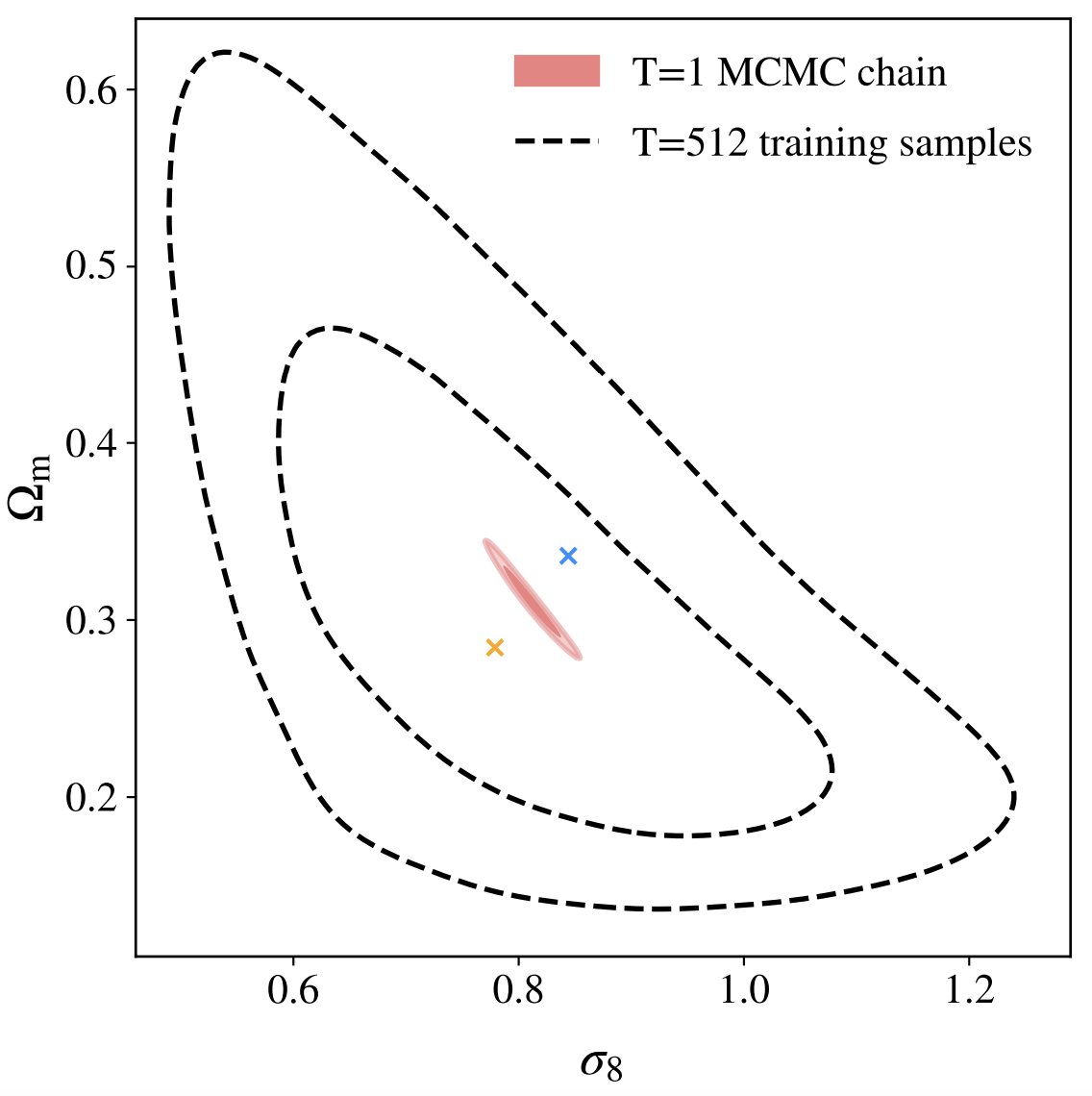
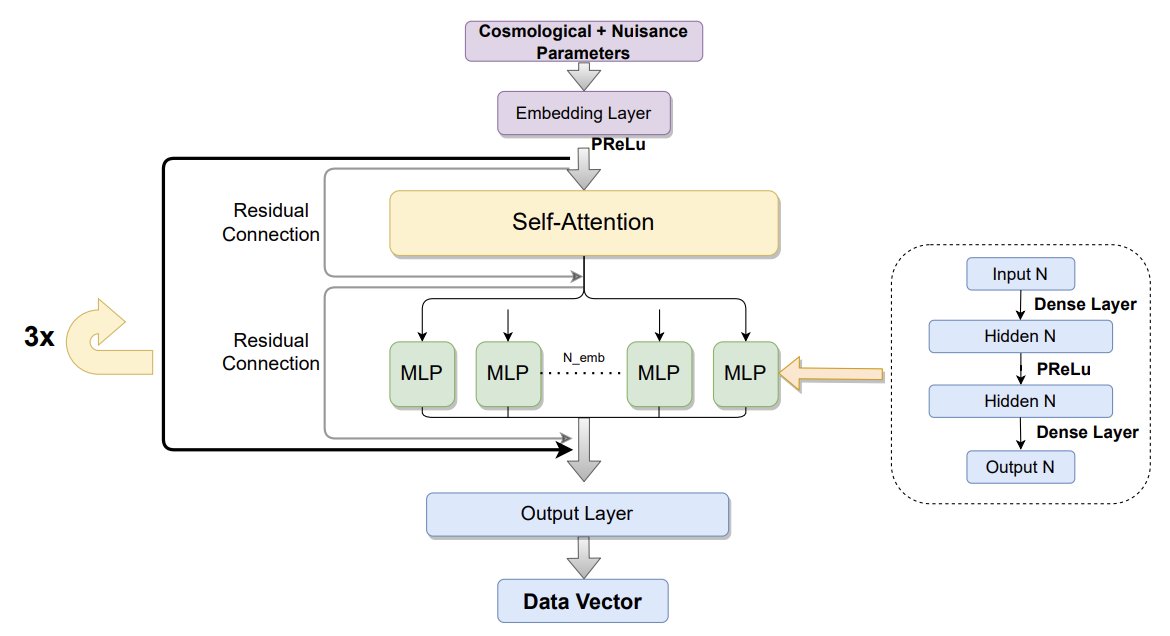
We train transformer based neural networks to emulate non-Gaussian covariance matrices over a wide parameter range. We then use our emulator to constrain cosmology by re-analyzing BOSS DR12 data.
I should really wait till Monday but I can't! On Monday we'll present a brand new collab: The Beyond-2pt Collaboration. It has been a humbling experience to learn so much in this challenge over the last 2 years. A Cosmology Talks with @just_shaun will follow up the paper shortly!
Rubin Observatory's 8.4-meter mirror is finally, well, a mirror! 🥳
The glass got its shiny coating this past weekend—but what did that actually look like?
Find out in the fifth and final video in our "Making of Rubin's 8.4-meter Mirror" series ✨
#CaptureTheCosmos
The Arizona Lensing Day started in 2022 as an informal event that brings together students, PDs, faculty from UA and ASU for 8 hours of fun, science, and conversations on lensing/cosmology topics. Yesterday’s highlights: research talks, panel discussions, and group interactions.
The TED paper is out!: https://t.co/fmnawF4utg We investigate the Tully-Fisher environmental dependence (TED) effect as a potential systematic for Kinematic Lensing (KL).
In our analysis using IllustrisTNG, we detect TED but find that it has no impact on KL.
New paper out! https://t.co/06ylyQuHmN Second in a series, we build neural networks based on transformer architecture that highly accurate over a large parameter space. This breakthrough enables the calibrate of tension metrics for Rubin Observatory's LSST Y1 dataset. @LSSTDESC
New paper out! https://t.co/nG31rj4OoX First in a series, we train neural networks based on transformer architecture (same as Chat-GPT) to explore the constraining power of Rubin Observatory's LSST on physics beyond the standard cosmological model. @LSSTDESC
New paper! https://t.co/7QLuTnyfpC We train neural networks to forecast the science performance of Rubin Observatory's LSST. Our Machine Learning technique accelerates simulated analyses by several orders of magnitude allowing us to simulate a large variety of LSST scenarios.
A new paper is out: https://t.co/KCriQH2EkX We show that Sunyaev-Zel’dovich effect observations of galaxy clusters can constrain the baryonic impact on cosmic shear with statistical and systematic errors subdominant to the measurement errors of DES-Y3 and LSST-Y1.
New paper is out: https://t.co/9cI3xR7vJ3! Using synthetic DESY3 and LSSTY1 data, we implement an approximate form of the neutrino-induced scale-dependent galaxy bias and investigate the impact of detailed neutrino modeling in cosmological parameter inference
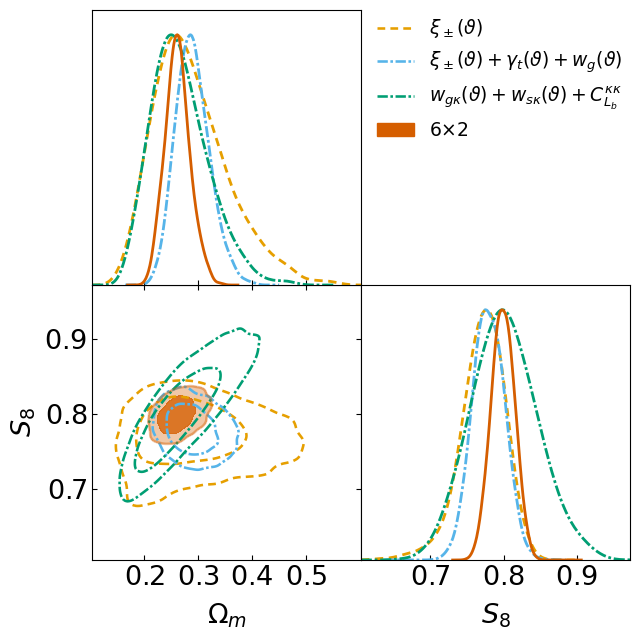
New paper! In 2311.08047, we get tight constraints on baryonic feedback strength and S8 in our Universe, using six two-point statistics among DES Y1 galaxy density and shapes, and Planck PR3 CMB lensing convergence. Stronger feedback and higher S8 are found compared to DES Y1.
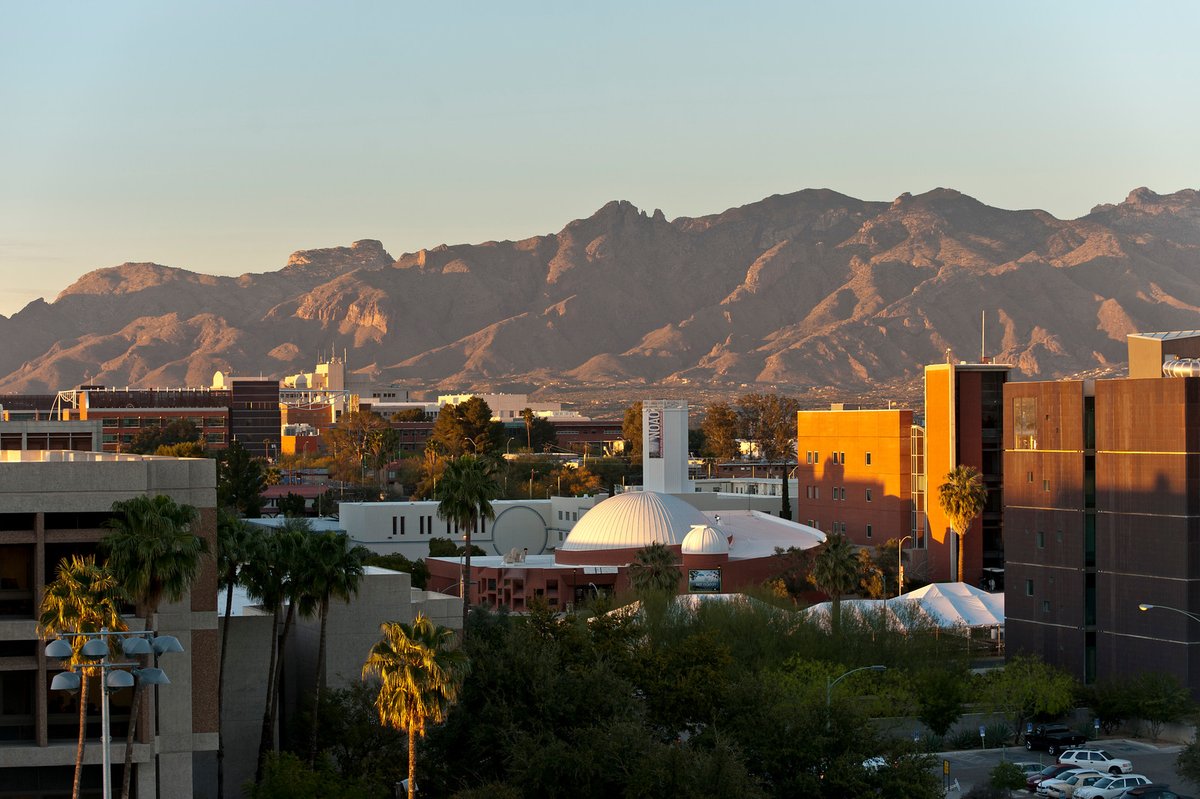
The UArizona, Dept of Astronomy and Steward Observatory, invites applicants for a tenure-track faculty position. Candidates with research expertise in cosmology and machine learning/data analysis encouraged to apply. Deadline: 12/15/23. More information: https://t.co/AXxG6WinhG