skimmed the megaETH docs between espresso shots and imo it’s the single most important innovation since the wheel, fire, and lying on job applications
i didn’t understand 80% of its architecture but that’s how you know it’s real. if you can understand 100% of any new project, it’s never revolutionary
10ms block times, 100-core sequencers, replica nodes... reading this alone sent chills down my spine and made my wifi faster. i was even able to text my ex closure in under 10ms
would love to keep exploring MegaETH’s ecosystem more closely. like extremely closely. maybe even in an allocated kind of closely
megaETH is the future and a $186,282 token allocation would genuinely save me
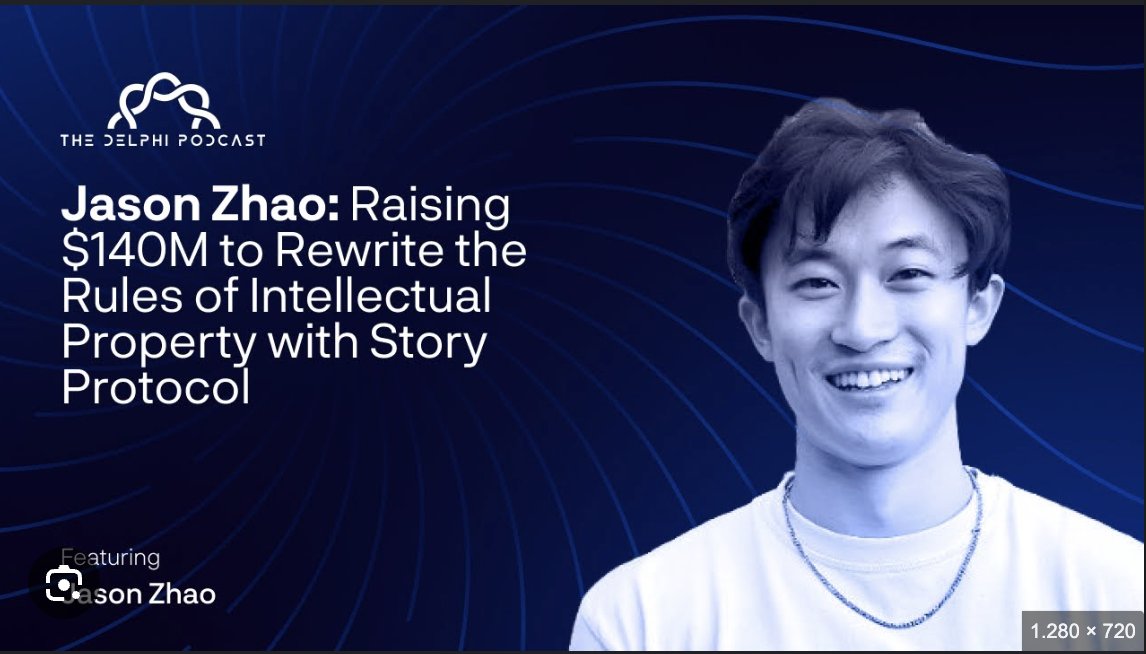
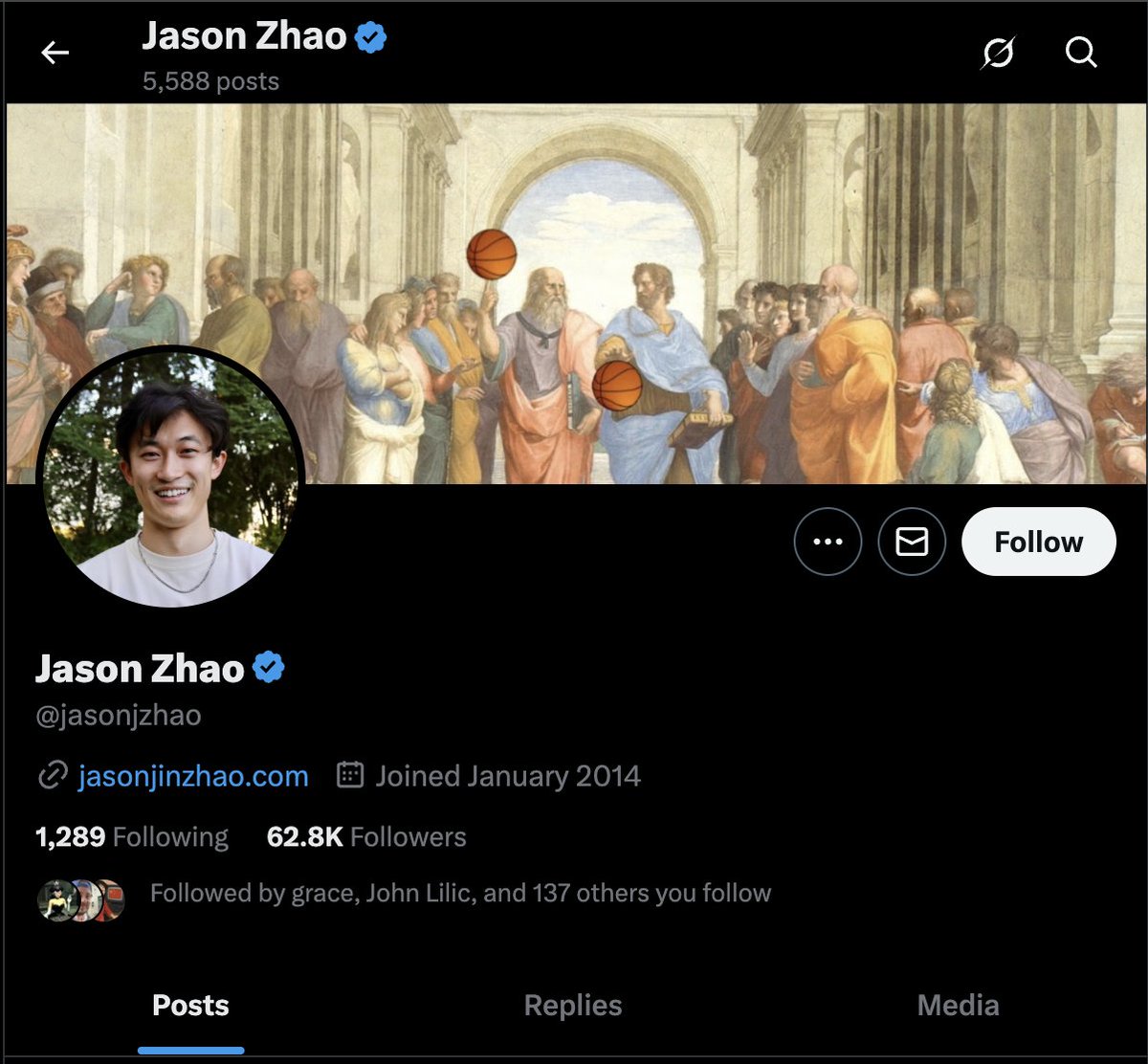
you guys remember @jasonzhao?
co-founder of story (IP), raised over $100 million for a useless ip chain, cashed out millions of USD for himself and then simply left
leaving a project within first 2 years is already sus, but this nigga deleted EVERY SINGLE TWEET about ip ever, removed any association from his twitter and just pretends he was never part of this project
this is typical behavior from crypto founders. pacman did the identical thing, but deleting all tweets about your old company is hardcore
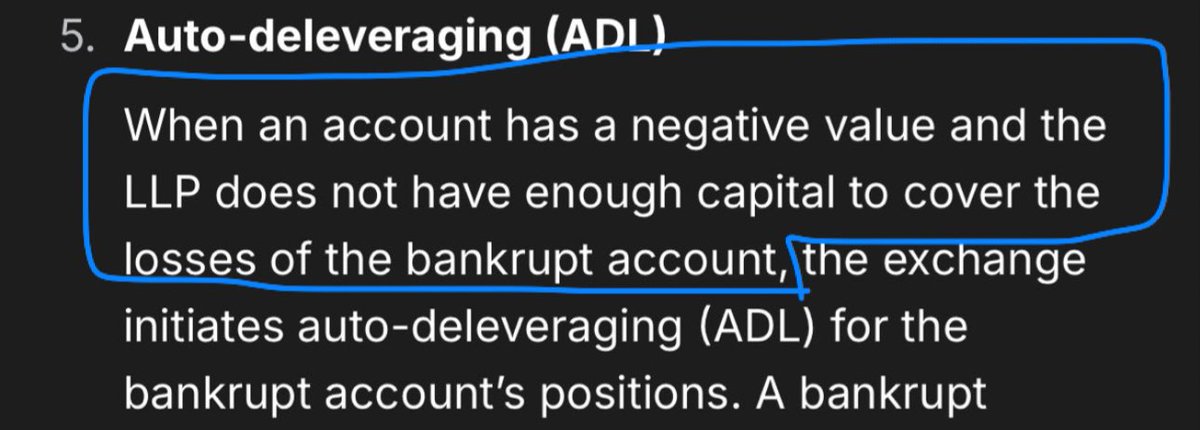
@dw8998@0xShual If I’m interpreting it correctly the LLP had enough capital to cover the loses therefore ADL wasn’t enforced which is exactly what shual stated, the LLP took the hit instead of lighter traders.
One morning in January, I woke up and it was like a spell had been broken the way I looked around my room and saw how dull everything was, not because it was lacking but because of how full it was of stuff.
Stuff I didn’t particularly love. Stuff with no serious meaning to it. Stuff I didn’t care about. Stuff that, if you had secretly tossed, I wouldn’t even realize went missing. Stuff I bought because it was trendy at the time, because my friend had it, because I had seen attractive influencers my age brag about it on Instagram, and it made me think that I could be her.
So, I did a bit of Marie Kondo-ing and produced a few large bags of clothes and trinkets and stuff for donation. Standing in front of all my stuff, it hit me that all of it used to be money, and all of that used to be time. I was standing in front of the metabolic waste of my existence, materialized. I was looking at the amount of my time, therefore my life, that had been turned into garbage. And the worst part is that I could’ve prevented it.
A movie scene that has stuck with me for years comes from Spirited Away, where Chihiro finds her parents turned into pigs. It’s comical to describe, but when you put yourself in her shoes, it’s terrifying: it’s every child’s nightmare to lose their parents to a force they can’t control. The panic she feels in that scene speaks to me deeply, the feeling of watching your loved ones do something that you know is wrong but being called “silly” when you try to stop them.
Materialism isn’t evil; it can be gorgeous through the frames of abundance or art. Miranda Priestly’s “stuff” monologue from The Devil Wears Prada, for example, shows how material creates jobs, fuels culture, and shapes history. Miyazaki’s plates of food are dramatically overblown and colorful and delicious, but Chihiro’s parents don’t think about what they consume, only about how much. When she confronts them, her father shrugs: “It’s okay. I have my credit card and some cash.”
This is the mindset that will make you waste your life away into bags of garbage: the idea that shopping is a material issue, and overconsumption is a budgeting problem, rather than a spiritual problem. It’s easy to be Spirited Away, whisked into another world operated by desires that come from ads and friends and fleeting trends. Your appetite for novelty and your fear of missing out sucks the joy out of you—the more you eat, the hungrier you are. The more you spend, the more vapid you feel. You lack spirit, not another fashion identity. You don’t need another aesthetic, you need stronger values.
The title Spirited Away in Japanese is Sen to Chihiro no Kamikakushi, and kamikakushi means “hidden by the gods,” a folk belief where people mysteriously vanish into another realm. This film is about magical abduction and losing your identity. Chihiro loses her name and becomes “Sen”: to be spirited away is like being stolen from yourself, forgetting who you are under the influence of forces like greed, fear, anger—and who’s to say that emotions aren’t magical? That desires aren’t demonic possessions of the mind (“demonic” meaning “godlike divisive superfactor” in Greek)? Who’s to say that feeling horny isn’t its own kind of spell? We literally use “mania” and “craze” to describe the way people desire something: Beatlemania, the craze with Labubus, matcha being ‘all the rage’.
Lust, for example, is the feeling of wanting something really badly. It doesn’t have to be a carnal desire but it’s about a possessive craving that ends in a feeling of collapse, an appetite that, once appeased, reveals its emptiness:
"Lust is the deceiver. Lust wrenches our lives until nothing matters except the one we think we love, and under that deceptive spell we kill for them, give all for them, and then, when we have what we have wanted, we discover that it is all an illusion and nothing is there. Lust is a voyage to nowhere, to an empty land, but some men just love such voyages and never care about the destination." —Bernard Cornwell
Shopping has this effect on me, the voyage is more satisfying than the destination. There is such thing as post-purchase clarity: the moment when you buy something trendy and you suddenly sober up to how much you don’t care about it (let alone like it); you just want to be seen having it.
Spirited Away is most known for the character with the least lines: a masked ghost who can conjure gold. He has no backstory, we only know that he is banned from entering the bathhouse. Chihiro, out of kindness, lets him in. No-Face is refused service at first, but the staff quickly compromise their values upon seeing his gold. They serenade him, “Welcome the rich man. He’s hard for you to miss. His butt keeps getting bigger, so there’s plenty to kiss!” while they fight for the gold nuggets that plop out of his fat hands. Then, he devours the workers in despair when he realizes their kindness is bought, and only Chihiro is genuine.
The painful part of loneliness is the realization that most people are ass-kissers and friendship is rare. Likewise, people feel the most alienated when they suddenly sober up to the fact that most of their desires are herd-driven, that most of them are no where close to the truth, if they even have a clear enough sense of what that is that matters to them. It’s like waking up from a trance state and realizing, What have I done to myself? I certainly felt this way standing in front of my garbage bags. Loneliness, alienation, addictions and self-defeating loops—these are not material problems, but ‘desire’ problems.
I’m finally coming to understand what Girard meant by, “All desire is a desire for being.” We think we want things, but every desire points to a way of life, a kind of person we long to become. Objects seduce us not with their utility but with their promise of transcendence—status, attention, belonging. That’s why No-Face has no face: he is desire itself, the appetite to become, the emptiness that consumes while wishing it were someone else.
Money reveals this: In Roman mythology, the temple of Juno Moneta was both sanctuary and mint (it’s where we get the words “money” and “monetary”). To strike a coin was to sanctify it with divine authority, so it circulated as both economic and spiritual power. It still does: money organizes meaning. Fiat currency works because we collectively believe it means something—fiat literally “let it be” in Latin—its meaning assigned by our shared narrative. And because money is tethered to desire, it doesn’t just reflect value; it follows it. It’s the pull of eyes when a sports car glides down a street. It’s Bernard Arnault, CEO of LVMH, saying “when you create desire, profits are a consequence.” Shopping is not independent from the spiritual realm that strips away our names, and it’s a very literal form of kamikakushi.
When we feel the weight of our limits, we start reaching toward idols to imitate, goals to chase, places to explore, people to meet. What we’re really chasing is a sense of immortality or infinity, something that lives longer than we ever will. We want to be remembered long after we’ve left a conversation, the company, the world.
Desire is never about the object itself. If it were, once you acquired it, the desire would vanish. Yet, your wardrobe keeps getting stuffier while you still find yourself with nothing to wear. Desire is about what the object seems to promise us: a fuller, richer existence. This is why Marie Kondo’s “spark joy” test is great: it reframes consumption as discernment. It asks whether an object raises your spirit or weighs it down. Left unchecked, your possessions take away your freedom to be who you are. As Fight Club says, “The things you own end up owning you.”
Every now and then, I feel my value system collapsing under the seduction of Alo’s knitwear sets through their windows. Overall, none of this is about “how to spend less”, it’s about the freedom to just be… you.
"You are not your job, you’re not how much money you have in the bank. You are not the car you drive. You’re not the contents of your wallet. You are not your fucking khakis." —Chuck Palahniuk (Fight Club)
Stronger values make you spend more mindfully because they shift the axis of desire. When you know what you worship—what you actually stand for and who you want to become—everything gets tested against that vision. Values act like a sieve: they filter out the empty cravings that come from comparison and they let through only the things that genuinely serve your spirit. Without values, desires lead you astray by following ads and algorithms and the envy of friends—a state commonly known as “being distracted”.
The scariest part of Chihiro watching her parents turn into pigs is that they could’ve simply walked away. The unattended food stalls feel like a test of whether one can resist charming distractions. Like the family in Spirited Away, you’re rarely forced to follow one desire over another (until you choose wrongly, and only later realize what you’ve done, if you realize it at all). But if you aim at your highest value—placing no other gods above it, coveting nothing of your neighbor’s—you free yourself from the distractions that split your soul and can refocus your being on becoming who you want to be.
Just checked
Aerodome holders rev (30d): 16.68m
Aredome incentives (30d): 19.75m
Fluid holder rev (30d): 1.33m
Fluid incentives (30d): 1.47m
disregarding the fact that you accidentally grabbed the annual (pretty bad misrepresentaiton) it seems you conveniently picked the period where a base token was announced (base really dosent need a token but that besides the point) and revenues on base surged as speculation went up but now your rev has normalized and it seems like you are indeed losing money...
@litocoen
Lee Kuan Yew, back in 2012, said that the European Union expanded too fast and will probably fail.
His prediction of Europe’s future is looking quite sound:
In the last two to three years, European leaders – including David Cameron, Nicolas Sarkozy and Angela Merkel – have separately declared that multiculturalism has failed in their countries. In other words, the Turks who have settled in Germany have not become Germans, nor have the Algerians and Tunisians in France become French. Increasingly, Europe sees these people as indigestible.
Race is at the root of this inability to assimilate, although religion, culture and language are also factors. But it is also not possible for Europe to stop the inflow because these immigrants meet a pressing domestic need. So we may well see European governments letting in immigrants when they can, only to hit the brakes when electoral cycles come around and far right parties outflank their moderate opponents with angry rhetoric. However you look at it, they face a catch-22.
When Europe emerged from the devastation of two world wars, the idea of European integration seemed most natural. Here was a continent of countries that held many things in common. They had all lived through the Renaissance and the Enlightenment and had come away with one European culture, a similar way of thinking about themselves and the world. Christianity was the dominant religion.
Going further back in history, these countries shared a heritage from the days of the Roman Empire, which gave them a certain uniformity in the way they organized society. Yet, for all their commonalities, what came to the fore dramatically in the 20th century were their disagreements and their separateness, as they were led by their worst angels to engage in brutal, internecine and protracted wars resulting in the death of millions. Integration, then, became a central mission for European leaders. It represented their best hope for enduring peace. It was the clearest way for the countries to build on their similarities, set aside their differences and bind the fates of their nations closer to each other so that they would never again have to suffer such horrible consequences that were, arguably, of their own making.
Having decided that this was an important project, they went about building the necessary institutions. They signed the Treaty of Paris in 1951, establishing the European Coal and Steel Community, the pioneer of the EU. In 1957, the Treaty of Rome, which proposed the creation of a common market, and common agricultural and transport policies, was agreed on. The community later evolved into the European Union and was expanded to include 27 states after the end of the Cold War. Of those states, 17 adopted a single currency, the euro.
Integration holds great promise apart from just peace. A Europe that achieves singularity in purpose would have much greater economic clout and, more significantly, a much bigger voice in international affairs. Put simply, it would be a more powerful Europe. If the Europeans were to deepen its integration efforts and go on to have one finance minister, and perhaps even to having one foreign minister and one defence minister, their augmentation in hard-power terms would be enormous.
Consider the people of the United States of America. They are basically Europeans who have been transferred to another continent and have dropped their tribal loyalties and their different languages. If Europe integrates to the same extent and becomes the United States of Europe, there is nothing the Americans can do which they cannot do. Europe as one entity is more populous than America (500 million versus 310 million) and has an economy one-sixth larger than America’s. Such a Europe would certainly be in the running for the world’s leading superpower.
Alas, all the signs point to the impossibility of integration. They have so far failed to make a single currency work and are not likely to progress to a single foreign policy stance or a single military. They have individual histories, each going back many centuries. Each nation is proud of its own traditions. Above all, they want to keep their languages alive – there is glory and literature behind it. America decided to start afresh and create a new literature, but Europe will not be able to do so. Even though English is already the second language in all the other countries, those on Continental Europe will never accept it as the single working language.
What then will be Europe’s place in the world? They will be smaller players on the international stage. In the face of dominance by the major powers such as the US and China, and maybe later on, India, Europe will be reduced to the role of supporting actor. Most of the European countries will be treated – quite rightly – as ordinary small states. Germany might be able to carry its weight alone, thanks to its population and its economic success, although it will not want to raise its head above the parapet because it is still filled with guilt for having killed six million Jews during the Holocaust. The British will retain some influence because of their special transatlantic relationship with America.
But otherwise, Europe cannot hope to count for much at a table where the US, China and India are seated, even if some European leaders may still be reluctant to admit it because of their historical sense of self-importance and their long experience in playing the game of international affairs. In the end, you are comparing nations of 40, 50 or 80 million against 1.3 billion Chinese and 1.2 billion Indians. The Chinese, especially, will find that a fragmented Europe makes life easier for them. They can deal with each country individually, rather than in a group. Each European country will be more dependent on the Chinese than the Chinese are on them. This will be even more so as China’s economy moves towards being driven by domestic consumption.
Europe’s declining international voice, however, will not result in its living standards falling by the same magnitude. If it can survive the break up of the euro, it goes back to what it was. Europe loses its voice in the world, but the countries in it have a high standard of education and skills and can make a good living. There will be some decline, but each country will reach a steady state at its own level of competitiveness. The Europeans will lead lives that are happy enough.
I write more in sorrow than in derision about Europe’s inevitable decline. I do not want to run Europe down. The Europeans are a very civilized people. Yes, they were colonialists – the French, the Belgians, the British and the Spaniards. But the French had their mission "civilisatrice" to transfer their civilisation to the Africans.
And on the whole, the British left institutions behind them, including in Singapore. We had the rule of law, we had statutes, we had the English language and we were wise enough not to change any of that. They have helped us to grow. Their institutions were already working. What I did was to make sure that we did not subvert the institutions but reinforced them.
The Belgians, in stark contrast, left Congo in a mess. They extracted the raw materials and when the time came to leave, the place just broke up into tribal warfare. Congo is still in trouble today. In Guinea, Charles de Gaulle was so angry with Ahmed Sekou Toure, who was a forceful freedom fighter, that they ripped off all the electric and telephone wires before they left. Guinea has still not recovered from that. They did not do that to all French colonies but they did that to Guinea because Sekou Toure baited the French government. Thus, Sekou Toure inherited a non-working system, which he never got back into working condition. These things make a difference.
If the British had left me with a French or Belgian situation, I am not sure I would have been able to build it up to today’s Singapore. The British left in good grace. The main building of the Istana was occupied by the last Governor, Bill Goode, who handed it over intact, everything in order. He took me around and introduced me to the butlers and so on before leaving. From here he went to North Borneo for a while and then retired. We should be thankful for their system and their graceful exit.”