Honored to be among this cohort. The fellowship will support my research on how the partisan loyalty of older adults and institutional distrust among younger adults create different paths to polarization, with the goal of developing age-specific solutions. #CarnegieFellows
Announcing the 2026 Andrew #CarnegieFellows! Selected from a record 381 nominations, 24 fellows will each receive $200K to examine the causes of political polarization — and how to reduce it.
🔗Read more: https://t.co/lpg5B3q2PY
#Polarization#Research
Does affective polarization itself actually threaten democracy?
Recent experiments from the US suggest maybe not. In our new @EJPRjournal paper, we revisit this question comparatively with a survey experiment in 9 democracies (18,000 respondents). https://t.co/A05UiqiKfk
Call for Papers - Human Communication Research
We're now accepting submissions for a special issue: "Who Are We Studying in Communication Research? Revisiting Audience in a Transforming Media Environment"
Extended abstract deadline: August 31, 2026
https://t.co/uh0GzeyGsa
🚨 Special Issue @HCR_Journal cfp:
Who Are We Studying in Communication Research? Revisiting Audience in a Transforming Media Environment
Guest eds @YeSun_comm, Adrian Meier & me
Extended abstracts due Aug. 31
More info: https://t.co/CXJsD1Ocbz
@dee_of_e saw Boogie Nights in packed theater of younger people apparently seeing it for their first time based on reactions, huge cheers when Rollergirl stomps the guy and when the Colonel gets smacked in prison
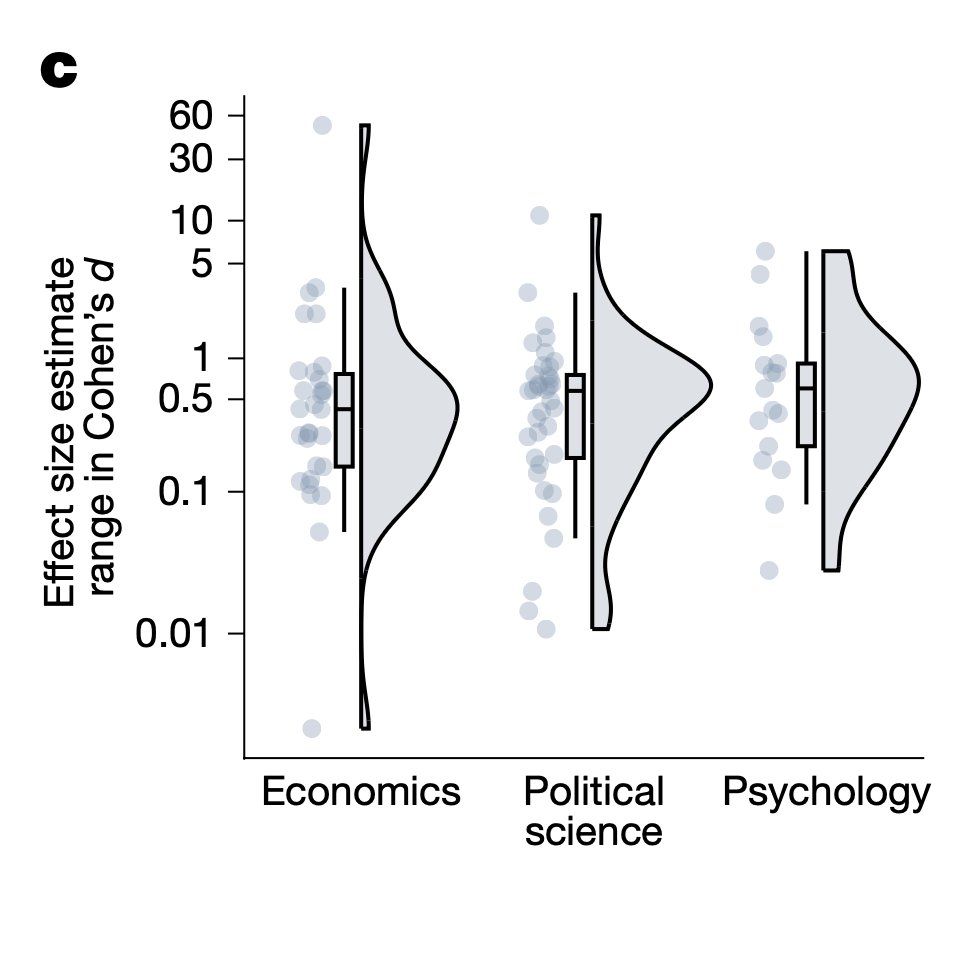
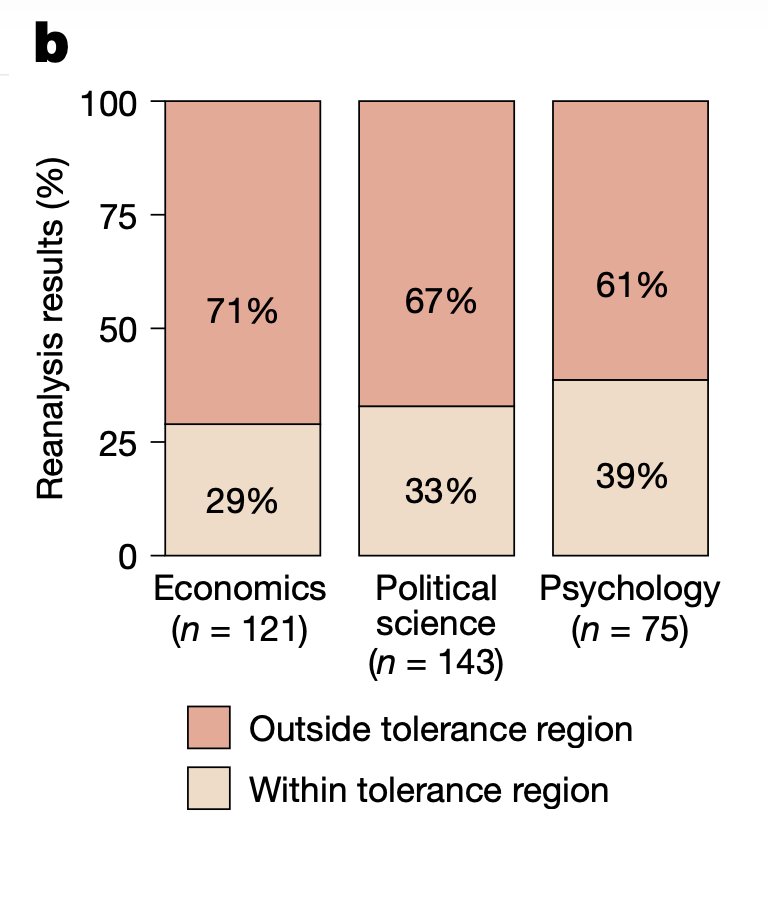
Economics is about the same as political science in the "reproducibility" paper, which looked at whether data and code was available and could reproduce results in a sample of articles. Again, read the paper for details: https://t.co/qqHwY0G4Sj
Economics doesn't look better in the "robustness" paper. Honestly, econ looks worse than PS and psych but the difference is tiny and not worth obsessing over. Experimental work looks better than observational. Read the paper for details: https://t.co/KxQml5xoCD
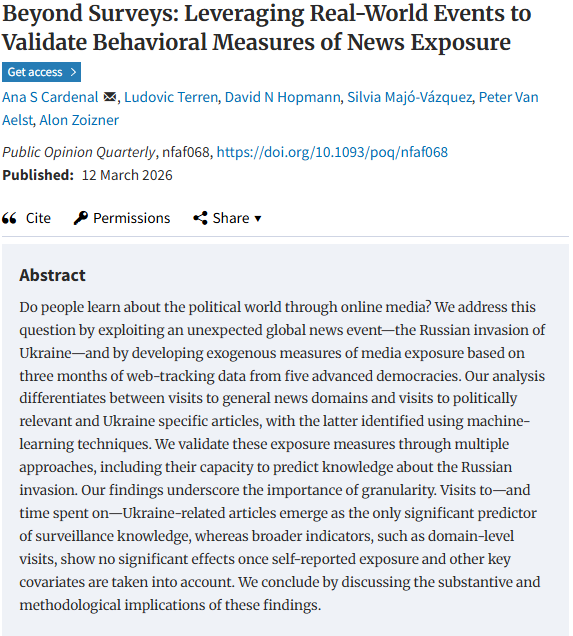
Not all news clicks teach us something.
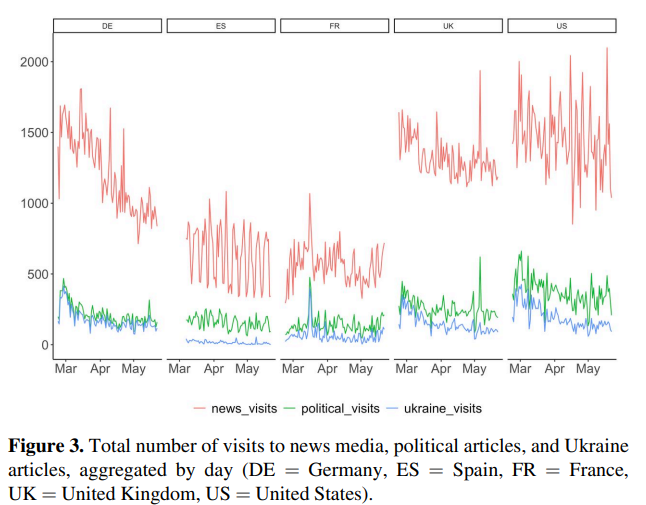
In POQ, Cardenal et al., using digital trace data, find that only article-level exposure to Ukraine stories—not general news browsing—predicted who learned about the Russian invasion.
Read now: https://t.co/b3x4WQuNip
Nearly half of Americans (46%) report using AI to get news at least occasionally--but most are light users. Only ~14% use it 3+ times a week. Some people use AI as their primary interface to society, even if the models are not really up to the task.
What happens when a polarized democracy bans a social media platform? New working paper with Christopher Barrie, @mollyeroberts, Chris Schwarz, and @j_a_tucker. We study Brazil's 2024 ban on X and find it created what we define as a "partisan sorting ratchet ." 🧵 ⬇️ 1/
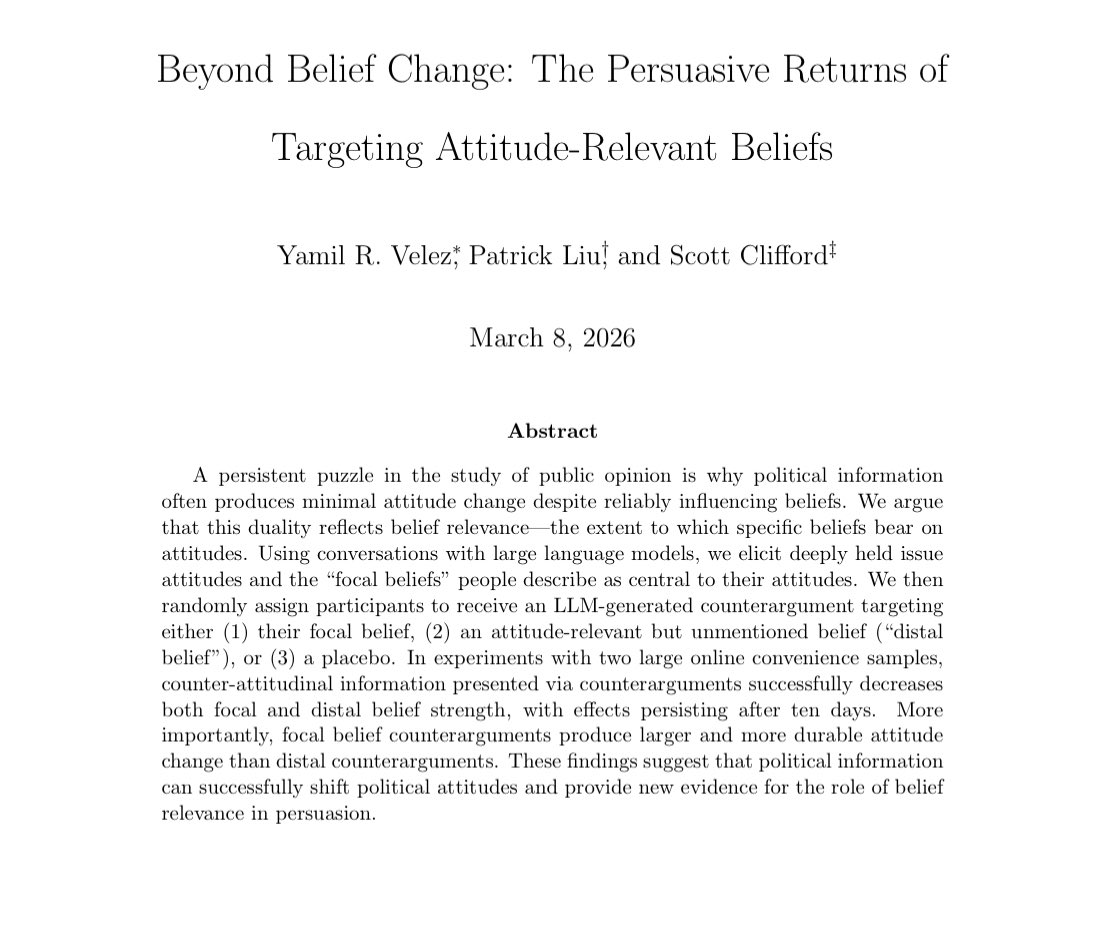
Conditionally accepted at the APSR (w/ @scottclifford & @patrickpliu):
Why does political information so often change beliefs but NOT attitudes? We highlight the role of belief relevance, or the extent to which beliefs bear on attitudes.
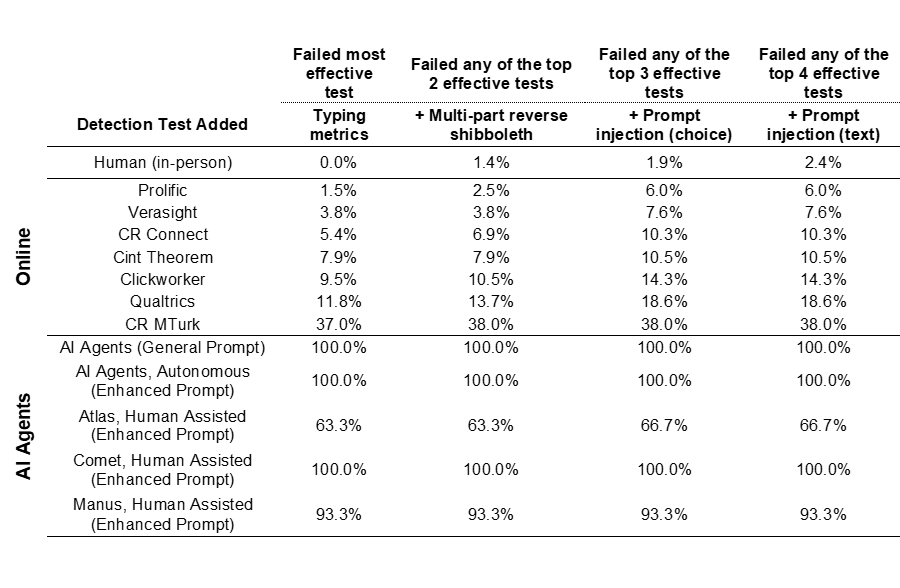
The results differ substantially across platforms. @Prolific and @CloudResearch’s Connect panel have relatively low failure rates, while Mturk (even via @CloudResearch) has a high failure rate.
We just executed 2.8 million search queries in 243 countries in 2024 and 2025, generating both AI and traditional search results to understand the implications of the Rise of AI Search....
New Pub Alert from @UtahCGM! Exposure to low-credibility online health content is limited and is concentrated among older adults https://t.co/dmlsYXOGwr
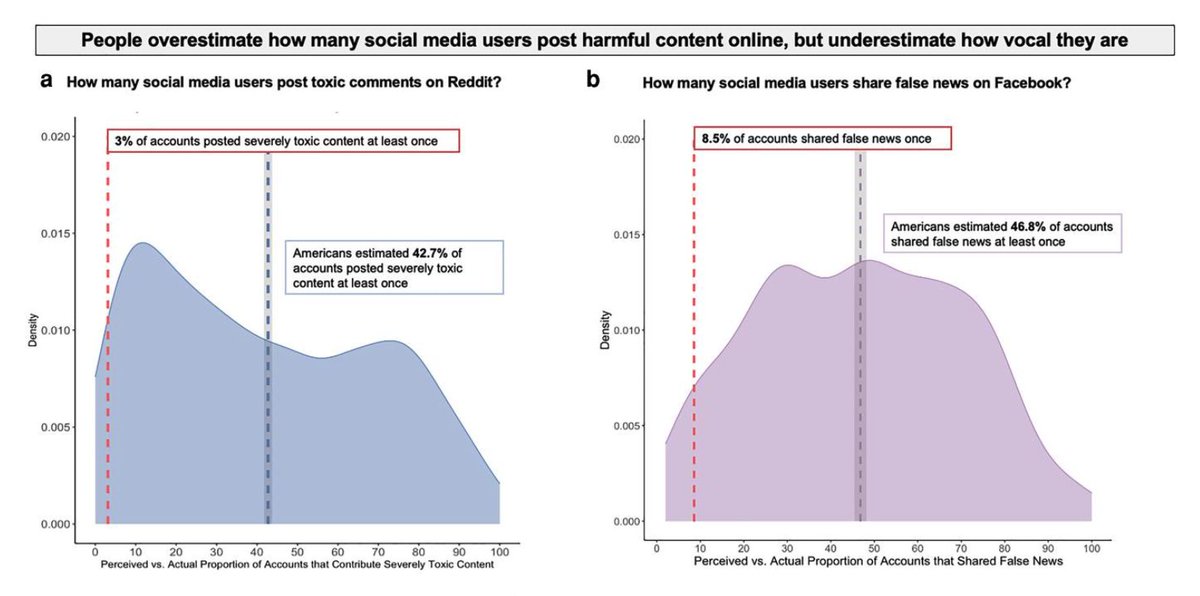
Research finds that people overestimate how many social media users post harmful content--which makes us think the world is worse than it really is.
On average, they believed that 43% of all Reddit users have posted severely toxic comments and that 47% of all Facebook users have shared false news online. In reality, platform-level data shows that most of these forms of harmful content are produced by small but highly active groups of users (3–7%).
Overestimating the proportion of social media users who post harmful content makes people feel more negative emotion, perceive the United States to be in greater moral decline, and cultivate distorted perceptions of what others want to see on social media.
https://t.co/xRmIjKtJmd