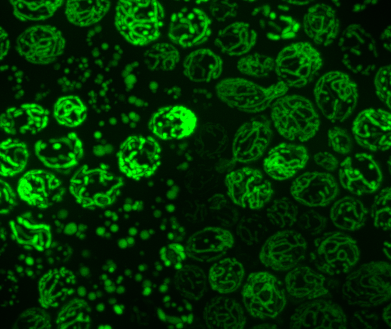
🎉 Excited to share a big part of my PhD work in @KleinLabHMS that took many, many years and my blood, sweat, and tears! 😅
We ask - What’s the role of cell division in the formation of initial cell types during early development ?🧐
https://t.co/aBQCx2PZIU
🧵 (1/14)
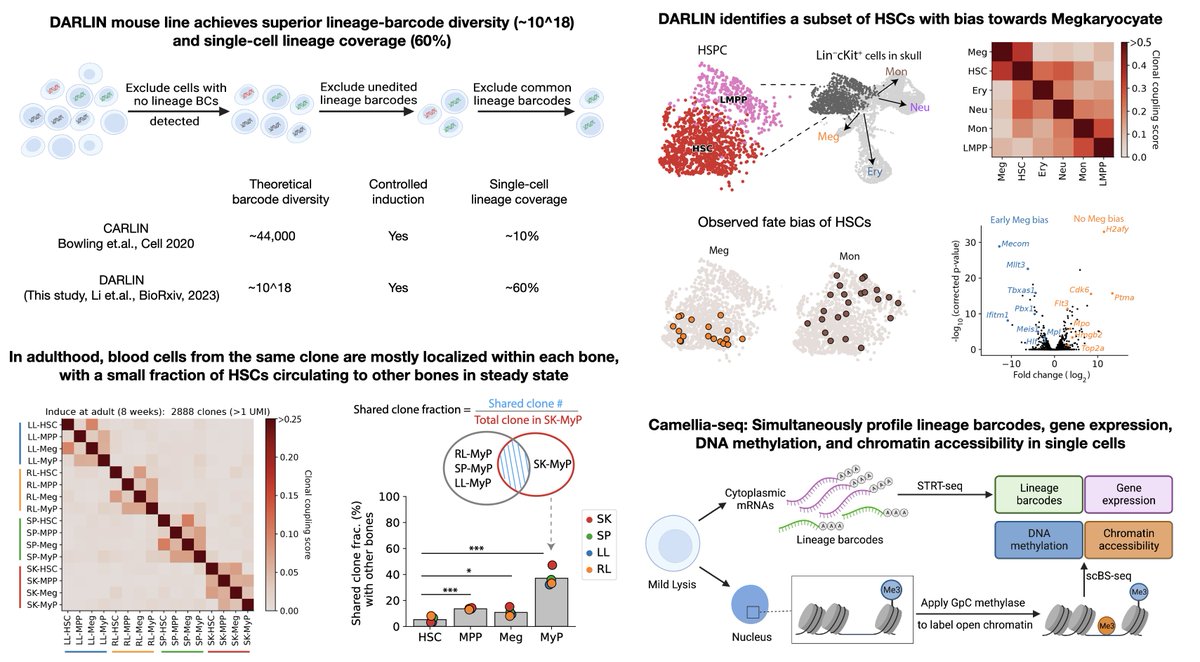
Want to apply single-cell multi-omic lineage tracing to study your favorite system in mice at defined time point and with superior lineage resolution?
Jointly with @Li_Li_666@SarahBowling15@FD_Camargo, we present DARLIN, a superior lineage-tracing mouse https://t.co/hZqvbjJiNj
How do different signaling pathways alter tissue composition & state? Can we use signaling response phenotypes to predict aberrant signaling in disease? 🤔
We interrogate these in our new paper - https://t.co/hORVCKeVBu
A thread 1/9
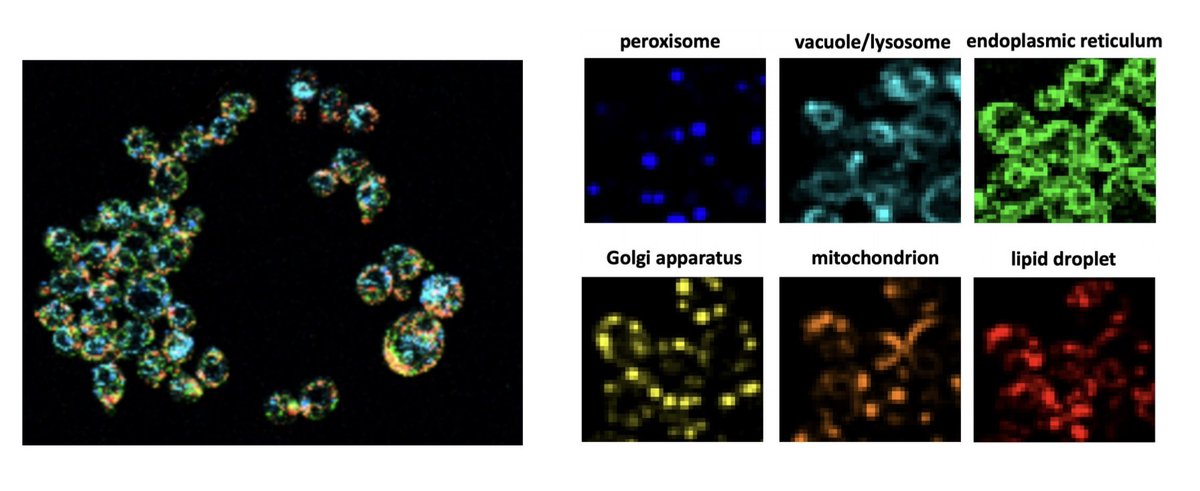
You’re the Mayor of Celltown. How do you allocate resources to grow? Do you invest in more mitochondria? ER? Golgi? We studied links among systems-level organelle biogenesis, cell size and growth at single cell resolution with our fun tool: rainbow yeast! https://t.co/tvnRhc7nYF
CoSpar with @KleinLabHMS is out at Nature Biotech! CoSpar robustly infers cell fate choice by integrating transcriptome and lineage tracing information. It reveals early fate bias across hematopoiesis, reprogramming, and directed differentiation. Link: https://t.co/Bg3uTejLKk
Animation Lab postdoc Shraddha @Na_y_ak is very excited to release "The Journey of a Metabolite," a lesson on metabolic flux for undergrads: https://t.co/DPugM6F7fo
The gif below shows a glimpse of carbon flux through glycolysis (click the link to see the rest and much more!)
Excited to share my work with @KleinLabHMS, in which we developed a robust computational approach for dynamics inference by integrating single-cell genomics and lineage tracing.
https://t.co/s1kmyFo1eX
I'm never not in awe of Kristian's ability do to thoughtful, meticulous, and insightful science--and then explain it clearly and in stunning images.
Including in his new story on how freshwater fish can avoid saltwater:
https://t.co/y2o6SXoP3s
My preprint on salt avoidance in zebrafish with @EngertLab, @DrGuggiana and Thomas Panier is up!
https://t.co/TQ9zAPuA1T
TL;DR: Using brain-wide imaging, like in this video, we now believe fish avoid swimming into salty water because they really do not like the way it smells
My preprint on salt avoidance in zebrafish with @EngertLab, @DrGuggiana and Thomas Panier is up!
https://t.co/TQ9zAPuA1T
TL;DR: Using brain-wide imaging, like in this video, we now believe fish avoid swimming into salty water because they really do not like the way it smells
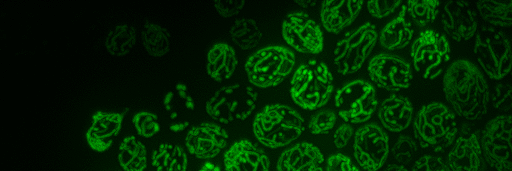
Attention science: I proudly present our work on bet-hedging in yeast metabolism, performed in the labs of @EvolvingMurray and @fleshball with @QuinceyJustman. We found a bizarre and fascinating example of non-genetic variation in yeast metabolic activity.
https://t.co/OQhXqIhytG
I have been helping the awesome former @mvhlab member Mark Sullivan with some new work that we are excited to share! Described in more detail in the comments… https://t.co/I5aLvEl0c8
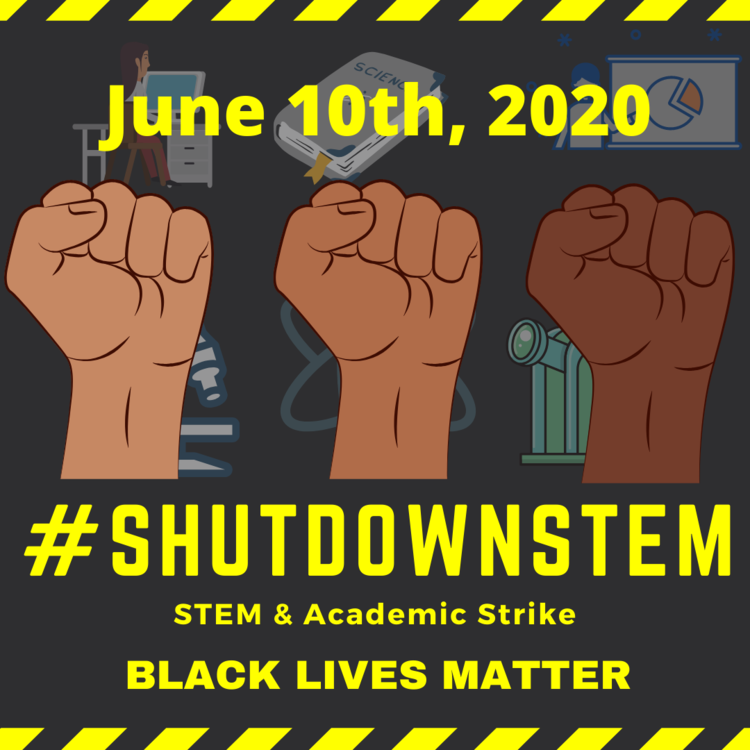
This Wednesday, June 10th we will join the call to #ShutDownSTEM! We urge all scientists and STEM workers to stop business as usual for a day to focus on actionable plans that work towards ending anti-Black racism.
#Strike4BlackLives#BlackLivesMatter#ShutDownAcademia
Here's a new #b3d animation I put together for the @EngertLab to provide a quick explanation of the optomotor response in larval #zebrafish
https://t.co/Agn1NZXycD
@skryazhi@fleshball @EvolvingMurray @SashaFLevy Theirs is perhaps a stronger persister phenotype (definitely at least for heat shock). That work was absolutely a source of inspiration for us as we tried to figure this thing out!
@skryazhi@fleshball @EvolvingMurray @SashaFLevy Our "slow" type seems to exist at a higher frequency and carry a subtler growth defect. It's also not marked by high Tsl1p (one of the first things I tried!) or age-dependent.
@gsherloc@fleshball @EvolvingMurray It didn't make the manuscript, but we've done these experiments in PKA-inactive (tpk1/2/3-as + pretreatment with inhibitor) strains; the balance shifts toward the recoverer subtype, growing more slowly but prepared for starvation.