[VIDEO] The Humane AI pin just launched for $699.
Is this pin going to be the new Apple iPhone?
Idk, but here are 3 big takeaways from the launch:
1. OpenAI/Microsoft will eventually become infra for all tech
Hard to beat them at this rate, they will become AWS for AI
2. AI is gonna make apps (as we know them) a lot less important
Screenless interfaces powered by AI will be connected to apps on the back end and bundled into a subscription service
My Humane subscription will come with Tidal and I will rarely/never need to interface with tidal again
Many consumer products will go from B2C -> B2B
3. Product design is going to look a lot different in 5-10 years
Maybe unrecognizable.
The bottom line is how we are interacting with these devices are changing.
This week we had the GPT store. Agents are the new apps.
Now we have AI pins.
The palm of your hand is your new screen.
Wild times.
--
Follow me @gregisenberg for more takes on where the world is going. Link in bio for more insights. Email going out today on how to find proven startup ideas.
This is so crazy.
The Northern Hemisphere used to radiate more heat to space than it absorbed from the sun.
The difference was made up for by heat transported north from the Southern Hemisphere through (mainly the Atlantic) oceans and atmosphere.
Around 2014 the amount of Absorbed Solar Radiation started to rapidly increase, surpassing Outgoing Longwave (Thermal or IR) Radiation to space, leading to a positive Energy Imbalance of the Northern Hemisphere!
So more heat was absorbed from the sun than radiated to space, possibly also reducing heat transported from the Southern to the Northern Hemisphere and leaving more to e.g. melt Antarctic Sea ice.
In recent years this energy imbalance has been increasing further, as air pollution and cloud cover decreased, and the amount of sunlight reflected back to space decreased.
And because outgoing heat radiation was not increasing (as much).
The balance can be restored (or made negative again) in two ways:
1⃣ Increasing Outgoing Longwave Radiation.
For that temperatures of the Northern Hemisphere need to increase, which is happening at the moment.
2⃣ Increasing air pollution and cloud cover to reflect more sunlight to space.
Neither of these are policy recommendations.
We are between a rock and a hard place.
People need to be aware of the situation.
🚨 BREAKING: GPT-4 image recognition already has a new competitor.
Open-sourced and completely free to use.
Introducing LLaVA: Large Language and Vision Assistant.
I compared the viral parking space photo on GPT-4 Vision to LLaVa, and it worked flawlessly (see video).
Story Points don't work.
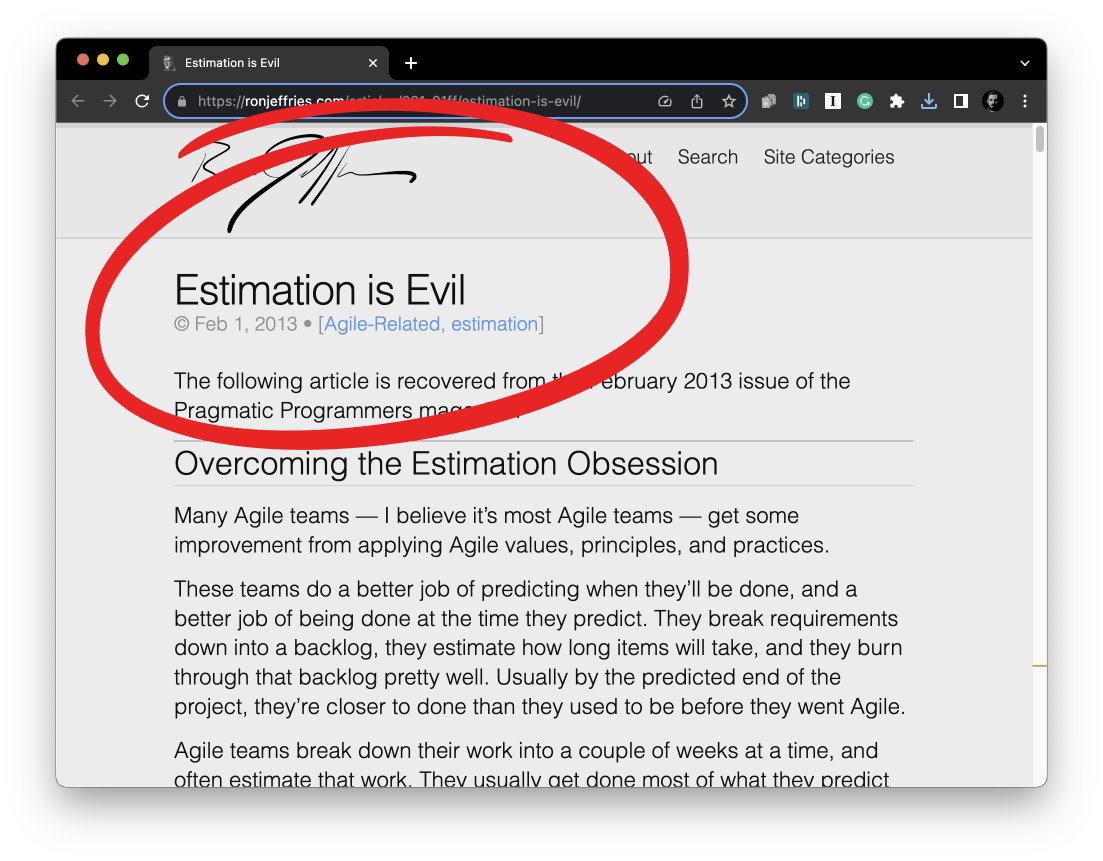
Even Ron Jeffries, who invented them, said he was sorry years ago.
And not only did he apologize, but he called the whole estimation idea "Evil."
Unfortunately, too many teams still use these points to estimate their work.
Story Points is a made-up metric to estimate work effort, not time. The goal was to prevent management from misusing estimates.
But it didn't work.
Every team I've ever met keeps a conversion table to translate back and forth between points and time. Some will never admit it, but go and talk to the folks doing the work.
Look at me and tell me I'm wrong.
But it gets worse:
Teams use points to decide how much work they can finish. But how can they do that without talking about time?
The effort to do something is not the same as the time it will take to finish it. This is especially true when planning an iteration with many people and tasks.
It's clear now: Story Points don't work.
What's the alternative?
I'll let the people who manage projects for a living offer their alternatives, but I can tell you what I've done.
As I got older and wiser, I stopped with the estimation charade altogether. I had my teams focus on short iterations with constant feedback from stakeholders.
From the "scope, budget, and time" triangle, I always tried to keep two of them variable and fix the third one.
If the customer was looking for a specific scope, we had a variable timeline and budget to finish it. We kept the scope and time flexible if the budget was non-negotiable. And if we had to deliver by a specific date, the scope and budget were on the table.
Every company is different, and this doesn't work for everyone. But if it does, I hope you stop the charade.
I'd love to hear about your experience estimating software. What crazy things does your company make you do?
Software estimates are one of the oldest lies we tell ourselves.
We all know they don't work, but pretend they mean something and later feel enraged when shit hits the fan.
I focused a big part of my undergrad on software estimation.
After graduating, I wrote plenty about the topic.
Then, I started working for a company where I spent years researching how to make better estimates. We sold multiple millions of dollars of software using the tools I built.
I read everything there's to read. I could recite Steve McConnel's "Software Estimation" book from top to bottom.
Here is the most important lesson I learned:
People can't estimate software. It doesn't matter who they are or how much experience they have.
Estimating software reliably is science fiction.
And the best part:
They will ask you to estimate something. They will tell you they understand it's not exact. They will promise they won't hold you accountable.
And then they will. They always do.
There are two solutions for this. Let's start with my recommendations for those who don't have a choice:
1. Remove "quick," "simple," "straightforward," "easy," and every similar word from your dictionary. Never use them. Don't let others use them when referring to your work.
2. Never volunteer an estimate. Everything you say will be used against you.
3. When forced, estimate work you know you can complete today. Always estimate with a range: "It will take me 2 - 4 hours."
4. Estimate anything you won't do today in days and weeks. Say, "I should finish that feature sometime this week." Do not estimate future work in hours.
But we all know your manager will force you to give an estimate. Here is what you should do:
1. Estimate how long you think it will take you to complete the task.
2. Multiply the number by 3. This will be the lower range of your estimate.
3. Double the lower range of the estimate. This will be the upper range.
Example: If you think something will take you 1 day of work, say "between 3 and 6 days."
Here is the funny part:
It won't take you between 3 - 6 days. This is as much bullshit as any other method you can think of.
The true solution for this problem:
Work for a company that doesn't care about estimates.
Scrum is a cancer.
I've been writing software for 25 years, and nothing renders a software team useless like Scrum does.
Some anecdotes:
1. They tried to convince me that Poker is a planning tool, not a game.
2. If you want to be more efficient, you must add process, not remove it. They had us attending the "ceremonies," a fancy name for a buttload of meetings: stand-ups, groomings, planning, retrospectives, and Scrum of Scrums. We spent more time talking than doing.
3. We prohibited laptops in meetings. We had to stand. We passed a ball around to keep everyone paying attention.
4. We spent more time estimating story points than writing software. Story points measure complexity, not time, but we had to decide how many story points fit in a sprint.
5. I had to use t-shirt sizes to estimate software.
6. We measured how much it cost to deliver one story point and then wrote contracts where clients paid for a package of "500 story points."
7. Management lost it when they found that 500 story points in one project weren't the same as 500 story points on another project. We had many meetings to fix this.
8. Imagine having a manager, a scrum master, a product owner, and a tech lead. You had to answer to all of them and none simultaneously.
9. We paid people who told us whether we were "burning down points" fast enough. Weren't story points about complexity instead of time? Never mind.
I believe in Agile, but this ain't agile.
We brought professional Scrum trainers. We paid people from our team to get certified. We tried Scrum this way and that other way. We spent years doing it.
The result was always the same: It didn't work.
Scrum is a cancer that will eat your development team. Scrum is not for developers; it's another tool for managers to feel they are in control.
But the best about Scrum are those who look you in the eye and tell you: "If it doesn't work for you, you are doing it wrong. Scrum is anything that works for your team."
Sure it is.
Here are 26 cybersecurity YouTube channels:
1. Infosec Institute — Cybersecurity awareness.
2. Black Hat — Technical cybersecurity conferences.
3. Bugcrowd — Bug bounty methodology & interviews.
4. InfoSec Live — Tutorials & interviews.
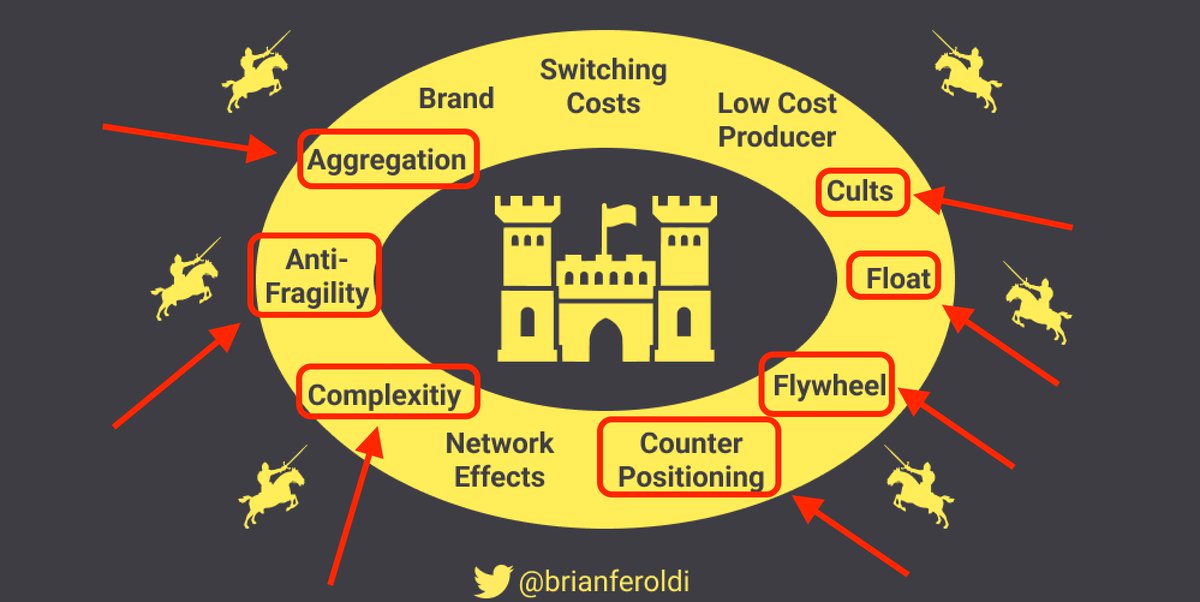
Every investor knows the 4 most common moats...
But did you know that OTHER competitive advantages exist?
Here are 18 POWERFUL -- yet completely underrated -- types of moats:
Mes pensées et prières vont à la famille et aux proches de Naël, mort à 17 ans ce matin,
tué par un policier à Nanterre.
Qu’une justice digne de ce nom honore la mémoire de cet enfant.
One simple trick to improve your writing — The Rule of 3.
Veni. Vidi. __.
Life, Liberty, and the Pursuit of __.
Tall, dark, and __.
Your brain is a pattern-completion machine.
And the number three is the smallest number of elements needed to create a pattern.
***
The Rule of Three is a storytelling principle that says people better understand concepts, situations, and ideas in groups of three.
They’re right. The most common storytelling structures are split into threes:
• 3 Act Structure
• Promise, Progress, and Payoff
• The Hero’s Journey – Separation, Initiation, and Return
But why’s it so effective?
Threes let you shape your story.
Any less, there’s no pattern.
Connect two points, you have a line.
Connect three points, you might have a line. Or a squiggle. Or a triangle.
It depends on how you connect them.
***
3 techniques to use The Rule of Three today:
1. Tricolon
The repetition of similar words or phrases three times to create a parallel pattern.
Example:
“On the one hand, the objective reality of rivers, trees and lions; and on the other hand, the imagined reality of gods, nations and corporations.”
– Yuval Noah Harari in Sapiens
2. Three-part structure
James Clear calls his newsletter "3-2-1."
He organizes his writing into three sections, and it's become a popular way to format newsletters.
3. Hendiatris
A hugely popular technique in speeches and advertising, hendiatris means using three individual words together to convey one idea:
• “Reduce, Reuse, Recycle.”
• “Friends, Romans, Countrymen.”
• “Government of the people, by the people, for the people.”
The Rule of Three may be the most practical rule in all of writing.
Proven by science, effective in practice, and simple to implement.
Pay attention to good writing and you see threes everywhere.
When I worked in an office, I had to commute every day for 2 hours.
1 hour to the office, 1 hour to come back home. That’s 40 hours per month wasted on commute.
Now tell me again why would I go back to the office and waste 40 hours per month on commuting? I can use those hours to do… literally anything that I enjoy instead.