Yes each of my sites is a Termius server with this kind of start command
cd /srv/http/hotelist.com && tm
tm is a script made by Claude Code which puts it in a tmux session tied to the project name (from its folder)
That means I always log back into my tmux session for each project!
My big sites like Photo AI are on their own VPS, one site per VPS, but the rest is on one VPS, all on Hetzner btw, so anyway I don't even notice this, it's just all tabs in Termius
If my phone disconnect I just reconnect and am back where I was
Every tmux session has Claude Code open
What are the best crypto Visa cards currently?
I have used EtherFi for the last year, and while I am still happy with it, I wanted to see if there are some new ones worth checking out, or if there are some good campaigns going on rn.
Head of Claude Code:
"85% of our engineers are running dozens or hundreds of agents. The way you do it is graph engineering."
In 40 minutes he explains how a single engineer now does the work of a whole team, how far this has gone inside Anthropic and where it goes next.
This is something you can't skip if you don't want to be left behind.
Watch it, then read the full guide on graph engineering below.
have not touched perplexity/claude/chatgpt for 2 weeks now and see no reason why i would.
running my fully private (almost) AI personal assistant stack that handles research, portfolio management, journalling, coding, etc.
here's the full stack:
- Hermes agent (agent harness)
- Venice (private, uncensored AI inference API)
- Honcho (behavioral analysis/long term memory)
- Obsidian (knowledge vault)
- qmd (on device search engine, both text/vector search)
- browser-harness (CDP browser automation, agent browses the web like a human)
- Tavily (search API)
- Codex (coding, powered by private coding models on Venice too)
all on a 16gb macbook pro.
there are currently only 2 touch points (AI inference & search API) that got offloaded to cloud -- AI inference due to hardware constraints, search API has no workarounds. but i'm opting for purely private/e2e model choices on Venice and queries get filtered by the agent before hitting the search API. this way, we keep data leakage to a minimum.
it's also pretty sick that locking base:0xacfe6019ed1a7dc6f7b508c02d1b04ec88cc21bf grants you daily refreshing compute credits denominated in base:0xf4d97f2da56e8c3098f3a8d538db630a2606a024 -- meaning i'm running private, anonymized SOTA inference daily for free.
of course, full privacy is definitely the end goal. i'm slowly working towards running everything completely local while offloading only high-complexity inference to Venice.
looking into stronger workhorses (eyeing upcoming m5 studio ultra release/refurbed 512gb options for SOTA models) to close that last gap for a complete e2e private intelligence stack.
firmly believe owning your data in the age of AI surveillance and big tech data centralization is as important as owning your own assets.
like we've said for years: "not your keys, not your coins". you don't custody all your money with a bank, why custody your thoughts and private information with OpenAI/Anthropic?
if you haven't already started, highly recommend you look into it.
remember, that's why we got into crypto in the first place.
So you are using AI to write your resume to apply for a job where HR will use AI to screen the resume?
Then the first round interview will be done on HireVue where an AI will review your answers?
And once you are on the job, you will use AI to write your emails and reports, while your boss will use AI to summarize that report?
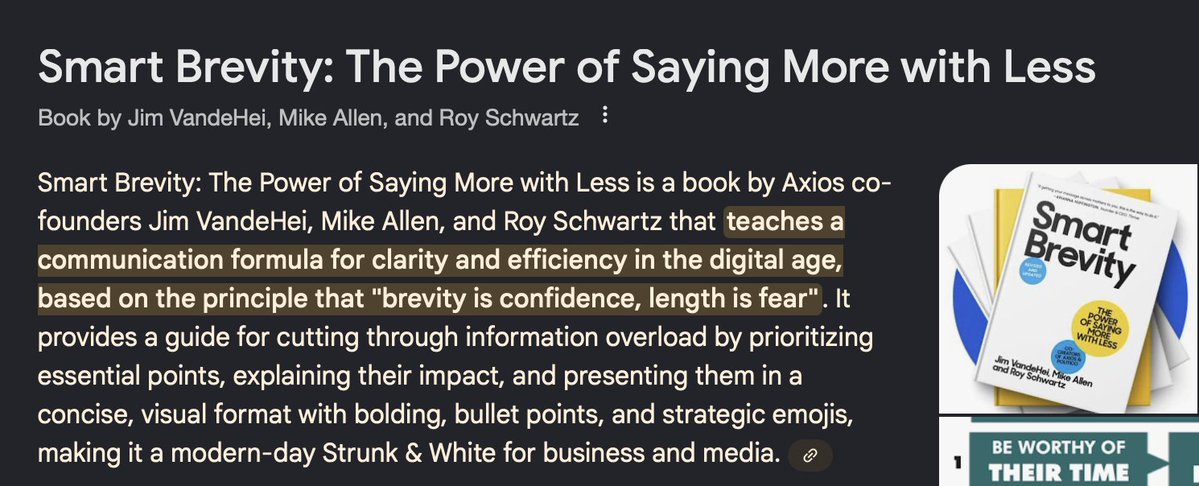
The best book you can read to improve your communication is Smart Brevity. I bought it for my analysts years ago and it made their research notes 10x better.
The best technical writers parse out the most important details and hand them to you on a silver platter.
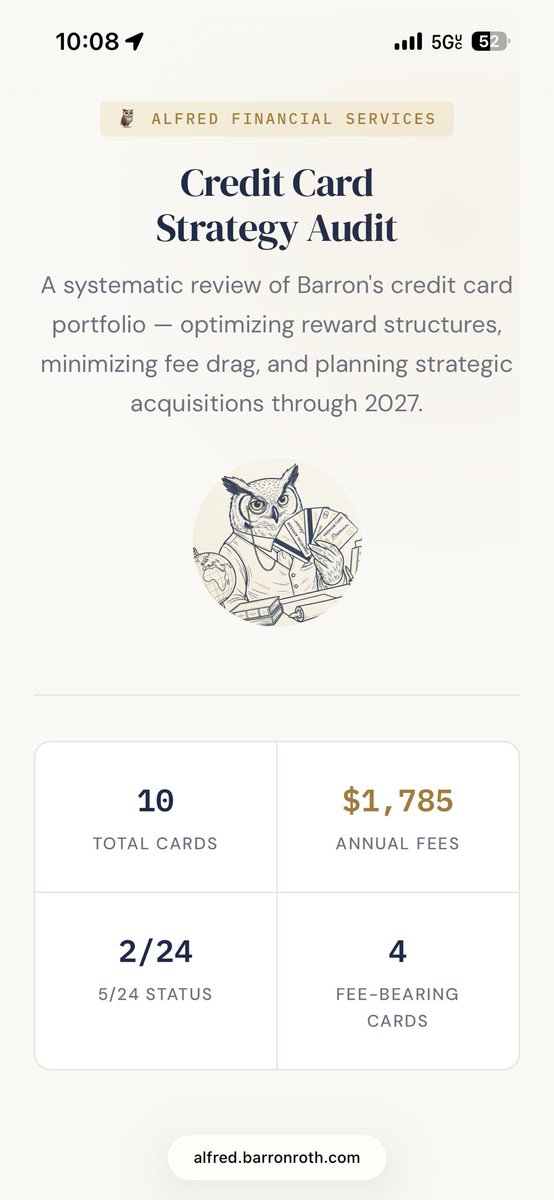
new @openclaw meta: credit card churning
i love flying biz class as much as the next guy, but i don’t have the patience to maximally churn cc’s like r/churning
but my claw Alfred does!
gave him access to all my CC data, and he built me a churning strategy like no other
longterm memory for @openclaw is solved and you don't need to pay for it (sorry @supermemory)
@tobi's QMD memory system, when configured correctly, is cracked
just ask your openclaw to:
(1) install qmd
(2) enable "session memory" (this means it'll search through all your transcripts)
(3) configure qmd embeddings in openclaw's preferred path (not qmd's)
after enabling, tell your agent to run qmd embed. first build takes ~1 hour depending on how many sessions you have. go make coffee.
then test it: ask a needle-in-the-haystack question. something you talked about weeks ago that's nowhere in current context. if it nails it, you're welcome!
I literally live off yields and airdrops
Every few days I spend hours to find the highest stablecoin yields on Solana
And I tell you passive income isn't a myth!
Here’s my full guide — all pros & cons + Airdrops 👇🏼🧵
They told you meat is bad for your gut.
That it lacks fiber, so it can't support a healthy microbiome. That it promotes inflammation and disease. Here’s the truth:
1. Meat digests cleanly, with no fermentation
Meat is composed of highly bioavailable proteins and fats, not fermentable carbohydrates.
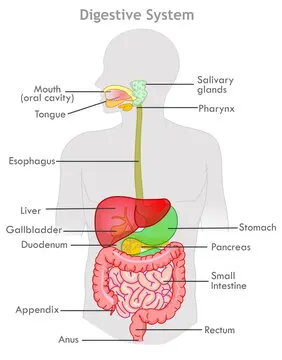
It’s broken down efficiently in the stomach and small intestine — where pepsin, HCl, and pancreatic enzymes dismantle amino acids and fats for direct absorption.
No fiber = no fermentation. Which means no gas, no bloating, and no endotoxins (like lipopolysaccharide, or LPS), which are byproducts of gram-negative bacterial fermentation in the colon.
So while fiber feeds microbial fermentation (producing short-chain fatty acids but also gas, histamines, and inflammatory byproducts), meat bypasses that entire process.
2. Meat supports gut integrity
The amino acid glutamine, abundant in meat, is the preferred fuel source for enterocytes (the cells lining your gut wall).
Without adequate glutamine, the gut lining deteriorates, increasing intestinal permeability ("leaky gut").
Other gut-healing nutrients from meat:
- Glycine and proline (from collagen-rich cuts and bone broth): essential for repairing the gut mucosa.
- Zinc: vital for intestinal barrier repair and immune regulation.
- Vitamin A and retinol: support mucosal immunity and gut lining health.
- Carnitine, carnosine, taurine: antioxidant and mitochondrial support for epithelial cells.
3. Meat doesn't feed dysbiosis
Diets high in fermentable fiber (especially insoluble fiber) can overfeed pathogenic bacteria and yeasts in people with dysbiosis or SIBO (Small Intestinal Bacterial Overgrowth).
This creates:
- Endotoxemia: inflammatory compounds leaking into circulation.
- Immune overactivation: chronic low-grade inflammation (via TLR4 signaling from LPS).
- Neurological symptoms: brain fog, mood swings, fatigue, even autoimmune flare-ups.
Carnivore diets eliminate the fuel source for microbial overgrowth, giving the gut a chance to reset and heal.
That’s why people with Crohn’s, colitis, IBS, and SIBO often thrive on animal-based diets.
4. The probiotic myth
“Probiotic” doesn’t just mean bacteria. It means pro-life for the gut.
And that’s what meat is — a foundational input for gut cell health, immune balance, and mucosal resilience.
Fiber is not essential. Probiotic pills are not essential.
What’s essential is rebuilding the gut wall, nourishing the immune system, and reducing microbial stress.
Meat does all of that without causing fermentation or inflammation.