They told the public it was too technical to question.
Then people learned the acronyms, read the contracts, mapped the cameras, and started showing up to meetings.
Awkward.
https://t.co/4wBNqbBbih
#Privacy#Surveillance#Transparency
LayerOne 2026 starts this Saturday! Join us for a weekend of fun, making new friends, and learning new things! This year's Saturday Night Party is a Banquet Dinner and Game Night - dice, meeples, cards, and more! https://t.co/J3jRqLqU94 Register now at https://t.co/rgA7V3tL1z
There’s something ominous about the speed with which the entire world has marched to require identification on platforms and, as I expected, begin the process of banning anonymous VPNs.
Last call for Early Bird registration! Discounts end on Friday, May 1st @ 23:59 Pacific! Get your tickets and hotel discounts now at https://t.co/rgA7V3tL1z and https://t.co/Mh39MKalxp Really looking forward to seeing you all in May!
PROS VS JOES CTF 🚨! Industry pros vs cybersecurity joes - who wins? 🤔 Sponsor Red Team, Blue, Team, or be a PvJ game sponsor! Get brand visibility & social media love 😎 Email sponsors [@] bsideslv [.] org #BSLV#CTF#cybersecurity#sponsorship
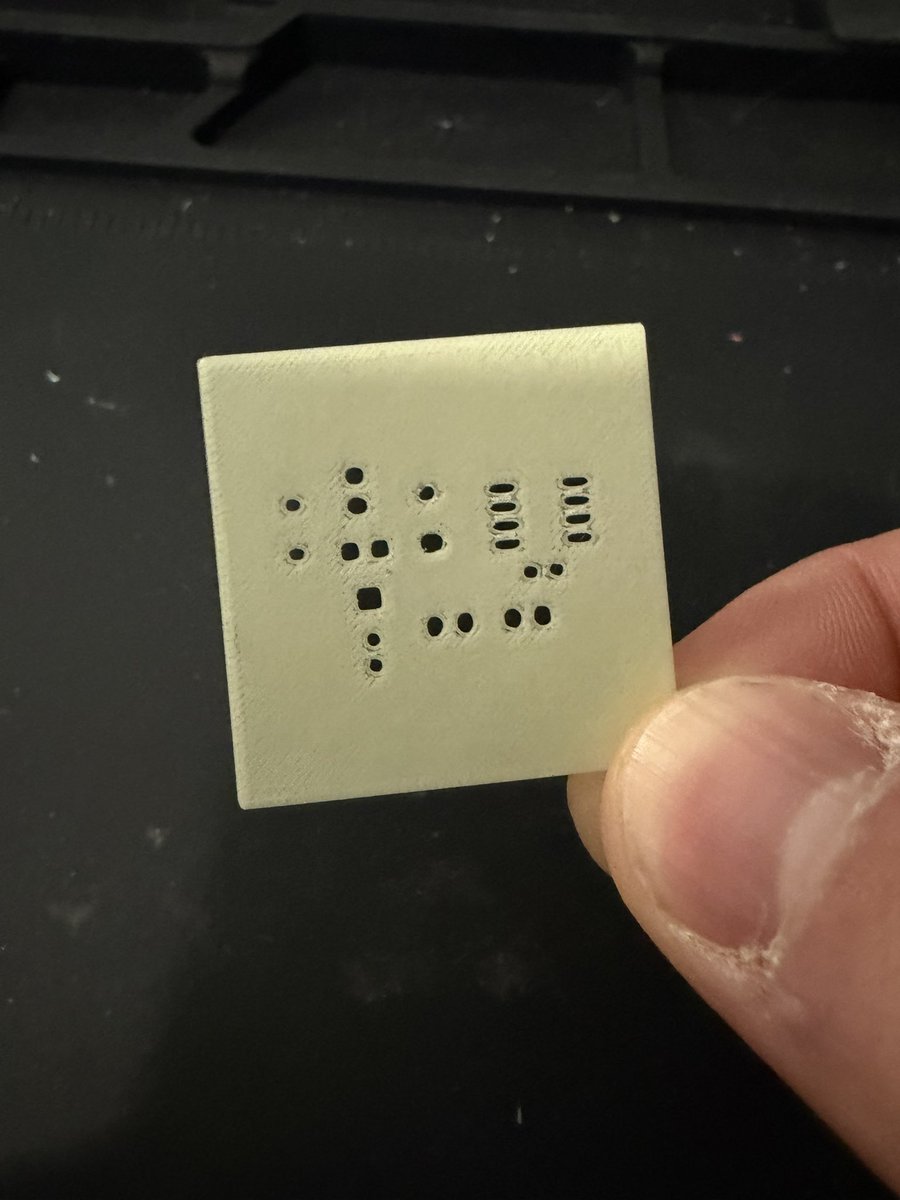
Brutal. I’m always fascinating by the failures/consequences of the low cost PCB options. Sometimes it’s a roll of the dice, like this person’s PCB’s having a holes punched deep into the PCB by the flying probe test machine.
Sometimes it’s repeatable, like tests I did a few years ago. I’m seeing lots of people get into PCBs, so here is a quick thread on those tests:
🧵1
BookBub ebook of Idoru!
Download the Kindle app and you can read it on anything.
Very timely, given passionate relationships with AI self-creations etc.
At the bottom of any Obsidian Reader page you'll see this tiny text: "parsed in X ms".
My goal is to try and turn the messiest HTML into a perfectly clean page in less than 50 milliseconds. Usually less than 10.
Who invented the telephone? I'm pretty sure this is before any of AGB's demonstrations. I'm not sure he even got it to work before 1876.
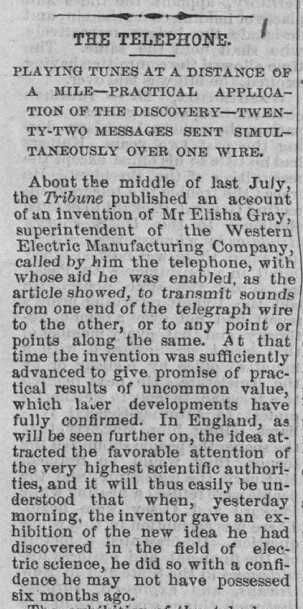
THE TELEPHONE.
PLAYING TUNES AT A DISTANCE OF A MILE—PRACTICAL APPLICATION OF THE DISCOVERY—TWENTY-TWO MESSAGES SENT SIMULTANEOUSLY OVER ONE WIRE.
About the middle of last July, the Tribune published an account of an invention of Mr Elisha Gray, superintendent of the Western Electric Manufacturing Company, called by him the telephone, whose aid he was enabled, as the article showed, to transmit sounds from one end of the telegraph wire to the other, or to any point or points along the same. At that time the invention was sufficiently advanced to give promise of practical results of uncommon value, which later developments have fully confirmed. In England, as will be seen further on, the idea attracted the favorable attention of the very highest scientific authorities, and it will thus easily be understood that when, yesterday morning, the inventor gave an exhibition of the new field he had discovered in electric science, he did so with a confidence he may not have possessed six months ago.
The exhibition of the telephone took place in General Stager’s room, in the Union Building, and was attended by Mr. Gray, the inventor, Gen. Stager, Prof. Swing, the Rev. Messrs. Hurd and Mitchell, Messrs. S. Barker, J. Hasskell, C. R. Field, G. Sturges, Herbert Ayer, W. H. Smith, Stephen F. Gale, Obadiah Jackson and others. It is perhaps, more proper to say that the exhibition was of the powers of the telephone, rather than of the instrument itself, which was performing its part of the work at the office of the Western Electric Manufacturing Company; but as the results of the grand transmitting process are made audible at the office of Gen. Stager, of course this was the best place to gather an idea of what the new feature in telegraphy really was. It must be understood, then, that on Keuzie street, just east of State, street, in obedience to instructions from the Union Building office, spent an hour or two about noon in playing upon the telephone a number of popular airs, such as “Yankee Doodle,” “Robin Adair,” “Auld Lang Syne,” “Coming thro’ the Rye,” etc., and the musical performance, the gentlemen were invited to General Stager’s room in the Union Building. As soon as they arrived and had been introduced to the inventor, he briefly explained to them the nature of the exhibition, showing that the sound-producing instrument was about a mile distant, and calling attention to the receiving instruments, by means of which he proposed to bring the far-off music within the hearing of all in the room. There were two in number, one, a sounding-box, made in wood, perforated on one side, about sixteen inches in length and four inches in height and breadth, with an electric magnet placed upon its upper surface—the other an ordinary violin with a metallic plate stretched across it on a bridge, in place of the four strings.
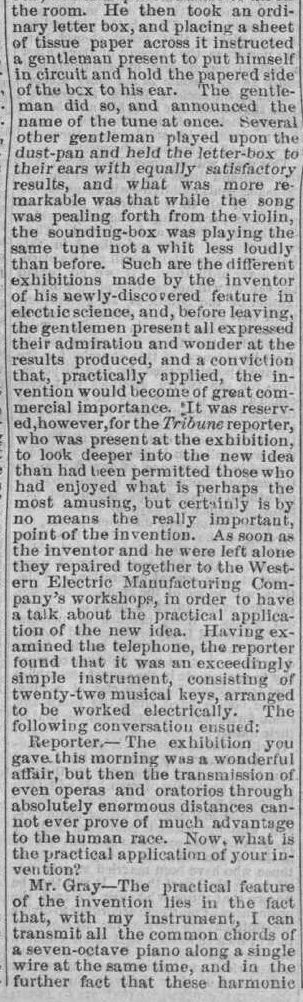
The first exhibition made was with the sounding-board. The wire leading into the room from the electric works on Keuzie street was connected with the electro-magnet on the sounding-box, and instrumentalist at the works to begin playing. In a few seconds the sounding-box began to evoke sweetly and very sonorously the tune of Yankee Doodle, followed in a minute by Robin Adair. The effect upon the audience—all of them were fully capable of appreciating whatever of the beautiful, or wonderful, or useful, or all combined, there is in air or nature—was instantaneous. They looked from one to the other with a that’s-a-big-thing sort of an expression which was quite amusing, and when the note of Robin Adair died away they made quite a number of pertinent inquiries of the inventor, who explained to them the sound was produced at the other end of the line by an instrument fitted with keys, which, under the action of electric current, underwent a certain number of vibrations, which, according to the number of each key achieved, provided its note, the number of vibrations of the higher keys being, of course, much greater than those of the lower. The number of vibrations per second achieved by the key in the telephone was reproduced in the electric coil on top of the sounding-box, which, systematically vibrating, sounded the note. The inventor then called attention to the fact that with the introduction of living animal tissue into the circuit the sound could be produced without agency of the electro-magnet. In proof of this, he placed himself in the circuit, and, taking the violin above described in his hands, he rubbed the surface of its metallic plate with a bow composed of a small piece of wood with a piece of a pig’s tail dexterously inserted therein, and evoked as loud correct music as had been provided by the sounding-box. Having shown the gentlemen present how to do it, they all in turn took the violin in hand, and although none of them had ever played a note in their lives before with the aid of the piece of pig’s tail they produced just as good music as Mr. Gray, every bit. The inventor then, to show that the principle applied to everything that is sonorous in its nature, sent for a letter-pan, from which he, placing himself in circuit, brought forth the music, less clearly of course, than from the violin or sounding-box, but still quite audible to all in the room. He then took an ordinary letter box, and placing a sheet of tissue paper across it instructed a gentleman to put the paper side of the box to his ear. The gentleman did so, and announced the tune at once. Several other gentlemen played upon the dust-pan and held the letter-box to their ears with equally satisfactory results, and what was more remarkable was that while the song was pealing forth from the violin, the sounding-box was playing the same tune not a whit less loudly than before. Such are the different exhibitions made by the inventor of his newly-discovered feature in electric science, and, before leaving, the gentlemen present all expressed their admiration and wonder at the results produced, and a conviction that, practically applied, the invention would become of great commercial importance. It was reserved, however, for the Tribune reporter, who was present at the exhibition, to look deeper into the new idea than had been permitted those who had enjoyed what is perhaps the most amusing, but certainly by no means the really important, point of the invention. As soon as the inventor and he were left alone they repaired together to the Western Electric Manufacturing Company’s works, in order to have a talk about the practical application of the new idea. Having examined the telephone, the reporter found that it was an exceedingly simple instrument, consisting of twenty-two musical keys, arranged to be worked electrically. The following conversation then ensued:
Reporter.—The exhibition you gave this morning was a wonderful affair; but then the transmission of even operas and oratorios through absolute enormous distances cannot ever prove of much advantage to the human race. Now, what is the practical application of your invention?
Mr. Gray.—The practical feature of the invention lies in the fact that with my instrument, I can transmit all the common chords of a seven-octave piano along a single wire at the same time, and in the further fact that these harmonic sounds can be analyses at the receiving end on instruments, each of which selects its own peculiar note, and rejects all others. Thus one wire can easily be employed by at least twenty-two different sending and twenty-two different receiving operators.
Reporter—Can you not send more than twenty-two messages in an opposite direction at the same time?
Mr. Gray—That is a point I do not know about yet!
Reporter— You say “at least twenty-two.” Is there then a prospect of sending there more messages in the same direction?
Mr. Gray—That remains to be seen. If I can transmit and receive discords as well as harmonies, of course the number of messages will be largely augmented, but I have my doubts about being able to do so.
Reporter—Well, twenty-two messages at once is a good number. How will it work?
Mr. Gray—We will see that in a minute.
Reporter—Does the length of line make any difference?
Mr. Gray—Of course the longer the wire, the larger the battery required, but the sound carried over any length of wire which is electrified from a sufficiently strong battery. In England I made experiments on what they call there an artificial cable, representing the conditions of an actual ocean cable. The experiments were as thoroughly successful as those you witnessed this morning. At a future day we intend to make experiments with the cable proper.—Chicago Tribune.
Publication: Salt Lake City Deseret News
Location: Salt Lake City, Utah, United States Of America
Issue Date: February 3, 1875
BOOM! A stencil I got quoted $20 for now costs $0.01 to make
Nobody believed in the 3d printed stencil but it worked perfectly!
You guys are all crushed under the boot of big stencil. While I’m liberating the people.
Start 3D printing your own stencils, it works!
@bronzesail@AdroitParchment@nxthompson I mean this is more like wolfram alpha to solve calculus It’s not that people use tools is that tools skips the journey to understanding.
No one’s saying never use tools.
1. i didnt discover this, @vmfunc and friends did. im regurgitating their stuff
2. ive been informed discord stopped using persona. they use something else now. persona is still used in lots of places (like apparently roblox)
3. vmfunc and friends are still doing a write up about it and trying to talk to persona about it.
https://t.co/kMkDH06Uj6
> be nerds
> look into persona (used by discord)
> kyc (know your customer) service
> used for age verification
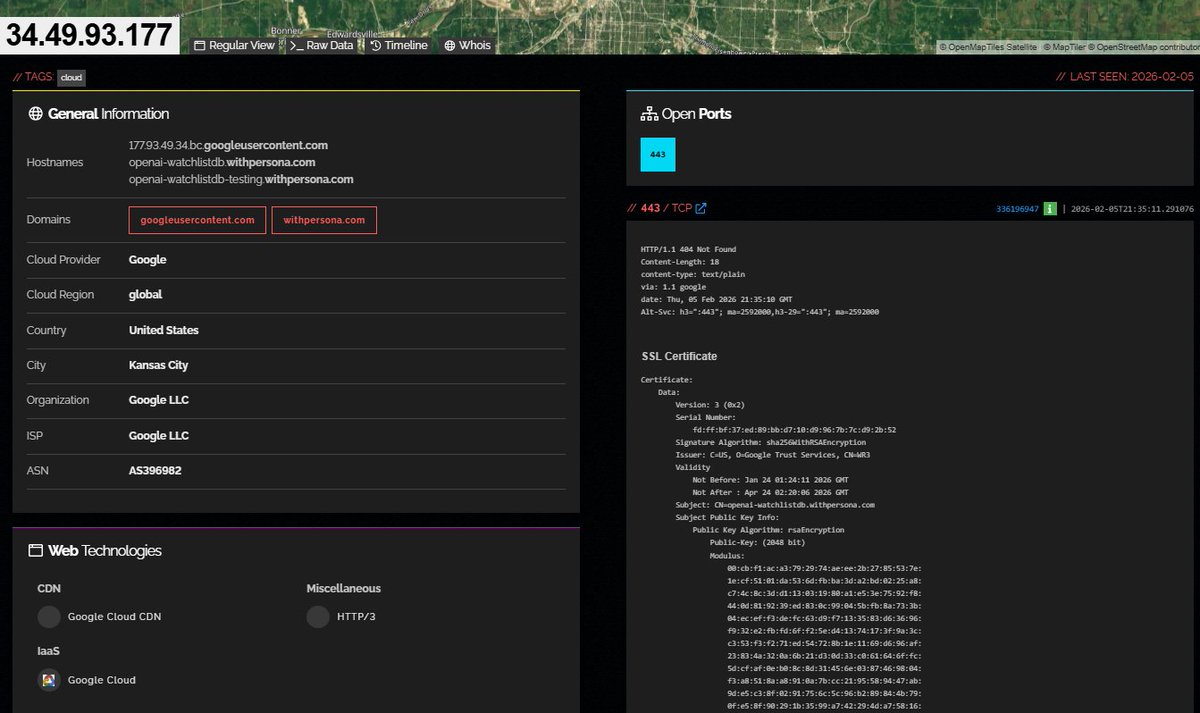
> search on internet (shodan)
> find weird server
> image 1
> openai-watchlistdb.withpersona
> openai-watchlistdb-testing.withpersona
> lolwtf
> look inside
> supposed to be behind cloudflare to hide ip
> openai messed up
> not behind cloudflare
> real ip shown
> using google cloud
> lookup cert history
> 2023-11-16 created
> 2024-02-28 gets cert
> 2024-03-04 prod goes live
> google stuff
> openai and persona partners
> partner around timeline of certs
> back to searching stuff
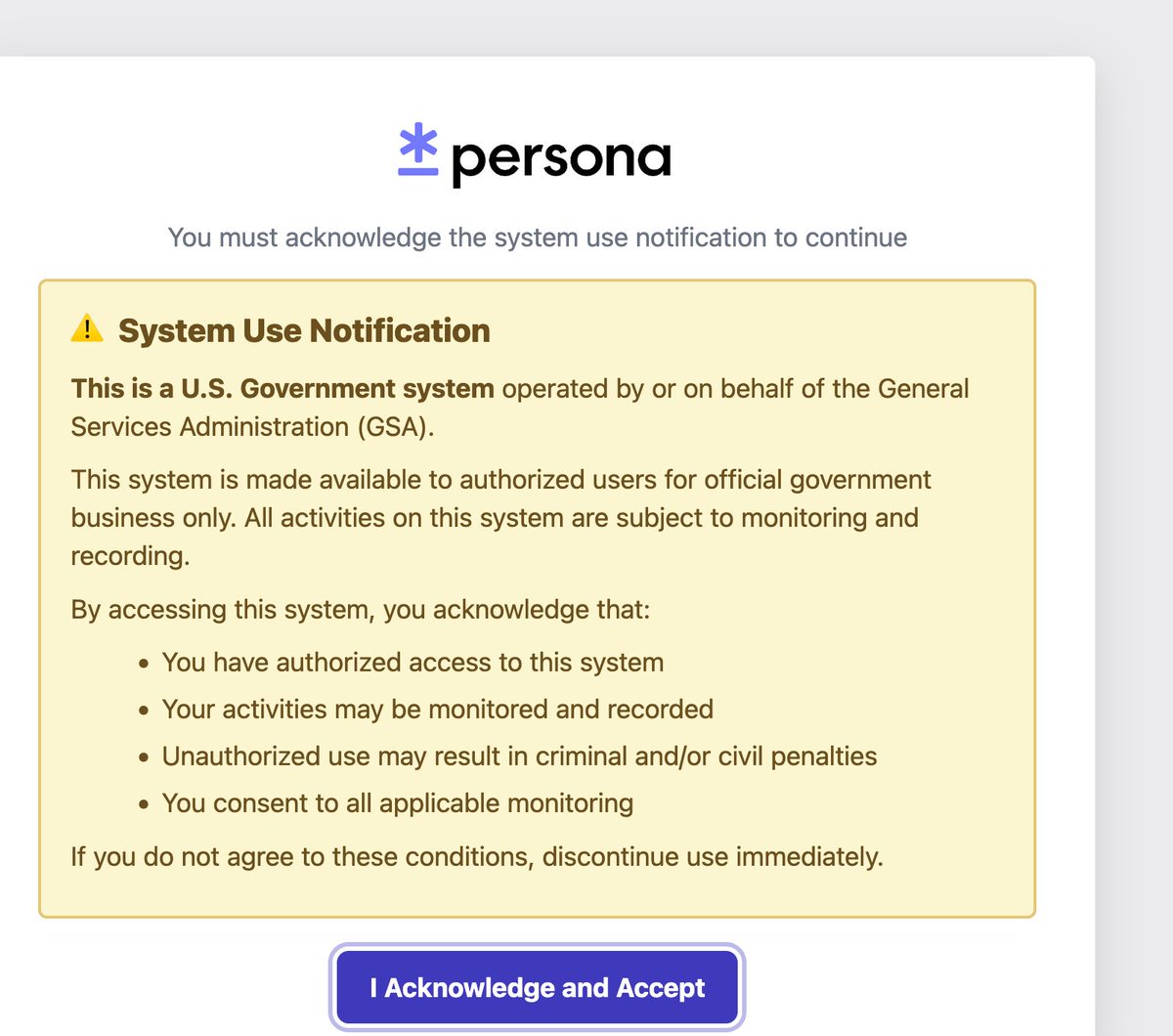
> find withpersona-gov
> look inside
> okta (image 2)
> lolwtf
> look inside
> website accidentally leaking stuff
> fedramp-private-backend-api
> look inside
> api .js accidentally exposed
> look inside
> wtf "SARInstructionsCard"
> wtf "app.onyx.withpersona-gov"
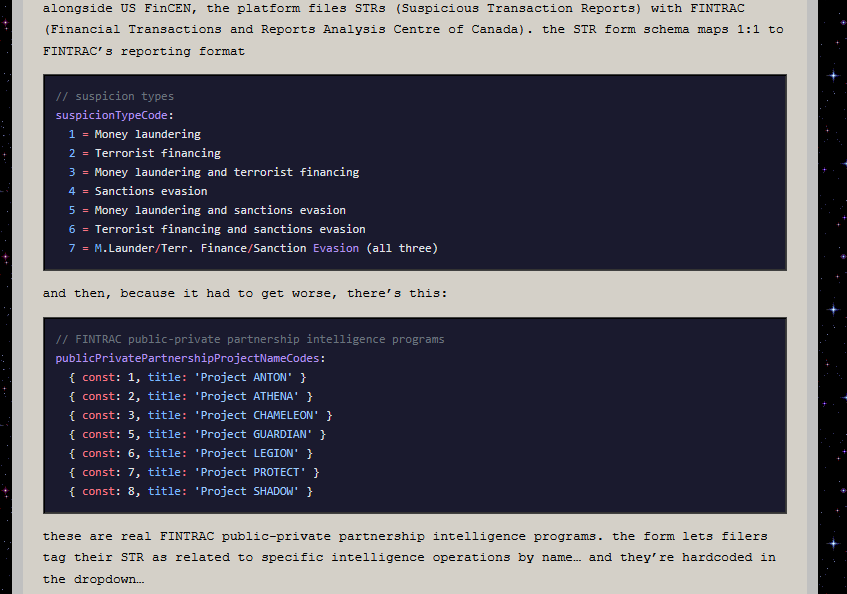
> wtf "FINTRAC"
> wtf "PrivatePartnershipProjectNameCodes"
> image 3
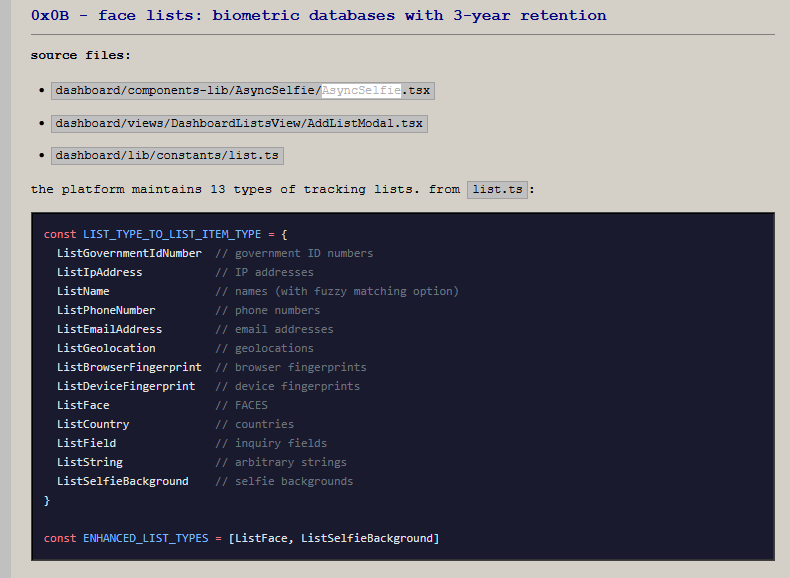
> wtf "AsyncSelfie"
> look inside
> openai, persona, send data to us gov
> feds map face to financial records
> map face using AI
> map face to ICE stuff
> api stores data for lots of stuff
> image 4
tl;dr persona kyc and openai are frens, using your selfie for verification and sending to ICE (or USGOV in general), using AI to tie to your financial records. see subsequent post for full write-up. its long and not mobile friendly
SaaS is dead. It's over.
I just cancelled my free Gmail subscription and vibe coded my own.
There is no spam filtering, no support for attachments, and the storage costs me $150/mo, but worth it. This is the future.
Your AI conversations aren't privileged. Yesterday, Judge Jed Rakoff ruled that 31 documents a defendant generated using an AI tool and later shared with his defense attorneys are not protected by attorney-client privilege or work product doctrine.
The logic is simple: an AI tool is not an attorney. It has no law license, owes no duty of loyalty, and its terms of service explicitly disclaim any attorney-client relationship. Sharing case details with an AI platform is legally no different from talking through your legal situation with a friend (which is not privileged).
You can't fix it after the fact, either. Sending unprivileged documents to your lawyer doesn't retroactively make them privileged. That's been settled law for years. It just hadn't been tested with AI until now.
And here's what really hurt the defendant: the AI provider's privacy policy (Claude), in effect when he used the tool, expressly permits disclosure of user prompts and outputs to governmental authorities. There was no reasonable expectation of confidentiality.
The core problem is the gap between how people experience AI and what's actually happening. The conversational interface feels private. It feels like talking to an advisor. But unless you negotiate for an enterprise agreement that says otherwise, you're inputting information into a third-party commercial platform that retains your data and reserves broad rights to disclose it.
Judge Rakoff also flagged an interesting wrinkle: the defendant reportedly fed information from his attorneys into the AI tool. If prosecutors try to use these documents at trial, defense counsel could become a fact witness, potentially forcing a mistrial. Winning on privilege doesn't make the evidentiary picture simple.
For anyone advising clients or managing legal risk, this is a wake-up call. AI tools are not a safe space for clients to process their counsel's advice and to regurgitate their legal strategy. Every prompt is a potential disclosure. Every output is a potentially discoverable document.
So what do we do about it?
First, attorneys need to be proactive. Advise clients explicitly that anything they put into an AI tool may be discoverable and is almost certainly not privileged. Put it in your engagement letters. Make it part of onboarding. Don't assume clients understand this, because most don't.
Second, if clients want to use AI to help process legal issues (and they clearly will, increasingly), then let's give them a way to do it inside the privilege. Collaborative AI workspaces shared between attorney and client, where the AI interaction happens under counsel's direction and within the attorney-client relationship, can change the analysis entirely. I'm excited to be planning this kind of approach, and I think it's where the industry needs to head.
https://t.co/NFqsznVdXh









![BSidesLV's tweet photo. PROS VS JOES CTF 🚨! Industry pros vs cybersecurity joes - who wins? 🤔 Sponsor Red Team, Blue, Team, or be a PvJ game sponsor! Get brand visibility & social media love 😎 Email sponsors [@] bsideslv [.] org #BSLV #CTF #cybersecurity #sponsorship https://t.co/IsA373vGie](https://pbs.twimg.com/media/HGWNiVtWYAA_e4d.jpg)