Research Instructor @AWeaverLab | Former postdoc | Cell-EV-RNA biology | Curious about cells, stories, and the art of living | Books • Cooking • Home decor
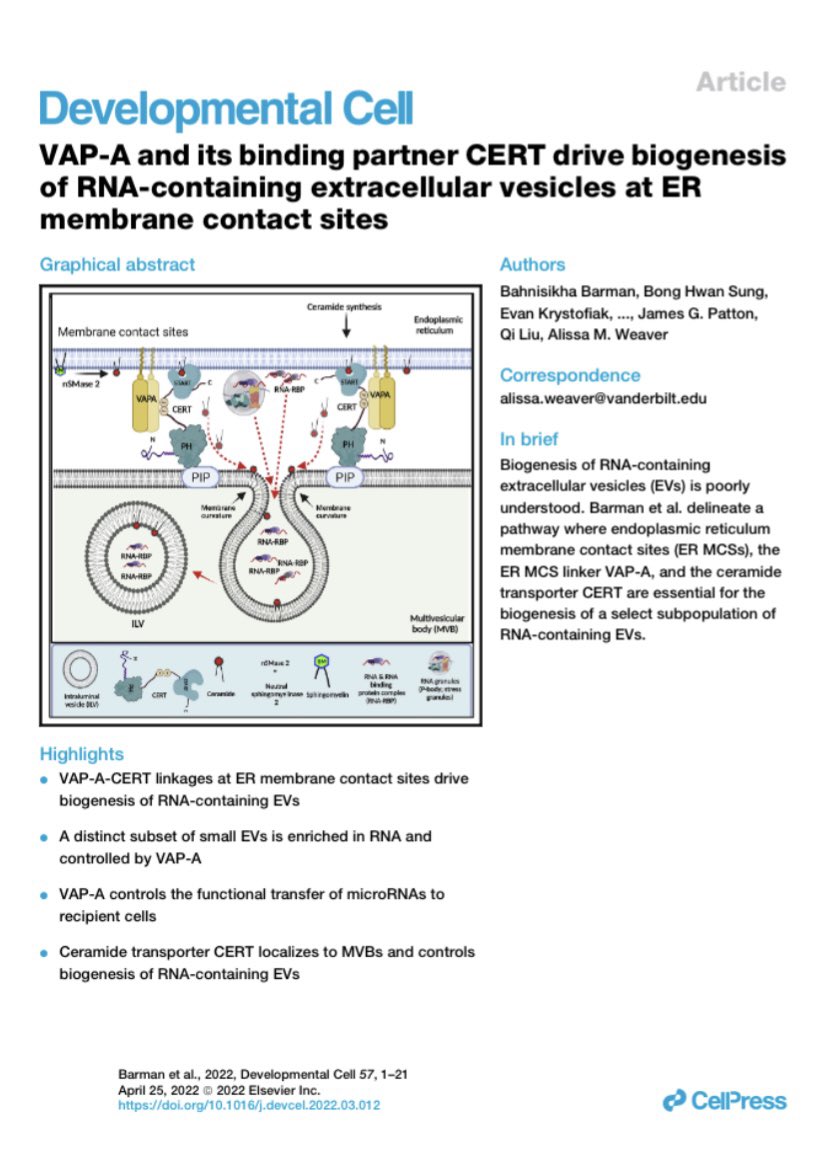
Our story on RNA containing extracellular vesicles biogenesis at endoplasmic membrane contact sites is finally online ! Thanks to all co authors and All my colleagues.
@AWeaverLab @IsevComms @exRNA@SungBH@MillisBryan
New Article online now at Dev Cell: VAP-A and its binding partner CERT drive biogenesis of RNA-containing extracellular vesicles at ER membrane contact sites - https://t.co/RRSOCFvbIf
This is how football should be visualized.
Spain vs. Argentina paints a clear picture
The graph shows real momentum, rendered in 3D, supported by data on goals, shots, xG and more.
Spain are world champions again,
Ferran Torres made sure of it.
Graph by Intelligoal
Out today: Researchers have made the first cell capable of “feeding, growth, replication, division and selection...entirely using components scientists put there.”
In other words, a cell that self-replicates and was made entirely from the ground-up, molecule by molecule.
The cell is called SpudCell. And although it is definitely a cell (in that it has a membrane with molecules inside) it is definitely not alive, because it cannot grow indefinitely, survive without human help, make its own ribosomes, or recycle waste. It "dies" after a few divisions.
But it's a starting point! And these same researchers have raised $6-8M+ in philanthropic funding to scale their efforts with a new nonprofit for synthetic cell research, called Biotic.
Buenos Aires, we're coming to you!
Join us at @fundacionleloir for an interactive workshop on how to explore and use cell type taxonomy data and tools from the Brain Knowledge Platform.
🎟️ Registration is free
🔗 https://t.co/rviHNEpy7J
Neanderthals survived for hundreds of thousands of years in Eurasia, enduring ice ages and eking out a hardscrabble living hunting woolly mammoths and rhinoceroses and harvesting edible grasses, tubers, and legumes. Why they ultimately perished has long been a mystery.
New research appears to strike out a leading hypothesis: that they succumbed to harmful mutations brought on by inbreeding within tiny, isolated populations.
Analyzing 27 high-quality Neanderthal genomes from Western Europe, researchers find that at the tail end of their existence approximately 45,000 years ago, our close evolutionary cousins were genetically healthy and appear to have lived in large, well-connected groups.
Learn more: https://t.co/8E6Q0n8NKc
New research finds that the ovaries of old mice become infiltrated with immune cells and may secrete immune signals into the body.
The consequences of these changes aren’t clear, but a similar transformation in humans could have health implications after menopause.
Learn more: https://t.co/N9dWVKeSBO
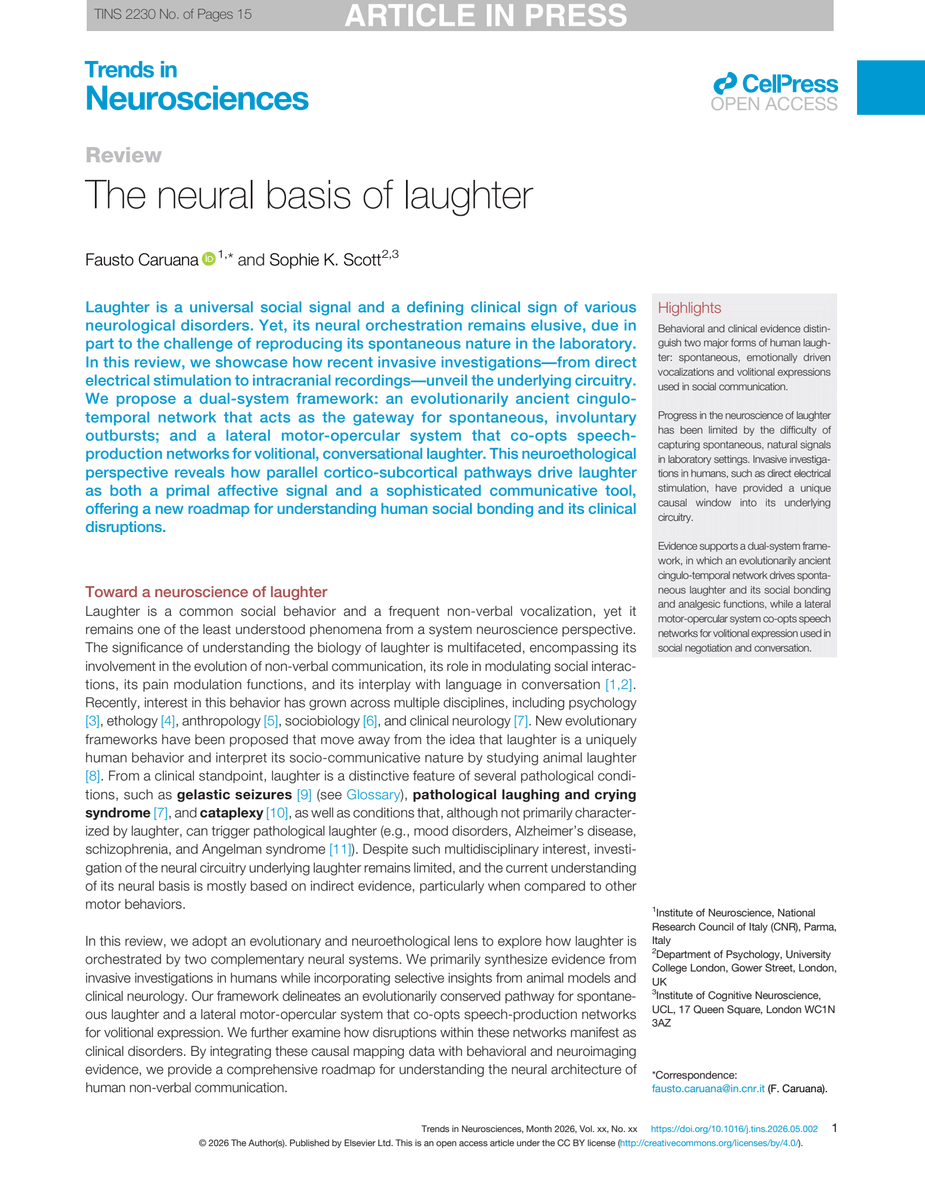
Spontaneous and conversational laughs come from two different parts of the brain.
Learn more in Trends in Neurosciences: https://t.co/aesQlabGei
Fausto Caruana & Sophie K. Scott
Two of the most important biomedical breakthroughs came from science of the Gila lizard venom (GLP-1s) and yogurt (CRISPR genome editing).
"The system that turned that lizard into a medicine is now being dismantled."
"Less support for scientists means strange questions no one will get to chase."
gift link https://t.co/JKEzQCGm75
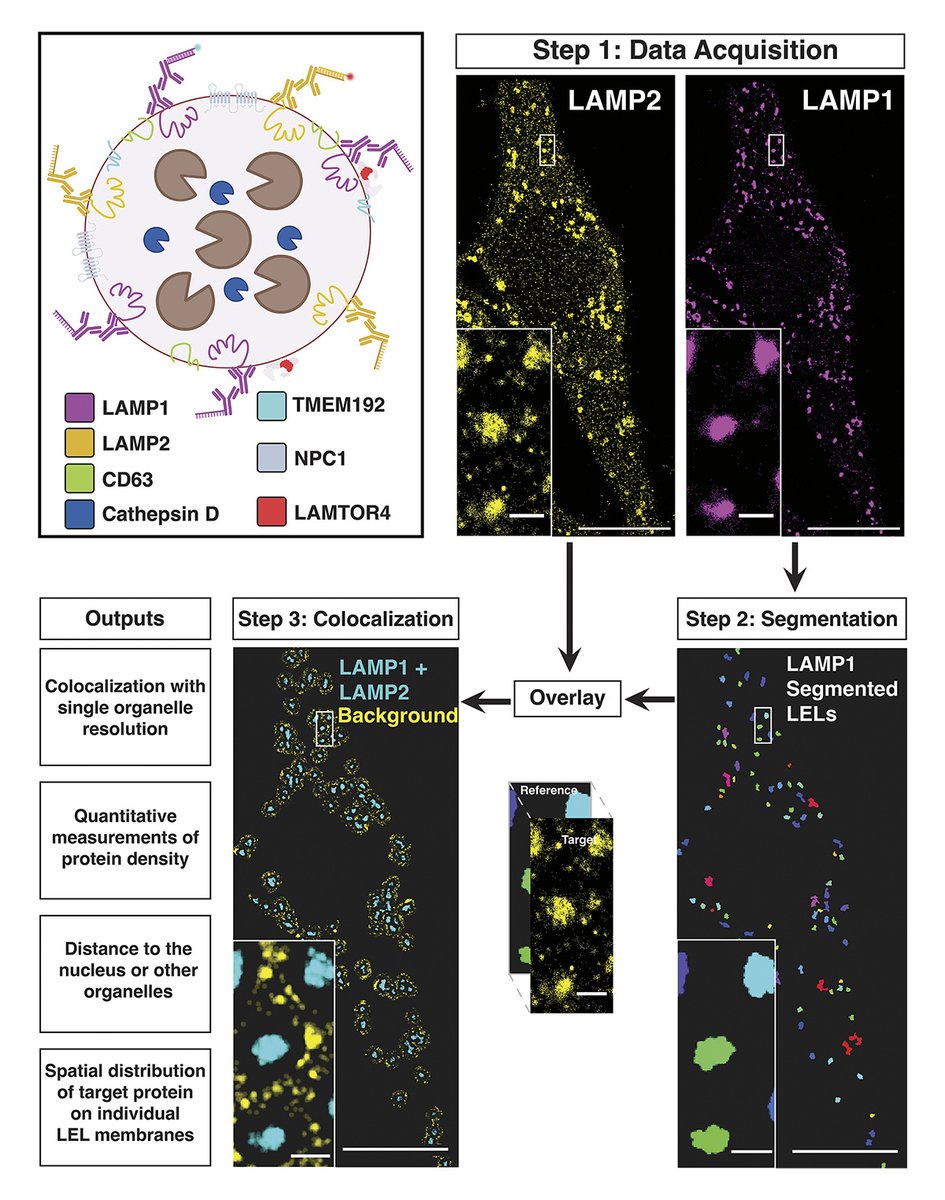
Heterogeneity of late #endosome/#lysosomes shown by multiplexed DNA-PAINT imaging. Quantitative pipeline developed by Charles Bond, Melike Lakadamyali and colleagues: https://t.co/hUB1soQFHj
📕 In #Lysosomes 2026: https://t.co/jTBR8w1ucY
Why do some people with a pathogenic (disease-causing) mutation get hit and others are resilient?
One explanation is heat shock proteins (like HSP90) , molecular chaperones that have a buffering, protective impact.
https://t.co/actqJ0ucvI
From @TheAthleticFC: U.S. government officials say they are working to get the mother of Cape Verde goalkeeper Vozinha to the U.S. so that she can be at the World Cup. Vozinha has said visa issues stopped his mother from witnessing his heroics in person. https://t.co/N8a3meas9A
A scientist spent 30 years studying an organ every textbook said was irrelevant. In 2026, two papers in Nature proved she had been right all along. The papers were not written by her.
Her name is Noel Rose Mackay. She is a thymic biologist who has studied the thymus since the 1990s, at a time when the field was considered a professional dead end.
The thymus is a small immune organ behind the breastbone. By the 1980s, medical consensus had settled: the thymus trains immune cells in childhood, shrinks at puberty, and stops functioning meaningfully in adults. Researching adult thymic function was considered a waste of time and grant funding.
Mackay and a small number of colleagues disagreed. They published research throughout the 1990s and 2000s arguing the thymus remained active in adults and that its ongoing T cell production mattered for immune health. The papers were published in smaller journals, cited rarely, and largely ignored by mainstream medicine.
For 30 years, clinical practice did not change. Radiologists reading millions of CT scans did not measure thymic health. Oncologists designing immunotherapy did not account for it. No clinical guideline mentioned it.
In March 2026, researchers at Mass General Brigham used artificial intelligence to analyse CT scans from over 25,000 adults. The AI found exactly what Mackay had argued for three decades.
Adults with healthier thymuses lived longer. 50% lower risk of death from any cause. 63% lower risk of cardiovascular death. 36% lower risk of lung cancer. In cancer patients receiving immunotherapy, stronger thymic health predicted a 37% lower risk of cancer progression and a 44% lower risk of death.
Two papers. Published simultaneously in Nature. Covered by Harvard Medical School, Mass General Brigham, and dozens of international outlets.
The researchers who wrote them work in artificial intelligence and cancer imaging. They were not thymic biologists. They were not looking for the thymus. The AI found it for them.
The science that spent 30 years being ignored was correct.
It took a machine looking at 25,000 scans without any prior assumptions to confirm what a small group of scientists had been saying for three decades.
Sometimes the reason a field is underfunded is not that the question is unimportant.
It is that the answer is inconvenient.
🚨 Published in @Nature: A groundbreaking spatiotemporal transcriptome atlas of human organogenesis (CS12-CS23). Using STOmics' Stereo-seq, researchers mapped 50 organs & 198 substructures, unlocking the spatial code of early human development. 🧬
🔗 https://t.co/xbDAB5OaHL
Why AI cannot do good science without humans @Nature
With the arrival of ‘AI scientists’, it’s as well to remember that human wisdom, empathy and sheer messiness are as much part of progress as are process and efficiency.
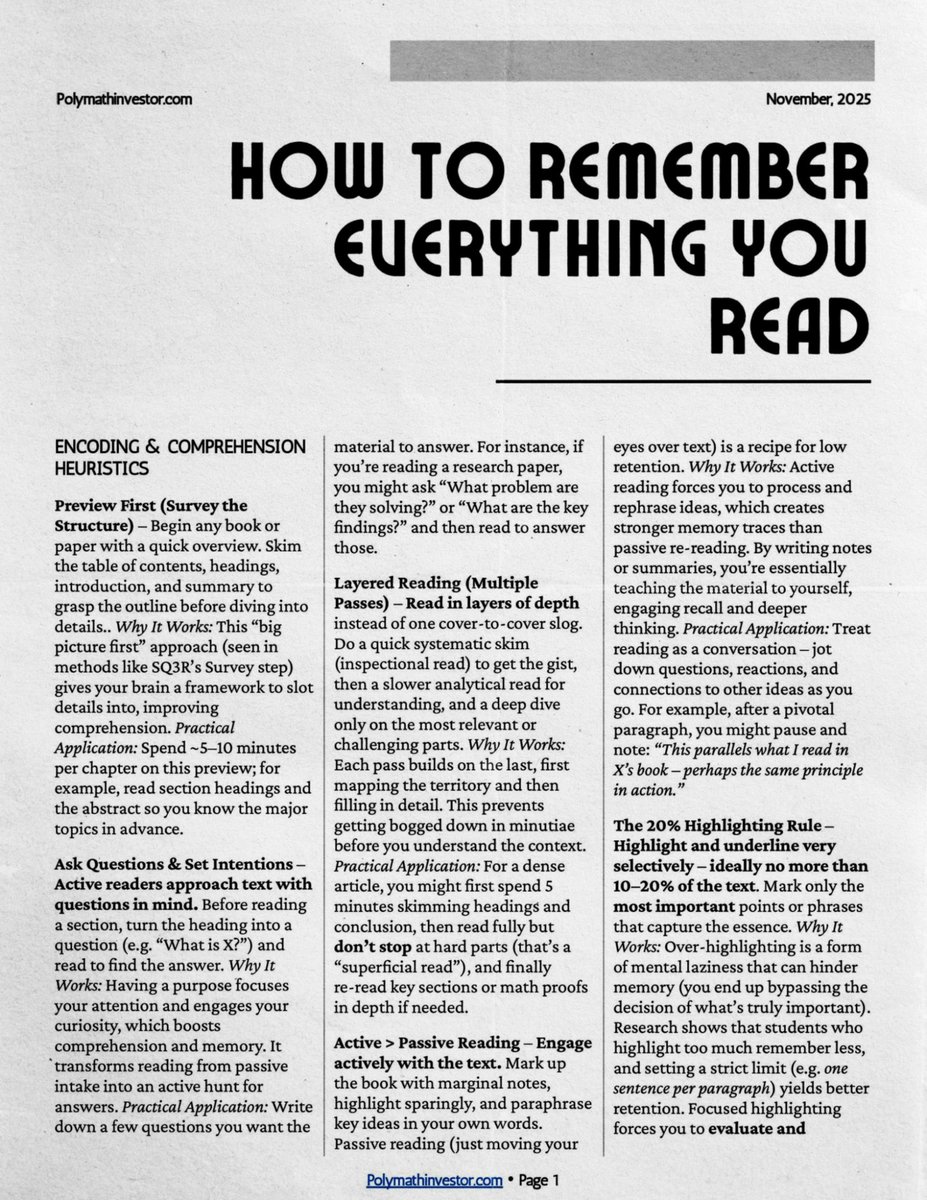
A few months back, I published this guide on how to remember everything you read.
Re-sharing it here for anyone who finds these protocols useful.
(1/11)