We are recruiting 4 graduate students to join a multi-investigator project focused on understanding climate-impacts of alternative grazing practices in grassland ecosystems. https://t.co/IMF8UQpnh8
@Bennett_Ecology@UofAALES@ualbertaScience@agbiousask
We're seeking multiple graduate students for an interdisciplinary study of soil carbon storage in grasslands and forages. https://t.co/8DZSbpudfX @UofAALES@agbiousask @ScottJeffrey58 @UofA_EAS@UAlbertaREES
1/ New study by Ben Cook (@DustyBowl), Jason Smerdon, and me in @NatureClimate. 2000-21 drought was likely the driest 22 years in >1200 years in SW North America. CMIP6 climate models suggest ~40% of the severity was due to human-caused climate trends. https://t.co/zb7ydoAzgS
🍂In response to a 'replication crisis' in ecology, @EcoFilazzola & Cahill Jr discuss several aspects of experimental design that can enhance confidence in scientific outcomes, suggesting tangible steps that can be taken to improve confidence in research https://t.co/AAvY6Xkxke
Effects of livestock grazing depend on trophic level of responding species. Herbivores and pollinators are most impacted, while detritivores increase with livestock present. There's also an effect of livestock exclusion over time on the animal community.
https://t.co/pbynh1g466
Still my favorite eco-evo artistic rendering ever. Can never decide which bit is my favorite—Santa Rosalia as a goat or the possum with the Florida State sweatshirt
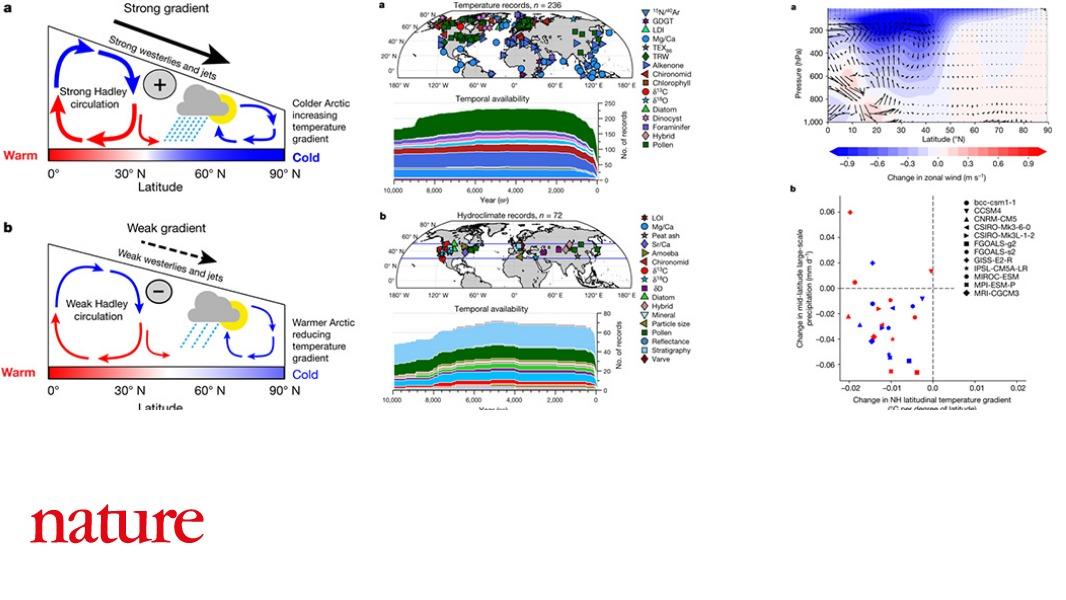
According to research published in Nature, a reduced gradient in temperatures between low and high latitudes during the Holocene led to drier mid-latitudes. https://t.co/ud0jYKRYDl
BBC Radio wanted to have me on today to debate a climate-denier in the context of the drought/heatwave.
I said NO.
I told them it was a disgrace that they still give climate-deniers airtime at a time like this.
I won’t be part of such charades any longer.
Please RT if you agree.