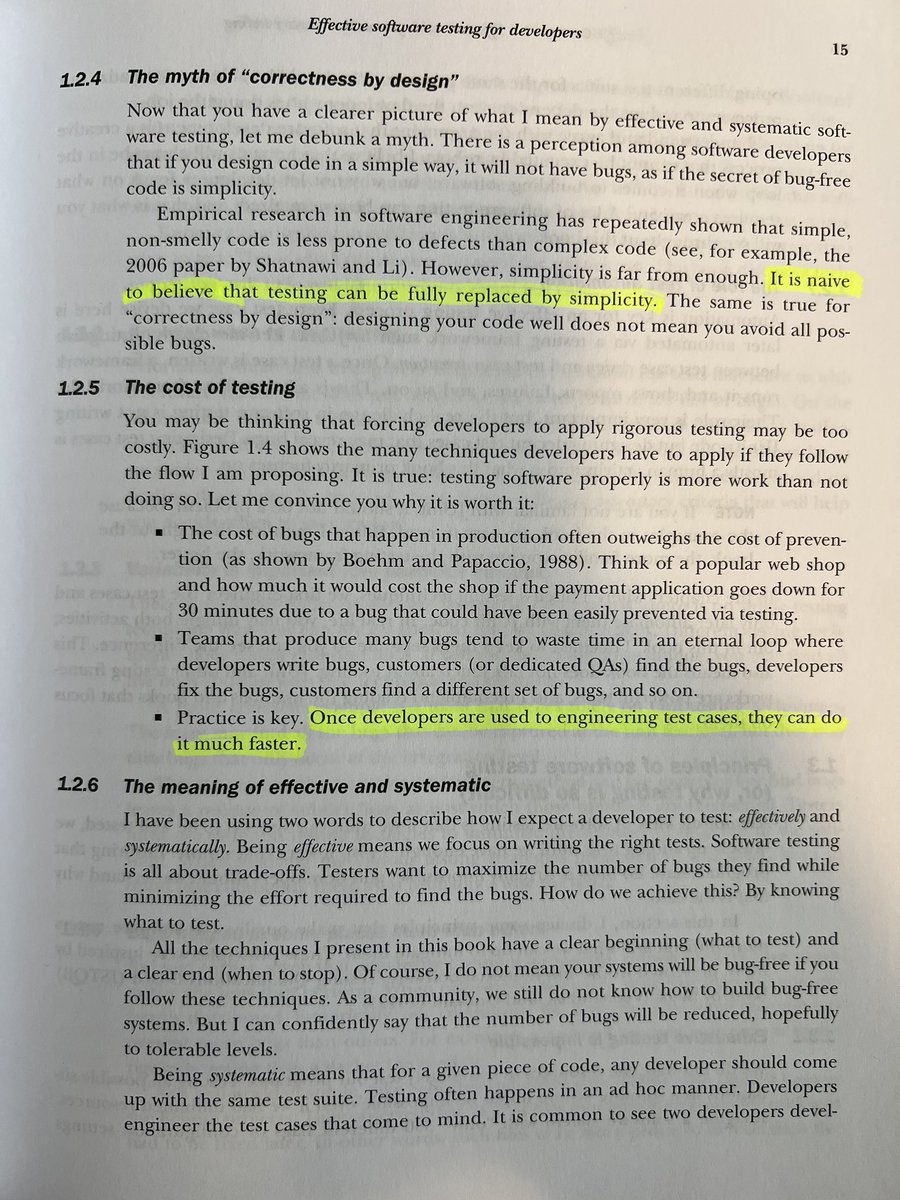
I really agree with both these takes from Effective Software Testing by @mauricioaniche:
1. That simple code won’t guarantee no bugs, and is not a replacement for testing
2. That the more you write tests, the less effort it becomes to do so.
@PanosJee Too much money also led to:
1. Founders taking money off the table before their startup was even slightly profitable
2. Making people believe that it's OK for a company to lose tens or hundreds of millions every year
3. Staffing for minor inconveniences not actual pains
Our code base has two major headaches the ones we would consider technical debt. Both were engineering decisions based either on the 'cool technology' fad or the 'lets play' mentality. They didn't come from featuritis or upper management pushing for dirty solutions.
Most sports news sites can be transformed into games where you have to quickly close videos and ads that pop-up while keeping your device's temperature below a certain threshold. Hall of fame includes high scores for most pop-ups closed before battery dies out.
The crypto collapse gels a thought I’ve had for a long time: Silicon Valley VCs erred by shifting investment away from nerd technologists to highly articulate hucksters.
The last decade didn’t build solid companies, it made Crypto Boy Bands.
And of course, the only reason for technical debt and codename bloat is always management wanting more features. Never because "let's add this yesterday's unproven but cool technology that solves no problem, but makes us happy"
I think one can objectively say that over the last decade, the complexity that exploded in tech didn’t always impact the product’s bottomline in a meaningful way, but optimized for certain org structures and engineering practices, which benefited engineers more than the company.
@GergelyOrosz feel totally justified to strongly express their opinion on matters they have no clue about. People with no idea what a budget file is or believe P&L is a fashion brand know exactly how a company should be run.