I sat on a bench one day sad and without a friend. When a voice came out of the blue and said cheer up things could be worse. So I cheered up and sure enough things got worse.😁😁😁
A bird's-eye view of a Martian storm 🌪
The Mars Express spacecraft captured a massive dust storm descending the slopes of the volcano Pavonis Mons. The Martian moon Phobos also appears in the frame, strikingly complementing the cosmic landscape.
🚨China's Xi got a B-2 flyover, F-22s, and a full honor guard of military paparazzi.
Canada got 50% tariffs. Europe got threatened. NATO allies treated like adversaries.
Our biggest adversary treated like royalty.
"Tough on China" is doing a lot of heavy lifting these days.
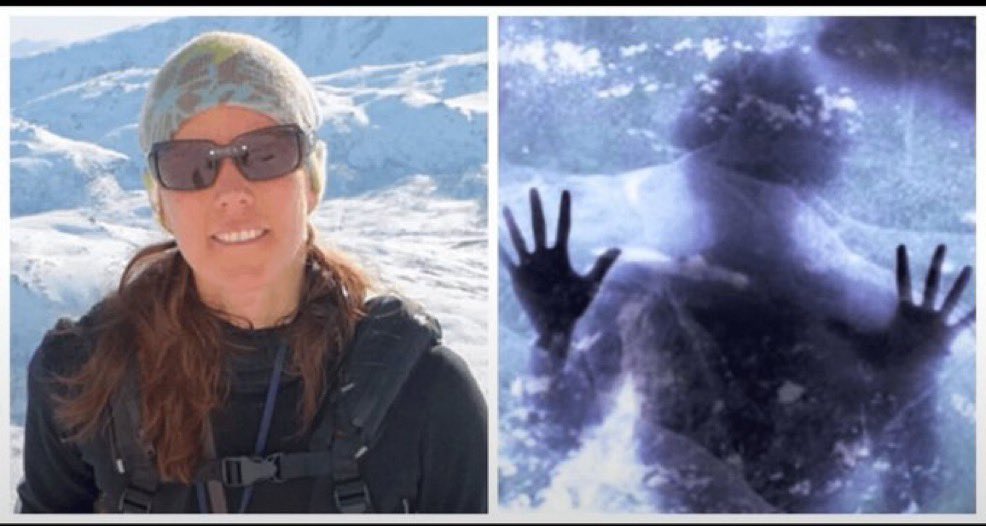
In 1999, Anna Bagelholm was skiing in Sweden when she accidentally fell into a frozen river. She was stuck in the ice for over 80 minutes as rescuers struggled to free her. When they finally pulled her from the freezing cold water she was given CPR, and she was defibrillated, but the rescue team were sure she was dead.
It took two hours to get her to the hospital, by which point her body temperature was 56 degrees Fahrenheit. At the hospital she was connected to an EKG, which showed no signs of life, so doctors declared her clinically dead.
The doctors didn’t want to give up on her, so more than 100 medical staff worked in 9-hour shifts to try and revive her. Miraculously, they were able to warm up her blood and achieve a heartbeat. They then put her on a ventilator for the next 35 days.
Anna eventually woke from the coma but was paralysed from the neck down. She was angry with her friends at first for saving her life, but somehow managed to make a full recovery and now works as a radiologist.
“Walk with Mambo” 🇮🇹✨
Everyone knows the breathtaking cathedral of Orvieto, Umbria, Italy
But few people know how it looks as you arrive in the square, so I filmed it for you
No editing, no sound, no effects
Completely raw, just so you can experience it exactly as it is ❤️
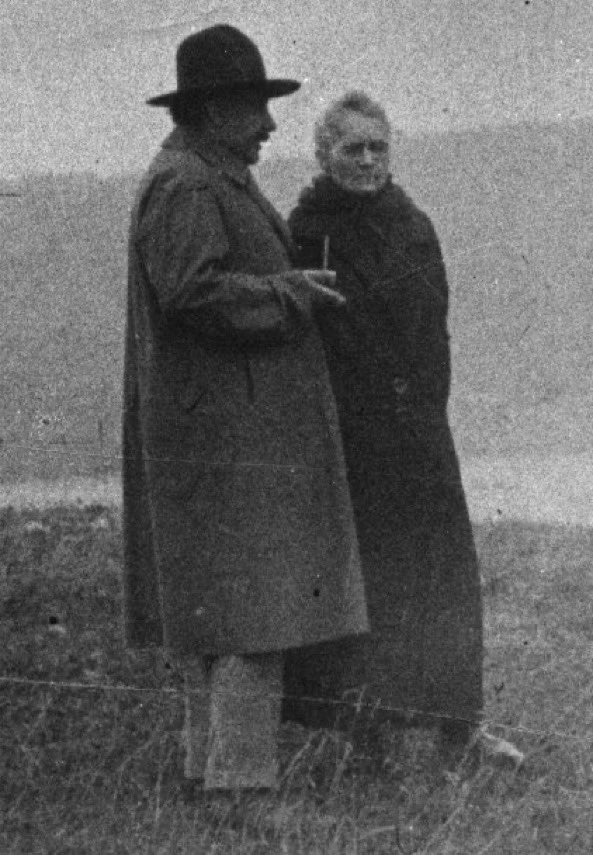
Albert Einstein's letter to Maria Skłodowska Curie, 1911:
Prague, 23 November 1911
Highly esteemed Mrs. Curie
Do not laugh at me for writing you without having anything sensible to say.
But I am so enraged by the base manner in which the public is presently daring to concern itself with you that I absolutely must give vent to this feeling. However, I am convinced that you consistently despise this rabble, whether it obsequiously lavishes respect on you or whether it attempts to satiate its lust for sensationalism!
I am impelled to tell you how much I have come to admire your intellect, your drive, and your honesty, and that I consider myself lucky to have made your personal acquaintance in Brussels. Anyone who does not number among these reptiles is certainly happy, now as before, that we have such personages among us as you, and Langevinil too, real people with whom one feels privileged to be in contact. If the rabble continues to occupy itself with you, then simply don't read that hogwash, but rather leave it to the reptile for whom it has been fabricated.
With most amicable regards to you, Langevin, and Perrin, yours very truly,
A. Einstein
P.S. I have determined the statistical law of motion of the diatomic molecule in Planck's radiation field by means of a comical witticism, naturally under the constraint that the structure's motion follows the laws of standard mechanics.
My hope that this law is valid in reality is very small, though.
A speck of living goo just moved the boundary of what complex life can endure.
In the steaming, algae-slicked streams of Lassen Volcanic National Park in California, NASA-supported researchers found an amoeba that divides, hunts, and keeps its nucleus intact at a temperature that should scramble a eukaryotic cell. Incendiamoeba cascadensis—the fire amoeba of the Cascades—reproduces at 145°F (63°C). That is hotter than any known fungus, red alga, or other nucleated cell had ever been shown to divide. The old ceiling sat near 140°F (60°C). This organism walked through it.
Heat is supposed to be lethal to complexity. Proteins unfold. Membranes leak. DNA locked inside a nucleus becomes fragile cargo. Bacteria and archaea shrug off boiling water; eukaryotes were thought to hit a hard wall. I. cascadensis ignored the wall. In the lab it kept dividing at 63°C, stayed mobile and foraging up to 147°F (64°C), and remained partly active at 150.8°F (66°C). After five minutes at 158°F (70°C) it could still recover. At 176°F (80°C) the comeback finally failed. When conditions get worse, it curls into a protective cyst and waits.
On video at 60°C it crawls almost casually: a living smear probing for food in water hot enough to scald a hand. The work was published in Cell. Samples came from Lassen’s geothermal streams. Researchers kept raising the incubator—and mitosis continued where textbooks said it should stop.
For astrobiology this is more than a curiosity. Earth’s extremophiles are the measuring stick for other worlds. If a nucleated cell can thrive this close to scalding, the habitable zone for complex life gets a little wider—on Mars, on icy moons, or in any hydrothermal system that looks too hot on paper. The same heat-stable proteins that keep this amoeba alive are also the kind of molecular machinery biotechnology wants.
A microscopic hunter in a California hot spring just moved the temperature line for every cell that wraps its DNA in a nucleus. The map for life elsewhere just got hotter.
“Political language is designed to make lies sound truthful and murder respectable.”
- George Orwell (1946)
George Orwell’s personal experiences gave him firsthand insight into the political structures he would later examine in his writing. Born Eric Arthur Blair in 1903, he served in the British colonial police in Burma, experienced poverty among working-class communities in Paris and London, and traveled to Spain during the Spanish Civil War. These encounters shaped his commitment to democratic socialism while strengthening his opposition to imperialism, authoritarianism, and unquestioning political obedience.
In his 1946 essay Politics and the English Language, Orwell examined how political language can distort reality rather than clarify it. He argued that governments and political organizations often rely on vague expressions, complicated terminology, and euphemisms to disguise uncomfortable truths. By replacing straightforward descriptions with abstract language, serious events can be made to appear routine or impersonal. Orwell believed that imprecise writing was more than a stylistic weakness; it could encourage equally imprecise thinking.
His proposed remedy was straightforward: choose familiar words, eliminate unnecessary language, and describe reality with as much clarity as possible. He criticized overused metaphors and elaborate jargon designed to sound sophisticated without conveying genuine meaning, while acknowledging that his writing principles were flexible guidelines rather than absolute rules.
These concerns also appeared in his novel Nineteen Eighty-Four, where the fictional language of Newspeak demonstrates how controlling vocabulary can restrict independent thought. By systematically reducing the words available to people, the ruling Party seeks to make certain ideas increasingly difficult to formulate or communicate. Through both his essays and fiction, Orwell explored the relationship between language, political power, and the freedom to think independently.
There is no insurance or money that replaces a human life. #seafarers are unprotected, innocent workers. They serve #shipping and shipping should doesn't seem to care. They serve the world, but the world seems to be too busy.
Macron: I do not believe Putin when he says he wants peace. That was not true before.
I do not believe him when he says Russia has no aggressive intent toward Europe. That is not true either.
1/