Out now, new #rustlang hyper v1.10.0!
- New HTTP/2 builder options.
- Fix for HTTP/2 capacity usage.
- Fix for HTTP/1 bodies if the future drops unexpectedly.
- Other refactors to improve code cleanliness.
https://t.co/SUCnLIYIYe
Thanks to the latter mentality we have a multi-billion dollar cybersecurity industry.
I think memory safety guarantees should be a given since we have a production compiler (Rust) and other language ecosystems could also adopt.
“Zig over Rust?” 👀
@VBragilevsky asked Andrew Kelley a simple question, and the answer turned into a very interesting take on language tradeoffs, tooling, and choosing the right tool for the job.
Full interview in the comments 👇
SpaceX is actively hiring world-class engineers/physicists for SpaceXAI, even if you have zero prior experience in AI. Smart humans figure it out fast.
Please send an email with ~3 bullet points demonstrating evidence of exceptional ability to [email protected].
@Alokedesai@warpdotdev It was before this update. But right after, every single time after a few minutes of work, I get to see warp consuming hundreds of GBs of memory and I have to restart my MacBook
After the most update, something has horribly broken in @warpdotdev when I use Claude code. It leaks memory to the point that it freezes the entire system.
@Alokedesai@warpdotdev I did the latest update and now it’s (v0.2026.04.08.08.36.stable_05). I almost exclusively use multiple tabs with Claude code all the time.
🦀 Introducing rusty-mermaid. A pure Rust port of MermaidJS
25 diagram types. SVG/PNG/GPU rendering.
Built a gpui backend so Zed editor can render mermaid natively.
Gallery: https://t.co/VzwPBeGhZO
GitHub:
https://t.co/eQGeNQmtZT @zaboris would love to chat about Zed integration
If you provide a good rust skill file, the LLMs today will generate fantastic code today and consistently as well. I think Rust’s outcome (performance, safety guarantees, scale) are free-win with LLMs now. Human reviews are the biggest challenge though.
I don't think Rust is the best programming language for LLMs. The only reason why Greg said this is because Rust limits the LLM from making mistakes by not compiling shitty code, but the LLMs still suggest using unsafe! to bypass security rules.
Therefore, I would say that Go is the best — if there is any "best" language for LLMs. Since LLMs are based on next-token prediction, it's more important that the code looks almost the same to get a good result. Go was designed to make every app around the globe look almost the same; for instance, there is only one way to make a loop compared to Rust, which has at least five that I could think of (loop, for, while, while let, and map).
I want the best language to be rust tho
It’s perhaps the most efficient investment by @zeddotdev. Students are the near-future engineers and entrepreneurs and humans in general tend to retain their tools of choice over their careers because of the experience and muscle memory the train.
Introducing: Zed for Students! 🎓
Enjoy Zed's Pro plan free, for a year, if you're a current university student (or teacher!)
- Zed Pro features for 12 months
- $10/month in token credits
- Unlimited edit predictions
Apply today: https://t.co/YE6suEkB2U
Just tried @jetbrains Air. Looks like Jetbrains Fleet repurposed (which is not a bad idea). But there's no ACP integration (can't use claude-code) and no mermaid diagrams rendering. I'll try again when at least these two are addressed.
@AnthropicAI my engineering org uses several ai agents to build software today. I'm trying to align and bring them to use claude-code teams. I think a hackathon could be a great start. Would you be interested in sponsoring a virtual hackathon for my org? Lovable has reached out.
I think likewise with the only addition that writing code with test cases and a compiler still is an important exercise. It keeps validating and course-correcting your understanding, thinking and approaches.
The computer science major is going through an identity crisis.
ChatGPT can finish any programming assignment with a single prompt so what's the value of teaching students how to write a function in Python?
Here’s the point: we still need architects, not button-pushers.
The next decade will belong to people who understand theory and how to break complex systems into smaller components even without Wifi.
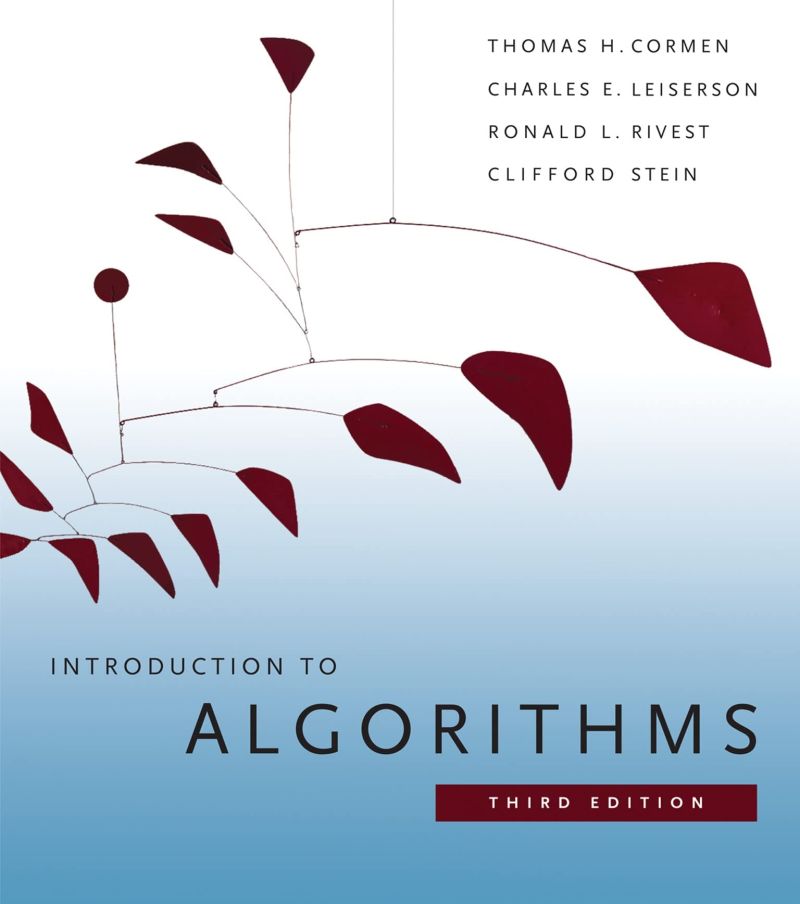
Imagine a degree that drills algorithmic thinking. Weekly closed-book exams. CLRS becomes the most important book in the major.
And coding? You’ll exercise that muscle only at internships and real jobs.
The computer science major will look more and more like a math degree.