@NicholasChacon9 This number is larger than the entire country of South Korea. Think about that for a moment. We are literally hosting another country within our country.
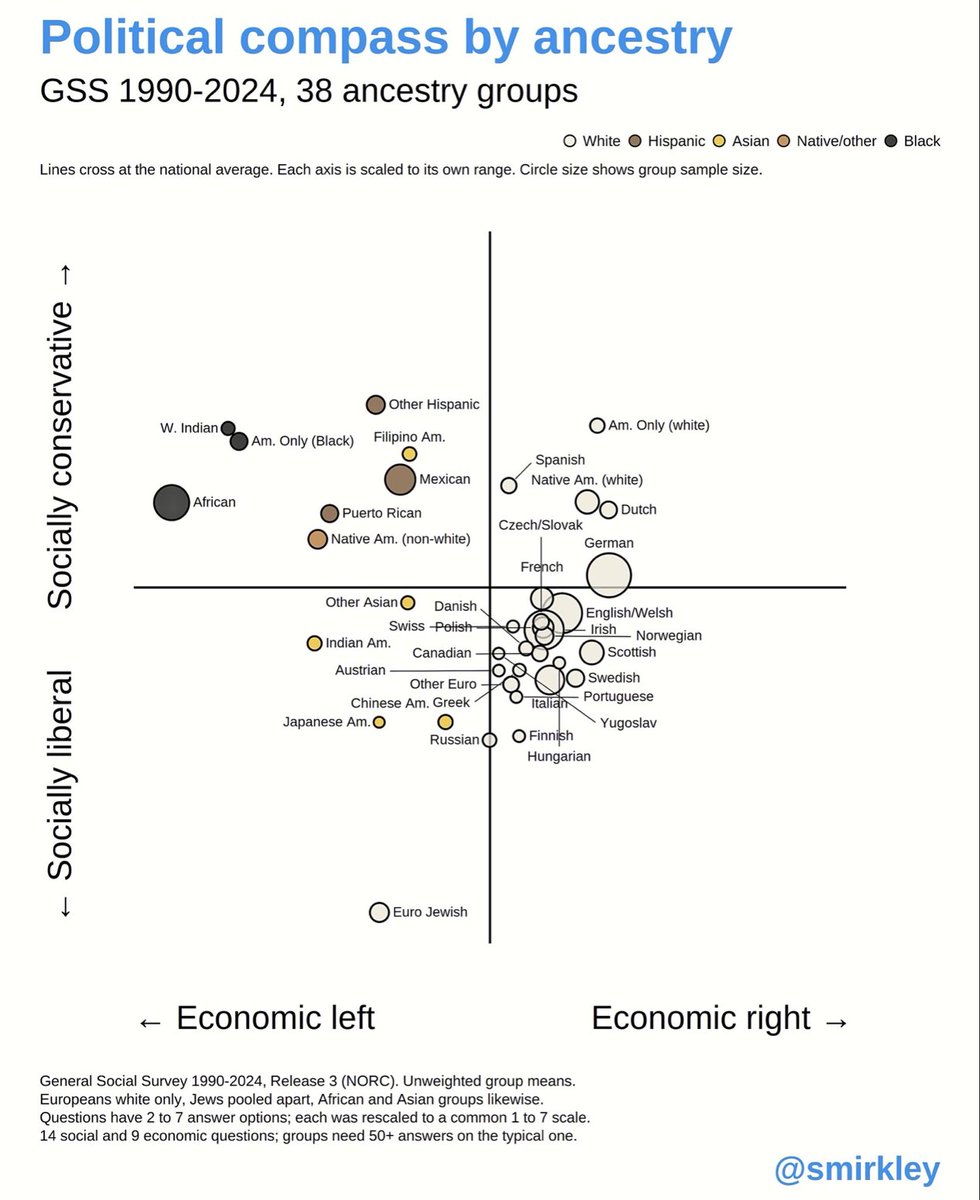
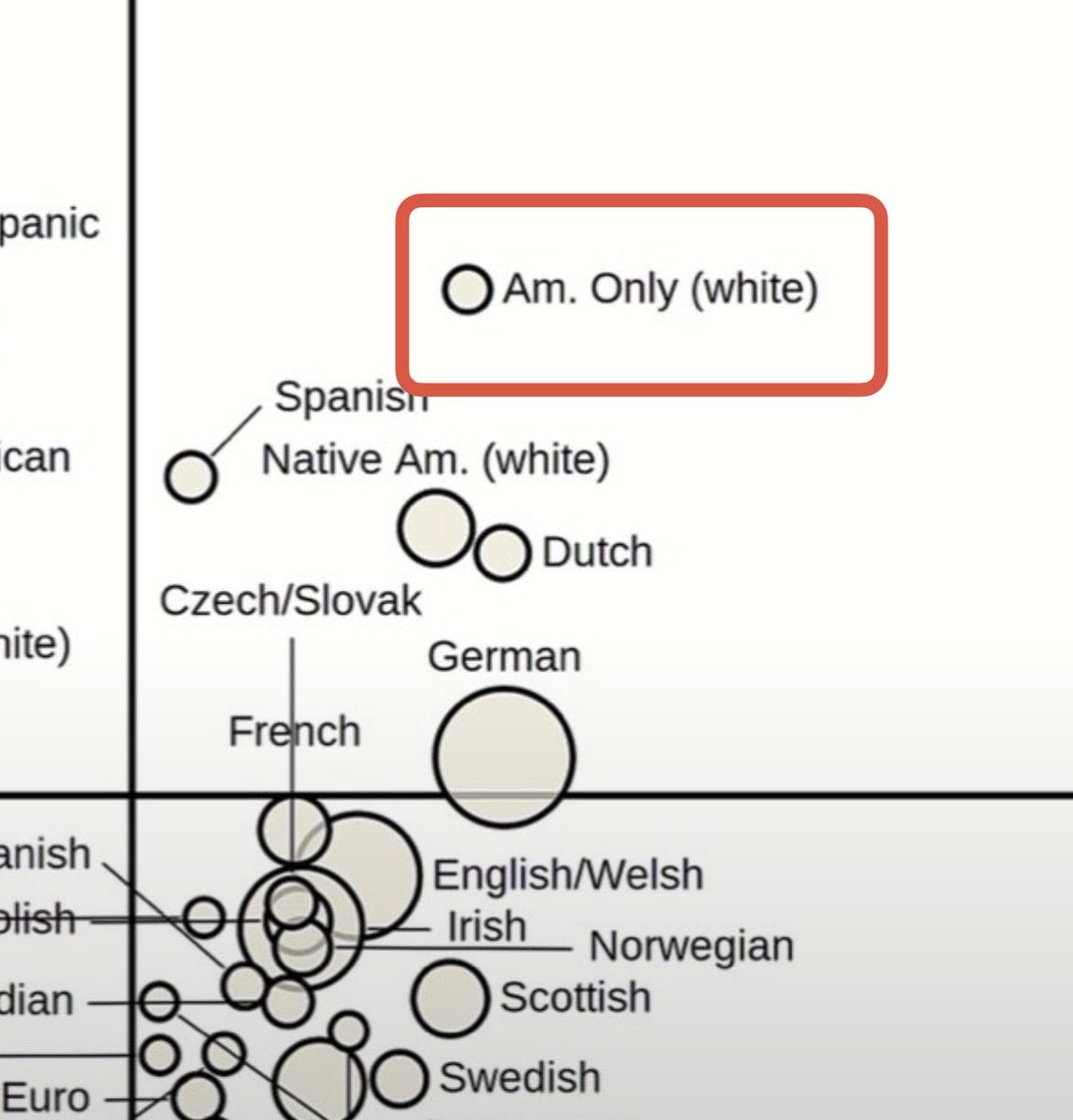
Race & Politics
1) Jews are the most socially liberal.
-They want LGBT and abortion
2) Blacks are the most economically liberal.
-They want free stuff
3) Whites are the least economically liberal.
-They want to stop being robbed
Former PM @RishiSunak has written about identity, integration, and me. He means well but the argument he advances is not only wrong, it's actually helping to create the racialised Britain he is so desperate to avoid.
Like him, I'd love to go back to a time when people didn't think about their identity as much as we do today. But after two decades of rabid identitarianism for minorities, uncontrolled mass immigration and with tens of thousands of illegal immigrants streaming into our country every year, we cannot go back. We can only go forward by addressing the source of our division and tribalism head on.
Britain does not need more "diversity", it needs to find a way to unify people around a common cause. Pretending we're all English isn't going to do that.
https://t.co/wqEstlicgz
The "far-right" AFD just won the Mecklenburg-Vorpommern state election in Germany…
Their 2nd state victory in 2 weeks.
AFD is the most popular party among every age group polled, except 70 and older.
I thought of doing something new. I thought of writing about a sociological trend that I see and how scripture can help us here. I urge followers and others to reply so we can keep a decision going forward.
Today's topic will be about judgement. A lot of people have an aversion to religion because they think it is judgmental. I have heard this many times from younger people especially.
Religion and christianity is indeed judgmental but understanding why is important too.
The modern aversion to "judgment" largely stems from equating the word with hypocritical condemnation or unloving elitism. In biblical theology, however, judgment is fundamentally about discernment, clarity, and justice—the capacity to distinguish between truth and error, life and death, good and evil.
When you choose one thing, you always have to reject the other, and because of this moral decision making is inherently exclusionary. Without judgment, love lacks boundaries, wisdom collapses into indifference, and justice becomes impossible.
The most common objection comes from quoting Matthew 7:1 out of context: "Judge not, that you be not judged." However, reading the entire passage reveals that Jesus is condemning hypocrisy, not moral evaluation.
Matthew 7:5–6: Jesus commands the listener first to remove the plank from their own eye so they can see clearly to remove the speck from their brother’s eye. Immediately after, He instructs: "Do not give dogs what is holy, and do not throw your pearls before pigs." Obeying verse 6 is impossible without making a clear, discerning judgment about what is holy and who is receptive.
John 7:24: Jesus explicitly commands judgment when it is rooted in truth rather than superficial appearance:
"Do not judge by appearances, but judge with right judgment."
Biblical judgment means evaluating situations accurately to act rightly, not wishing harm upon people.
Every meaningful choice requires excluding its opposite. A doctor cannot fight infection without killing bacteria; a gardener cannot cultivate crops without removing weeds. Scripture treats the exclusion of evil as an essential prerequisite for wisdom and life.
In Leviticus 10:10, God commands priests: "You are to distinguish between the holy and the common, and between the unclean and the clean." Holiness requires active differentiation.
In Matthew 7:13–14: Jesus notes that the gate to life is narrow and hard, while the path to destruction is broad. Truth is inherently exclusive because not all paths lead to human flourishing.
Judgment is like eyesight or a ship's navigation system. To steer toward a harbor, a captain must deliberately steer away from rocks. Rejecting judgment is like disabling the rudder in the name of being "open-minded or tolerant."
Loving someone’s health means excluding poison. Loving someone’s safety means excluding abuse. Biblical judgment is the intellectual and moral mechanism through which love protects what is good.
If we are to actively build a world on the values of Christ, we must not lie, pursue the truth, and be willing to offend people so as to stick up for the truth of scripture. Christianity is judgmental so that it can get to the perfect truth and thus act righteously.
Anyway just a couple of thoughts. Enjoy the rest of your Sunday. Appreciate those who read all the way.
@LoganWisc@socdemAdam We've got a lot to work with Gen Z. There is a subset of Gen Z (men particularly) that is based, but this is unfortunately the truth. A large number of young people are communists and they want it as well.
Conservatives need to realize what we are up against.