In the aftermath of the Iranian strikes on Kuwait Airport, a Kuwaiti military @KuwaitArmyGHQ officer was seen carrying the debris of what is most likely a Mado MD550 engine. The MD550 is a 50-horsepower, four-cylinder, two-stroke gasoline piston engine manufactured in Iran by Mado. It is a reverse-engineered copy of the German Limbach L550E aircraft engine and is widely known as the primary powerplant used in the Iranian-designed Shahed-136 attack drone.
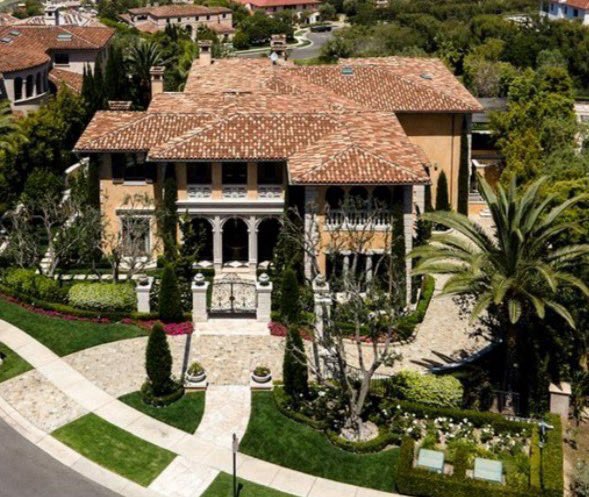
Today, Jamshid Ghomi, a dual U.S.-Iranian citizen who lives in a $35 million mansion in Orange County, California, was arrested on a federal criminal complaint charging him with selling computer technology to Iranian companies and Iran’s government — including technology to help with Iran’s military and nuclear program.
These allegations assert that the defendant violated U.S. sanctions against Iran, aided one of our nation’s enemies, supported Iran’s nuclear program, and got rich doing it. Not only is he being arrested today, but we also are beginning the process of seizing his mansion, which was purchased with his illegal proceeds. Thanks to the work of @USAttyEssayli’s office, @CommerceGov, and @IRS_CI’s Los Angeles Field Office, he will face the full force of justice.
Today, Treasury’s Office of Foreign Assets Control is designating a network of individuals, entities, and vessels responsible for shipping hundreds of millions of dollars’ worth of Iranian-origin liquid petroleum gas⸺intentionally disguised as Omani LPG⸺to end users in South and East Asia.
A group of options traders in Gaza joking about how finance influencers on social media are surrounded by Lamborghinis, waterfront mansions, luxury vacations, and six-figure trading accounts, while they’re trading from a rooftop with slow internet, post-war destruction in the background, and accounts so small they celebrate single digit gain. Funny, self-deprecating, and unexpectedly moving. A reminder that resilience isn’t about perfect conditions. It’s about showing up anyway.
SBO Palladino was pleased to meet with @AmbJamilaRajaa to discuss regional developments and ways the United States and Yemen can work together to counter the Iran-backed Houthi threat, protect freedom of navigation, and advance regional security.
#Iran#SITREP | Iranian official and semi-official media outlets continued to focus on nuclear diplomacy, regional security issues, regime legitimacy, and ideological messaging tied to Eid al-Ghadir.
On the nuclear file, @FarsNews_Agency rejected recent reporting by Saudi-owned Al Arabiya claiming that Tehran had agreed to transfer part of its enriched uranium stockpile to a third country. Citing a source close to Iran's negotiating team, Fars described the report as inaccurate and stated that nuclear-related issues are not currently under discussion in the present phase of negotiations. According to the source, discussions regarding uranium stockpiles have been deferred to later stages and remain contingent on what Tehran described as concrete and definitive actions by the United States, as well as agreement on several unresolved core issues.
Iranian officials also continued to highlight allegations of regional involvement in recent military operations against Iran. Foreign Minister Abbas @Araghchi, quoted by @Tasnimbrk, stated that Iran possesses evidence indicating that U.S. and Israeli forces utilized UAE airspace and territory during recent operations. He reiterated that Tehran had previously warned regional governments against permitting the use of their bases by the United States. Araghchi emphasized that any Iranian response would be directed at U.S. military facilities rather than the territory of neighboring states, while acknowledging that some regional governments had opposed the use of their territory against Iran.
Separately, @Tasnimnews_Fa announced that it would soon publish information attributed to a Resistance Front security source concerning communications and statements by @AnwarGargash, diplomatic adviser to the UAE president. The announcement appeared intended to maintain public pressure on Abu Dhabi amid continuing tensions following the recent conflict.
Iran's media ecosystem also devoted significant attention to commemorating the late Supreme Leader Ayatollah Ali @khamenei_ir, who is increasingly referred to in official discourse as the "Martyr Leader of the Revolution." State-affiliated outlets promoted the documentary "The Day I Was With You," which portrays popular affection for Khamenei through previously unpublished footage of public meetings and interactions. The documentary was broadcast in connection with the anniversary of the beginning of his leadership in June 1989 and forms part of a broader effort to reinforce revolutionary legitimacy and continuity following his death.
Religious and political messaging surrounding Eid al-Ghadir remained prominent. In Friday prayers in Tehran, acting Friday prayer leader Mohammad Javad Haj Ali Akbari framed Ghadir as the foundation of Islamic political authority and argued that Wilayat al-Faqih represents the continuation of the Ghadir tradition during the occultation of the Twelfth Imam. He praised Ayatollah Khomeini as the figure who revived this model of governance and portrayed both Khomeini and Khamenei as central guardians of the Islamic Republic's ideological mission.
Haj Ali Akbari also combined ideological themes with contemporary political messaging. He described Iran as occupying a favorable strategic position following the recent conflict and argued that the regional balance of power has shifted in Tehran's favor. He claimed that Iran's deterrence capabilities now extend beyond military assets to political signaling, asserting that official Iranian statements alone can influence adversaries' calculations. He further stated that Iran maintains full leverage over the Strait of Hormuz and characterized the Islamic Republic as an emerging global power.
On domestic issues, Haj Ali Akbari warned against framing economic hardship and resistance policy as competing priorities. He called for the establishment of an economic command structure modeled on military headquarters to address inflation, market manipulation, and cost-of-living concerns while preserving public support for the state's broader strategic agenda.
Judicial authorities simultaneously emphasized distinctions between reconciliation and national security enforcement. While Ayatollah Mojtaba Hosseini Khamenei approved pardons, sentence reductions, or commutations for more than 2,000 convicts on the occasion of Eid al-Ghadir, Deputy Head of the Judiciary stated that individuals convicted of espionage, security-related offenses, or activities deemed harmful to national security would not be eligible for amnesty. The announcements projected both clemency and continued firmness toward perceived security threats.
Iranian officials and state-affiliated media also continued to promote messaging focused on civilian casualties, particularly children affected by conflict. Foreign Ministry spokesman @IRIMFA_SPOX marked the International Day of Innocent Children Victims of Aggression by condemning the deaths of children in Gaza, the West Bank, Beirut, and several locations inside Iran. He accused the United States and Israel of responsibility for civilian casualties and argued that no military objective can justify harm to children. The statement was accompanied by commemoration of Seyedeh Mahya Sedighi Saber and other Iranian children killed during the 2025 conflict, reinforcing Tehran's effort to frame recent events through a humanitarian and victimization narrative.
#Iran#SITREP | A series of political and military statements were issued in Iran in conjunction with Eid al-Ghadir and the anniversary of the passing of Khomeini.
In a message marking the occasion, Iran's Supreme Leader Mojataba Khameni emphasized the importance of national unity, awareness, and resilience in confronting what he described as enemy plots. He stressed that social cohesion and mutual trust among the people are essential for overcoming pressure and challenges. He also called on officials to take measures that strengthen public confidence and support national stability.
At the same time, First Vice President Mohammad Reza Aref stated that the months following the martyrdom of the Leader of the Islamic Revolution had reinforced national solidarity. He said the Iranian people had succeeded in turning challenges and external pressures into opportunities to strengthen the national economy and domestic capabilities.
Parliament Speaker Mohammad Bagher Ghalibaf stated that Iran would respond firmly and proportionately to any attack. He said the country continues to follow the principles of independence and resistance to foreign pressure established by Khomeini.
Foreign Minister Abbas Araghchi warned that any hostile action against Iran would receive an immediate and decisive response. He argued that military pressure and sanctions had failed to achieve their objectives and that continuing such policies would not produce different results.
President Masoud Pezeshkian called for drawing inspiration from the values of justice, honesty, and public service associated with Eid al-Ghadir and Imam Ali. He said addressing current challenges requires prioritizing human dignity, solving people's problems, and protecting their rights.
On foreign policy and security issues, Ebrahim Azizi, Chairman of the National Security Committee in Parliament, stated that ending military confrontations on all fronts remains a key priority in any political understanding. He also reaffirmed Iran's support for what it describes as the Resistance Axis.
The Houthis continue to target Saudi Arabia through coordinated messaging across their media and social media ecosystems.
The Houthi-controlled Sana’a-based outlet @YemenNewsTv recently aired a segment attacking Saudi television channels and influencers, accusing Saudi media of promoting normalization with Israel, distorting Islam, and demonizing Muslims.
Houthi Politburo member @hezamalasad also criticized Saudi Arabia, stating that the Saudi government remains subordinate to Washington and that the land of the Two Holy Mosques continues to host American military bases used against Islamic countries and movements that support Palestinian causes. He argued that this reality is inconsistent with the religious significance of the holy sites and their expected role in serving Muslim interests.
Even Saudi commentators advocating regional de-escalation have faced Houthi attacks. After Saudi journalist @aloqeliy argued that a prolonged sectarian conflict between Arabs and Iran serves Israeli strategic interests and praised Gulf states for pursuing de-escalation rather than confrontation with Iran, @TvAlmasirah presenter @Bandarhetar dismissed the remarks as detached from reality. He accused Saudi Arabia of attempting to distance itself from responsibility for regional crises while remaining openly aligned with Israel and the United States.
Houthi Politburo member @FAbotalb defended the movement’s doctrine of divine leadership, arguing that critics readily accept democratic, socialist, secular, and hereditary political systems, including the rule of the Al Saud and Al Nahyan families, while rejecting what he described as Islam’s divinely ordained system of governance. He characterized the Houthi concept of leadership as a divine authority connected to God and capable of producing dignity, strength, and victory.
Anti-Saudi rhetoric has also been amplified by senior Houthi media officials. @Nasr__Amer, Vice Chairman of the Houthi Media Authority and head of the movement’s official news agency, accused Saudi Arabia of inflicting suffering on Yemenis living in areas outside Houthi control. He cited fuel and gas shortages, prolonged electricity outages, insecurity, economic collapse, currency depreciation, and repression in Hadramawt, Aden, and other governorates. He described the Saudi presence as an occupation and predicted its eventual downfall.
Senior Houthi media official @ryq1665978 used Eid al-Ghadir celebrations to promote the movement’s ideological and sectarian narrative. Sharing photos and videos showing fireworks, illuminated mountains, and public celebrations in Dhamar, he claimed that all Yemenis were celebrating the Day of Wilaya of Imam Ali except those who had chosen allegiance to the United States, Israel, and their Saudi and Emirati allies. He further argued that loyalty to Imam Ali serves as protection against alignment with Jews, Christians, and foreign powers.
The messaging highlights a continuing pattern of anti-Saudi political, religious, and media rhetoric by senior Houthi officials and affiliated outlets. It also demonstrates the movement’s ongoing promotion of its doctrine of divinely sanctioned leadership and Wilayat Ali, while portraying Saudi Arabia as aligned with American and Israeli interests and framing regional disputes through an ideological and sectarian lens.
Read more: https://t.co/FpbypcT8AM
Abdulmalik al-Houthi Ends Months of Restraint Toward Saudi Arabia: After months of indirect criticism, the Houthi leader is once again blaming Riyadh for Yemen’s economic and political crisis. https://t.co/kbmMPU6b3P
In an exclusive interview with CNN, Lebanese President Joseph Aoun tells CNN's Christiane Amanpour his message to the IRGC and Iran. https://t.co/V3msdvKCG1
Reading @FDD's @NatalieEcanow deep dive on Qatar's investment portfolio in the United States which spans a wide range of strategic sectors. Its largest commitments include approximately $148.5 billion in @Boeing aircraft orders and more than $55.9 billion in approved U.S. @StateDeptPM Foreign Military Sales since 2011. Qatar has also invested over $8 billion in @ENERGY Golden Pass LNG project in Texas and signed a $25 billion memorandum of understanding between the Qatar Investment Authority and @GoldmanSachs. Doha has directed roughly $8.8 billion to American universities @Cornell@CarnegieMellon@TAMU@Georgetown@NorthwesternU since 2001, making it the largest foreign funder of U.S. higher education. Qatar's real estate holdings are valued at around $8.9 billion and include landmark assets such as @CityCenterDC, the Plaza Hotel, the Park Lane Hotel, and a stake in the @EmpireStateBldg . The country has also established a growing presence in the technology sector through investments in firms such as @xai@databricks@Axiom_Space@QuantumScapeCo@SoFi@AppliedInt@Uber.
https://t.co/MFo5AXFBSi
Libyan National Army #LNA#Libya#IMC#APC#MRAP
NIMR II High Mobility Tactical Vehicle (HMTV) was developed and manufactured by a joint venture between Jordan's King Abdullah II Design and Development Bureau (KADDB) and Bin Jabr Enterprises of the United Arab Emirates (UAE)
Today, our @BashaReport series on key Saudi @modgovksa officers deployed to Yemen examines Brig. Gen. Mohammed Al-Balawi, the Coalition Forces commander in Hadramawt. In his meetings Al-Balawi did not display name and unit tags but he is most likely a current or former member of Saudi Arabia's elite 64th Special Forces Brigade, a formation that has supplied a number of officers to sensitive operational assignments both inside and outside the Kingdom.
During the reporting period, Al-Balawi appeared in several meetings with both civilian and military officials in Seiyun, the administrative center of Wadi Hadramawt and home to Yemen's First Military Region Command (MRC).
For years, Saudi Arabia has maintained a significant security presence in Seiyun, supporting the development of local counterterrorism units and helping establish the Al-Hadharim Battalion, one of the earliest locally recruited and trained formations in the governorate.
Al-Balawi's principal military counterparts include Maj. Gen. Fahd Salem Issa Bamoumin, commander of the First Military Region, Brig. Gen. Amer Abdullah bin Hattiyan, Chief of Staff of the First Military Region, and Brig. Gen. Mohammed Omar bin Ghanem, Head of Operations for the region.
Maj. Gen. Bamoumin also oversees the deployment of the National Shield Forces @diralwatan in Hadramawt. These Saudi-backed formations have emerged as an important counterweight that defeated and expelled the UAE-backed Southern Transitional Council @STCSouthArabia and its affiliated forces in the governorate.
In November 2024, two Saudi military personnel were killed in an insider attack at a Coalition Forces camp in Seiyun, Hadramawt. The victims were First Lieutenant Waleed bin Suleiman Al-Mushayali Al-Balawi and Sergeant Nasser Al-Otaibi. According to Yemeni and coalition authorities, the attack was carried out by a soldier from the Yemeni National Army's 135th Infantry Brigade and was described as a "treacherous terrorist act" targeting coalition personnel stationed in the governorate.
Hadramawt remains one of the most strategically important regions for Saudi Arabia. Its long shared border with the Kingdom, geographic depth, access to key transit routes, and deep historical, commercial, and familial ties with Saudi Arabia make it central to Riyadh's long-term security and political interests in Yemen.
As part of @BashaReport ongoing series highlighting Saudi @modgovksa military engagements in Yemen, today we focus on one of the most active and sustained outreach efforts by a Saudi officer deployed in the country.
Rear Admiral Staff Ali bin Saeed Al Amri [most likely from Naval Special Security Group (NSSG), Commander of the Saudi-led Coalition Forces in Al Mahrah, has maintained an extensive program of engagement with key leaders and influential figures across the governorate. During his recent Eid visits, he met with Dr. Anwar Mohammed Kalshat @Anwarkalshat, Minister of Technical Education and Vocational Training; Brigadier General Dr. Mukhtar Mohammed bin Awad Al Jaafari, First Deputy Governor of Al Mahrah; Brigadier General Mufti Suhail Samouda, Director General of Security and Police; and Sheikh Ali bin Diyoul Kalshat, Advisor to the Coalition Commander in Al Mahrah.
Beyond these official meetings, Al Amri has regularly engaged tribal elders, community leaders, commanders of the National Shield Forces @diralwatan, security officials, and a broad range of local stakeholders. This sustained outreach demonstrates a clear commitment to building relationships, strengthening trust, and maintaining close ties with the communities and institutions of Al Mahrah.
Such consistent, high-level engagement serves as an effective approach to winning local support and fostering positive relations between coalition forces and local actors. The breadth and frequency of these interactions distinguish Al Amri's approach and represent a level of engagement rarely seen among Saudi commanders deployed elsewhere in Yemen.
🚫 CLAIM: Iran claims it fired warning shots at U.S. warships in the Gulf of Oman, forcing American vessels to “retreat” toward the Indian Ocean. FALSE.
✅TRUTH: Iranian forces did NOT attack or fire at U.S. Navy warships. Doing so would be a gross violation of the ceasefire. U.S. forces continue to operate freely in regional waters while fully enforcing the ongoing blockade against Iran.
#Somalia#SITREP | Looks like events in Mogadishu may be heading toward de-escalation.
Political sources report that dialogue facilitated by Mudulood traditional elders, with the involvement of the U.S. and Turkish embassies, has produced a preliminary understanding on an inclusive electoral process between President Hassan Sheikh Mohamud’s government and opposition leaders.
Following the mediated talks, former President Sharif Sheikh Ahmed @HESharifShAhmed returned to his residence near Mogadishu airport after a two-day standoff with government forces in the Mirinaayo area.
The development came a day after former Prime Minister Hassan Ali Khaire @HassanAKhaire left the Barmuudo area following clashes with government forces that reportedly left several people dead and wounded. According to sources, both leaders had been attempting to organize an anti-government rally on Thursday before tensions escalated into armed confrontations.
Yesterday, both opposition leaders released recorded statements declaring:
“Violence and intimidation will not deter us. We will continue to stand for constitutional legitimacy, democratic principles, and a credible, consensus-based election for Somalia without delay.”
Earlier, Somalia’s federal government deployed APCs and MRAPs carrying heavily armed troops around Sharif Sheikh Ahmed’s residence, raising fears that the fragile ceasefire could collapse. Civilians were reported to be fleeing affected areas.
Opposition figures have accused President @HassanSMohamud Hassan Sheikh Mohamud’s administration of using internationally supplied military assets against political opponents. They further alleged that a Turkish-made loitering munition drone was deployed during operations targeting former Prime Minister Hassan Ali Khaire.
According to opposition claims, the platform involved is typically used in operations against Al-Shabaab and external security threats rather than domestic political disputes.
Khaire stated: “We were under attack for 15 consecutive hours. Every type of weapon was used against us. Mortars were fired from the Presidential Palace. The purpose of that attack was to eliminate us.”
Meanwhile, Banadir Regional Police Commander Colonel Mahdi Omar held an emergency press briefing at the cleared residence of MP Jafar following what authorities described as a successful tactical operation to remove armed militias from the area.
Displaying substantial caches of seized heavy weaponry, the commander issued a strict ultimatum to all remaining armed groups in Mogadishu to surrender illegal weapons to state authorities immediately or face decisive security action. He warned that the era of parallel armed influence in the capital was over and reaffirmed the government’s intention to restore a monopoly on the use of force.
Senior National Army and Military Court officials later departed Sharif Sheikh Ahmed’s residence after hours of negotiations. Sources close to the discussions said international partners played a key role in facilitating the understanding that helped reduce tensions and avert further violence.
#SITREP#Somalia | Local and regional observers and commentators on social media have increasingly framed the latest tensions in Mogadishu through the lens of regional geopolitical competition, portraying the unrest as part of a broader contest between UAE-Israel-aligned influence networks and Turkish influence in Somalia. These claims remain politically contested and have not been independently verified, but they have gained traction online following the reported appearance of Turkish-made BMC Kirpi II and Kirpi 6x6 armored vehicles in security operations around Mogadishu.
Fueling that view point, Somalia’s Defense Minister Ahmed Moallim Fiqi @AhmedMoFiqi has commented on the ongoing clashes in Mogadishu, claiming that what he described as an attempted coup against the Somali state by a “Somali branch of the [UAE-Backed] RSF” has been largely repelled by national security forces and is now on the verge of failure.
Fiqi argued that just as Al-Shabaab conceals its objectives behind religion, those behind the current unrest attempted to disguise their actions under slogans such as “protest” and “clan grievances.” He alleged that opposition politicians involved in the events are acting on behalf of foreign governments seeking to weaken Somalia’s state institutions and reverse progress made in rebuilding the country.
The minister also issued an appeal to young militia fighters participating in the clashes, urging them to abandon the fighting, lay down their weapons, and surrender to the Somali National Army.
1/10 Two major reports on #Yemen's economy landed in April and May:
🔹 @WorldBankGroup — Yemen Economic Monitor, Spring 2026: "Pushing Against the Tide"
🔹 @IMFNews — 2025 Article IV consultations report (the first in 11 years)
We quickly summarised key findings in this 🧵:
My press remarks published by @_NadaAlTaher for @TheNationalNews:
“The prisoner exchange was the main trust-building measure between the Houthis, Saudi Arabia and Yemen’s internationally recognised government,” said the head of the US-based Basha Report Risk Advisory, Mohammad Al Basha. More contentious issues await further discussions. including the lifting of restrictions on Sanaa International Airport, access through Hodeidah's ports and the payment of public servants, he added.
https://t.co/WFGqu3oZqa
🚨 BREAKING INTELLIGENCE BRIEF; Drone Plot & Political Assasinan – Somalia
Reporting from NISA technical directors described as concerned sources reports that a planned targeted assassination campaign using DELI kamikaze drones is underway, reportedly, linked to Azerbaijan-facilitated channels, against former President Sheikh Sharif, opposition allies, and select Somali National Army generals.
Key Intell:
1. According to the sources, the Hassan Sheikh administration has acquired approximately 200 “DELI” kamikaze drones. These drones are reportedly intended to target former President Sheikh Sharif and senior Somali National Army officers, particularly those linked to General Odowaa and Saneey, in an effort to consolidate power beyond May 15.
2-The DELI loitering munition, developed with Turkish firm TİTRA and Azerbaijani defense firms, is designed as a low-cost, up to $35k/unit, hand-launched system, carrying an estimated ~3.1 kg explosive warhead, with a range of roughly 85 km and endurance of about 75 minutes.
3-The operation is reportedly being overseen by NISA Director Mahad Salad, who would directly carry out such drone strikes as a false-flag operation, with the intent to attribute the attacks to Al-Shabaab, reflecting patterns seen in previously disputed incidents involving targeted killings of field figures such as Shaah Macabe.
4-Separately, sources claim a dedicated diplomatic channel was established to facilitate this operation, reportedly linked to Somalia–Azerbaijan engagement. Within this framework, State Foreign Minister Ali Omar, a US citizen with potential FARA violation exposure, is alleged to have played a role.
5-Turkey may have facilitated initial connections but declined participation due to its NATO position and sensitivities around former President Sharif. It is also alleged that Azerbaijan could be blamed if the operation fails.
Key Judgment:
This reporting would indicate a serious escalation in political weaponization, including the alleged use of state-directed false-flag operations, which would carry significant risks for internal stability, counterterrorism credibility, and international partnerships.
#FactCheck This is old footage from March, and I reported it at the time. Also, this is the Port of Salalah, not Al-Fahal. Please see the following post for reference.
https://t.co/MAVPGPPeFl
Today, I had the privilege of holding my first meeting at the U.S. Congress with Congressman @RepMikeLawler, Chairman of the MENA Subcommittee of @HFAC, to discuss U.S.-Yemen relations, cooperation on #Counterterrorism, and Red Sea maritime security.
We also discussed sustaining pressure on the Iran-backed #Houthis in support of peace efforts, restoration of the Yemeni state, and economic development in #Yemen.
#USCongress #RedSea #MaritimeSecurity #FTO