USA, Staten Island, New York: Shaykh Hammad Mustafa al-Madani al-Qadri delivered a speech for the Friday Prayer titled “Ḥusn al-Ẓann: Positive Disposition Leads to a Happier Life and Hereafter” at Masjid Un-Noor.
.
.
.
#TheSirahAndModernTimes#Jummah#USA2026#ShaykhHammadQadri #ShaykhHammadMustafaQadri #HMQ
The plight of refugees represents one of the most pressing humanitarian challenges of our age. Islam emphasizes compassion, solidarity, and support for those who are displaced and vulnerable. Meaningful dialogue, interfaith understanding, and international cooperation are essential in addressing the complex realities faced by refugees. Serving and supporting displaced people is a service to humanity itself. Building a more peaceful and inclusive world requires us to reject prejudice and division while promoting mutual respect, dignity, and human solidarity. Every individual deserves the opportunity to live in safety, dignity, and hope.
#WorldRefugeeDay #Refugees #HumanRights #HumanDignity #ServeHumanity
Manchester, UK: Overflowing Jumma Congregation at MQI Manchester Hears Shaykh-ul-Islam’s Address on Preserving Urdu and Access to Islamic Knowledge
A blessed Jumma congregation was held at MQI Manchester, with the centre filled beyond capacity as worshippers gathered in the blessed presence of His Eminence Shaykh-ul-Islam Dr Muhammad Tahir-ul-Qadri.
During his address, Shaykh-ul-Islam delivered a powerful and timely message on the importance of preserving Urdu as a means of safeguarding access to Islamic knowledge for future generations.
His Eminence explained that Arabic is the original and foundational language of Islam, as the Holy Qur’an, Hadith and primary sources of Islamic scholarship were all authored in Arabic. All other languages, he noted, are languages of translation.
Shaykh-ul-Islam highlighted that many of the great Hadith scholars, including Imam Bukhari, Imam Muslim, Imam Abu Dawood, Imam Tirmidhi, Imam Nasai and Imam Ibn Majah, were non-Arabs by origin, yet authored their works in Arabic because it was the official scholarly language of the Muslim world.
His Eminence further explained that, after Arabic, the greatest bodies of Islamic literature are found in Turkish, Persian and Urdu. He stated that approximately 25% to 35% of Islamic literature is available in each of these languages, giving those who understand them access to a major portion of the wider Islamic scholarly tradition.
By contrast, Shaykh-ul-Islam noted that only around 10% to 18% of Arabic Islamic literature has been translated into English, with an average of approximately 14% to 15%. This means that around 85% of Islamic literature remains inaccessible to an English-only reader.
His Eminence cautioned that an English-only approach significantly limits access to the deeper Islamic intellectual tradition. Whilst translations may provide access to some primary texts, many important commentaries, jurisprudential principles and advanced explanatory works remain unavailable in English.
His Eminence stressed that authentic Islamic learning requires not only books and translations, but also scholars, teachers and institutions capable of transmitting, explaining and contextualising the tradition.
Reflecting on the experiences of diaspora Muslim communities, Shaykh-ul-Islam observed that many families from the Indo-Pak subcontinent have gradually lost confidence in their linguistic heritage across successive generations. He linked this, in part, to the lingering psychological effects of colonialism and an inherited sense of inferiority towards native languages and cultures.
By contrast, His Eminence drew attention to societies such as Turkey and Iran, which retained confidence in their languages and therefore preserved stronger cultural and religious continuity.
Sharing personal reflections, Shaykh-ul-Islam explained how fluency in a language can decline when it is no longer used regularly, drawing a direct parallel with the challenges faced by diaspora families whose children risk becoming disconnected from Urdu and, through it, a vast body of Islamic scholarship.
His Eminence emphasised that language is not Deen in itself, but rather a vital tool and bridge that connects individuals to faith, knowledge and religious heritage. Preserving Urdu, he explained, is not merely a cultural preference, but a practical means of keeping future generations connected to a major reservoir of Islamic learning.
Shaykh-ul-Islam therefore called upon Islamic institutions and centres to introduce structured Urdu education for younger generations. He proposed that every Islamic centre should establish Urdu classes as a second language, enabling children and young people to remain connected to their religious, scholarly and cultural heritage.
Concluding his address, His Eminence reminded attendees that preserving language is ultimately about preserving access to knowledge, identity and faith. His message served as a clear call to parents, elders and community leaders to make language preservation a strategic priority for the religious future of coming generations.
USA, South Jersey,: Shaykh Hammad Mustafa al-Madani al-Qadri delivered a keynote address on the theme “Sīrah and Modern Times: The Prophetic Sīrah and Excellence Towards Women, Children and all of Society” at Eden Banquet Hall, hosted by Minhaj ul-Qur'an New Jersey as part of his USA tour.
Shaykh Hammad Mustafa Qadri explained that whilst the Holy Qur’an provides the divine principles and teachings of Islam, the blessed life of the Holy Prophet Muhammad ﷺ serves as their practical manifestation. Shaykh Hammad Mustafa Qadri highlighted that the Sīrah is not merely a historical biography, but a living embodiment of the Qur’an, demonstrating how divine guidance is translated into character, conduct.
Shaykh Hammad Mustafa Qadri drew attention to the support and wisdom of Sayyidah Khadījah al-Kubrā رضي الله عنها, who reassured the Holy Prophet ﷺ by reminding him of his noble qualities, his care for family ties, his generosity towards the poor, and his service to those facing hardship. He noted that these virtues formed the foundation of Prophetic excellence long before the public proclamation of Islam.
Shaykh Hammad Mustafa Qadri further emphasised that the Sīrah offers practical lessons for family life in the modern age. Shaykh Hammad Mustafa Qadri highlighted the Holy Prophet’s ﷺ kindness, gentleness, and respect towards his blessed wives, explaining that true excellence is demonstrated through compassion, fairness, and consideration for the feelings and wellbeing of one’s family members. Shaykh Hammad Mustafa Qadri encouraged attendees to embody these Prophetic qualities within their own homes and relationships.
Shaykh Hammad Mustafa Qadri reminded the audience that the Holy Prophet ﷺ nurtured young people with mercy, patience, and affection. Through examples from the Prophetic tradition, Shaykh Hammad Mustafa Qadri illustrated how children should be encouraged, supported, and welcomed within Islamic spaces so that their hearts remain connected to faith, community, and the mosque from an early age.
Concluding the address, Shaykh Hammad Mustafa Qadri emphasised that the enduring relevance of the Sīrah lies in its ability to cultivate excellence in every aspect of life. Whether in family relationships, community engagement, or personal character, the Prophetic example remains the most complete model for building compassionate individuals, strong families, and flourishing societies in the modern world. Shaykh Hammad Mustafa Qadri encouraged attendees to study the Sīrah not merely as history, but as a practical guide for achieving excellence in their relationships with Allah Almighty and with all members of society.
Among those in attendance were Syed Saad Ali Faizi, Syed Soban Ali Faizi, Syed Ali Abbas Bukhari (President MQI UK), Dr. Abdullah Raja al-Qadri (Executive MQI Canada), Adnan Sohail (Global Director of Operations), Maqsood Qadri (President MWF USA), Imam Tariq Alvi, Mujtaba, Sikander Iqbal, Sufyan Iqbal, Ishtiaq Ahmed, Ikram Siddiq, Tariq Malik, Nazhar Ali, Ali Ahmad Malik (General Secretary Youth League Canada), Hammad Anwar, Atta al-Mustafa, Nabeel Mughal, Sister Zoha Ali, Sister Aisha Sufyan and other members of the organisation
#TheSirahAndModernTimes #USA2026 #ShaykhHammadQadri #ShaykhHammadMustafaQadri #HMQ #NewJersey
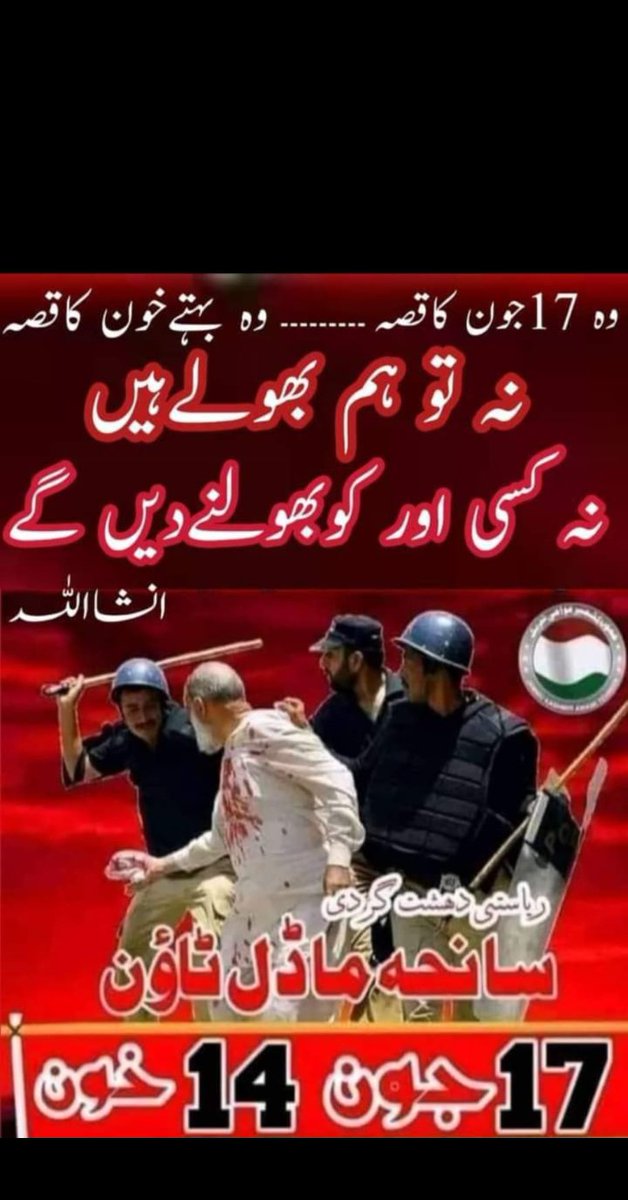
ظلم کتنا ہی طاقتور کیوں نہ ہو، حق کی آواز کو ہمیشہ کے لیے دبایا نہیں جا سکتا۔ ماڈل ٹاؤن کے متاثرین کی استقامت کو سلام پیش کرتے ہیں۔
#12YearsOfInjustice
For the past 12 years, the families of the Model Town martyrs have demonstrated remarkable patience, perseverance, and unwavering commitment to a peaceful legal struggle, knocking on every door of justice in pursuit of accountability. Yet, to this day, a complete investigation into the Model Town tragedy, in accordance with the Constitution and the law, has not been carried out.
The Joint Investigation Team (JIT), which was constituted on the orders of the Supreme Court of Pakistan, has been unable to proceed since March 2019, as its notification remains suspended by the Lahore High Court. Legal counsel representing both sides have already completed their arguments in the JIT case, yet a verdict is still awaited.
We once again respectfully appeal to the Chief Justice of Pakistan to remove the obstacles preventing the JIT from submitting its report. Only an impartial and transparent investigation can fulfill the legal requirements of a fair trial. The continued delay in the submission of the JIT report has effectively stalled the process of justice.
Together with the families of the martyrs, we are pursuing all available legal avenues in collaboration with some of Pakistan’s leading lawyers and law chambers. We remain steadfast in our commitment and will continue this struggle for justice until our very last breath.
On this occasion, I pray for the elevation of the ranks of the Model Town martyrs. These sacrifices and the blood of the innocent will not be in vain. I also commend the families of the martyrs and the eyewitnesses who, despite facing fear, pressure, and inducements of every kind, have remained resolute. They have courageously rejected all forms of intimidation and temptation, continuing to appear before courts at every level and testify in the cause of justice with unwavering determination.
#12YearsofInjustice
Want to actually use your crypto in real life?
PGON Wallet lets you turn USDT into instant payments at merchants.
Quick, easy, and works where you need it.