The Three Humans Left in a VC Firm
Fred Wilson, co-founder, Union Square Ventures, interviewed by Michael Mignano (USV)
[I post one executive summary daily of an interview I enjoyed and learnt from. I loved this interview that @mignano did with @fredwilson, who I've learnt a tremendous amount from on the board of Coinbase. Tons of great nuggets for founders and investors.]
Summary: After 40 years in venture, Wilson has rebuilt USV around a single conviction. Only three things in the firm still need a human: picking the thesis, building relationships with founders working in that thesis, and supporting them after the check. Everything else, including sourcing, diligence, term sheets, and CRM, is being handed to agents. The interview is a working sketch of what a venture firm looks like when the back half of its job becomes software, and a clear read on what stays human-only and why.
1. The Three Humans Left. A year ago Wilson wrote a memo to his partners saying that if he were starting USV from scratch today, only three jobs would stay with humans: high-level thesis development, building relationships with founders inside that thesis, and supporting them after the check. Everything else gets handed to agents. USV is now executing on that memo, not theorizing about it. For founders raising, this is the new operating profile of the firm sitting across the table.
2. Agents Love Data Rooms. "I hate data rooms. Agents love data rooms." USV no longer asks a junior associate to scrub the data room before a term sheet. An agent reads the room and answers questions in conversation: cap table, vesting, founder ownership, anything in the corpus. The effect on partner time is direct, with less work on the parts of the job no one enjoys and more time with founders.
3. Term Sheets Without Lawyers. USV's term sheets are now written by an agent, with no outside counsel stamp at the term-sheet stage. The firm seeded the agent with standard term sheets by sector and by stage, then partners shape each document in conversation with the agent. Wilson does not yet trust an agent to write long-form definitive docs. The implication for founders: term sheets land faster, with less round-trip friction, and the cost structure of the next-generation venture firm starts to drop.
4. The Kill Zone Test. Wilson ran a sample contract through a legal-AI startup and through raw Claude Code, side by side, and Claude's markup was better. "All of legal AI is in the kill zone." The test is portable to almost any AI vendor pitch. If a wrapper company cannot outperform the raw model on the thing it sells, the wrapper is paying for the privilege of being disrupted. Operators should run the same test before signing a multi-year contract.
5. No Wrappers Allowed. To survive the kill zone you cannot wrap a model. You have to rebuild the business model from scratch around the new economics. Cursor is the example Wilson reaches for: it has been hugely successful, but more developers are dropping back to raw Claude Code, and nothing stops Anthropic from shipping an IDE. A defensible AI company redesigns the workflow itself, so the foundation lab would have to abandon its current pricing model to copy.
6. Energy Is the AI Trade. About a third of USV's deployment now goes to energy, because no matter which model wins, the winner needs power. The firm has backed a decentralized model-training network and a company that turns each grid-scale solar and wind plant into a mini data center selling inference tokens. The trade is indexed to AI without forcing USV to pick the model. Builders hunting for a less crowded adjacent market should read the same memo, because the picks and shovels of AI run through electricity.
7. Sellers, Not Coders. The skill USV now overweights in founders is selling: recruiting, fundraising, convincing customers, inspiring teams. Forty years has taught Wilson that the founder who can tell the story and bring it to life wins more often than the founder who can write the code. The corollary is uncomfortable for technical founders. "Actually being able to write code is probably not a big deal anymore," though enough technical vision to see three moves ahead still matters. If you are a CEO who cannot recruit, that is now your constraint.
8. The 80–90% Open Source Window. Open-source models, especially the ones shipping out of Asia, are running at 80 to 90 percent of the quality of the closed frontier models. Right now the closed labs are subsidizing usage, so price does not force the comparison. When the labs have to charge a real margin, open source becomes a serious value alternative and the playing field levels. Wilson is not betting the firm on this outcome, but he is hedging into the quadrant where open source wins.
9. Founders Still Want Humans. Founders do not want to raise money from an agent. They want to know the human they are getting in business with, and that is why Wilson does not see VC automating itself out of a job in the short term. The firm can automate the back half of the workflow. The front half, sitting across from a founder at 11 p.m. when they have had a horrible day, stays human.
10. Don't Pass on Price. The biggest regrets of Wilson's career are deals he passed on because the price was too high. The market-clearing valuation will almost always feel uncomfortable a year later, and the right answer is to find a way in, even if that means buying secondary instead of leading the round. Saying no on price is a defensive move masquerading as discipline. Founders raising can use the line in negotiation, because a firm that walks on price is telling you it has not adjusted to the current market.
11. Offense Over Defense. Wilson lost $25 million in six months in 2001 and learned that getting it wrong is a byproduct of the job, not a verdict on the investor. He spent his first 15 years scared of losing money and only got good at venture once he stopped playing defense. The advice is harder to apply for someone breaking in, because the first checks really do matter, but the directive holds at every level. For operators, the analog is the founder who refuses to ship until the product is perfect, because you cannot win a game you are not playing.
12. The Relationship Is the Moat. After 40 years and an AI rebuild of the firm, Wilson's one-line summary of the venture business is the same as it was on day one. The relationship between the investor and the founder is the secret sauce. Everything else, including the work USV used to staff up to do, gets compressed by technology. Find great founders, build real relationships with them, and help them build great companies. If your venture pitch to LPs does not lead with that, you are pitching the wrong business.
the non-tech public needs to be presented:
- the benefits of AI (products, services and outcomes)
- the ability to participate
- the requirements (natsec, competitiveness)
- mitigated concerns (jobs, energy cost)
everyone has a real shot to participate in the new economy!
Wild clip. Swami S goes to Anthropic's faith + AI meeting and the takeaway is basically: we are not programming tools anymore, we are growing artificial minds.
And those minds can drift into personas.
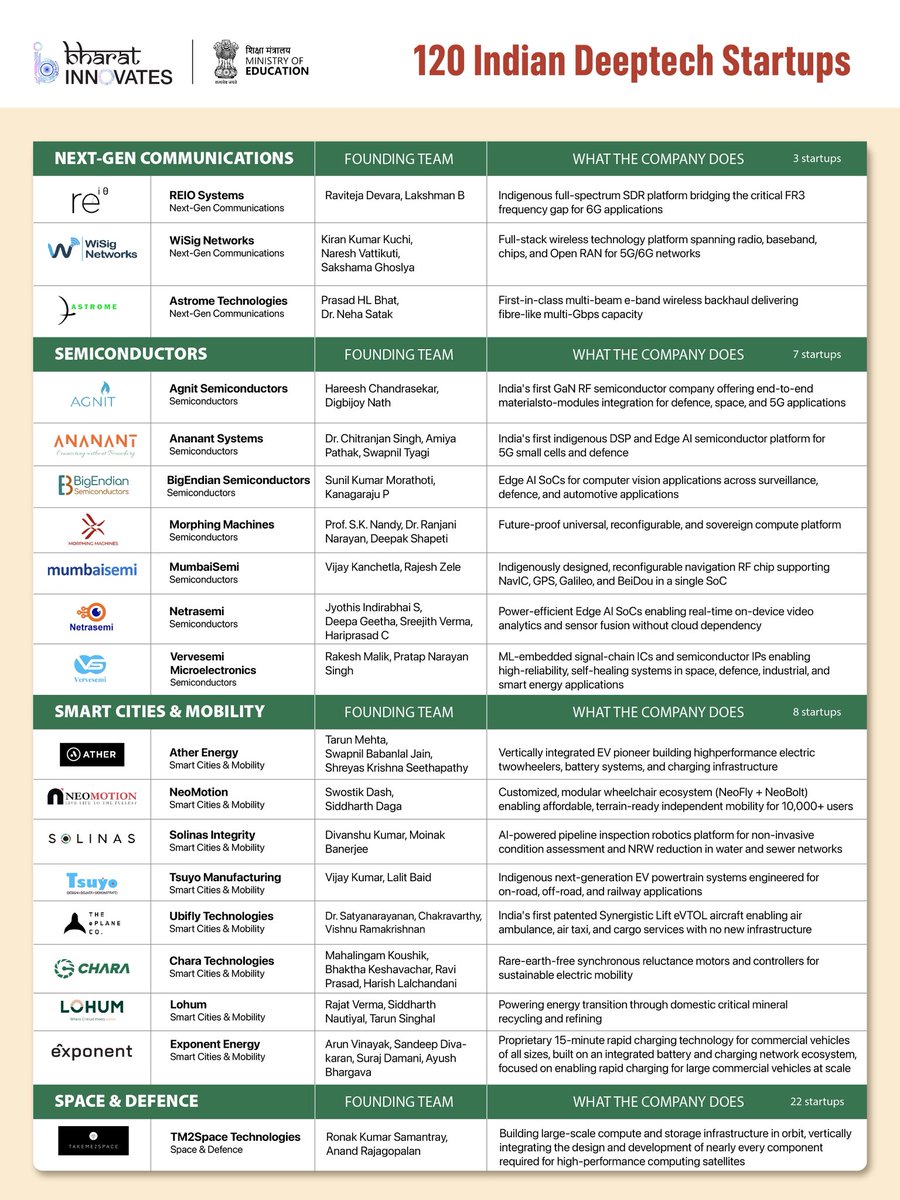
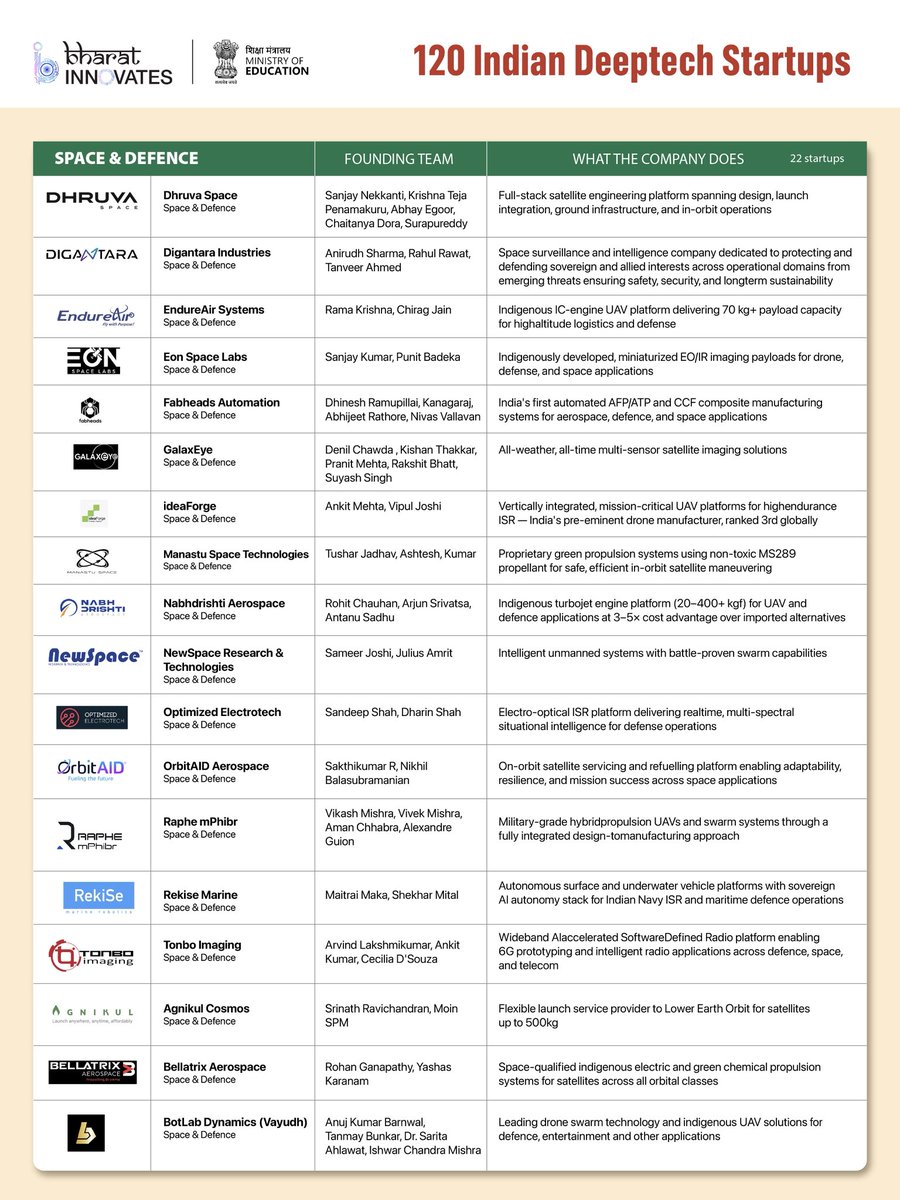
Meet the Deep tech startups from India who will represent our innovation story at Nice, France this June as Bharat Innovates @BharatInnov2026 Proud of our young innovators.
The dedication of our elders to plant, water, and care for the land shows us that hope isn't just a feeling it’s an action. Every sapling they nurture is a gift to the future.
It’s also a reflection of regenerating practices where care for the land restores not just soil, but life, balance, and continuity across generations.
Let’s take a page from their book and do our part to nurture the planet. 🌱👇
Visit https://t.co/BWzj6GqwE2 to see how you can help support a greener tomorrow. Saytrees has been planting fruit trees with farmers since 11 years now!!
#SayTrees #Community #Environment #PlantingHope #EcoFriendlyLiving #SustainableFuture #RegenerativePractices
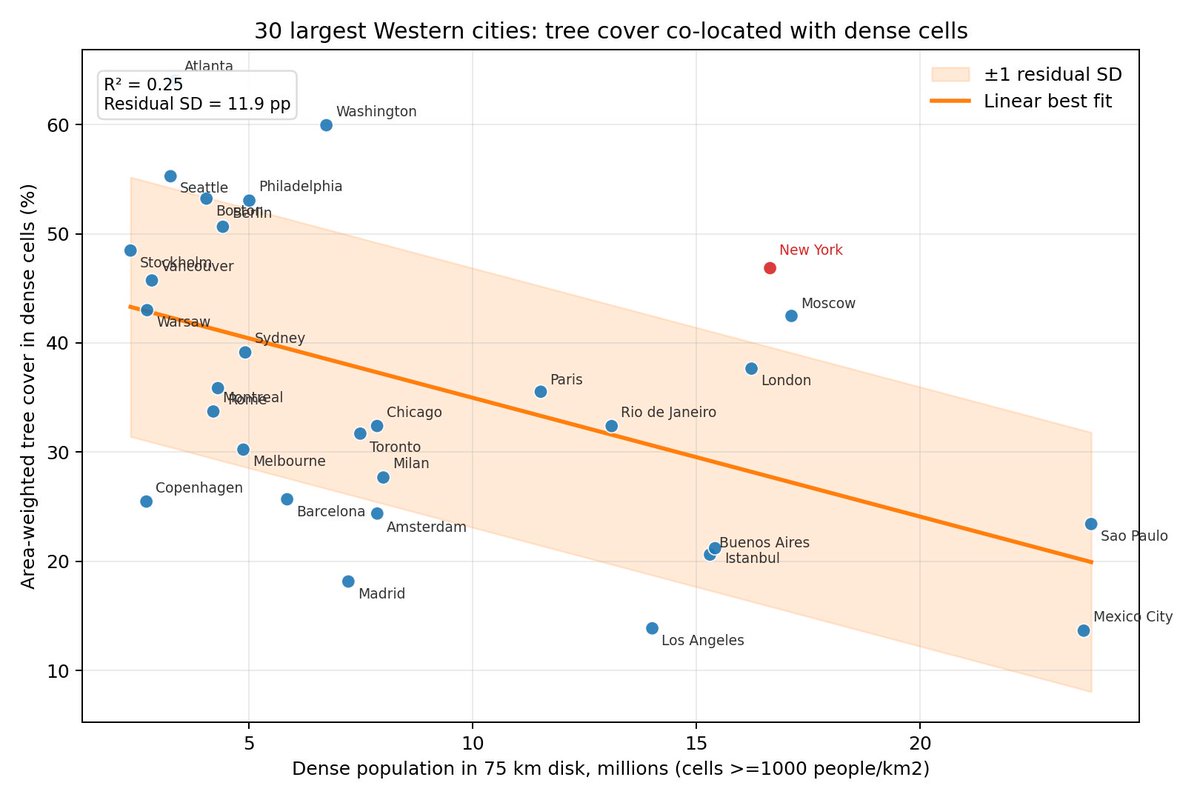
Every time I fly to New York, I'm struck by how many trees there are in the densely-populated areas around the city. (Coming from the West Coast, one arrives over the Garden State, and the suitability of the sobriquet is quite apparent from the air.) It feels like this degree of tree cover in highly populated areas is atypical (the environs of places like Paris, London, Los Angeles, Melbourne, Tokyo, etc., look very different), so I asked the LLM to investigate.
It found GHSL 2020 population and ESA WorldCover 2021 10m land-cover data, and concluded that New York is in fact quite unusual.
As far as I can tell, it's because of some combination of:
* A very favorable climate. (Trees grow quickly without irrigation.)
* Marginal farmland. (Readily outcompeted by the Midwest in the 19th century.)
* Together yielding reforestation before the advent of suburbs.
* And a preference for development patterns that include trees. (Japan's climate is very hospitable, but one sees far fewer trees in the populated areas around the major cities -- forest and habitation are more disjoint.)
"Need for minerals..."
@theguardian.com is prone to Pearl clutching over mines for EV minerals while conveniently forgetting meat and soy cattle-feed.
This picture is a helpful reminder of where our priorities should lie, using numbers from the new study.
https://t.co/ROEQXYF88o
"Digital transformation" is just expensive shelfware if nobody uses it.
A Whatfix-commissioned Forrester report found that businesses lose $10.9M every year, not because they chose the wrong tools, but because those tools never get fully adopted.
Now add agentic AI to the mix: systems making decisions and executing workflows, while inheriting every adoption gap your business already has.
In his https://t.co/D7axxHUEXq interview, Khadim Batti said the quiet part out loud: Digital Adoption isn't a nice-to-have. It's the whole game.
The companies that solve this won’t just have better AI. They’ll build a real competitive advantage.
Read the full story: https://t.co/AdCmg8F5Mi
#digitaladoption #whatfix #digitaltransformation #thoughtleadership #ai
Some of us meditate, some spiritual seekers but my friend Shubhashish has mastered meditation and has crystallised his practice & learnings into an awesome book!!
Get your copy of "Where Silence Became Survival” here
https://t.co/UjqZE7XcoA
Growth PM flywheel is -- problem/value -> Validated learning -> Raw material (target segment + positioning) for demand gen. This core didn't change but now how can Agentic for PM org make this flywheel move 100x faster? #JustSayin cc @prasanna_says
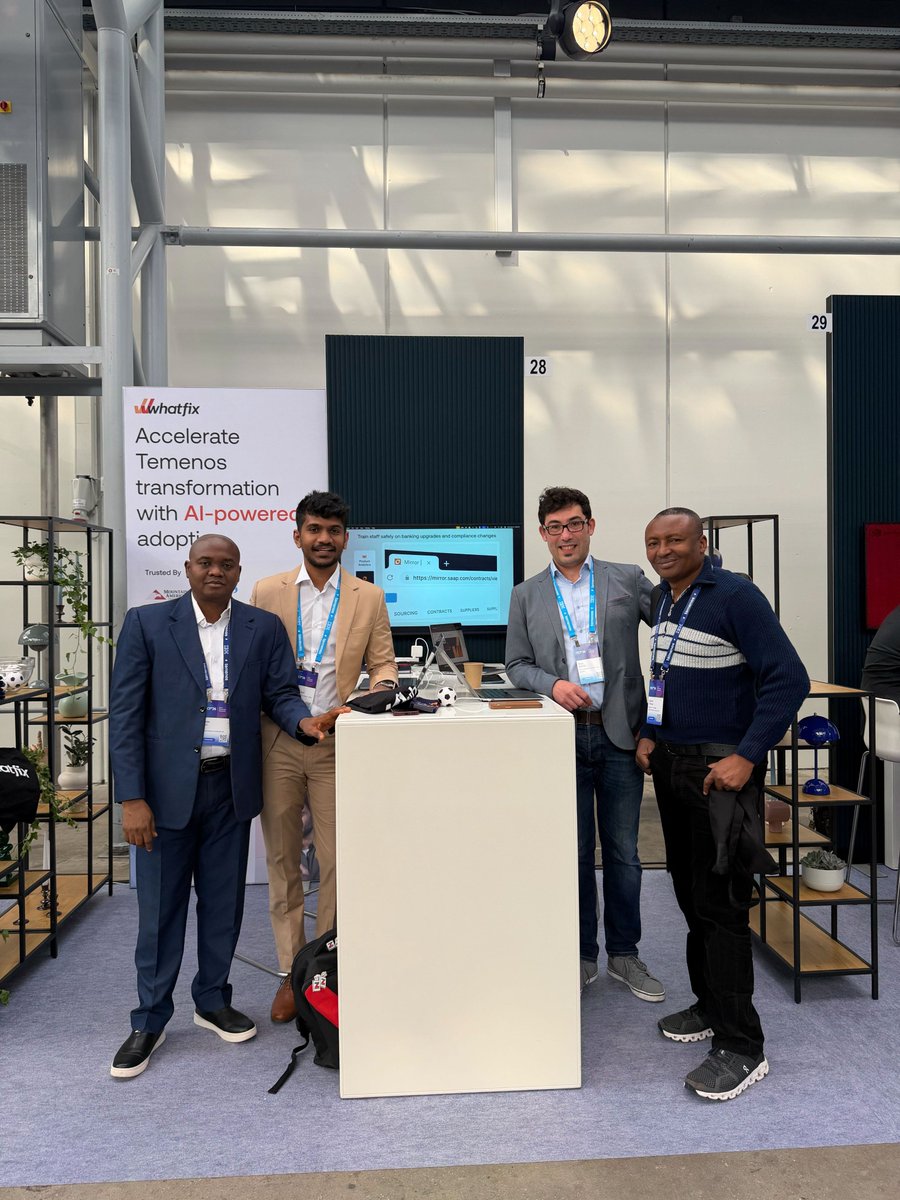
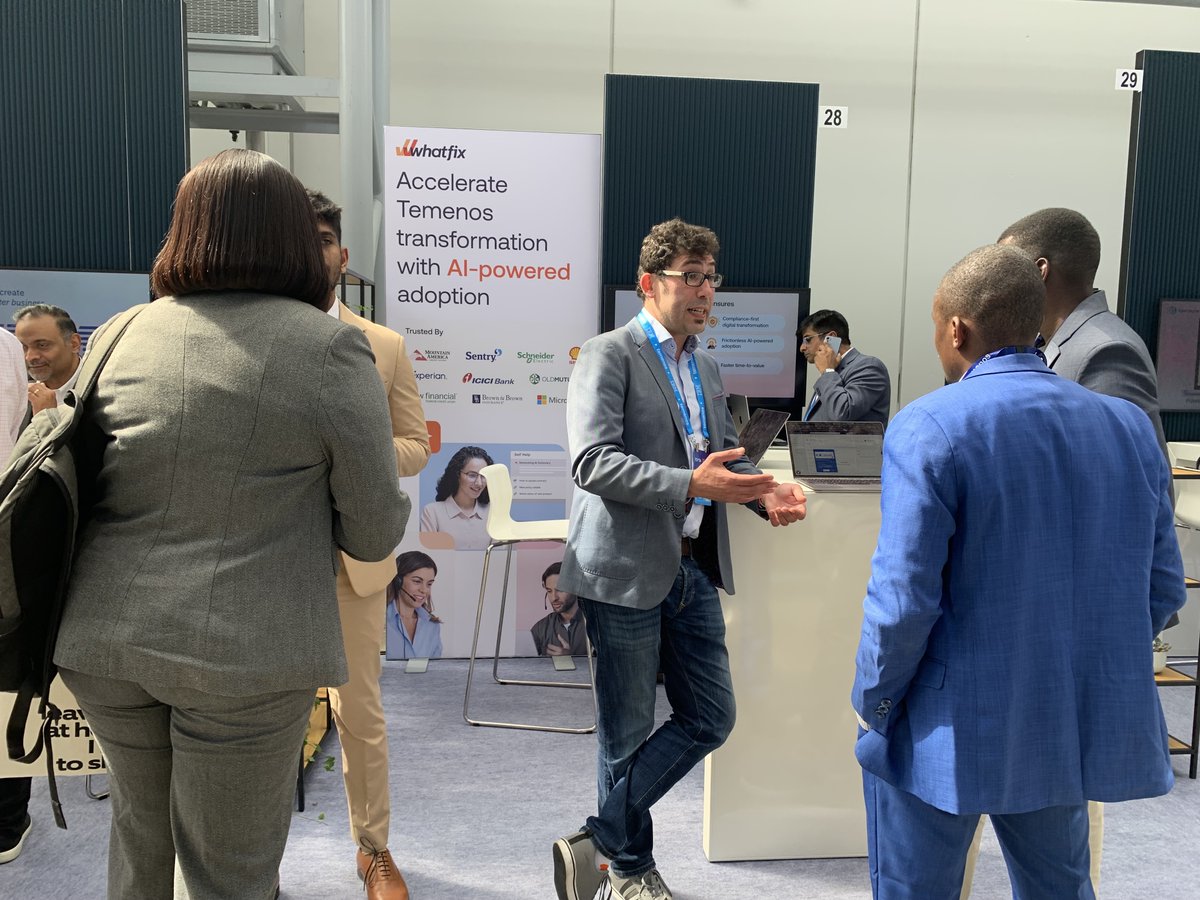
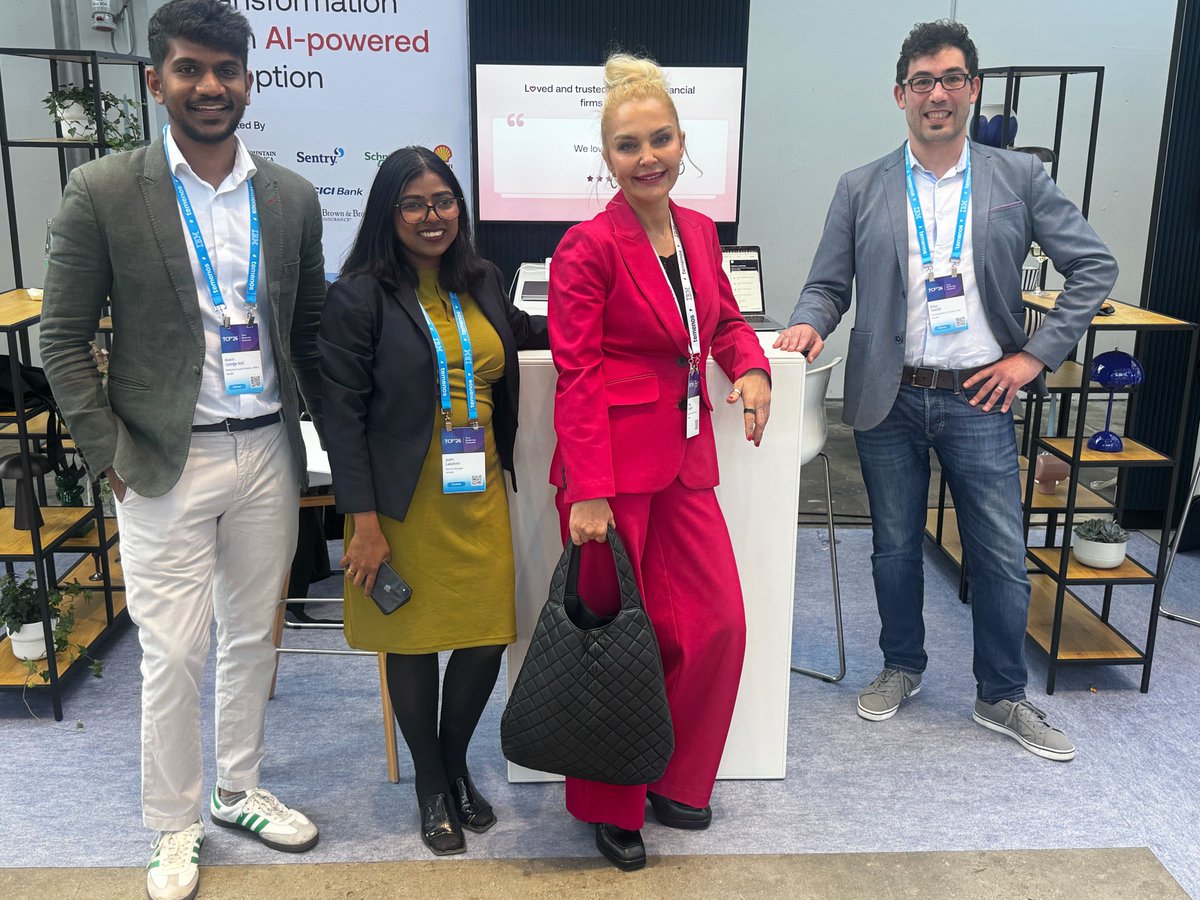
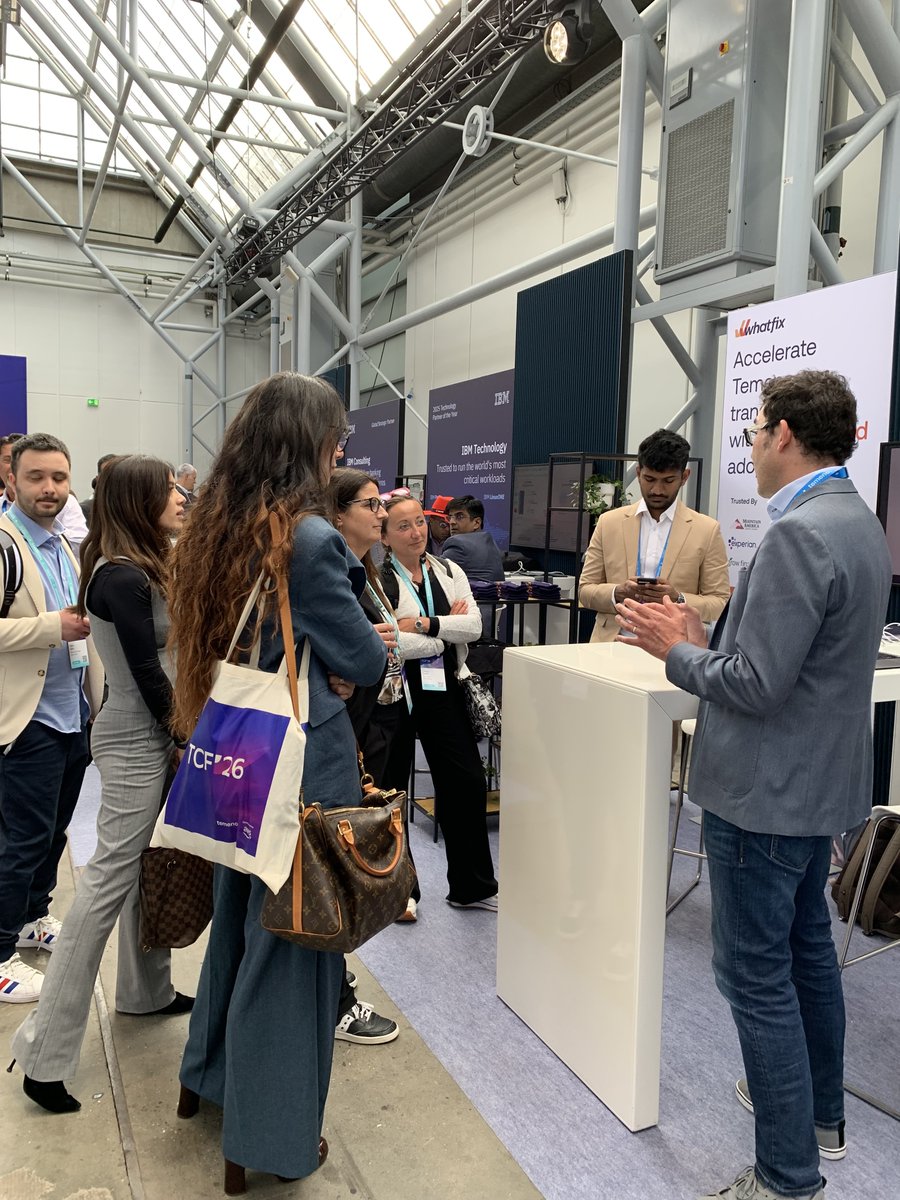
Core banking transformation took center stage at Temenos Community Forum 2026 in Copenhagen. 🏦
Across conversations with banks, partners, and transformation leaders, one theme was clear:
Migration is just the starting point.
Real transformation value is critically dependent on execution and adoption.
From modernization to new rollouts, the discussions kept coming back to how banks can help teams adopt new Temenos workflows faster, reduce errors, and operate with confidence from Day 1.
That’s where Whatfix comes in, embedding AI-native guidance directly within core Temenos workflows to help banks turn modernization into measurable outcomes.
Thank you to everyone who stopped by Booth #28 and connected with Team Whatfix.
🔗 Learn more: https://t.co/fU8IYcQ2iN
#TCF26 #BFSI #temenos #digitaltransformation #whatfix #digitaladoption #partnerships