Lessons to be learnt from the 1st set of cases presented in KICR 👉 https://t.co/JR4Pi5tjiA
Do you have a clinically relevant case that could help inform practice? Submit it to KICR 👉 https://t.co/lRcqaP4yAv
Authors receive 100% article processing charge waivers till 31 Dec 2026
The first set of cases are published on the KICR website 👉 https://t.co/V10cb4wzzA
Choose the cases you wish to read about after checking out the content in a nutshell in this video 👇
🎉Congrats to these #NephMadness 2026 Grand Prize Winners:
🏆 Top Medical Student: Ian Fleming
🏆 Top Fellow Score: David Mathew
🏆 Top Resident Score: @lanes1213
🏆 Top Attending Score: @BasuNephro
🎉Congrats to these #NephMadness 2026 Grand Prize Winners:
🏆Top Medical Student: Ian Fleming
🏆 Top Fellow Score: David Mathew
🏆Top Resident Score: @lanes1213
🏆 Top Attending Score: @BasuNephro
Delighted to see the full ISN “Genetics in Kidney Disease” curriculum now live.
Co-chaired and designed with #BeckyMa, this program was created to help nephrologists bring kidney genetics into practice, supporting earlier diagnosis, more individualized care, and better patient outcomes.
Grateful to the outstanding faculty and panelists who made it possible and to @ISNkidneycare for entrusting us with the opportunity to develop this curriculum!!
🔥 I get a lot of admiration from my colleagues & mentees!
🔥 The truth is that I have a lot of struggles, it is just that I don't post them here!
🔥 For us who were not born to privilege - it is purely hard work and using every opportunity God puts in my path.
To those who missed out on Sakura in Japan during WCN, watch for these trees in Chennai.
No, they're not cherry blossoms. They are Tabebuia Rosea, rosy trumpet tree.
The petals dont come down dramatically like a kdrama but it's nice to know that Chennai has a Spring season too.
Do you have #FOMO from missing all the fun at #ISNWCN ?
We've got you covered!!
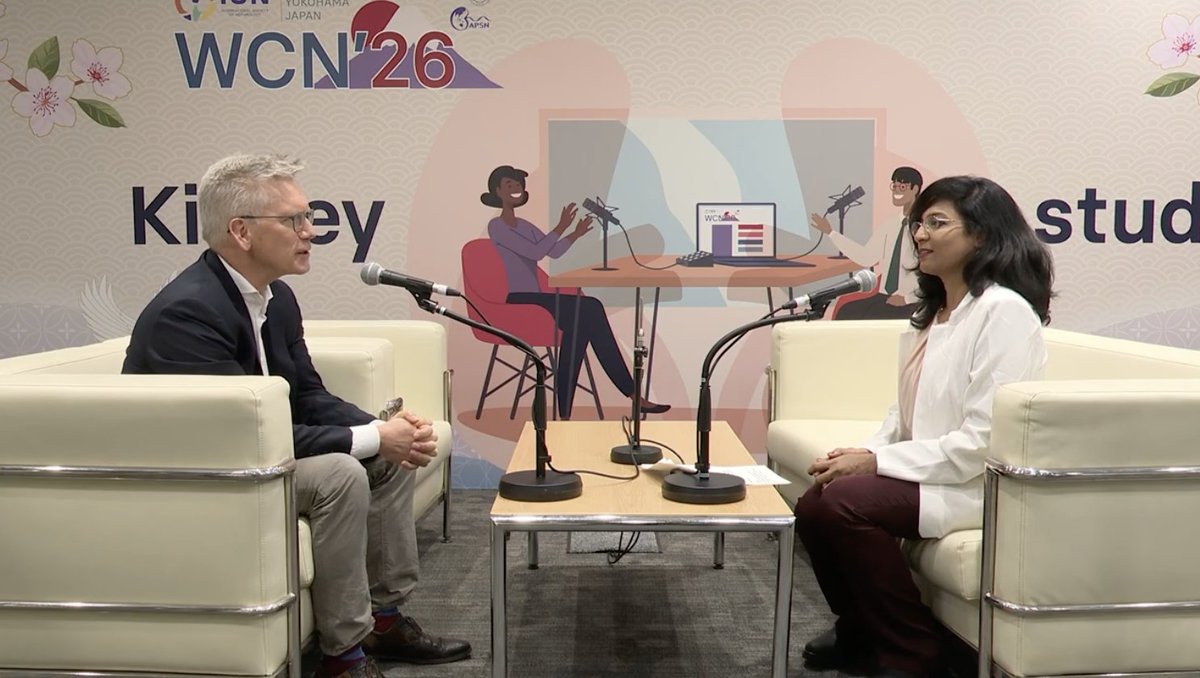
Check out the interview with @NephroSeeker and @hswapnil discussing simultaneous publications at WCN in Yokohama, Japan #NephTwitter
https://t.co/VQcoRWWfkz
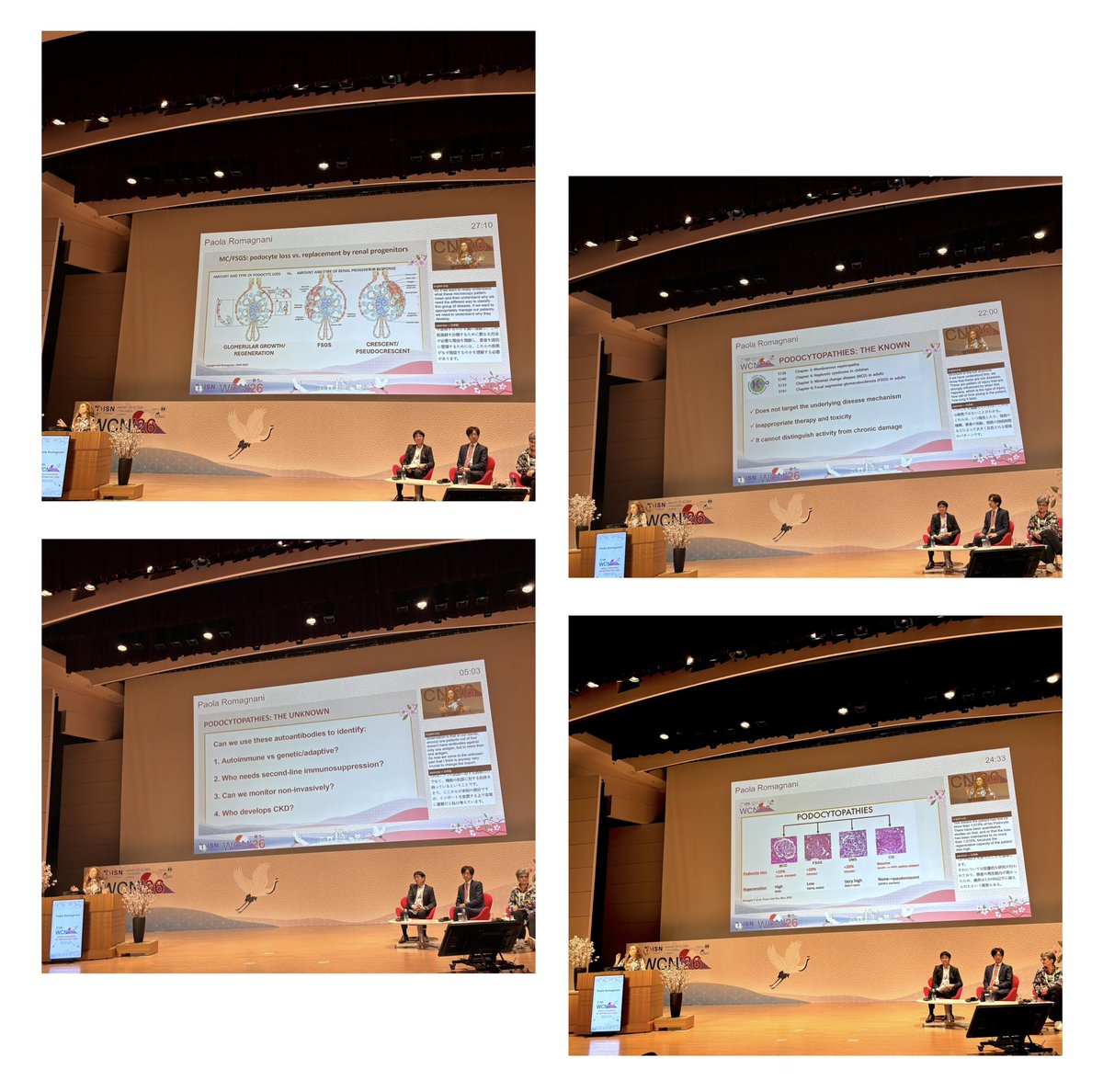
𝗔 𝗗𝗲𝗳𝗶𝗻𝗶𝗻𝗴 𝗠𝗮𝘀𝘁𝗲𝗿𝗰𝗹𝗮𝘀𝘀 𝗼𝗻 𝗥𝗲𝘁𝗵𝗶𝗻𝗸𝗶𝗻𝗴 𝗣𝗼𝗱𝗼𝗰𝘆𝘁𝗼𝗽𝗮𝘁𝗵𝗶𝗲𝘀: 𝗧𝗵𝗲 𝗖𝗵𝗮𝗻𝗴𝗶𝗻𝗴 𝗣𝗮𝗿𝗮𝗱𝗶𝗴𝗺 𝗶𝗻 𝗗𝗶𝗮𝗴𝗻𝗼𝘀𝗶𝘀 𝗼𝗳 𝗡𝗲𝗽𝗵𝗿𝗼𝘁𝗶𝗰 𝗦𝘆𝗻𝗱𝗿𝗼𝗺𝗲 𝗮𝘁 #𝗜𝗦𝗡𝗪𝗖𝗡
At ISN World Congress of Nephrology 2026 in Yokohama 🇯🇵 last Sunday 29 March, Prof Paola Romagnani from Italy delivered a landmark plenary on “𝘗𝘰𝘥𝘰𝘤𝘺𝘵𝘰𝘱𝘢𝘵𝘩𝘪𝘦𝘴: 𝘛𝘩𝘦 𝘒��𝘰𝘸𝘯 𝘢𝘯𝘥 𝘵𝘩𝘦 𝘜𝘯𝘬𝘯𝘰𝘸𝘯” which undoubtedly reshapes how we understand and manage glomerular disease associated with nephrotic syndrome.
Grounded in her 2025 Nature Reviews Disease Primers review (Romagnani et al) that is built on years of her research on the subject, this was a clear explanation on a practice-changing shift from morphological description of what we see in renal biopsies to understanding the pathophysiological mechanisms that lead to integrated diagnosis that guide more precise treatment.
At the center of it all are the podocytes which are the specialised cells acting as “gatekeepers” of the glomerular filter preventing# protein loss. When podocytes are injured or lost, proteins leak into urine, causing nephrotic syndrome.
Crucially, we now know that the kidney has intrinsic repair capacity whereby progenitor cells along Bowman’s capsule can migrate, differentiate and replace injured and lost podocytes.
The core concept therefore is that histopathological phenotype is determined by degree and duration of podocyte loss vis-à-vis the patient’s regenerative capacity to replace them.
This elegantly explains the familiar histopathological patterns in nephropathology:
🔘 MCD: Minimal, transient injury with strong repair (often young children; steroid-responsive)
🔘 FSGS: Chronic podocyte loss with inadequate repair and sclerosis (more common in older individuals after childhood)
🔘 DMS (Diffuse Mesangial Sclerosis): High loss with excessive/misdirected repair (often genetic; early childhood)
🔘 CG (Collapsing Glomerulopathy): Massive podocyte loss with failed repair manifesting aggressive collapse
🔘 MN (Membranous Nephropathy) Distinct immune-mediated GBM disease with secondary podocyte injury
A major advance is the move to etiology-based classification:
▪️ Autoimmune (e.g. anti–slit diaphragm antibodies such as nephrin)
▫️ Genetic
▪️ Adaptive (hyperfiltration)
▫️ Infectious
▪️ Monoclonal
▫️ Toxic
➡️ The same biopsy pattern may arise from entirely different mechanisms with different treatments and outcomes.
🔬 The implication is profound: MCD, FSGS and related entities are morphological phenotype and not final diagnoses.
This shift has immediate clinical impact with emerging autoantibody testing that can:
✔️ Define true autoimmune podocytopathies beyond morphology
✔️ Guide immunosuppression decisions
✔️ Enable non-invasive monitoring
✔️ Predict CKD progression and post-transplant relapse
At the same time, key questions remain:
• Can biomarkers reduce reliance on biopsy?
• Who truly benefits from therapy escalation?
• Can we monitor disease activity in real time?
• Why do some patients still progress?
🌟 This is a true learn–unlearn–relearn moment for we are moving toward integrated, mechanism-based nephropathology - combining histology, molecular biology, and immunology to deliver precision, patient-centered care.
Sincere thanks to Prof. Romagnani and @ISNkidneycare for a masterclass that distilled complexity into clarity and direction. The future of podocytopathy and nephrotic syndrome care is clearly becoming more precise, personalised and impactful.
#ISNWCN2026 #Nephrology #RenalPathology #Podocytopathies #GlomerularDisease #PrecisionMedicine #KidneyHealth
Together, we exchanged knowledge, built new collaborations, and created lasting connections. I hope you returned home with new insights, friendships, and inspiration to continue advancing kidney care. #ThisIsISN#ISNWCN 2/3
Great piece of advice that strongly resonated with me... Remain grounded in patient care while invoicing in research!! #ISNWCN@ISNeducation@ISNkidneycare
At #ISNWCN, we spoke with Professor Ron Gansevoort, recipient of the Lilian Kaplan International Prize.
His message is a powerful reminder of the link between research and clinical care in nephrology:
“Be inspired. We are all clinicians. That's our basic task.”
In his closing remarks, he encourages the next generation of nephrologists to engage in research while staying grounded as clinicians—both roles are essential to improving patient care.
🎥 Watch the full interview:
https://t.co/zjqbuPo3pf