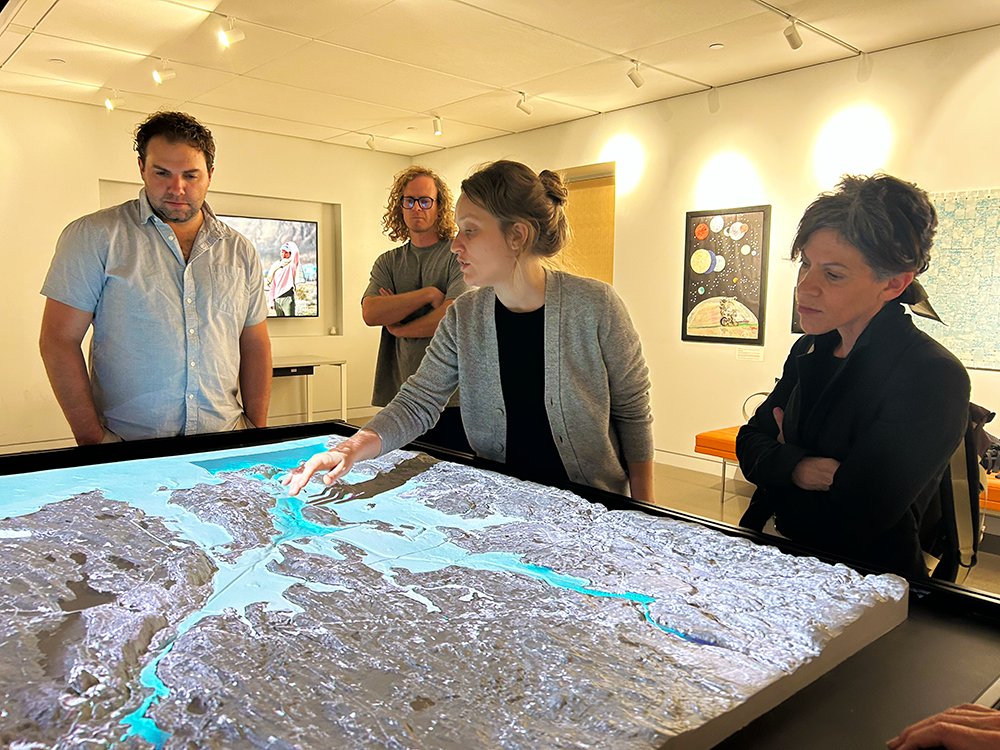
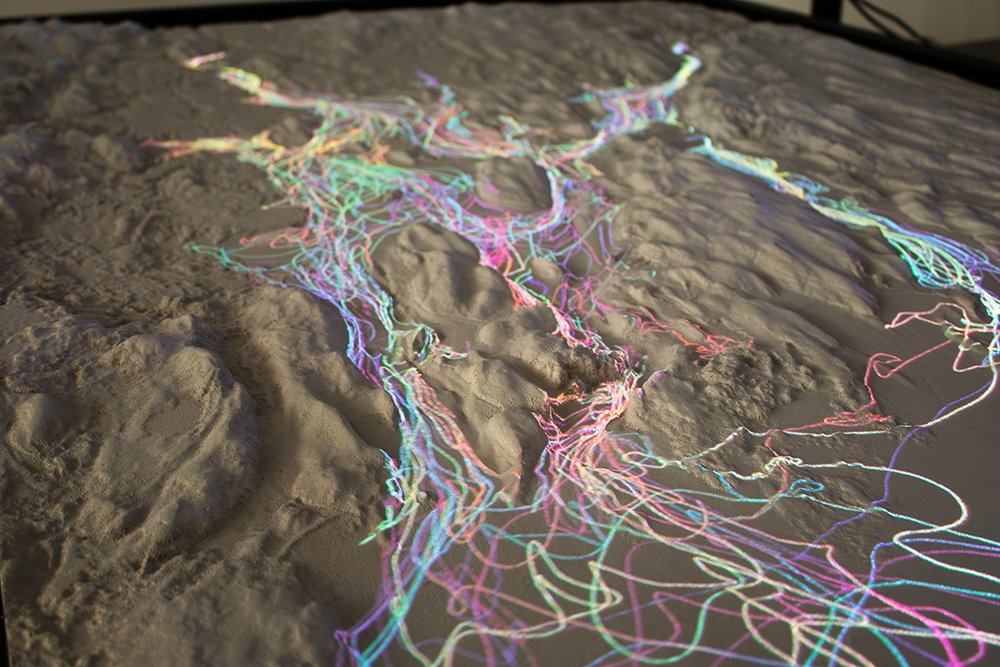
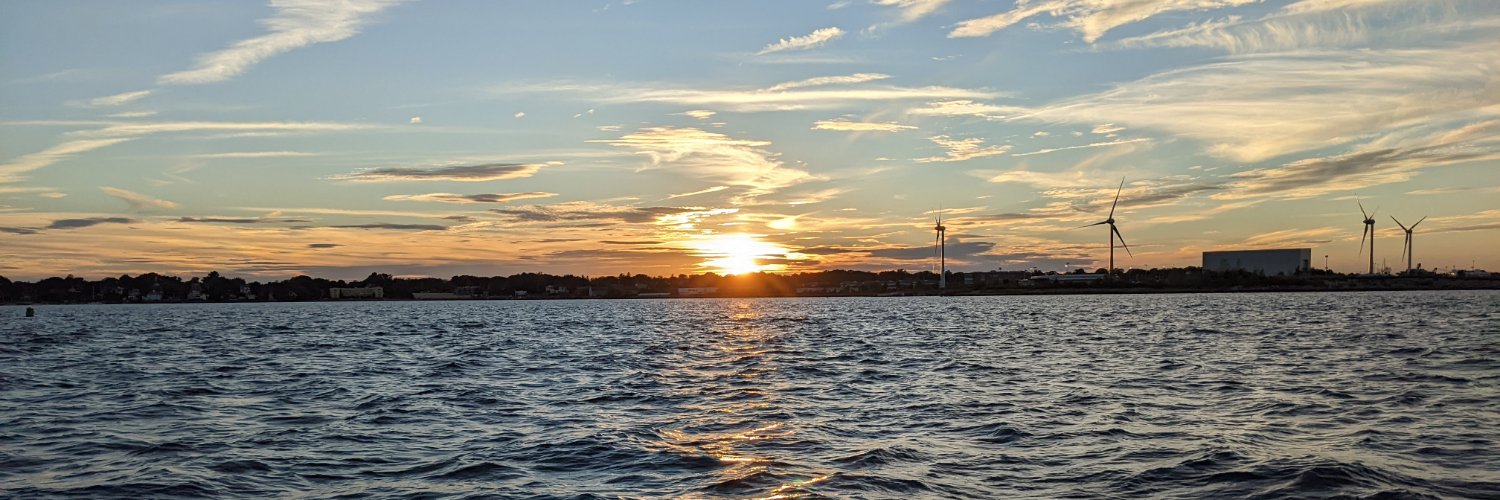
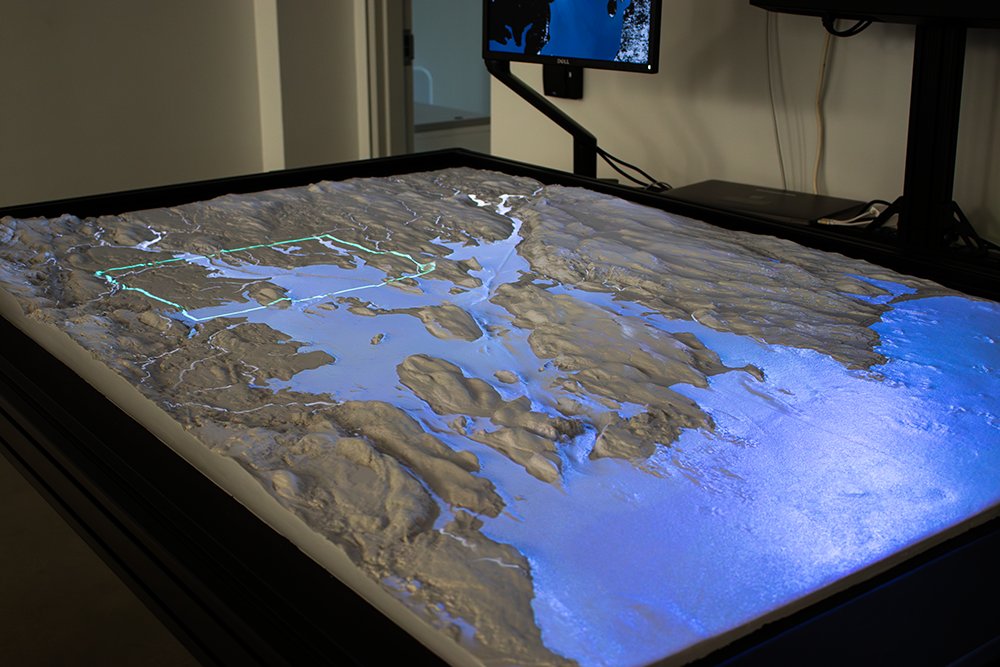
"It’s a platform to tell stories, share info & ask questions," says Stewart Copeland, co-creator of The Illuminated Bay w/ @risd Nature Lab's Georgia Rhodes & @baylorfk, an installation visualizing computational #models of the Bay's changing #ecosystems, now @BrownUniversity
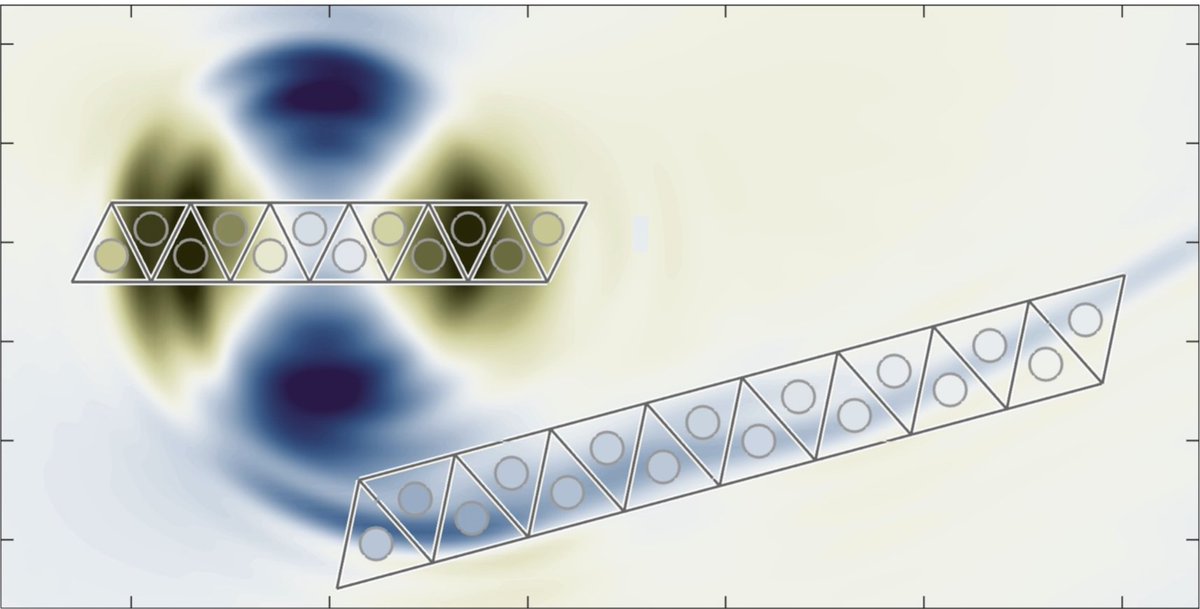
Submesoscales are a significant turbulence source in global ocean surface boundary layer
Jihai Dong, Baylor Fox-Kemper, Jacob O. Wenegrat, Abigail S. Bodner, Xiaolong Yu, Stephen Belcher & Changming Dong
https://t.co/JmyNsR4AQG
Last month, the 2024 US-UK Scientific Forum explored science in the age of AI, including its applications in scientific research, new paradigms, ethical issues, & more. #ICYMI, you can watch the full recordings of the Forum online: https://t.co/vZVgAalAtp #USUKForum@royalsociety
I'm happy to announce a new paper, with @baylorfk, Joel Feske, and @jeffreyearly.
Integral theorems for the gradient of a vector field, with
a fluid dynamical application
It's hopefully useful to oceanographers as well as those working with tensors.
https://t.co/umvEbr34bs
This summer, I'm offering my two-week Ocean/Atmosphere time series intensive online, July 29–August 9.
I've taught this a half-dozen time, but this is the first time it's ever been offered to US students.
Details and here: https://t.co/rEIwLmhVsI
Applications are now open!
@regclimo@ccivanovich @AMS_atmos Nice. BTW, some oceanographers prefer picante to caliente, but I like that caliente implies hot temperature... and since my Spanish is poor it also implies spicy to me at least...
@ccivanovich @AMS_atmos Oh--I see from your Fig. 4 that I had the orthogonality wrong. Low stickiness is "parchy" or "scorching" and high stickiness is "clammy".
@ccivanovich @AMS_atmos Great!! I hope that you have also taken note that spice goes from minty to caliente, and have adequately scholarly terms for low- and high-stickiness in mind, e.g., "brisk" to "muggy"
@EPSRC Centre for Doctoral Training in the Mathematics for our Future Climate: Theory, Data and Simulation @imperialcollege, @UniRdg_Met, and @unisouthampton invite passionate and dedicated individuals to apply. @Brown_DEEPS is a partner!
https://t.co/8LHkH88s5E
👀 One of our Core Projects, ESMO, has a new website! The updated space is now easy to navigate and find all relevant information. Check it out now!
🔗 Click the URL to explore!
https://t.co/8lSrbEjwqx
#ClimateModelling#ClimateCommunications
The NSF funded EPSCOR project, https://t.co/4AUhGjqoje, seeks to help communities manage the changing climate.
As part of this project, UNH is seeking a postdoctoral fellow to research the dynamical linkages between sea-level and human: https://t.co/BajpYUzBr2
📢 Last chance to apply! 📢 Two-year postdoctoral position in the Beal Lab at the Rosenstiel School, University of Miami. You will lead the processing and analysis of satellite and observational data to to better understand Agulhas leakage and variability. https://t.co/4hIrhw1zor
The Working Group on Numerical Experimentation (WGNE) is looking for new members to join their working group and contribute to the activities of the WG, ESMO and WCRP.
The open call is now published on their website: https://t.co/Ov25ZzILjv.
We are thrilled to announce the election of 120 members and 24 international members to the National Academy of Sciences in recognition of their distinguished and continued achievements in original research.
Congratulations to our new #NASmembers and welcome to the Academy!