🏆 Referee announced for 2026 #SuperCup!
We're pleased to share that Somali referee Omar Artan will officiate the highly anticipated match between PSG and Aston Villa in Salzburg.
Somali referee Omar Artan, who was denied entry into the USA ahead of the World Cup, has now been appointed by UEFA to officiate PSG vs. Aston Villa in the Super Cup final.
🚨 WORST @FIFAcom PRESIDENT OF ALL TIME: INFANTINO SILENT AS US HUMILIATES AFRICA
Gianni Infantino selected Omar Abdulkadir Artan — Africa's top referee and first Somali at a World Cup — then watched US authorities deny him entry at the border despite diplomatic passport and approved visa. Turned back like trash. No reason. No fight.
Where is your voice, Infantino?
You preach "global football" and "unity" while selling out African officials to US border politics. This isn't leadership — it's cowardice and betrayal of the game.
You are proving every day why you are the worst FIFA president in history. Africa will not forget this disgrace.
Stand up or step down.
This is what we call development, congratulations My Ethiopia 🇪🇹😍. The #GERD development will benefit not only Ethiopians but also people from the neighboring countries, even future generations will look back and be proud of their Country.
Why is #Ethiopia collecting so little tax?
At less than 10% of GDP, Ethiopia’s tax ratio is far below the African average of 16%. The International Monetary Fund points to this number as proof of underperformance.
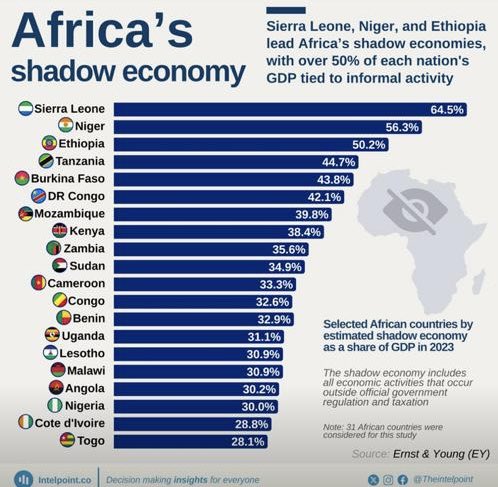
But the problem isn’t just collection — it’s structure. Over half of Ethiopia’s economy is informal (see attached graphic), outside the tax net. It is also one of the least urbanized countries in Africa. Just 22% of the population lives in cities, compared to the African average of 45%. Low urbanization means most people remain in subsistence farming, leaving far fewer taxable incomes and businesses.
Trade is another constraint. Ethiopia’s total trade is under 25% of GDP, compared to an African average of nearly 75%. With fewer imports coming through the system, there are simply fewer flows to tax. And after decades of state-led growth, the private sector remains thin: a group of banks, family owned conglomerates, telecom, and real estate firms carry much of the load, alongside SoEs.
In fact, tax revenues have been rising in nominal terms, at around 20% year over the last five years. But GDP has been growing even faster, so the tax-to-GDP ratio stays low. That doesn’t mean the tax system collapsed — it means the economy is racing ahead in ways that don’t easily translate into taxable income. (Nemo Semret)
So is Ethiopia really failing, or are we using the wrong yardstick? Until the country urbanizes, trades more, and formalizes its economy, demanding higher tax yields maybe like squeezing water from a stone. And if the administrative squeeze goes too far, could it risk becoming counterproductive? Could it push more firms into informality instead of strengthening compliance?
If the problem is structural, shouldn’t the solution be structural too?
What do you think? If the IMF is asking the wrong question, what's the right one?