1. Layup lines … space is not given in the game; space is only taken … (replace with 1-on-1 Around the Arc).
2. Mikan drill … removes the very information that guides real shooting behavior … (replace with 1v1v1 in the Smile).
3. Fast break pattern drill … turns the game into a memorization task … (replace with advantage transition games so the break becomes a search for advantage, not a scripted route).
4. 3-man weave … teaches players to pass because it’s their turn … (replace with live defenders looking to disrupt so passing becomes perception again).
5. Cone dribbling drills … cones don’t play defense; they never reach for the ball … (replace cones with defenders and the skill starts to become basketball again).
6. Partner passing lines … teach players to throw passes; the game requires players to discover passes … (replace with Rondo Passing, where the pass becomes a decision again).
7. Spot closeout drill … offense and defense know exactly in advance what is coming … (replace with “Hot-Cold-Body” closeout variations. Now the closeout has to think).
8. 5-on-0 walkthroughs … removes the thing that defines basketball: opposition! … (replace by adding defenders so players learn what to do when somebody is trying to stop them).
The CLA does not mean simply replacing drills with small-sided games. The deeper question is: What information is regulating the player’s behaviour?
If players can perform a skill without perceiving anything important from the environment, then the activity is not representative of the game.
Note: The activity shown in the reel is not one of these drills. In this reel, players had to gather a ball before two bounces and find a finishing solution in a full-court, contested transition situation.
The Three-Phase Timeout
Regulate first. Instruct second. The order is what makes the instruction stick.
1. Emotional Reset ~15 seconds
Before anything tactical: eye contact, slow your own breathing, calm body language. Acknowledge the emotion without amplifying the panic. Players flooded with adrenaline can’t process coverages.
“I see the intensity out there, that’s good. We’re still in this game.”
2. Cognitive Reframe ~20 seconds
Shift focus to what’s controllable. Connect the pressure to something they’ve already mastered. This rebuilds confidence and gives the brain a concrete task.
“Remember what we worked on Thursday, tight closeouts on shooters. Let’s execute that for four possessions.”
3. Tactical Clarity ~20 seconds
Only now do you deliver the specific adjustment. A regulated player can absorb it. The same words in Phase 1 would be gone before they hit the court.
“Switch on ball screens. Pack the paint, make them shoot.”
Why it works: emotion gates cognition. Bring players to baseline, and the tactical point actually lands.
$10,000 a year for swimming. $20K for hockey. $30,000 for gymnastics + hoops. Youth sports are bleeding families dry and it's only getting worse. @StevePoliti with an incredible look at the dire, predatory atmosphere permeating today's youth landscape.
https://t.co/Cdzr8rOjkW
A PARENT’S JOURNEY THROUGH YOUTH SPORTS:
Age 5: “He’s got a cannon.”
Age 6: “He’s the fastest kid out there. Coach said so.”
Age 7: “Rec ball isn’t challenging him anymore.”
Age 8: “We tried out for select. Obviously made it.”
Age 9: “$2,800 for the season. Plus uniforms. Plus tournaments. Plus hotels.”
Age 10: “Cooperstown is basically a family vacation, right?”
Age 11: “He needs a hitting guy. And a pitching guy. And probably a mental performance coach.”
Age 12: “I’m not a crazy sports parent. The OTHER parents are crazy.”
Age 13: “We changed schools. For academics. (And also baseball.)”
Age 14: “Showcases are a requirement at this age.”
Age 15: “Ya his ranking just ticked up. We’re cooking.”
Age 16: “He just needs to get seen by the right school.”
Age 17: “The D1 schools want him to walk on. He’ll earn a spot by sophomore year.”
Age 18: “Okay, D2 is actually really competitive.”
Age 19: “He’s redshirting. Strategic.”
Age 20: “He’s focusing on school now.”
Age 21: “You know what? He’s so much happier.”
Roughly 7% of high schoolers play in college.
About 1.5% of those get drafted.
Less than half of draftees ever play one day in the big leagues.
The odds of our kids going pro are somewhere between “struck by lightning” and “find a $100 in old shorts.”
I love youth sports (all my kids play a bunch of them) just keep a good perspective my friends. ✌️
Congratulations to BU Sports Wall of Famer Rick DeGagne on being recognized with the Ted Earley Memorial Award - the @CanadaCboc's highest honour.
DeGagne was a member of the Bobcats' first-ever GPAC championship team that earned a silver medal at nationals in 1980.
When we don't have a defender, we tend to play with long strides.
But when we have contact, we need to be able to shorten our strides to remain on balance.
The GREATEST sports parents are those who let the coaches coach, the officials officiate, are their children’s biggest support system, and spend more time and energy focusing on their child’s character, work ethic, and education, than anything else.
~from @CoachKurtHines
If you’re a coach who wants to challenge players while building awesome relationships, you should read this.
The problem is . . . challenging players in uncomfortable ways is absolutely necessary for excellence but risks turning them off, damaging trust, and undermining confidence. They seem to work against each other.
But it only seems that way.
The truth is . . . you can challenge players incredibly hard AND build deep trust. They're not opposites.
The key is making players feel how the challenge comes from caring, not instead of it. Most players in your program have never experienced that from a coach. They’ve had intense coaches who challenged and caring coaches who connected, but not a coach that does both. At the same time.
Here’s the phrase to use —>
“High love with high standards.”
That's the phrase you need to repeat over and over and over. To yourself. To your players. To their parents. To your staff.
1000x a week.
High love is high standards. Lowering standards is not a sign that you care. It’s not an act of love. It’s an act of fear. Soft coaching is the opposite of love. It says, "I don't think you're capable of more or better."
High standards is high love. Holding high standards doesn’t require that you withhold love or connection. A player’s connection with you (and teammates) is the single most powerful force you can tap into to drive high standards. People will do anything for the people they love.
Every player is a person first, a player second. Show each player you see them as person first. Before practice, during water breaks, after mistakes, when they’re struggling.
Learn their unique desires fast. Ask about specific details in their lives, not just “How’s school? How’s your family?”. Notice their effort, not just their results.
When they feel that YOU are FOR them, they'll run through walls for you.
Then bring the intensity.
"Not good enough! You can do better! You must be better than that!"
When a kid knows you love him and believe in him, he hears your challenges totally different. Your challenges become proof that you care. But only if THE PERSON believes you care about him specifically. It’s now how much you think you care. It’s how much the person believes you care.
E+R=O helps you stay clear, disciplined, and confident as a coach:
The OUTCOME you want is better performance and a stronger relationship, improvement AND connection. You don't have to pick one or the other.
Your EVENT is their performance (effort, focus, execution).
Your RESPONSE is direct, honest feedback—HIGH LOVE + HIGH STANDARDS —delivered with energy and belief.
Players WANT a coach who expects excellence. They just need to know you won't abandon them when they struggle, fall short, or fail.
So challenge them in the moment, then reinforce the relationship immediately after.
"That was sloppy. Focus and fix it. You can do this. Now let's go."
High love with high standards. 1000x a week. Watch your players, and your relationships with them, transform.
Ball Reversals 🤝 Paint Touches
Arizona and Michigan EPITOMIZE this in their tourney runs this season. Both teams are putting so much pressure on the rim - Michigan with ball movement and Arizona with rebounding dominance.
Schematically, very different, but the shot quality from both is ELITE. This can equate to every competitive level 👇🏼.
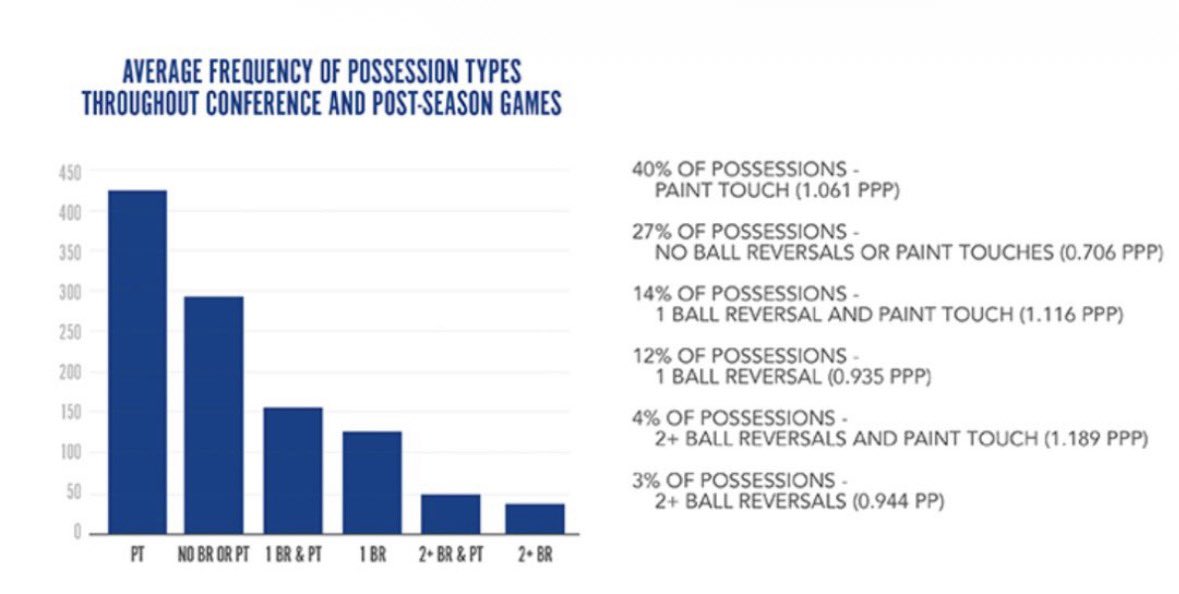
Data like this is extremely powerful. This is a study of 12 'high level D1 schools'.
Regardless of level, the goal is to get to 1.00 PPP. Out of any system/style, this data shows us the key to having an efficient offense is having an element of penetration and kick.
Paint touches, and paint touches + ball reversal limit the amount of straight line close outs. They also slow down defensive decision making, which keeps the offense in a big advantage situation.
PAINT TOUCH + BALL REVERSAL is a MUST in half court and secondary transition. Think DOMINOES.
An easy way to teach this is to constrain the score differently:
- no paint or ball reversal is +0
- paint touch is + 1
- paint touch + ball reversal is +2
- explain/emphasize hockey assists and TRACK THEM
@ShotTracker
Transactional vs. Transformational Coaching…
Dan Hurley shared a story about asking Geno Auriemma for advice after a rough start last season. Geno didn’t mince words:
“Listen, if the only gratification and the only part of coaching that excites you is winning the national championship, then you’ve lost your way, buddy! Where’s the joy in the things that you’ve always been about as a coach before you went on the championship run, like relationships with your players, like helping people get better, like making your team the best it can be. Be a coach, man. This is when you really need to be a leader. This team isn’t as good as last year’s, so what the hell are you going to do about it? Are you going home? Are you going to let this thing unravel?”
That’s the tension every coach feels:
Transactional vs. Transformational.
Transactional coaching is outcome-obsessed. It’s about the wins, the losses, the trophies. The problem? When results don’t come, your purpose crumbles with them.
Transformational coaching is different. It’s about people. It’s about growth. It’s about building something that lasts, whether the scoreboard agrees with you or not.
And this is why mentorship matters so much in coaching.
Left on our own, it’s easy to drift into a transactional mode without even realizing it.
A trusted mentor can pull us back to center and remind us why we started coaching in the first place.
To build relationships.
To develop players as people.
To make teams the best they can be.
Wins matter. But they’re not the why.
The why is impact.
The why is growth.
The why is leaving your players better than you found them.
The process is the prize. Stay grounded. Stay on the path.
Always remember your why.
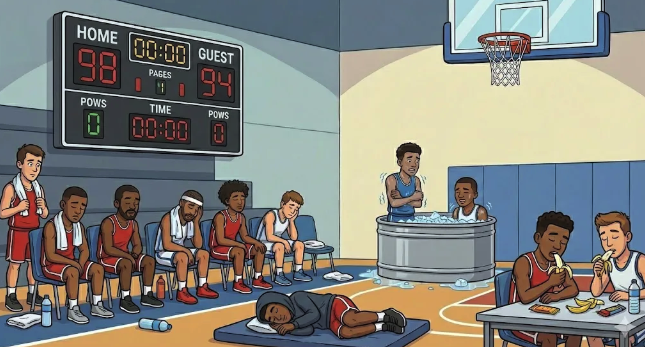
During #MarchMadness 🏀 recovery will be vital. 🔋 Clearly, recovery, including #nutrition, hydration and #sleep, from the fatiguing demands of the sport and schedule is critical to performance in the Big Dance!
Insights and links to 19 review papers👇
https://t.co/ZntyJlKUT7