"As coaches, we have the privilege and responsibility of shaping the next generation of youth players. It’s a task that becomes infinitely more rewarding when we prioritize fun, joy, and playfulness."
https://t.co/dnnpt5xV76
BLOG - 'The ‘Unknown Damage?’ caused from the sideline'
Every weekend all over the world millions of parents, children and coaches set off for their weekly sporting ritual ‘Match Day’. Many will follow the same process each week and will never question their routine or behaviour.
Many of these parents and coaches are well intentioned, trying to support their child and their team through match situations totally unaware of the damage they may be doing by overly involving themselves before and after but crucially during the game itself.
https://t.co/us3zB6qDzO
GUEST BLOG - 'How to raise a champion - try to relax!' by Steve Magness
When it comes to your child’s athletic pursuits, we can go a bit crazy. We can lose it on the sideline, yelling at the referee at their 8-year-old’s soccer match. We can stress over whether their kid is making progress and if he or she is good enough for the local academy or regional pathway programme.
Even those who keep their cool can get swept into the march towards these outcomes and maybe the allure of professional sport. We can hire private coaches, move schools to provide better opportunities, and go all-in, transforming their family into one dominated by whichever sport it is.
It’s natural to want our kids to succeed, to want the best for them. Occasionally, this behaviour is a result of us vicariously living through their children. But more often than not, our heart is in the right place. We want to support our child, to give them the best opportunity to succeed. Which is why a few recent conversations with a few former professional athletes struck me as interesting.
https://t.co/1QCwRcPqNG
“As a parent, there’s an element of freedom you have to give to a kid you want to become a real player. You have to be willing to cut them loose.”
“Raise a Player, Not a Puppet" >> https://t.co/pJROk3LE1g
~ via @CoachTDaugherty
Please stop screaming 'SHOOT IT!'
1) shooting should be a decision, not a reaction
2) instructions should only come from the coach
3) young players can only process so much info at a time
4) you're undermining their ability to make decisions
~from @AlanSteinJr
1. Layup lines … space is not given in the game; space is only taken … (replace with 1-on-1 Around the Arc).
2. Mikan drill … removes the very information that guides real shooting behavior … (replace with 1v1v1 in the Smile).
3. Fast break pattern drill … turns the game into a memorization task … (replace with advantage transition games so the break becomes a search for advantage, not a scripted route).
4. 3-man weave … teaches players to pass because it’s their turn … (replace with live defenders looking to disrupt so passing becomes perception again).
5. Cone dribbling drills … cones don’t play defense; they never reach for the ball … (replace cones with defenders and the skill starts to become basketball again).
6. Partner passing lines … teach players to throw passes; the game requires players to discover passes … (replace with Rondo Passing, where the pass becomes a decision again).
7. Spot closeout drill … offense and defense know exactly in advance what is coming … (replace with “Hot-Cold-Body” closeout variations. Now the closeout has to think).
8. 5-on-0 walkthroughs … removes the thing that defines basketball: opposition! … (replace by adding defenders so players learn what to do when somebody is trying to stop them).
The CLA does not mean simply replacing drills with small-sided games. The deeper question is: What information is regulating the player’s behaviour?
If players can perform a skill without perceiving anything important from the environment, then the activity is not representative of the game.
Note: The activity shown in the reel is not one of these drills. In this reel, players had to gather a ball before two bounces and find a finishing solution in a full-court, contested transition situation.
The Three-Phase Timeout
Regulate first. Instruct second. The order is what makes the instruction stick.
1. Emotional Reset ~15 seconds
Before anything tactical: eye contact, slow your own breathing, calm body language. Acknowledge the emotion without amplifying the panic. Players flooded with adrenaline can’t process coverages.
“I see the intensity out there, that’s good. We’re still in this game.”
2. Cognitive Reframe ~20 seconds
Shift focus to what’s controllable. Connect the pressure to something they’ve already mastered. This rebuilds confidence and gives the brain a concrete task.
“Remember what we worked on Thursday, tight closeouts on shooters. Let’s execute that for four possessions.”
3. Tactical Clarity ~20 seconds
Only now do you deliver the specific adjustment. A regulated player can absorb it. The same words in Phase 1 would be gone before they hit the court.
“Switch on ball screens. Pack the paint, make them shoot.”
Why it works: emotion gates cognition. Bring players to baseline, and the tactical point actually lands.
$10,000 a year for swimming. $20K for hockey. $30,000 for gymnastics + hoops. Youth sports are bleeding families dry and it's only getting worse. @StevePoliti with an incredible look at the dire, predatory atmosphere permeating today's youth landscape.
https://t.co/Cdzr8rOjkW
A PARENT’S JOURNEY THROUGH YOUTH SPORTS:
Age 5: “He’s got a cannon.”
Age 6: “He’s the fastest kid out there. Coach said so.”
Age 7: “Rec ball isn’t challenging him anymore.”
Age 8: “We tried out for select. Obviously made it.”
Age 9: “$2,800 for the season. Plus uniforms. Plus tournaments. Plus hotels.”
Age 10: “Cooperstown is basically a family vacation, right?”
Age 11: “He needs a hitting guy. And a pitching guy. And probably a mental performance coach.”
Age 12: “I’m not a crazy sports parent. The OTHER parents are crazy.”
Age 13: “We changed schools. For academics. (And also baseball.)”
Age 14: “Showcases are a requirement at this age.”
Age 15: “Ya his ranking just ticked up. We’re cooking.”
Age 16: “He just needs to get seen by the right school.”
Age 17: “The D1 schools want him to walk on. He’ll earn a spot by sophomore year.”
Age 18: “Okay, D2 is actually really competitive.”
Age 19: “He’s redshirting. Strategic.”
Age 20: “He’s focusing on school now.”
Age 21: “You know what? He’s so much happier.”
Roughly 7% of high schoolers play in college.
About 1.5% of those get drafted.
Less than half of draftees ever play one day in the big leagues.
The odds of our kids going pro are somewhere between “struck by lightning” and “find a $100 in old shorts.”
I love youth sports (all my kids play a bunch of them) just keep a good perspective my friends. ✌️
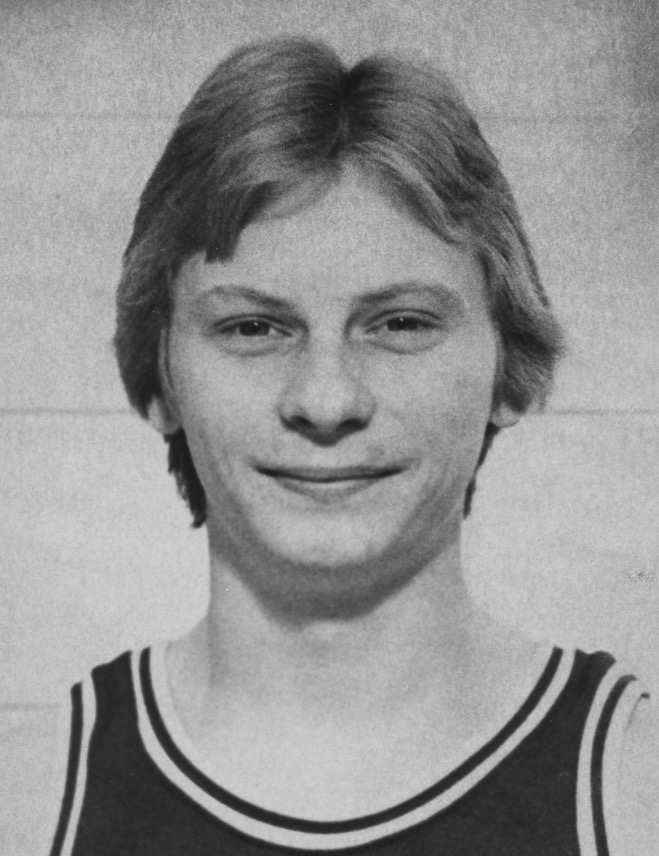
Congratulations to BU Sports Wall of Famer Rick DeGagne on being recognized with the Ted Earley Memorial Award - the @CanadaCboc's highest honour.
DeGagne was a member of the Bobcats' first-ever GPAC championship team that earned a silver medal at nationals in 1980.