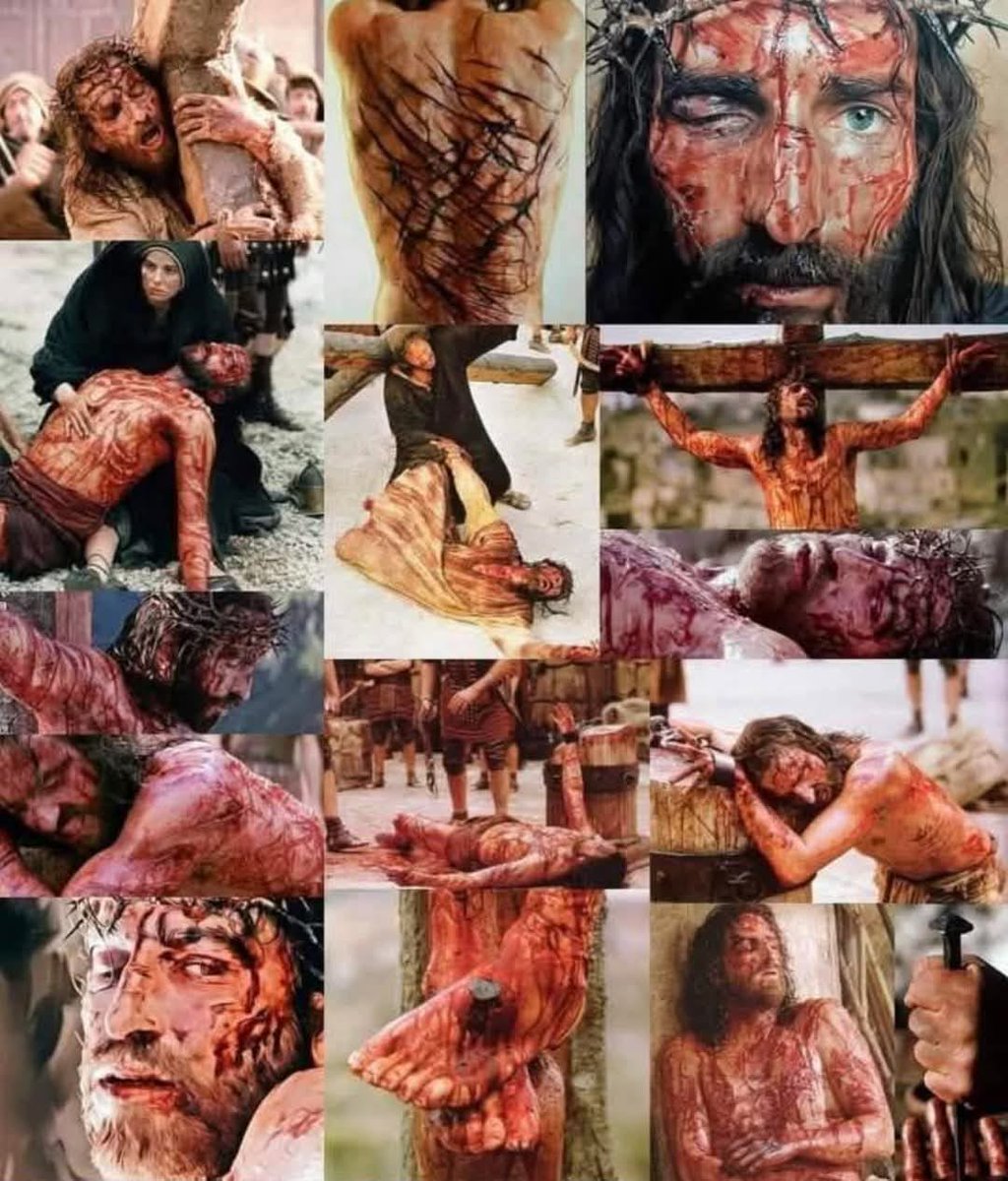
Jim Caviezel reflects on The Passion of the Christ and how important Christ's Passion truly is:
"When I was up there on the Cross, I learned that in His suffering was our redemption. Remember the servant is no greater than the master. Each of us must carry our own cross. There is a price for our faith, for our freedoms. I have been literally scourged, hit by the whips, crucified, struck by lightning, yes, open heart surgery — that’s what happens after five and a half months of hypothermia. ...
There was a lot of pain and suffering before the resurrection and your path will be no different. So embrace your cross and race towards your goal. I want you to go out into this pagan world and shamelessly profess your faith in public. The world needs proud warriors, animated by their faith. Warriors like St. Paul and St. Luke who risk their names and reputations to take their faith, their love for Jesus into the world."
How important is Easter to you?
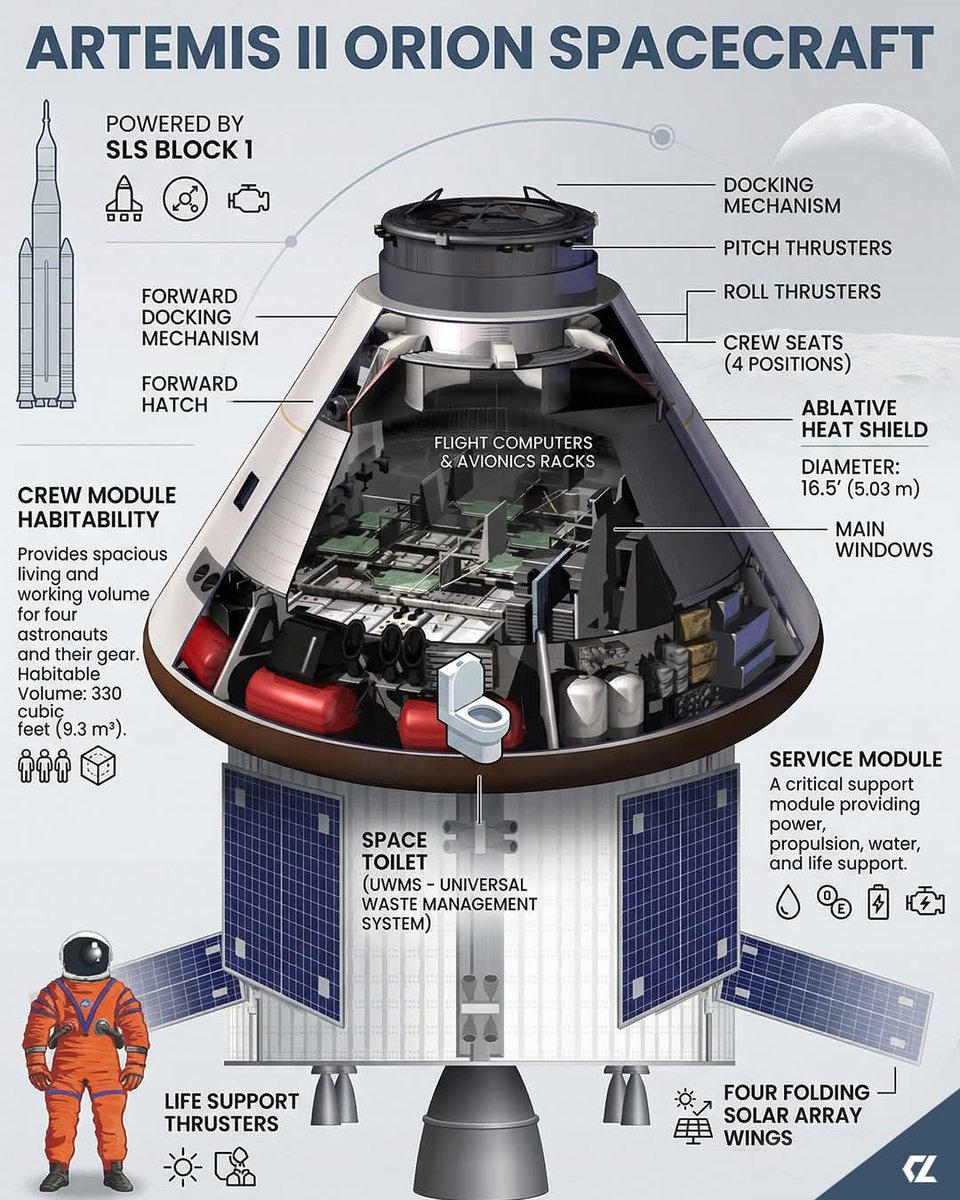
Peek inside the Orion spacecraft: how four astronauts live, breathe, and survive on a journey to the https://t.co/Zsaksjgcj9 the top sits the Crew Module — the astronauts’ home in deep space. Picture sharing a living space no larger than two minivans with three crewmates for weeks on end. This compact habitat is where they work, sleep, eat, exercise, and yes… use the famously tricky space toilet (microgravity makes even basic biology an engineering challenge). It’s an intensely intimate environment that tests both technical skill and human resilience every single day.Yet this small Crew Module would be lifeless without the powerhouse directly beneath it: the European Service Module. Built by ESA, this vital section is the spacecraft’s life-support engine room. It carries the main propulsion engines that will maneuver Orion around the Moon, massive solar arrays that generate electricity, and the sophisticated systems that recycle air, produce drinkable water, and maintain comfortable temperatures in the deadly vacuum of space.Together, the Crew Module and European Service Module form Orion — not just a spacecraft, but a carefully engineered oasis designed to keep humans alive and thriving in the harsh, unforgiving void of deep space.
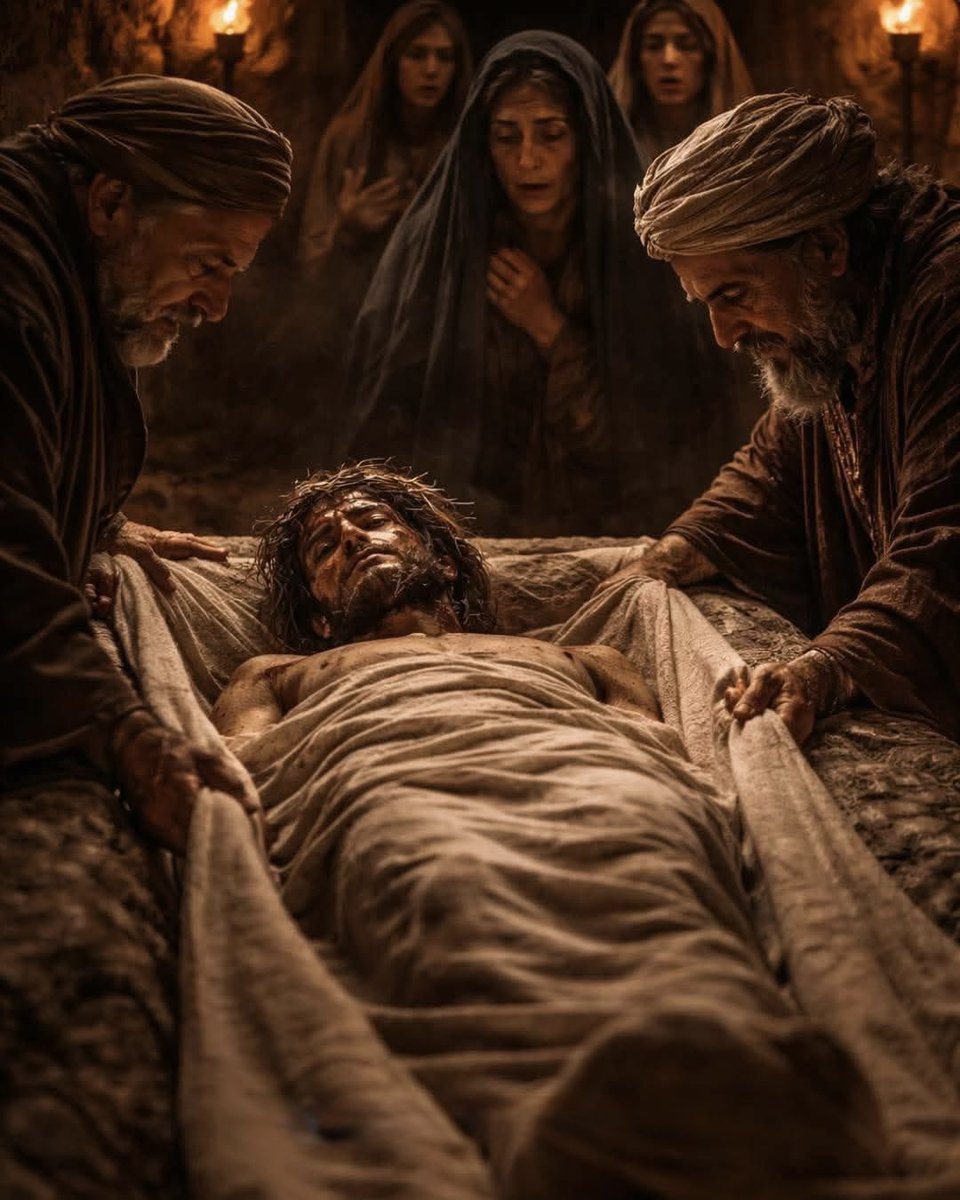
The Burial of Jesus🇻🇦
Most people rush past the burial of Jesus to get to the Resurrection, but if you slow down and sit in this moment, you will realize something powerful. The Son of God did not just die. He was carried, wrapped, and placed into a real tomb. Not a symbol. Not a metaphor. A cold, sealed place where dead bodies go. And that changes everything.
After Jesus breathed His last on the cross, a man named Joseph, of Arimathea stepped forward. He was a respected member of the council, someone who had been waiting for the kingdom of God. He went boldly to Pilate and asked for the body of Jesus. This alone is significant because aligning yourself with Jesus at that moment was risky. The crowds had turned. The leaders had condemned Him. Yet Joseph stepped in, took the body, wrapped it in clean linen, and laid Him in his own new tomb that had been cut out of rock. This is recorded in Matthew 27:59–60 and John 19:40–42.
Nicodemus, who once came to Jesus at night, now shows up in the open carrying a mixture of myrrh and aloes. About seventy-five pounds worth. That is not a casual burial. That is the kind of preparation given to royalty. They wrapped Jesus according to Jewish burial customs. Every detail matters. The same body that had been beaten, pierced, and crucified was now carefully handled and laid to rest.
This moment confirmed something the world needed to know. Jesus truly died. There was no illusion. No survival. No near-death experience. His body was lifeless. The burial removes every argument that tries to say He only fainted or somehow escaped. The Gospel stands on the reality that He fully entered death.
But here is where it goes deeper than most people realize. The tomb was new. No one had ever been laid in it before. That means there was no confusion about whose body it was. No mixture of remains. No possibility of misidentification. Heaven was removing every shadow of doubt before the Resurrection ever happened.
Even more, the act of wrapping Him in linen speaks louder than we think. Earlier in His life, when Lazarus came out of the tomb, he came out still wrapped in grave clothes and needed others to remove them. But when Jesus would rise, the grave clothes would be left behind. This burial is setting up a contrast. What holds humanity in death cannot hold Him.
Through the finished work of Jesus, this burial was not just the end of His life. It was the burial of sin itself. Scripture says He bore our sins in His body. That means when His body was laid in that tomb, everything that separated humanity from God was being put away with Him. Not managed. Not covered temporarily. Put away.
For us today, this means your old life has already been buried with Christ. You are not trying to bury your past. You are not trying to clean yourself up enough for God to accept you. In Him, your old identity has already been carried to the tomb. This is why Romans 6:4 says we were buried with Him through baptism into death, so that just as Christ was raised, we too might walk in newness of life.
Practically, this changes how you deal with guilt, shame, and past mistakes. When those thoughts come, you do not wrestle with them trying to fix yourself. You remind yourself that what you are being accused of has already been buried. It has already been placed in the tomb with Jesus. You are not that person anymore.
And this is where rest comes in. You do not have to strive to become new. You are living from what has already been finished. Just like His body was fully placed in that tomb, your old life was fully dealt with. Nothing was left undone. You can rest knowing that when the stone was rolled in front of that tomb, it was not just sealing His body inside. It was sealing your old life away for good.
Our Lord Jesus Christ has died, and is now buried.
But Sunday is coming🇻🇦
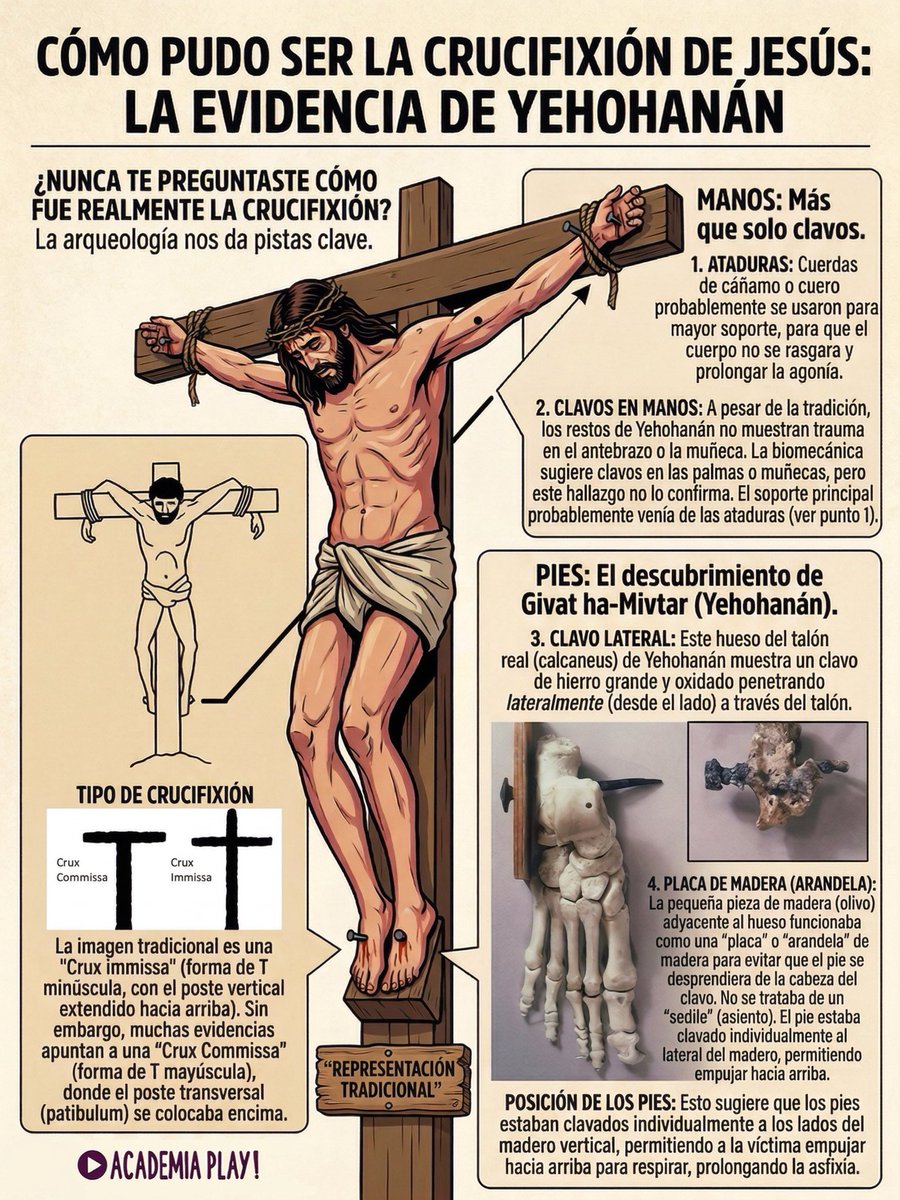
¿Te has preguntado alguna vez cómo era realmente una crucifixión romana? La arqueología nos dice que la imagen tradicional que todos tenemos en mente podría no ser del todo exacta.
Antes no te pierdas este vídeo. JESÚS DE NAZARET: Todas las pruebas escritas y arqueológicas de su existencia 👉🏻 https://t.co/eR1svgVEdt
Todo lo que sabemos hoy con rigor científico sobre este método de ejecución proviene de un hallazgo único en el mundo: los restos de Yehohanán, un joven del siglo I d.C. encontrado cerca de Jerusalén en 1968. 🦴⛏️
Esto es lo que nos cuenta la ciencia sobre la crucifixión:
Los pies no estaban juntos al frente: El hueso de su talón tenía un clavo de 11.5 cm atravesado lateralmente. La víctima tenía que poner una pierna a cada lado del poste. Además, los romanos usaban una pequeña “arandela” de madera de olivo para que el pie no se desgarrara de la cabeza del clavo.
¿Clavos o cuerdas? Aunque la tradición muestra clavos en las palmas, los restos de Yehohanán no tienen marcas de trauma en los brazos. Los arqueólogos concluyen que, muy a menudo, los brazos se ataban al travesaño con cuerdas de cáñamo para dar soporte y prolongar la agonía.
El debate de la cruz en "T" y el letrero: Lo más común en Roma era la Crux Commissa (forma de T mayúscula), donde el palo horizontal se encajaba justo arriba del vertical. Pero aquí viene el detalle clave: los Evangelios dicen que a Jesús le pusieron un letrero (el INRI) por encima de su cabeza. Esto sugiere fuertemente que, en su caso específico, sí se usó la tradicional Crux Immissa (en forma de "t" minúscula) para tener espacio donde clavar el cartel.
EL MATIZ MÉDICO: La teoría tradicional (que menciona la infografía) dice que la víctima debía empujar con las piernas hacia arriba para poder respirar, muriendo finalmente de asfixia. Sin embargo, patólogos forenses modernos debaten esto. Estudios recientes sugieren que, más que asfixia pura, la causa principal de la muerte solía ser un shock hipovolémico (pérdida severa de sangre y líquidos) o un paro cardíaco inducido por el trauma extremo y el dolor.
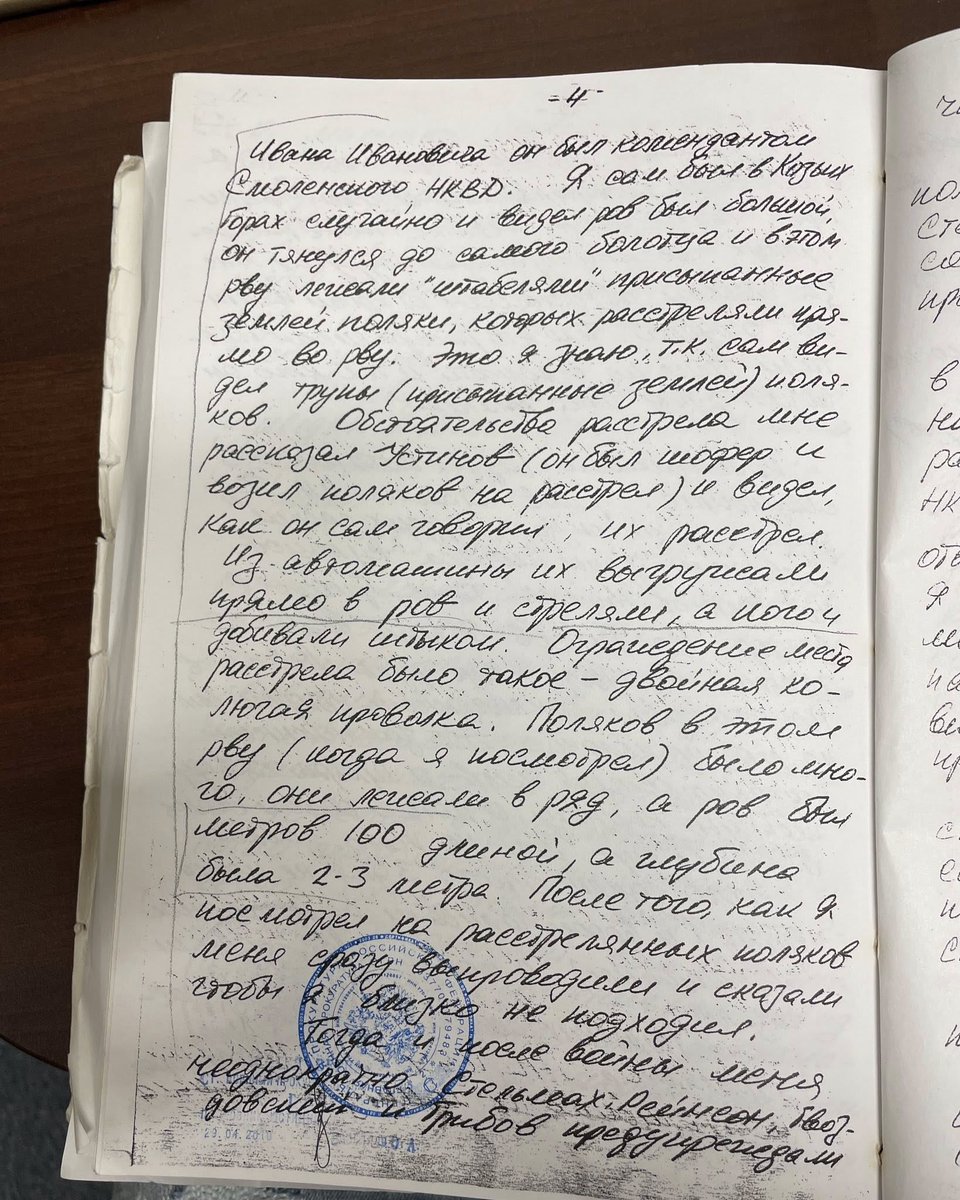
⏳ Из материалов "Катынского дела" Главной военной прокуратуры РФ. Фрагмент допроса сотрудника госбезопасности Смоленской области с 1930 по 1975 г., члена ВКП(б) с 1940 года, Климова Петра Фёдоровича:
«…На братском кладбище хоронили мало, а в основном расстрелянных возили в Козьи Горы, там больше десятка тысяч расстрелянных советских граждан и других. Мне за мойку автомашин от крови платили 5 рублей. Тем кто расстреливал, платили тоже по ведомости, и тем кто вывозил трупы, тоже платили.
Польских военнослужащих расстреляли в 1940 году в Козьих Горах. Расстреливала их команда Стельмаха Ивана Ивановича. Он был комендантом Смоленского НКВД. Я сам был в Козьих Горах, случайно и видел: ров был большой, он тянулся до самого болотца, и в этом рву лежали штабелями присыпанные землей поляки, которых расстреляли прямо во рву. Это я знаю, т. к. сам видел трупы (присыпанные землей) поляков.
Обстоятельства расстрела мне рассказал Устинов: (он был шофер, возил поляков на расстрел) и видел, как он сам говорил, их расстрел. Из автомашины их выгружали прямо в ров и стреляли, а кого и добивали штыком. Ограждение места расстрела было такое — двойная колючая проволока. Поляков в этом рву, когда я посмотрел, было много, они лежали в ряд, а ров был метров сто длиной, а глубина была 2—3 метра. После того как я посмотрел на расстрелянных поляков, меня сразу выпроводили и сказали, чтобы я больше близко не подходил
Тогда и после войны меня неоднократно Стельмах, Рейнсон, Гвоздовский и Грибов предупреждали, чтобы я молчал. Устинов, Грибов мне говорили, что польских офицеров военнослужащих расстреливали Стельмах, сам Грибов, Гвоздовский, Рейнсон Карл. Они были самые заправилы при расстрелах, других не помню.
Поляков на расстрел привозили в вагонах по железнодорожной ветке на станцию Гнездово. Охрану места расстрела осуществлял конвойный полк НКВД.
Все мною сказанное — правда, ответственность за клевету мне понятна, я сказал всю правду. Написано по моей просьбе (т. к. у меня не гнутся пальцы) Закировым Олегом Закировичем, мне все прочитано, записано правильно.
Еще хочу добавить, что тем кто стрелял людей, и тем кто возил, давали спирт и закуску бесплатно. Они еще, помню, после расстрела мыли руки спиртом. Я тоже руки протирал руки спиртом, после того как смывал кровь. Спирт еще хранился у меня в подвале, а закуску брали в столовой (колбаса, осетрина и др. продукты)…»
Записано 29 августа 1990 г.
La Liberación de Barrabas es un claro ejemplo de como la "Democracia" en manos de Manipuladores puede condenar a un inocente y liberar a un culpable. La voluntad de una mayoría acotada puede condenar a generaciones...
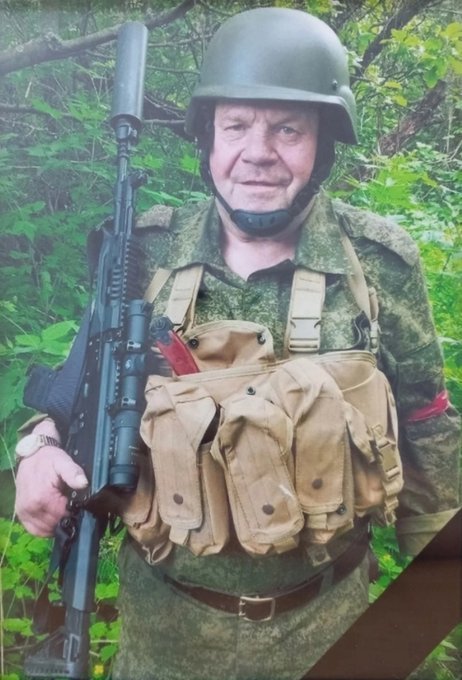
Russians drove up to Ukrainian Armed Forces positions… and simply surrendered.
Entire crews approached in tanks and BMPs right up to Ukrainian trenches, stopped, opened the hatches, and said: “Take the equipment, just don’t shoot.” Soldiers and officers came out with their hands raised; some even helped move the tanks onto Ukrainian positions.
Within a few hours, our fighters received dozens of operational Russian vehicles along with ammunition. The Russians were surrendering en masse—without a fight, without resistance, as if they were simply tired of the war.
Passion of The Christ🇻🇦🩸
“Mel Gibson warned actor Jim Caviezel that playing the character of Christ was going to be very difficult and that if he accepted, he most likely would be marginalized by Hollywood.
Caviezel asked for a day to think about it and his response to Mel who was funding and directing the movie was: "I think we have to make it, even if it is difficult." And something else, my initials are J.C., and I am 33 years old. "I didn't realize that until now."
Mel responded with “You're really scaring me you know.”
During filming, Jim Caviezel who plays the part of Jesus lost 45 pounds, he was struck by lightning, he was accidentally struck twice during the scourging scene leaving a deep 14-inch scar, he dislocated his shoulder when the cross was dropped into the hole with him on the cross. He then suffered pneumonia and hypothermia from being nearly naked with only a loin cloth on the cross for endless hours. The crucifixion scene alone took 5 weeks of the 2 months of shooting.
His body was so stressed and exhausted from playing the role that he had to undergo two open heart surgeries after the filming production.
Jim explained, “I didn’t want people to see me. I just want them to see Jesus. Conversions will happen through that.”
Almost like a clairvoyant prediction many amazing things happened.
Pedro Sarubbi, who played Barabbas, felt that it was not Caviezel who was looking at him, but Jesus Christ himself, as he played that role he said of Caviezel, “His eyes had no hatred or resentment towards me, only mercy and love."
Luca Lionello, the artist who played Judas, was an avowed atheist before shooting began. He eventually converted, and baptized his children.
One of the main technicians working on the film was a Muslim converted to Christianity.
Some producers said they saw actors dressed in white they didn’t recognize during one of the filming sessions, and when they reviewed the recordings they realized they couldn’t see them in that footage.
The Passion of the Christ is the highest grossing US religious as well as the highest R-rated film of all time, with $370.8 million! Worldwide, it grossed $611 million.
More importantly, it has reached 100’s of millions of people around the world.
Mel Gibson paid $30 million out of his own pocket for the production of the film because no studio would take on the project.
Today Jim Caviezel simply and boldly proclaims his faith in Christ, and the miracle it was for him to represent Christ as an actor and a greater believer of Christ because of this experience.
This is what Jesus Christ endured…
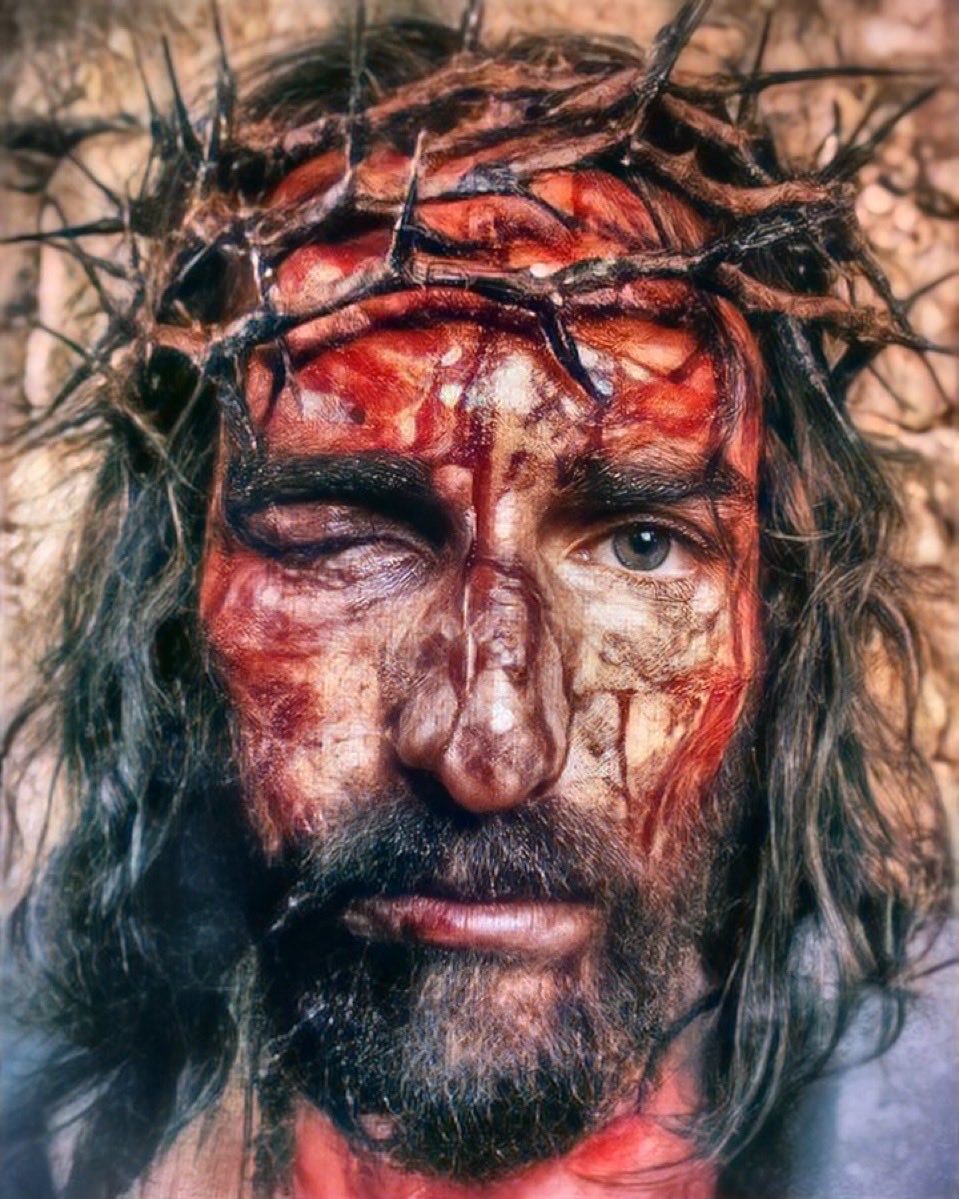
A crown of thorns… not a small ring, but forced down over His entire head like a helmet. Thick thorns—long, sharp, unforgiving—driven into the scalp, one of the most sensitive parts of the human body. Every movement… every breath… pushing those thorns deeper, blood running down His face into His eyes.
Iron nails… not small, but heavy, square spikes. Driven through His wrists and feet with force. The kind of pain that shocks the entire nervous system—sending fire through every nerve. Each breath required Him to push up against those wounds, grinding bone against iron just to inhale… and collapsing back down in agony to exhale.
The scourge… a Roman whip with multiple leather tails, each embedded with bone and metal. Every strike didn’t just bruise—it tore. It ripped flesh open, exposing muscle. Again and again, until His back was no longer whole… but shredded.
This wasn’t quick.
This wasn’t merciful.
It was prolonged… calculated suffering.
And He didn’t resist it.
He didn’t stop it.
He chose to endure every second of it…
For you.
And before he died he asked the father to forgive you.
Wow….
День памяти.
36 лет назад в Москве умер
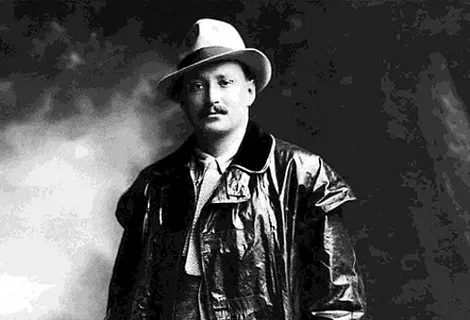
Эрнст Генри (1904-1990),
он же Семён Николаевич Ростовский, настоящее имя - Лейба Абрамович Хентов.
До сих пор не приходилось писать о человеке с такой фантастической судьбой. Перечислю только достоверные факты и поделюсь источниками.