I like simple tokenomics.
Ex: If a protocol generates revenue, then stake the Token for a % of protocol revenue.
Be careful of overly complex Tokenomics.
1) There are more points of failure
2) Or maybe it's designed to be complicated on purpose to confuse people.
Today an NFT started minting with a function which unfortunately which lets anyone drain all their ETH
A few hours later there was an MEV bot skirmish over the ETH in this contract, here's a short thread with some details
3 years ago tonight I went to bed drunk and heartbroken for what I quietly prayed would be the last time. The next morning, I would wake up and choose freedom 🙏🏻
🗣️ Announcing Hoopers United! 🏀💫
Don't miss this NFT collection dropping TOMORROW! @hoopersunitenft will celebrate all @TheWNBPA players & will support voting rights.
50% of proceeds go to @TheWNBPA & Rock The Vote!
🎨:@HeartlentGroup
📰:@justwsports
https://t.co/kjlKlexfut
how does the NYT still get this so wrong? this is literally false. a bitcoin transaction does not "require" any amount of energy. hack academics erroneously _correlate_ energy (mainly due to issuance) to individual "txns" (bundles of outputs). there is no "requirement"
So let me get this straight, the cost of mining and maintaining #bitcoin network is more than the cost of the US defending the full faith and credit of the dollar?
Have you looked up the MPG of a Humvee lately? $ARBK $RIOT $MARA
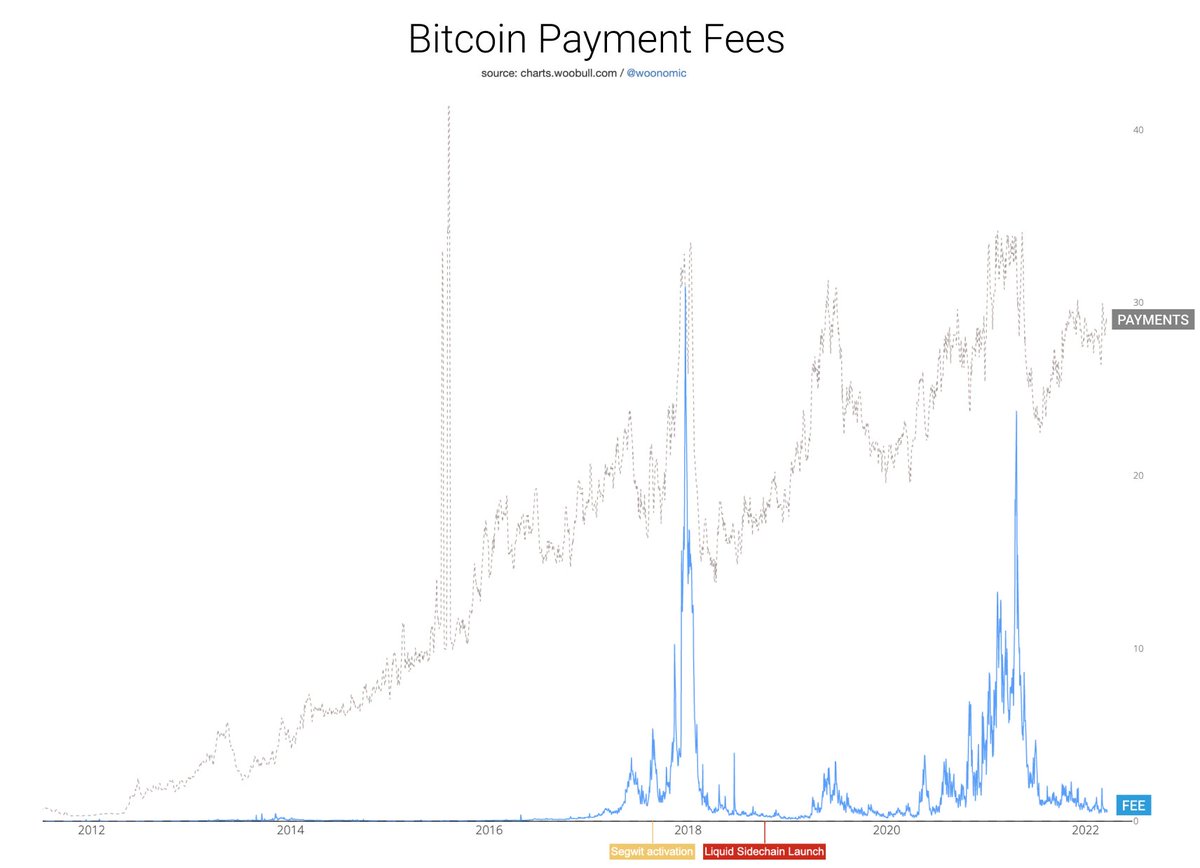
Today, the average payment on the BTC L1 network costs 55 cents in fees, the equivalent to 11kWh in electricity. This is 1/1000th of what a US house consumes in a year.
In other words, the NYT article stated a number 200x higher than the truth.