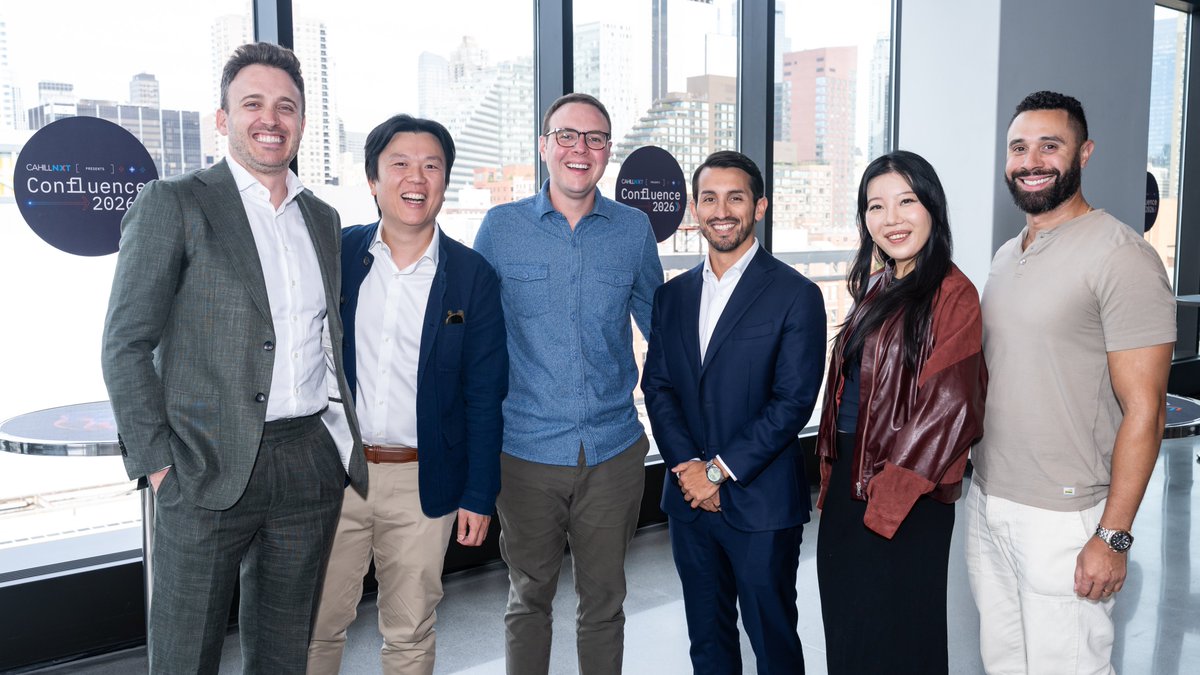
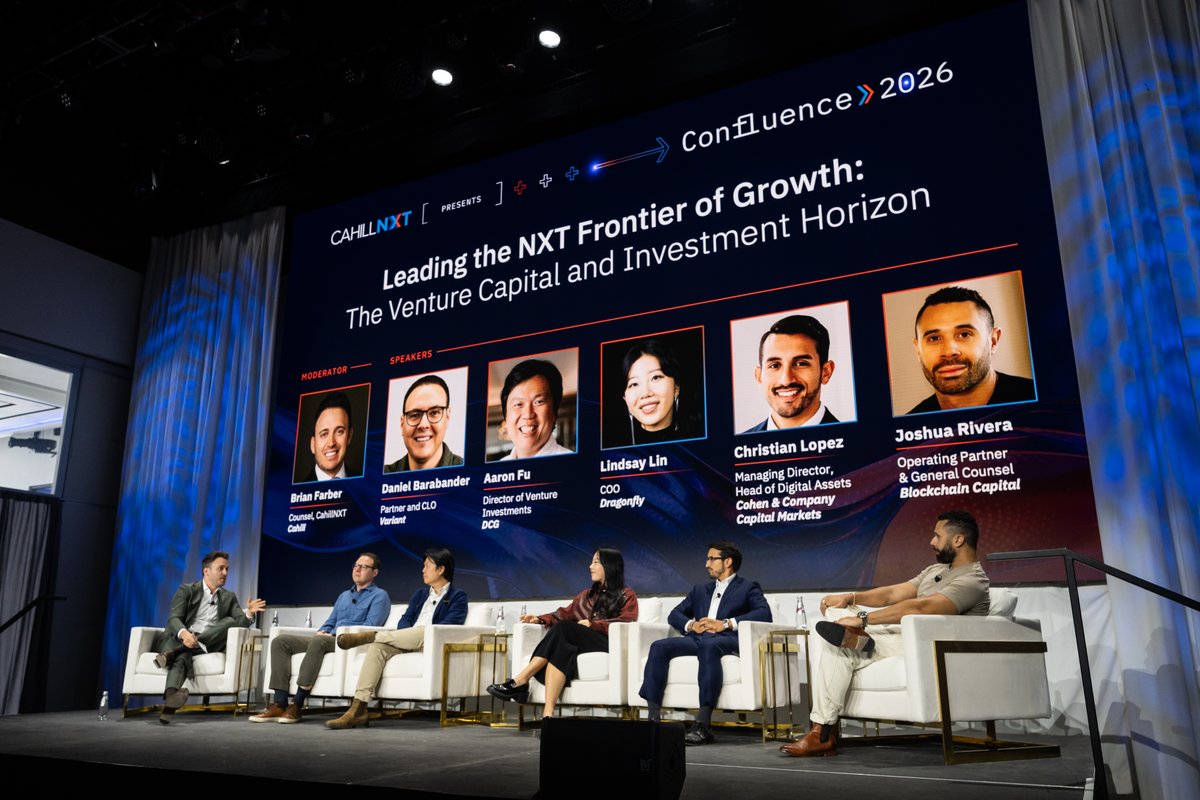
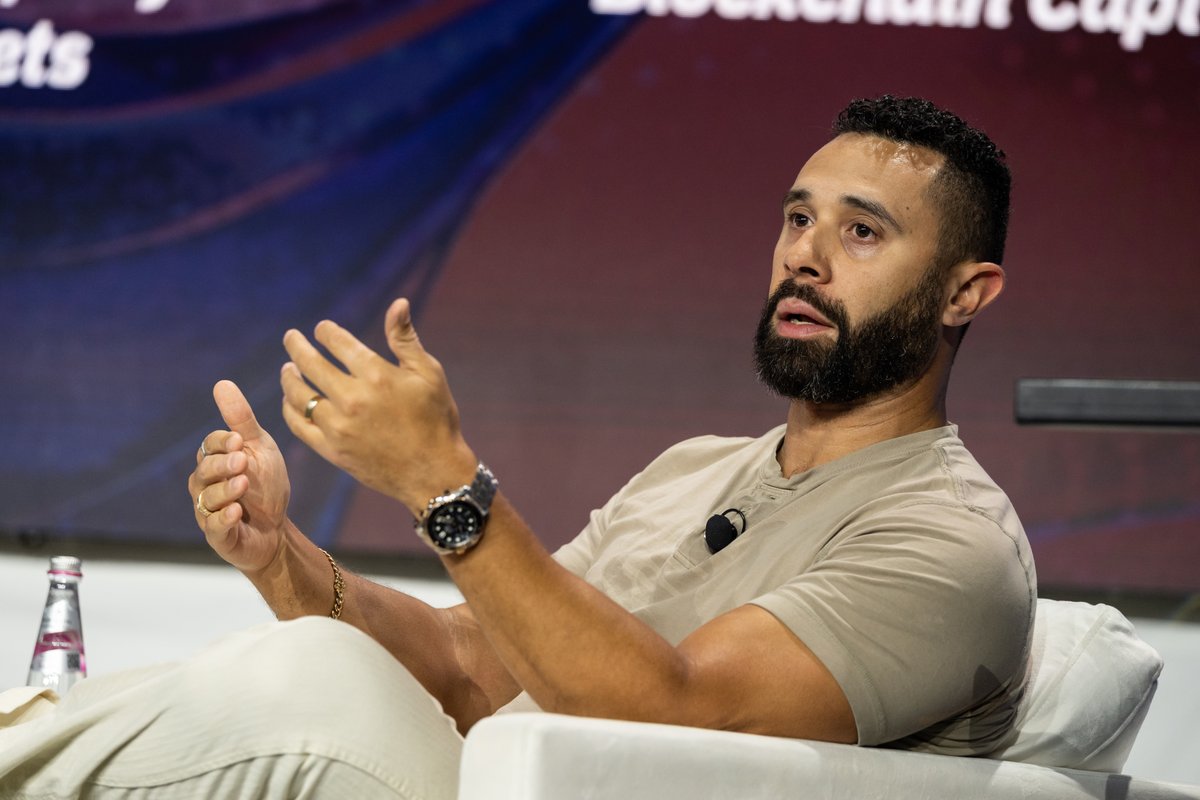
Early-stage crypto founders often go beyond building products, setting the rules for entirely new ecosystems of social and financial incentives. Over our 12 years of investing in these visionaries, we’ve learned to look for the key qualities that define what it means to be a true founder.
Read more from BCAP Partner @yuan_han_li ↓
This was a fun convo at @money2020 on the future of prediction markets.
The real innovation of prediction markets is using markets to improve our ability to understand the future.
Sports has driven a lot of volume so far bc there's a big existing market for it, but the whitespace that I'm personally excited about is new event markets like company KPIs, macro indicators, clinical trials etc, where the markets can aggregate new and better information than what we currently have.
What is next for prediction markets?
Our GP @alekslarsen took the stage at @money2020 to discuss the opportunities ahead with @RobinhoodApp VP and General Manager of Futures and Prediction Markets @JBMackenzie_.
Thank you, @PulchraMens, for moderating the conversation!
Just 3 years ago, deepfakes on a single call could cost a company millions in losses. Today, @world_id allows human Zoom call participants to prove they are human as well as agents to carry Proofs delegated by a person. Excited for this team!
In 2024, an employee at engineering firm Arup transferred $25.6 million after joining a video call where every other participant was a deepfake. Since then, AI has advanced significantly and is making impersonation increasingly convincing, causing challenges for financial institutions in particular. As autonomous agents begin handling more financial activity on behalf of people, establishing an added layer of trust and security behind a transaction or sensitive conversation is becoming an urgent need.
Introducing @world_id for banking and finance, a suite of technologies that helps institutions establish trust through privacy-preserving cryptographic Proofs. World ID for Zoom lets meeting participants confirm they are the same Orb-verified human connected to their account, while World ID for agents allows AI agents to carry Proofs delegated by people. Bain Capital, OpenExchange, Outtake, Pantera Capital, and VanEck Funds are initial design partners, bringing World ID into some of finance's most consequential interactions.
https://t.co/NakSyrdBtq
One of my bull cases for AI is that it will make uniquely human interactions 100X more valuable.
- Ithaca acquiring Bumble
- Longtime Endeavor/WME talent agency leader Ari Emanuel going "all in on live" with his new company, MARI
- Rise of experiential retail
The list goes on...
Congratulations to @trmlabs on the launch of Ardence! Proud to support a team building modern, AI-powered tools supporting private and public investigators.
Introducing ✨Ardence✨, TRM's AI investigation platform for all-source intelligence.
Follow connections across sources, keep the source trail, and put investigator judgment at the center of the work.
Learn more 👉 https://t.co/vOLgkC3pVq
Flow State Lounge is coming to SF 🌉
A late-night coworking base for founders + technical teams during Open-source AI Week
Tues, Oct 20 · 8pm–2am · House of AI
https://t.co/21ayrdypGl
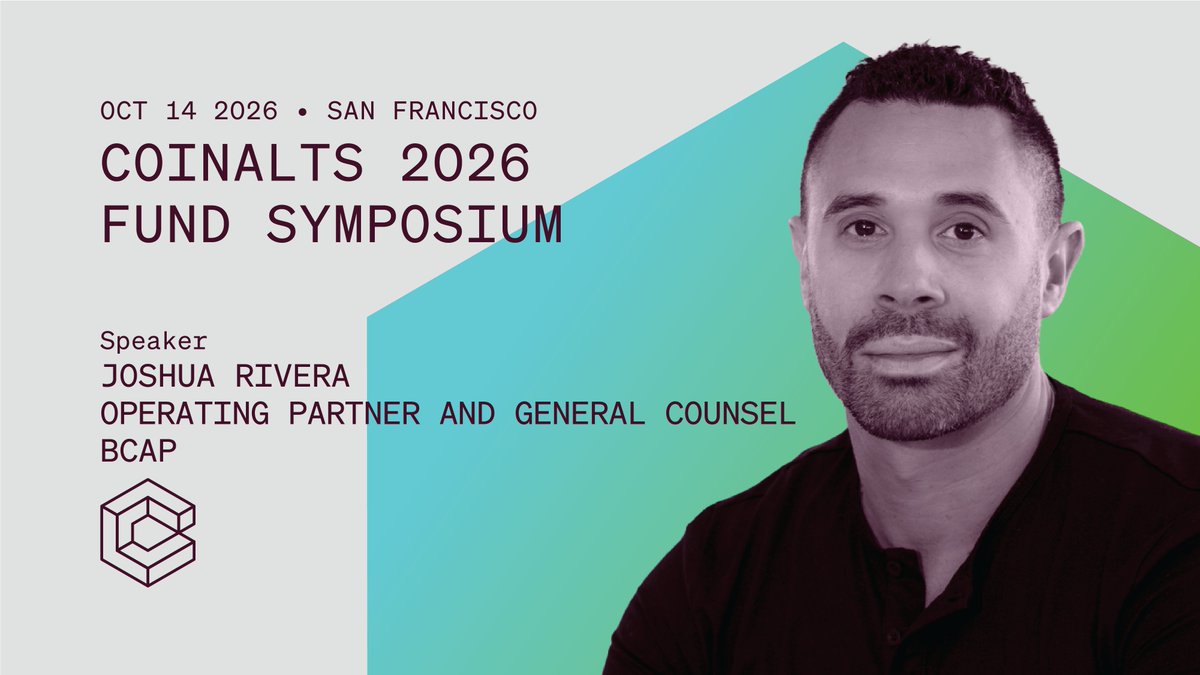
🎤 Thrilled to announce Joshua Rivera, Operating Partner & General Counsel at @bcap, as a @coinalts 2026 speaker! Joshua brings a rare lawyer-and-investor, founder-first perspective.
Oct. 14 | 📍 Hyatt Regency SF
🔗 https://t.co/TrJrdjFuzn
#CoinAlts2026#BCAP#VC#CryptoLaw
Anchorage Digital is expanding its global footprint.
USD accounts, available to eligible institutional clients through Anchorage Digital Bank N.A., are now also available through Anchorage Digital Singapore.
It’s time to upgrade how you bank.
We bring USD accounts, digital asset custody, global SWIFT wires, and 24/7 settlement onto a single platform.
More ⬇️
https://t.co/RwtkKKOX2d
Open an account: https://t.co/5B0PkHfOFa
One argument for these expert data markets being somewhat durable is that there’s a lot of really niche knowledge in the world. There are so many professions and specialties, like certain areas of medicine, where much of what you learn on the job is not yet written down.
As a result, there may be a last-mile problem. Maybe we get the models 90% of the way there for some proffessions, but the last 10% is as hard as the first 90%. Then the same may be true for the next 1%, and the 0.1% after that. There will always be surface area the model hasn’t touched.
So, in the limit, yes, the waterline on these models could be better than humans, but this regime where there is still useful data on the margins may persist.
FWIW, I’m not taking a side yet on the durability of these markets. I’m more just thinking out loud. What do others think?
Part of why crypto gaming hasn't taken off yet is the difficulty of developing great games, meaning you really needed to win the hearts of great game developers. Now that AI lets smaller teams build increasingly ambitious games at lower cost, it feels like a great time to build at that intersection.
People are quick to write off entire categories in bear markets, but stronger property rights are a natural fit for games
It’s no secret that AI is getting really good at hacking, and financial infrastructure is the obvious target. Why? Because the purpose of most hacks is ultimately to steal money. So why not cut to the chase?
One of the most obvious attack surfaces is agentic commerce. It’s still incredibly new, and unlike traditional software, AI is non-deterministic and vulnerable to things like prompt injection, hallucinations, etc. There’s a huge opportunity to build the security layer around it.
Importantly, solving the security problem is probably a gating condition for agentic commerce adoption. People are not going to hand agents meaningful financial authority if hacks are happening everywhere. In that sense, the companies solving security are also expanding their own TAM by making the market itself viable.
There’s plenty of historical precedent. Every major financial innovation, from credit cards to online banking, created new security risks and, in turn, new security companies and infrastructure to address them.
And who better to take on this problem than the leaders in blockchain security? Crypto has been one of the most adversarial financial environments in the world, where the code you’re securing is often literally open source to attackers and successful exploits can directly unlock money.
Awesome to see the leading crypto security team, @blockaid_, thinking about this problem. This will be an exciting one to follow.