In “Jimmy,” Yashaddai Owens took his Bolex film camera to Istanbul and Paris to show a gifted author before he became a literary quasar. https://t.co/VX5kezJ9Lr
"behind the facade of 'charitable giving' is a profoundly anti-democratic tax loophole that allows the super-wealthy to effectively substitute their priorities for what would otherwise be public priorities."
thanks for citing our research <3 @IPS_DC
We tend to think of “charitable giving” as unambiguously good because we equate “charities” with organizations that help the poor and equate “giving” with generosity. But both assumptions are wrong. https://t.co/suPlDqyICw
"By repeating his stories, slightly different each time, Spalding Gray constituted himself through performance. At some point during the fourth quarter of the game, I realized I was watching the Knicks do the same."
my 🐐 @JulianaDeVaan bringing woke back to the Alamo:
“We exchanged an oddly guttural ‘Knicks in Five,’ which sounded less like a coherent series of words than two animals of the same species recognizing each other in the wild.”
https://t.co/fzmZtqovDB
"what is at first glance a case of hypocrisy at a single sponsor warns of what can happen when financial institutions position themselves at crucial choke points of democracy."
great piece from @DanPetegorsky@IPS_DC on DAF sponsors, SPLC, + leonard leo:
https://t.co/5q0tC0pAS4
fab visualization by @HelenofIPS of the top 20 U.S. charities over the last 34 years:
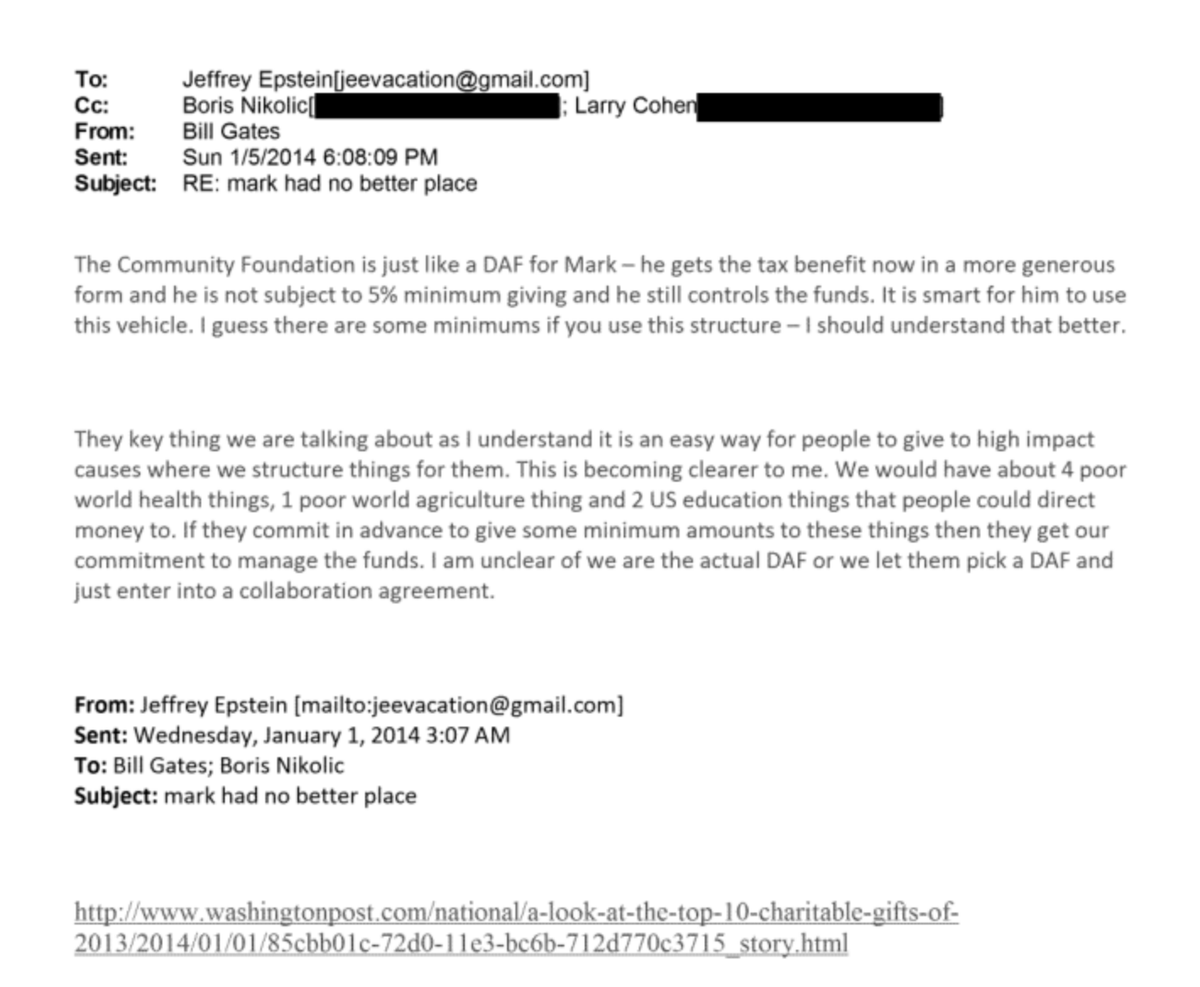
the most important story in 21st century philanthropy is the rise and (concerning) dominance of donor-advised funds, which don't have payout or adequate transparency requirements
@IPS_DC
it sounds obvious but the fact that almost all original signers **cannot stop getting richer** is what makes the Giving Pledge so easy to criticize. the right will take advantage of anything! it's far past time for voluntary efforts w/ teeth, new regs, + wealth redistribution.
I spent the last few months talking to people around The Giving Pledge about a bygone era of philanthropy.
There is an attack campaign against the Pledge led by none other than Peter Thiel.
My reported essay for NYT Sunday Business is out today.
per @Philanthropy's data, over $13.1 billion (or over 58%) of "gifts" from America's 50 biggest donors traveled into foundations & donor-advised funds in 2025.
money flows out of them... but basically everyone's getting richer, reaping tax benefits, + retaining control.
The Chronicle's exclusive Philanthropy 50 is out. @MikeBloomberg tops the list for the third straight year with $4.3 billion in 2025 giving. America's 50 biggest donors gave $22.4 billion total. View the full list at: https://t.co/ZcNqZO2NzN
#PHIL50
"I wanted to inspire really rich people — billionaires — to pony up some dough," @craignewmark tells Ben Gose @Philanthropy.
More on the new Giving Pledge signatory, who calls Leonard Cohen his rabbi and loves CUNY, ft. our @IPS_DC take:
https://t.co/IfZFYGN459
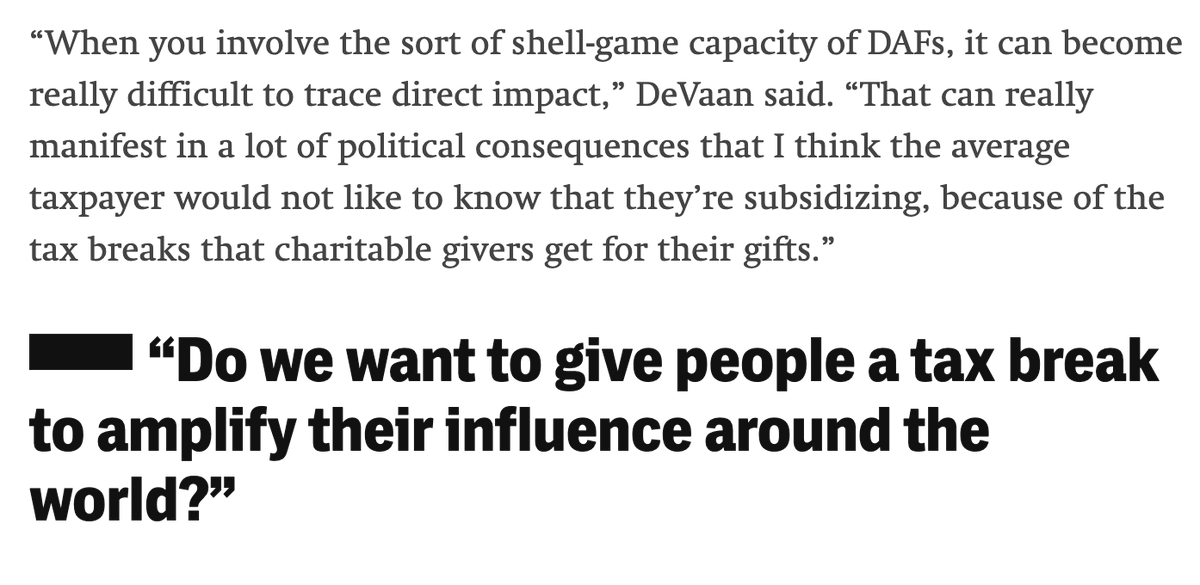
“It’s a way to rinse your name off of any kind of donation that could be perceived as controversial or something that you just want to keep anonymous publicly,” DeVaan said.
Melinda French Gates on our @IPS_DC Giving Pledge at 15 report findings:
"I wish we had been even more successful with the pledge than we have been to date... I believe to whom much is given, much is expected, and they should be giving back more. Far more than they are."
On this week’s episode of The Big Interview podcast, the philanthropist offers her insights on billionaire donors, kids on phones, and the importance of women’s health care. https://t.co/SXUupzboxk
“One-third of all newspapers in America closed between 2004 and 2025. When newspapers close, local businesses commit more legal violations, local government borrowing costs grow because of decreased public scrutiny of spending decisions, people vote less…” https://t.co/InauUi0f0D
NEW: Since 2010, some 14% of our country's billionaires have pledged to give away at least half of their wealth. Instead, most of them have collectively grown far, far richer, IPS @inequalityorg researchers found.
IPS scholar @bdevaan on @katiecouric:
https://t.co/5HyhHwi3S0
It’s fair to ask, writes @David_Moscrop, “what good a several times–removed, tax-deductible donation from a tech billionaire does for someone struggling to make ends meet within an economic system designed by and for that same billionaire to preserve their wealth and power.”
Most Giving Pledge dollars never reached the public, flowing instead to private foundations and donor-advised funds while billionaires grew richer, bought reputations for generosity, and handed back scraps to the people who made their fortunes. https://t.co/p9AtIZRchb
Not surprisingly, Starbucks declined multiple requests for comment from @msainat1 of @guardian on our new CEO pay report. This quote from our co-editor @SarahDAnderson1 will help you understand why they took a pass.