The Ebola outbreak in eastern DRC and Uganda has now passed 1,000 cases. But @UNICEF is there on the frontlines, working hard to stop it.
Since the outbreak started, UNICEF has surged additional resources, emergency medical supplies, and expert outbreak response staff to the affected areas – all while ensuring vital humanitarian services continues to be delivered.
Faced with a rapidly spreading virus in a challenging humanitarian setting, this kind of rapid, comprehensive response is critical to ensuring health services continue while we work to contain the outbreak.
Read more about the response: https://t.co/dJVaHJDdqq
Yesterday, @UNFoundation, @IFRC, and @UNICEF hosted an event at #WHA79 on how to sustain lifesaving health services during humanitarian crises.
One takeaway: Health services in place for #malaria and #polio can be leveraged to keep communities safe from other deadly diseases.
ICMYI: $2b in global health funds are expiring in September – including $250m for malaria.
That’s $2b that could save lives and keep Americans safe from malaria. It needs to reach the programs where it can make a difference.
Read the explainer: https://t.co/ktw62aG3j7
It's impossible to count how many people Ted Turner helped in his life. He gave $1B to start the UN Foundation, which helped me begin the anti-malaria campaign Nothing But Nets, which raised $80m and saved millions of lives and grew thanks to people like @StephenCurry30 ... RIP.
The United Nations Foundation community is mourning the loss and honoring the life of our Founder and Chairman Ted Turner.
Read the statement from our President & CEO and Board Co-Chair: https://t.co/gu6eNMDfym
Yesterday, the House Appropriations Committee approved a foreign affairs spending bill for FY27. It includes strong funding for malaria – but the process is just getting started.
For more on what's in the bill and what's next, check out our latest blog: https://t.co/rFqfCGbgsI
Latin America has been making huge strides in the fight against malaria. To date, 20 countries have eliminated the disease. How did they do it?
Read the new report for key lessons from elimination in the Americas and how other countries can do the same: https://t.co/SNTtveH0g5
On #WorldMalariaDay, we recognize the enormous successes of malaria programs since 2000 – and the need to double down on the investments and innovations that will allow us to sustain it.
Read more: https://t.co/pa9B6lNjda
For a long time, malaria felt like an unavoidable part of life.
Today, in Burkina Faso, mothers describe something different: less anxiety and better protection for their children — thanks to the malaria vaccine. Learn more from @Gavi https://t.co/Ruqg6AQNCz
Did you know the early warning systems developed for malaria also help catch outbreaks of novel and emerging disease threats?
Check out this episode of Global Dispatches with @marklgoldberg to learn how: https://t.co/wI4M5jew7q
With Congress debating the budget for FY27, it's important to remind them: U.S. malaria programs have saved millions of lives – but to win this fight, strong funding needs to continue.
Tell Congress you support full funding for malaria programs in FY27: https://t.co/4gmTOr73Wk
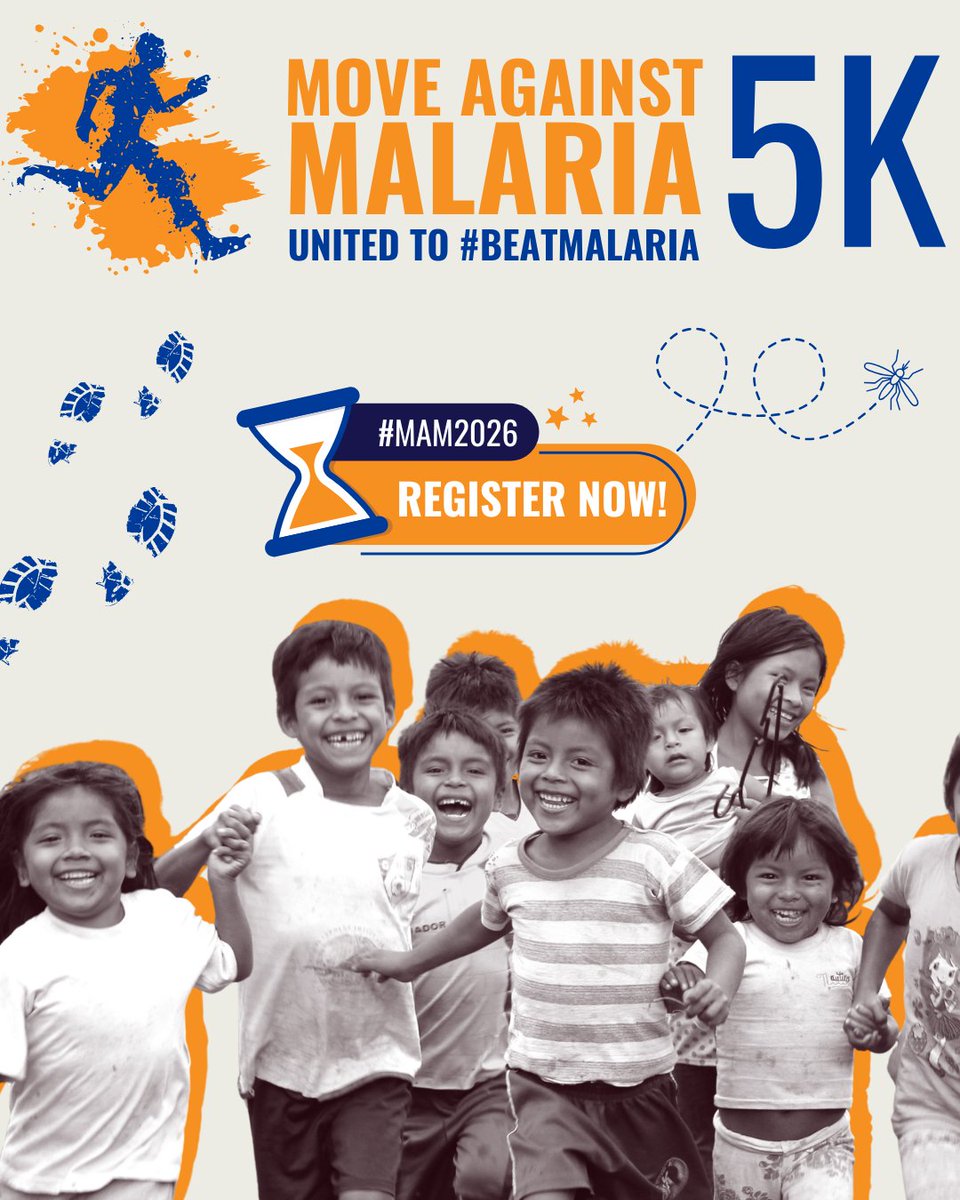
Just one month until the 2026 Move Against Malaria 5k! #MAM26
Between World Malaria Day (April 25th) and May 10th, join supporters around the world in making a real impact and safeguarding the world's most vulnerable people from malaria. Register today: https://t.co/qOxbvlUFRh
"No child has died of malaria here since June 2025." A Nigerian state that used to admit dozens of children infected with malaria per week is now just admitting 4.
This isn’t a forecast, but a year of actual results that can be scaled up. We can be the generation to #beatmalaria
Malaria transmission often varies according to the season; periods of rain mean that malaria-carrying mosquitoes peak during different times of the year.
With vector-borne diseases surging, all eyes are on malaria control as the rainy season approaches.
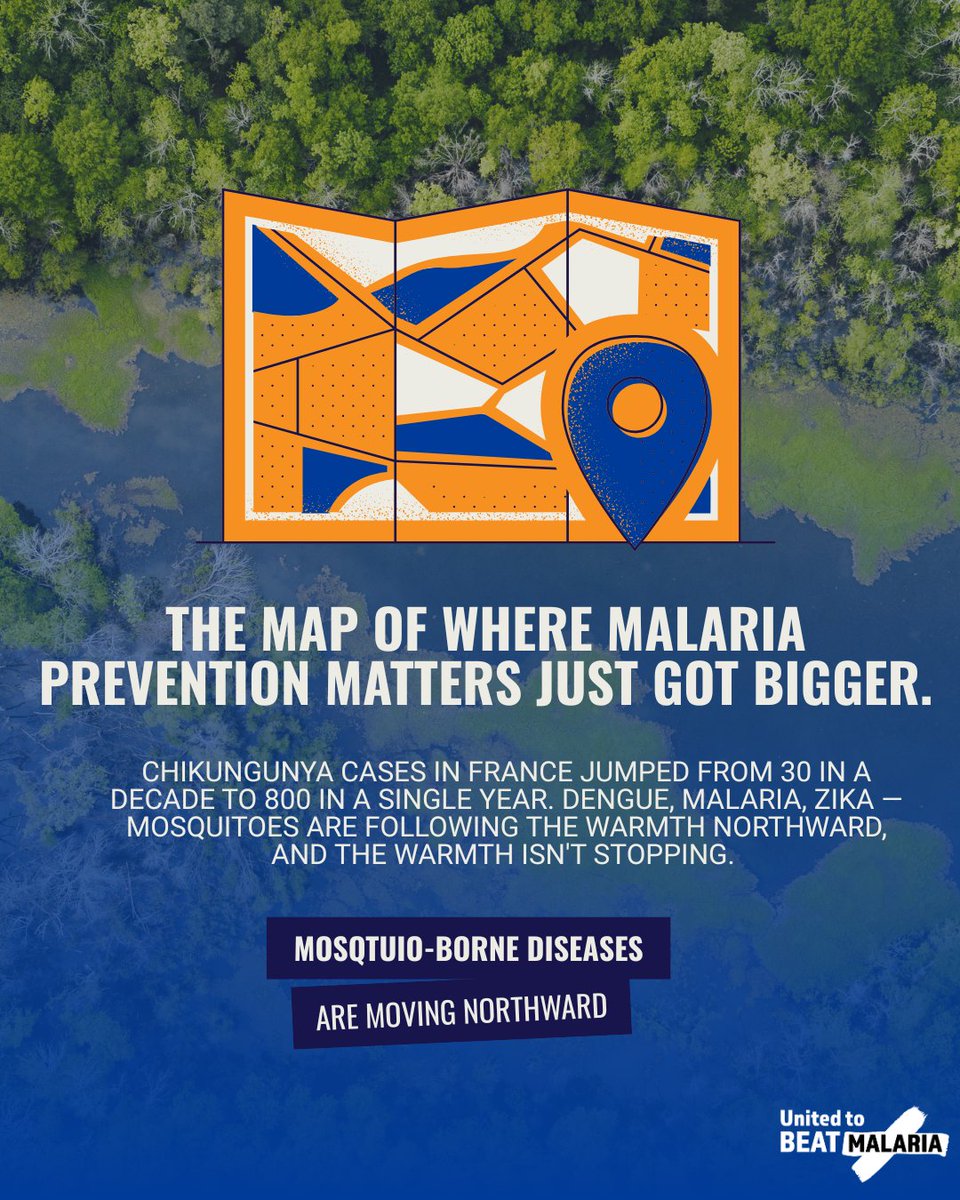
Chikungunya can now transmit at 55°F.
That's a Paris spring. A Berlin summer. A Chicago fall.
Climate change isn't just a temperature problem—it’s a mosquito superhighway being built in real time, and it impacts everyone.
Scientists just identified the exact mutation driving insecticide resistance in Africa's most dangerous malaria mosquito, enabling the anopheles to break down insecticides three times faster than before.
But the good news is now, we can track it—and stay ahead of the disease.
Another game-changer to #beatmalaria!
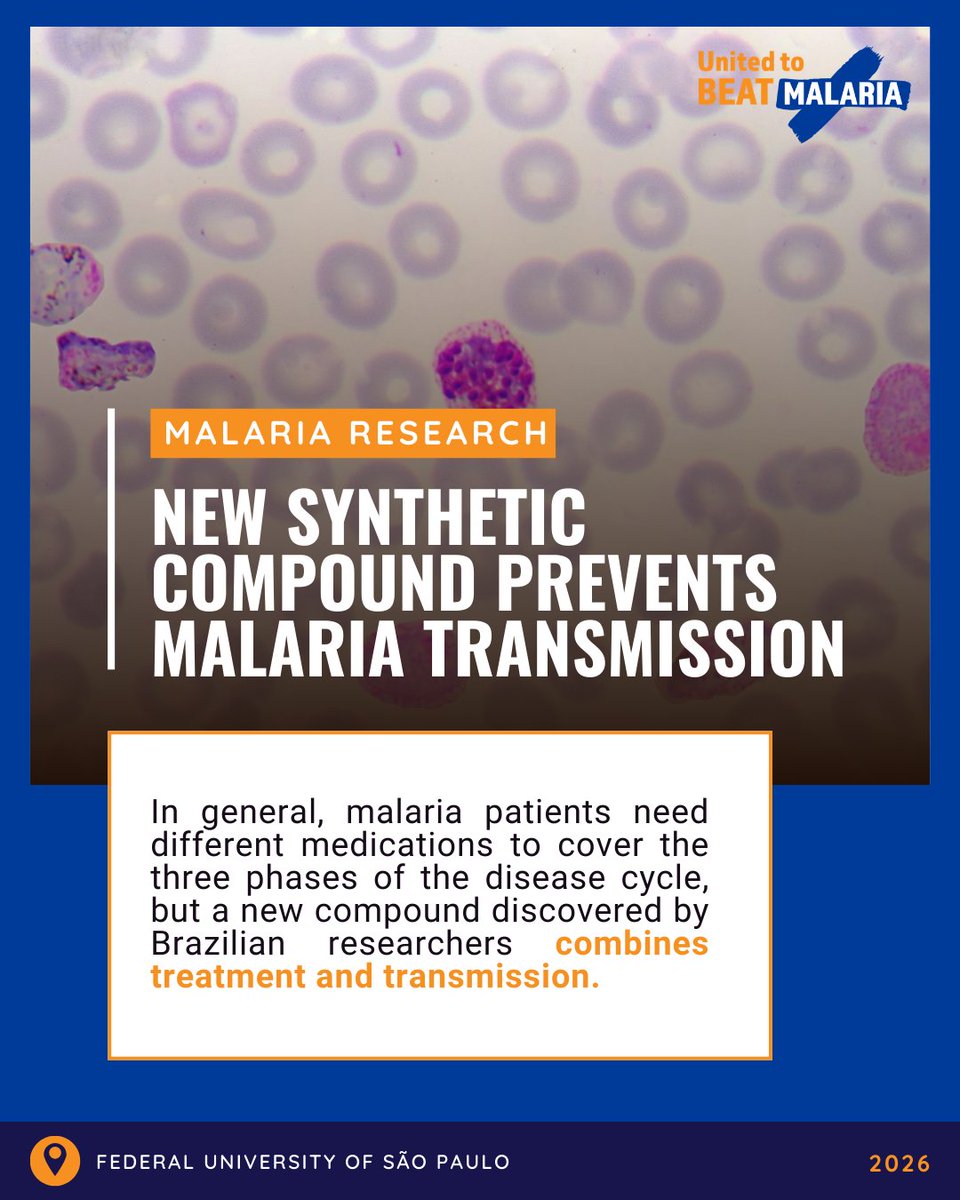
Researchers in Brazil have developed a molecule that treats malaria AND prevents its spread. Current treatments only target one stage of the parasite's lifecycle. This one targets 3: the liver, the bloodstream, and transmission. 🔬
Kicking off on #WorldMalariaDay (April 25), join our global community to make a real impact and safeguard the world's most vulnerable from this preventable disease.
You can participate from anywhere, anytime—and at your own pace. Register today:
https://t.co/qOxbvlUFRh
$1 invested in malaria medicine = $13 in health benefits 💸
@MedsforMalaria delivered one of the strongest ROIs in global health history over a 23-year period.
In that time, 1.6 million deaths were averted. This is what smart investment looks like.
During monsoon season in Bangladesh, stagnant water, rising temperatures, and unmanaged waste create prime breeding grounds for mosquitoes.
But the city is responding. In a country that's seen a spike in mosquito-borne diseases, the masses are taking health into their own hands.