You've been asking for this one...
Now in preview: Codex in the ChatGPT mobile app.
Start new work, review outputs, steer execution, and approve next steps, all from the ChatGPT mobile app. Codex will keep running on your laptop, Mac mini, or devbox.
Codex now works directly in Chrome on macOS and Windows.
It’s even better at working with apps and sites in Chrome, and now works in parallel across tabs in the background without taking over your browser.
To get started, install the Chrome plugin in the Codex app.
Claude Code 新增"电脑操控(computer use)"功能:写完代码直接帮你点鼠标测试
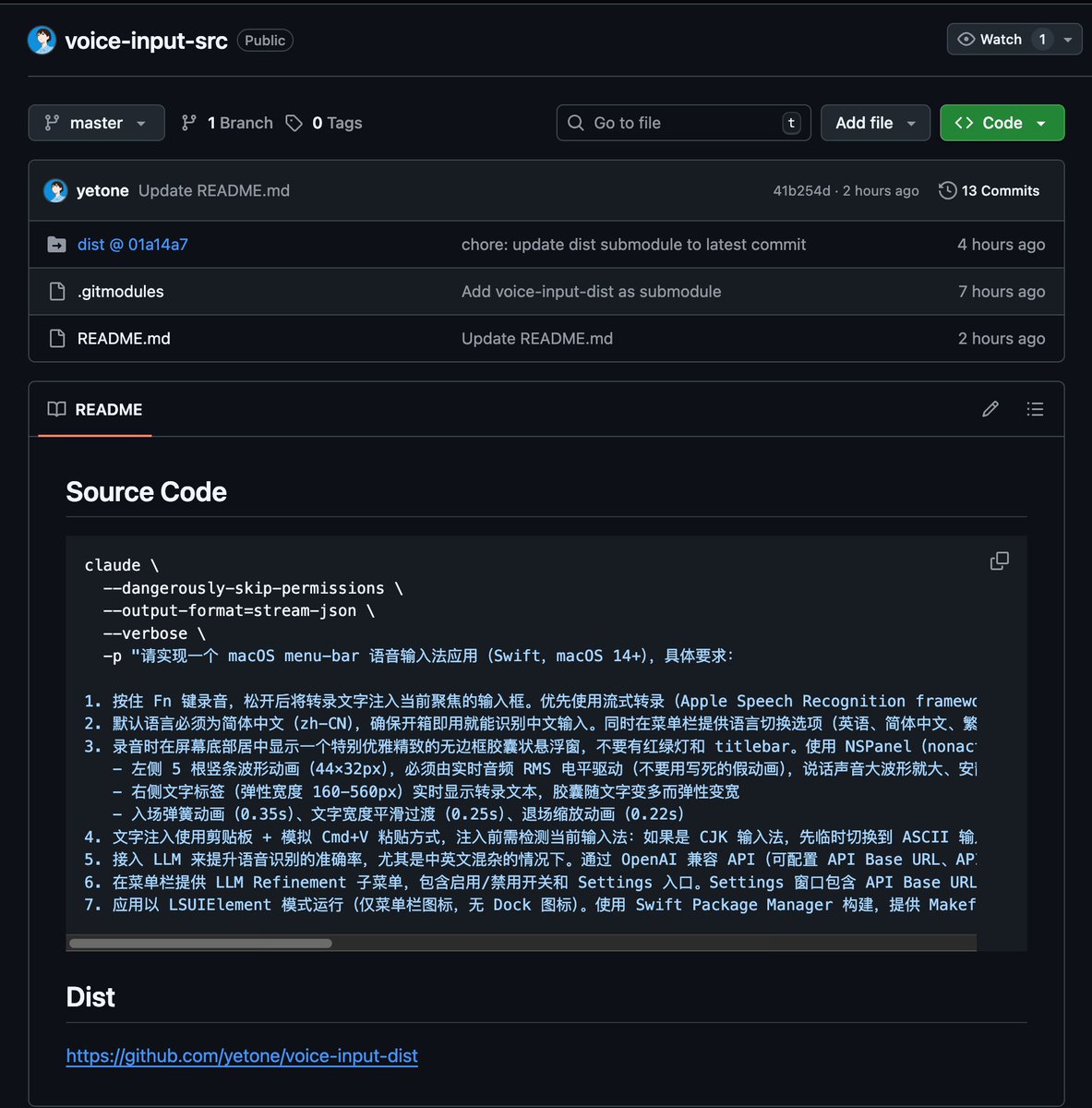
Anthropic 给 Claude Code 加了一个新能力:直接操控你的 Mac 桌面。写完代码之后,Claude 可以自己编译、启动应用、点击按钮、截图验证,整个流程不用你碰鼠标。
这个功能叫 computer use,目前是研究预览阶段,仅限 macOS,需要 Pro 或 Max 订阅。
具体能干什么?比如你让 Claude 写一个 macOS 菜单栏应用,它可以自己写 Swift 代码、编译、启动、逐个点击界面上的按钮,发现 bug 就修,修完再验证。再比如一个 Electron 应用的注册流程有问题,你只需要告诉 Claude 去测,它会自己打开应用、点击注册、逐屏截图。
安全机制上做了几层限制:每个应用需要单独授权,终端窗口不会被截图(防止 Claude 看到自己的输出),按 Esc 随时中断,同一时间只允许一个 Claude 会话控制屏幕。涉及终端、Finder、系统设置这类高权限应用时,会额外弹出警告。
启用方式是在 Claude Code 里输入 /mcp,启用 computer-use 服务器,首次使用时 macOS 会要求授予辅助功能和屏幕录制权限。
这个功能填补了一个明显的缺口:之前 Claude Code 能写代码、跑命令行,但涉及图形界面的操作就束手无策。现在等于把"写代码"和"测代码"串成了一个完整循环。对于做桌面应用、本地 Electron 应用、iOS 模拟器测试的开发者来说,省掉了手动验证 UI 的时间。
不过目前限制也不少:只支持 macOS,不支持 Linux 和 Windows;必须是交互式会话,不能用 -p 参数的非交互模式;Team 和 Enterprise 计划也暂时用不了。
Computer use is now in Claude Code.
Claude can open your apps, click through your UI, and test what it built, right from the CLI.
Now in research preview on Pro and Max plans.
My dear front-end developers (and anyone who’s interested in the future of interfaces):
I have crawled through depths of hell to bring you, for the foreseeable years, one of the more important foundational pieces of UI engineering (if not in implementation then certainly at least in concept):
Fast, accurate and comprehensive userland text measurement algorithm in pure TypeScript, usable for laying out entire web pages without CSS, bypassing DOM measurements and reflow
Software horror: litellm PyPI supply chain attack.
Simple `pip install litellm` was enough to exfiltrate SSH keys, AWS/GCP/Azure creds, Kubernetes configs, git credentials, env vars (all your API keys), shell history, crypto wallets, SSL private keys, CI/CD secrets, database passwords.
LiteLLM itself has 97 million downloads per month which is already terrible, but much worse, the contagion spreads to any project that depends on litellm. For example, if you did `pip install dspy` (which depended on litellm>=1.64.0), you'd also be pwnd. Same for any other large project that depended on litellm.
Afaict the poisoned version was up for only less than ~1 hour. The attack had a bug which led to its discovery - Callum McMahon was using an MCP plugin inside Cursor that pulled in litellm as a transitive dependency. When litellm 1.82.8 installed, their machine ran out of RAM and crashed. So if the attacker didn't vibe code this attack it could have been undetected for many days or weeks.
Supply chain attacks like this are basically the scariest thing imaginable in modern software. Every time you install any depedency you could be pulling in a poisoned package anywhere deep inside its entire depedency tree. This is especially risky with large projects that might have lots and lots of dependencies. The credentials that do get stolen in each attack can then be used to take over more accounts and compromise more packages.
Classical software engineering would have you believe that dependencies are good (we're building pyramids from bricks), but imo this has to be re-evaluated, and it's why I've been so growingly averse to them, preferring to use LLMs to "yoink" functionality when it's simple enough and possible.